Maps & Flip Flops

The Adventures of Astrid & Cecily


Leave a comment

Touring Tuscany – a soggy start at Monteriggioni

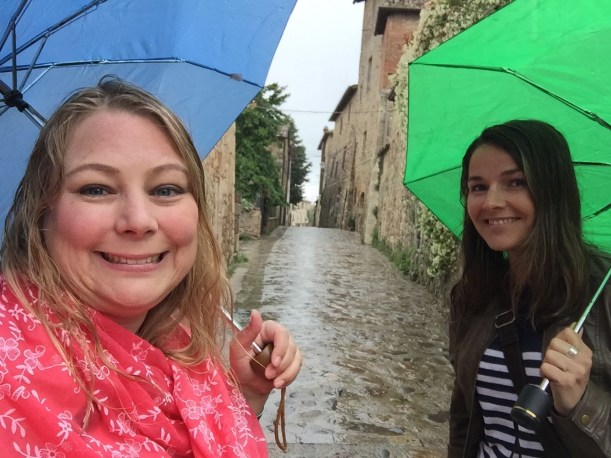
When we decided to hire a driver for the day to tour parts of Tuscany we have to admit we really were at the whim of the driver who selected four stops for us to tour that day. I had forgotten about this stop in my excitement to share our stories of Siena and San Gimignano – perhaps it was because it was the first stop or maybe I was trying to block out the monsoon that began the moment we got out of the van (me. check; Italy. check; downpour, check). Again, have to admit we were still getting a handle on our guides accent and it was early so I am not sure we even knew where we were when he ushered us out of the van and handed us a couple of umbrellas and left us on our own to explore. I honestly wasn’t sure what was going on – or if he’d even be there when we went back to look for our ride.

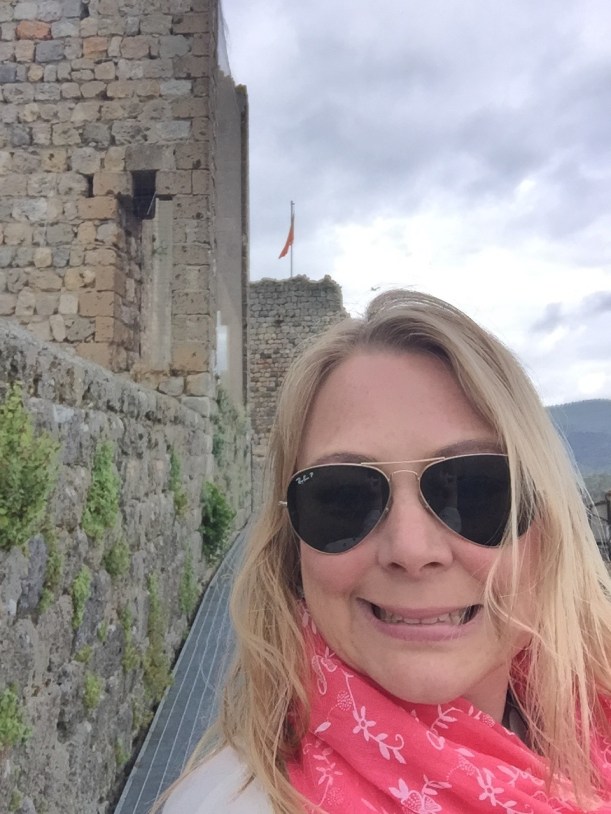
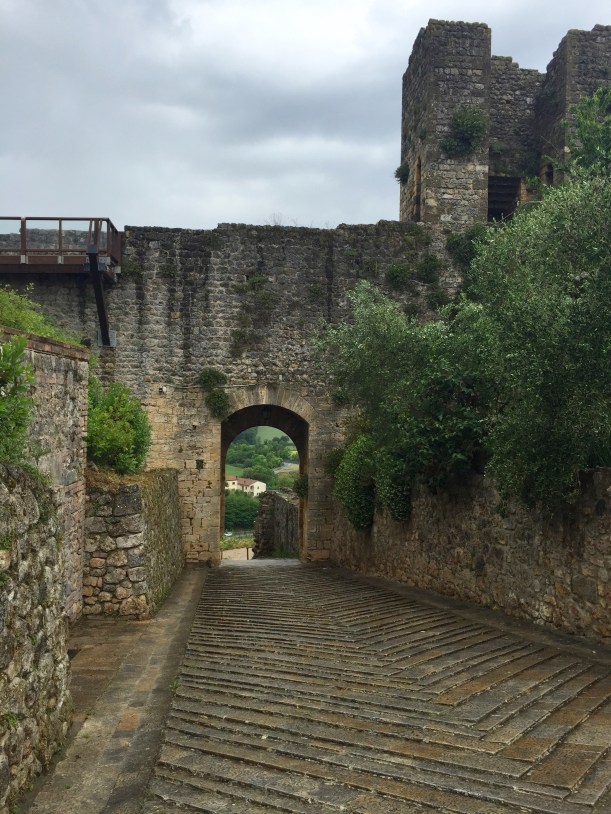
The rain poured as we climbed to the tops of the castle walls and looked out onto the lush green fields and valleys that surrounded us.

One of the first sign we saw on the site explained that Castello di Monteriggioni, which was part of the Via Francine, takes you through from medieval to renaissance times. In the stretch between San Gimignano and Siena, the Via Francigena crossed the territory of Monteriggioni  where one of the ancient pilgrim stopping places still survives, the abbey at Abbadia Isola. The castle was built by the Sienese between 1213 and 1219 for defensive purposes: its strategic location atop a hill overlooking the Cassia Road allowed the castle to control the cities of the Val d’Elsa and Staggia and be on the lookout for any armies approaching Siena.

Discovery Tuscany  filled in what the rest my memory does not recall – or maybe we never really figured out while we were there lost and wandering in the rain – “Monteriggioni represents one of the most important walled castles in the territory. It has incredibly preserved an intact structure as if time had never passed on the hill from which it elegantly dominates the surrounding landscape. Its perfect circular perimeter makes one suppose it to be an artificial construction while in actuality it was created by just following the curves in the natural ground.”

IMG_7406

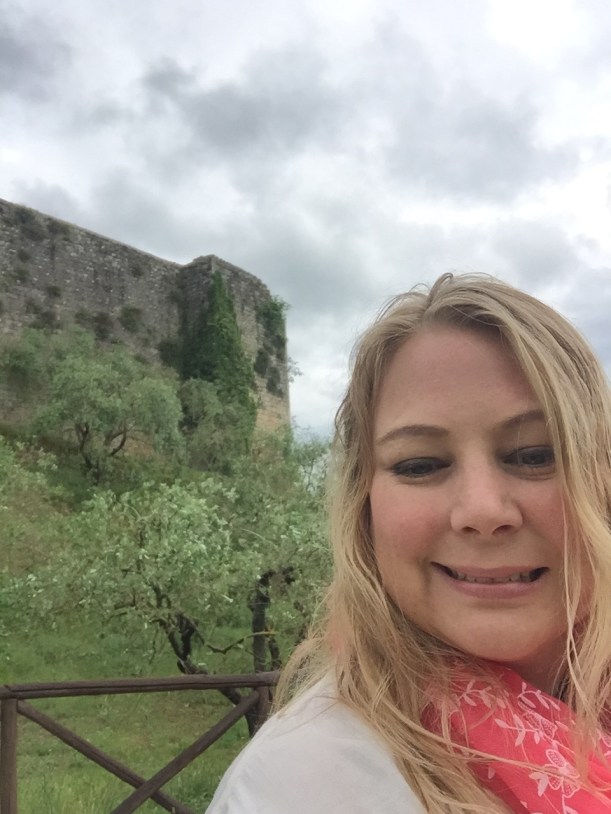
Before the rain…

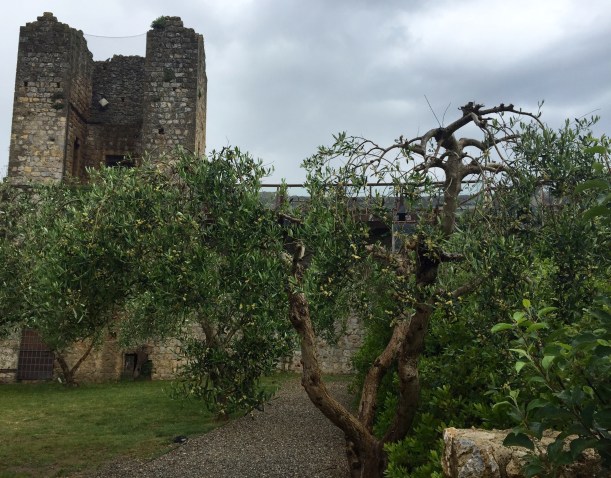
“The intact fortified wall presents 14 towers along which the guards used to walk and patrol the walls and 2 gates, one called the Franca or Romea Gate which faces Rome and the other known as the Florentine Gate since it heads toward Florence. The current structure of the village is essentially the original one, the only changes it went through date back to the 16th century when the towers were lowered and some earth accumulated at the base of the walls and another dating back to 1921 when 3 of the 14 towers were reduced to the level of the walls.”

IMG_7439

Touring the streets in the downpour with my half-broken loaner umbrella

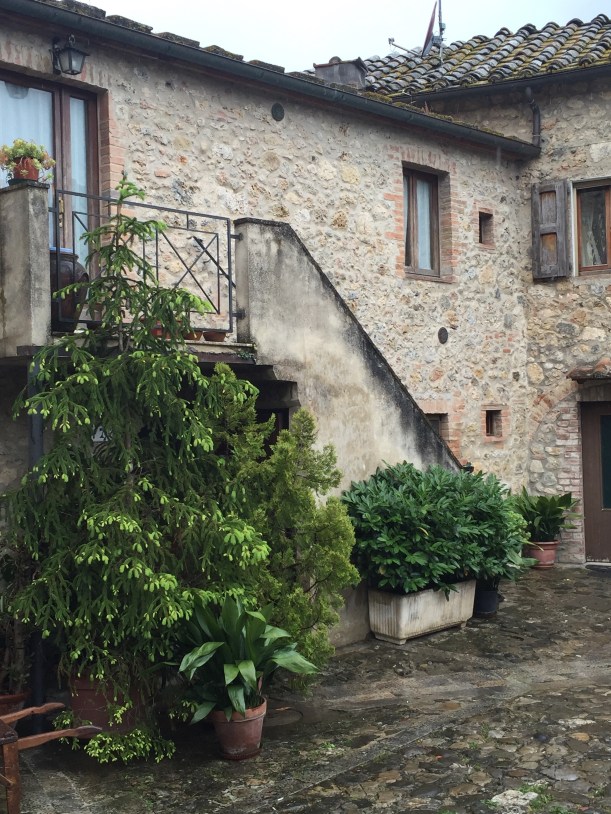
As we sought shelter as the rain got harder, we wound our way through cute little cobblestone side streets, tiny shops and what looked like little apartments in the village.

IMG_7423

A little rain won’t ruin the fun for Maps & Flip Flops…soldiering on with our exploring and hopeful our driver would be there when we were done


IMG_7431

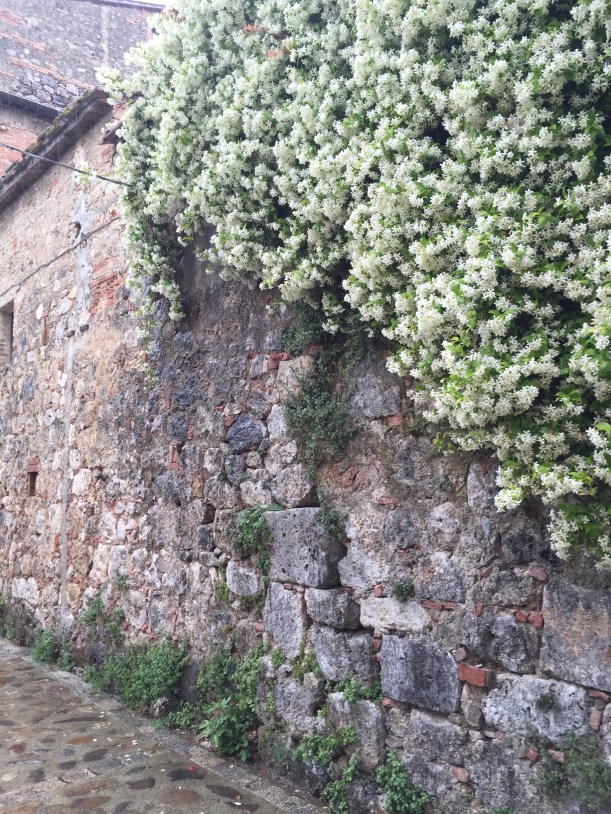
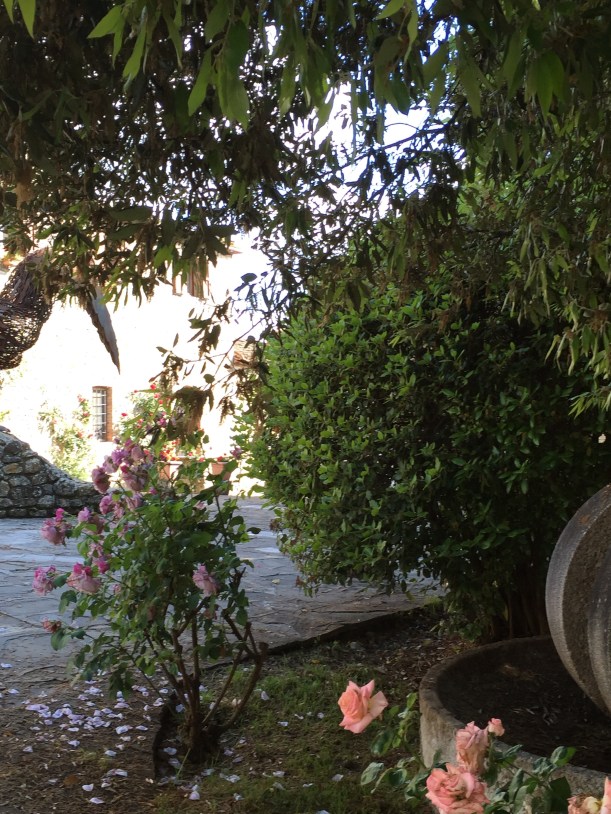
Spring arriving in Tuscany

IMG_7461IMG_7460IMG_7458

Certainly not the best way to start a tour, but I don’t think this is one of those stops that you immediately think of when you make your check-list for Tuscany so we are pretty glad our driver knew it was just the introduction we needed to the story of the medieval times that we we about to experience here and in Siena and San Gimignano later in the day.


Next up?  Finally, Flip Flops is getting into the grappa….and a little Chianti Classico wines.

IMG_7476


Leave a comment

Touring Tuscany – San Gimignano


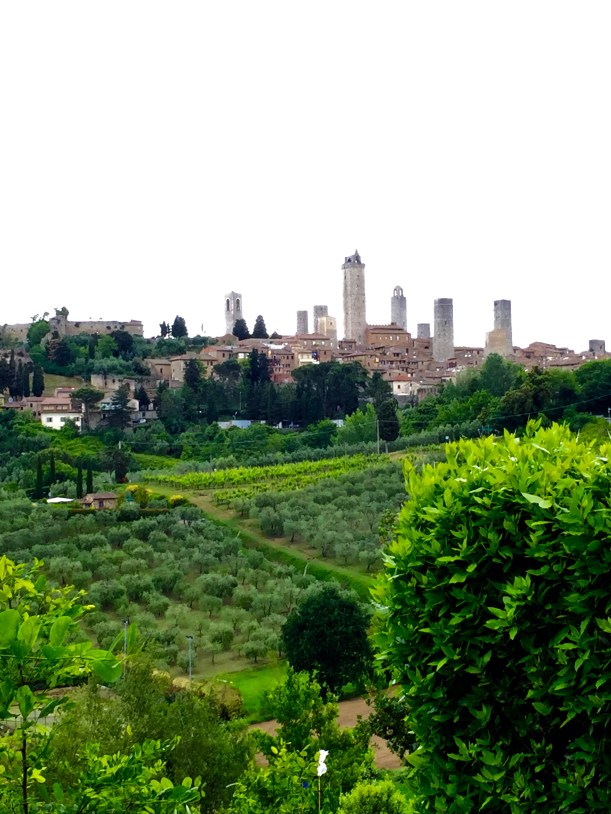
I have to admit I didn’t really have any expectations San Gimignano but, wow, steeped in history and beautiful old architecture, it was far beyond what one could hope from a small, historical town in Tuscany. The tidbits of trivia I did know were that the city was the birthplace of poet Folgore da San Gimignano and it was the setting for the novel Where Angels Fear to Tread.

DSC02780

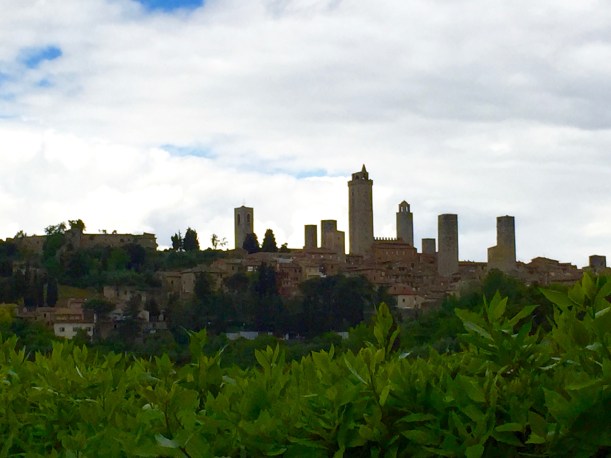
Known as the Town of Fine Towers, it is best described as a small medieval hill town, surrounded by three walls. In fact there are eight unique entrances that date back to the 12 and 13th centuries and a dismantled fortress from the 16th century, which sits in ruins. By the time we arrived the weather was not as ‘on our side’ as we had hoped so it was really a race against the clouds to get everything in and learn as much as we could before the downpours. I know, me, Italy and rain, right, Bea K Travels!

DSC02776

According to UNESCO, “the perimeter of the property is defined by two concentric rings of defensive walls. The inner ring was constructed in the late 10th century and in the 13th century it was reinforced with the construction of the outer wall. Inside, the medieval town contains all the elements that contribute to its Outstanding Universal Value: towers and tower houses, noble palaces rich in stone and terracotta decorations, late Roman churches, as well as the urban pattern of streets. Moreover, the urban fabric perfectly combines with a precious system of orchards set along secondary streets and building-free zones, which complement the late medieval urban layout. The unique skyline of the town, loftily perched in a dominant position, can be enjoyed from the main visual cones. Despite social transformation due to development over the last 60 years, the historical centre still retains the same ancient traditions, based on lively social dynamics.” (Source: http://whc.unesco.org/en/list/550)

IMG_7680

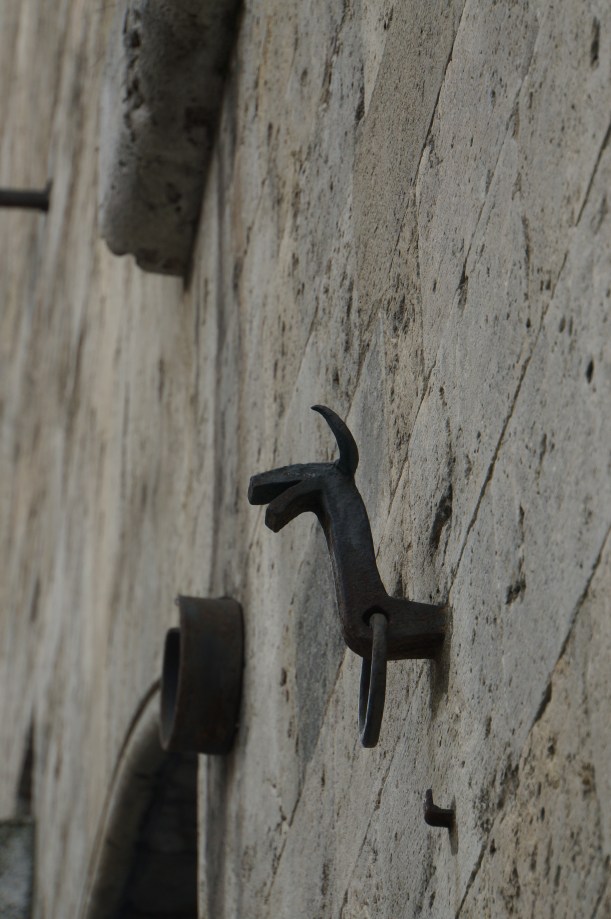
The ironwork and horse hitches that dominated Siena continued in this little city. This was a design found on a balcony railing near the centre of the Piazza della Cisterna

According to our friends at wikipedia “San Gimignano is famous for its medieval architecture, unique in the preservation of about a dozen of its tower houses, which, with its hilltop setting and encircling walls form “an unforgettable skyline”.  The Romanesque secular and domestic architecture which may be distinguished from each other by their round and pointed arches, respectively. A particular feature which is typical of the region of Siena is that the arches of openings are depressed, with doorways often having a second low arch set beneath a semi-circular or pointed arch. Both Romanesque and Gothic windows sometimes have a bifurcate form, with two openings divided by a stone mullion under a single arch. Within the walls, the well-preserved buildings include notable examples of both Romanesque and Gothic architecture, with outstanding examples of secular buildings as well as churches. The Palazzo Comunale, the Collegiate Church and Church of Sant’ Agostino contain frescos, including cycles dating from the 14th and 15th centuries. The town also is known for the white wine, Vernaccia di San Gimignano, produced from the ancient variety of Vernaccia grape which is grown on the sandstone hillsides of the area.”

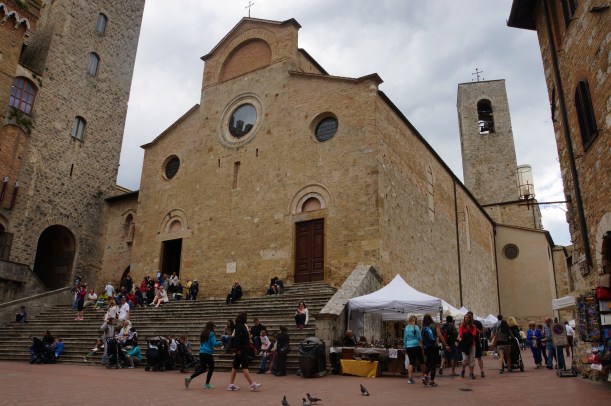
Wikipedia also explains that “at the heart of the town are four squares: the Piazza Duomo, on which stands the Collegiate Church; the Piazza della Cisterna, the Piazza Pecori and the Piazza delle Erbe and 14 preserved towers. To the north of the town is another significant square, Piazza Agostino, on which stands the Church of Sant’ Agostino. The locations of the Collegiate Church and Sant’ Agostino’s and their piazzas effectively divide the town into two regions. These churches house many significant pieces of 14th- and 15th-century renaissance art and impressive frescos everywhere.”

Piazza della Cisterna

“This Piazza is the main square of the town. It is triangular in shape and is surrounded by medieval houses of different dates, among them some fine examples of Romanesque and Gothic palazzos. At the centre of the piazza stands a well which was the main source of water for the town’s residents. The structure dates from 1346.Although much of it has been renewed in the late 20th century, parts of the paving date from the 13th century.” (Source: wikipedia)

Piazza Duomo

“This piazza is to the north of Piazza della Cistern and is connected by a passage adjacent to an open loggia. To the west, at the top of the square, stands the Collegiate Church, reached by a broad flight of steps. The name of the square would seem to imply that this church was at one time a cathedral, but although it was perhaps planned, this was not the case. Other important buildings on the square include the Palazzo Comunale and the Palazzo Podesta, the house of the mayor. The Palazzo Podesta is distinguished by its huge arched loggia.”

Like many of the smaller, Italian areas we visited, tourism and a desire to modernize continue to make these areas special and important to protect. While Maps could speak to the geology in  a much more informed way than I, our guide also explained to us that the town is prone to landslides and is at risk for seismic activity in this area.

While I don’t think one could spend an entire day here, walking into the city centre is like stepping back in time to the Middle Ages – well, minus all the tourists with their backpacks & selfie sticks – you could see how the aristocratic would have lived in those imposing towers and what a vantage point they had over everything.

But, our day wasn’t done yet – we still had two more stops before our tour of the Tuscan region was complete. Next up, we stop at Castello di Monteriggioni, which was part of the Via Francine, taking you through from medieval to renaissance times.  In the stretch between San Gimignano and Siena, the Via Francigena crossed the territory of Monteriggioni  where one of the ancient pilgrim stopping places still survives, the abbey at Abbadia Isola

Stay with us…


Leave a comment

Touring Tuscany – the wine

As we headed to stop #4 of the day, the weather began to break in our favour which made for a nice ride through Chianti in the afternoon sun. We are still with our driver, careening along at breakneck speed – both in his driving and his explanations of what we are driving past.

DSC02864

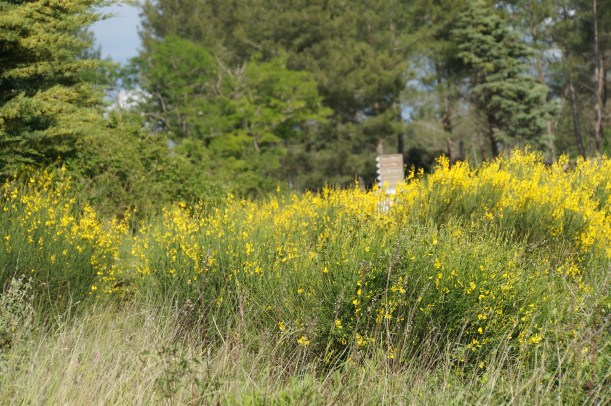
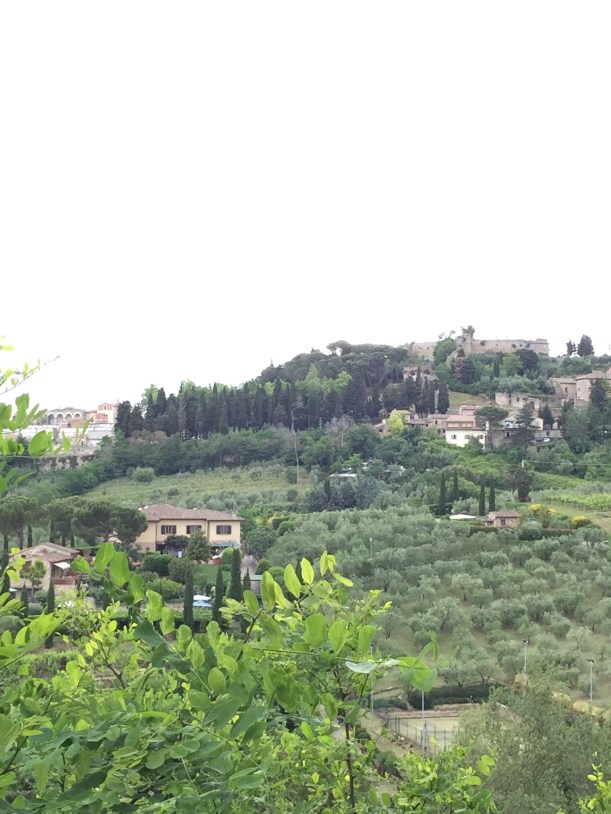
The roadside scenes of spring in Tuscany

DSC02861

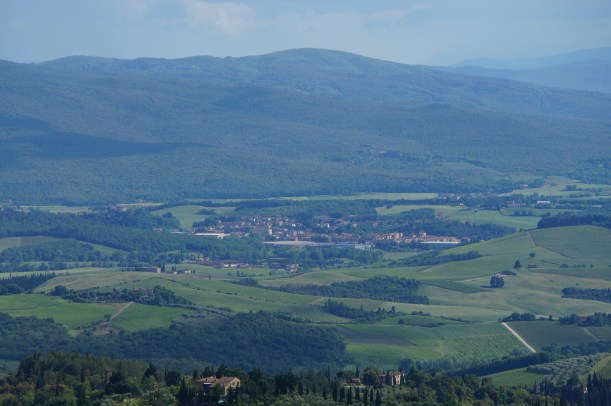
Looking downward into the valley – the greens and blues merging softly together, as we looking down at the village below

DSC02845

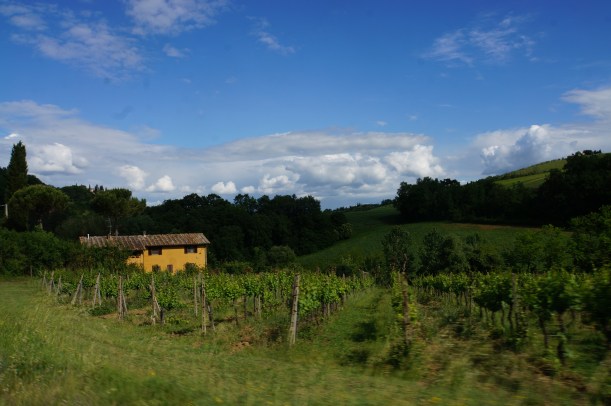
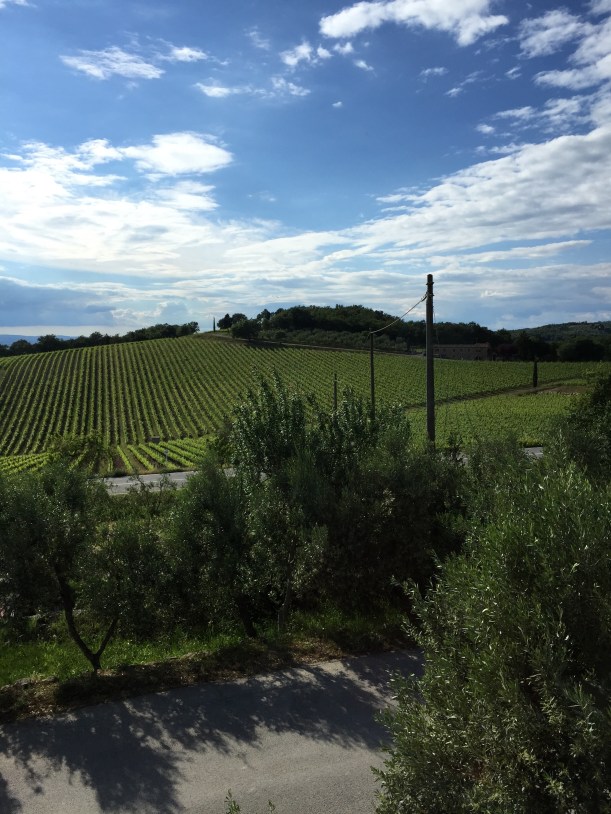
Row by row they grow…

IMG_7696

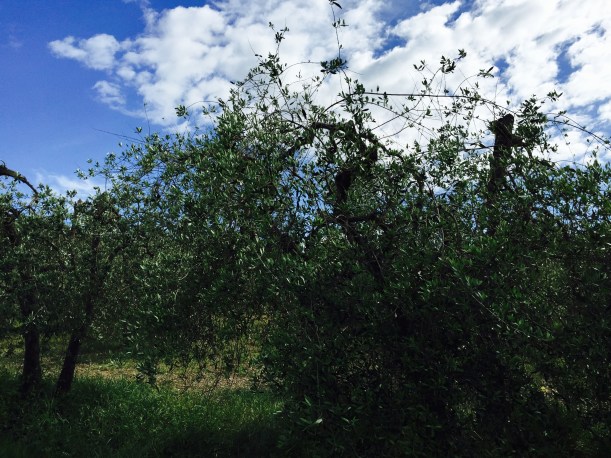
Believe this is an olive grove, though he didn’t slow down enough for our to be sure

There isn’t much history to tell within this part of the trip – but he stopped randomly at some scenic points that are worth sharing.

IMG_7712

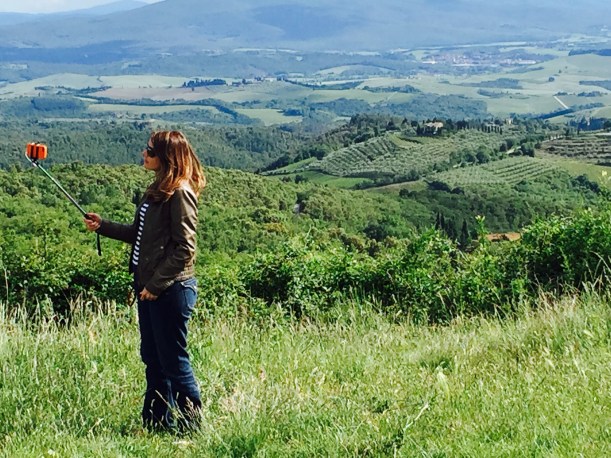
One of my favourite pictures of Maps from the trip – capturing the scene and in complete serenity

When we arrived at the vineyard, in the heart of Chianti Classico zone, the sun was starting to shift in the sky and late day was clearly upon us. Founded in 1973, Rocca delle Macie has an interesting history which is described on their website – “It was established in 1973, when Italo Zingarelli – producer of Ettore Scola’s We All Loved Each Other So Much, and also of the wildly popular series of films featuring comedy duo Bud Spencer and Terence Hill (including They Call Me Trinity and Trinity Is Still My Name) – decided to realize his lifelong dream by acquiring the “Le Macìe” estate – extending across 85 hectares in all, of which only two were under vine.”

DSC02881

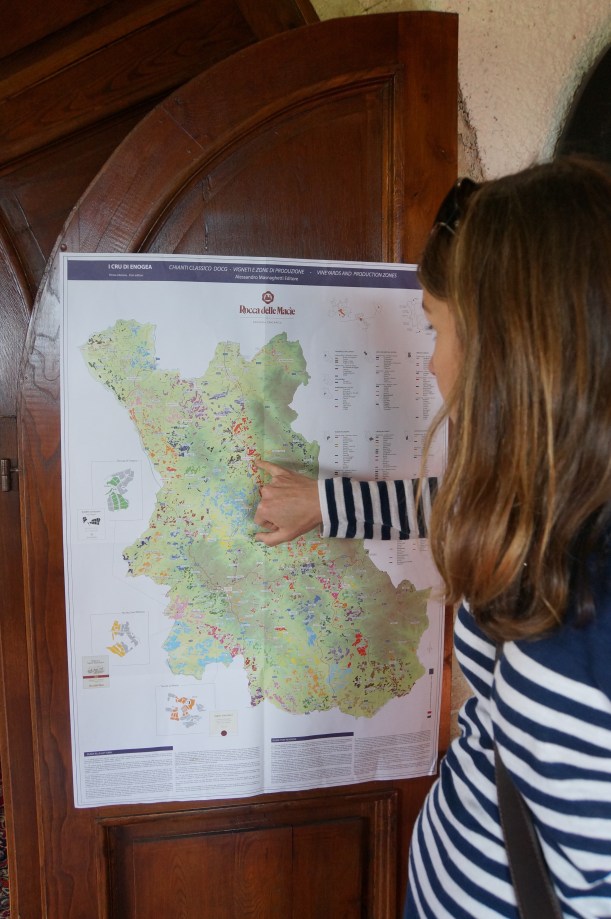
Maps is making sure we know where exactly on the map the Chianti Classico zone extends

DSC02867IMG_7750IMG_7731

“The company estate now extends to more than 600 hectares with, in total, more than 200 used as vineyards and 80 as olive groves, subdivided across the company’s six estates: Le Macìe, Sant’Alfonso, Fizzano e le Tavolelle in the Chianti Classico zone, in addition to the recently purchased Campomaccione and Casamaria in the Morellino di Scansano zone.”

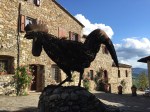
We only had about an hour at this last stop but it was worth doing. Here we saw the trip’s largest black, wrought iron rooster, sampled a large selection of delicious wines from the Chianti Classico region.

IMG_7757

So excited to start tasting…or maybe this was after the grappa #toothygrins

And – in a random call-back to our stop in Chamonix – enjoyed our second encounter with some delicious grappa. While I am now a confirmed fan, it reinforced for Maps that she simply “does not have the constitution”. It was here that we also enjoyed some of the best lavender honey we have ever tasted in our entire life. For Maps, this turned out be an especially effective way to mask the lingering taste of the grappa.

After this lovely and peaceful stop, we hopped back into the van and made our way back to Firenze as the sun faded into twilight and evening set in.

Next up, we pack up our now extremely heavy bags and ride the rails to our final destination of this crazy adventure. All roads lead to Rome…

Stay tuned…


Leave a comment

Touring Tuscany – Siena

I have a colleague who has travelled quite extensively in Italy, with his wife and two kids, but also “with the boys” on cycling expeditions through the Italian countryside. Naturally, I hit him up for some advice before we left. “Hire a driver, and tour Tuscany for the day – it’s spendy, but you won’t regret it,” he said.

Well, mid-trip – and not feeling at all like we haven’t already spent an obscene amount of money – we noodled his advice with our extra days in Florence. Remembering Maps & FlipFlops EuroTrip Rule #1 – “Money is not the reason we’ll skip something, ” we went down to see Astrid’s Dutch bestie at the front desk of our fancy hotel in Florence, hired us a car & driver and hit the road two days later.

The fellow who drove us was a local and as he drove us out of Florence and towards Siena he explained that in Italy you actually have to go to school and become certified to become a tour guide.  You can’t just memorize Lonely Planet, grab an umbrella and start herding people onto a bus. The idea being that Italy has rich and complex history, they don’t want some fly-by-night making it up as they go. Our guide explained this – showing us his credentials (often checked by the Italian police) – as we arrived at a church and he explained his training did not allow for him to go in with us, risk being fined for ‘touring’ us through something he was not certified in. I can’t begin to describe how expansive his knowledge was, how rapidly he rattled off the history and most importantly what a terrifying  -yet oddly safe – driver he was!

Our tour was to take us through a section of Tuscany – specifically Siena, San Gimignano and through a vineyard for a little wine tasting. (each will be covered in individual posts). While there were tours that let you spend an entire day JUST drinking wine, we agreed time (and geography covered) was best spent with the three-stop tour, though I did feel like more wine & less churches would have been ok too.

According to wikipedia – “the historic centre of Siena has been declared by UNESCO a World Heritage Site. It is one of the nation’s most visited tourist attractions, with over 163,000 international arrivals in 2008. Siena is famous for its cuisine, art, museums, medieval cityscape and the Palio, a horse race held twice a year. Siena is located in the central part of Tuscany, in the middle of a vast hilly landscape between the Arbia river valley, the Merse valley, the Elsa valley, the Chianti hills, the Montagnola Senese and the Crete Senesi. The city has a long and storied history, dating back as far as 900-400 bc which you can read more on here.

DSC02593

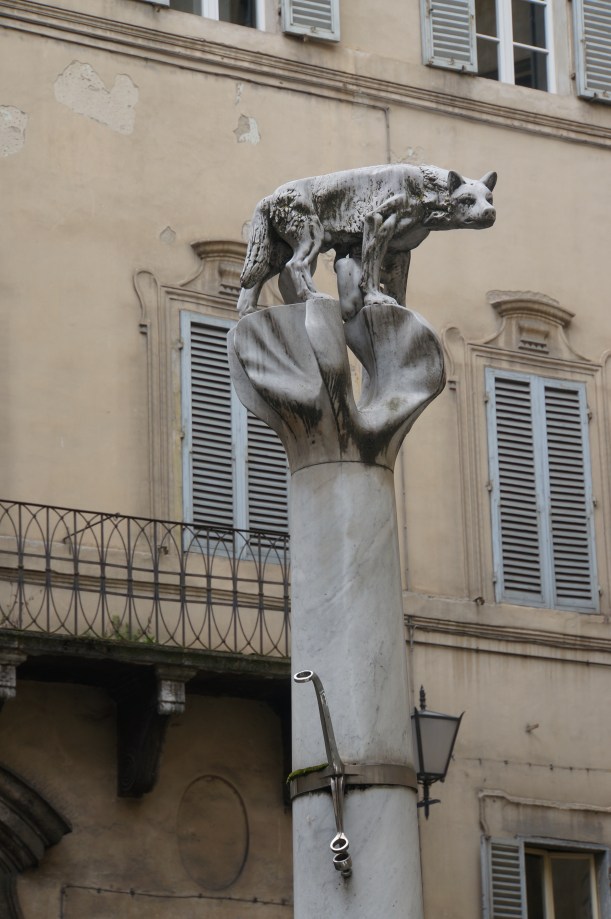
Wikipedia, in part details the local legend that “Siena was founded by Senius and Aschius, two sons of Remus and thus nephews of Romulus, after whom Rome was named. Supposedly after their father’s murder by Romulus, they fled Rome, taking with them the statue of the she-wolf suckling the infants (Capitoline Wolf), thus appropriating that symbol for the town.”

DSC02681

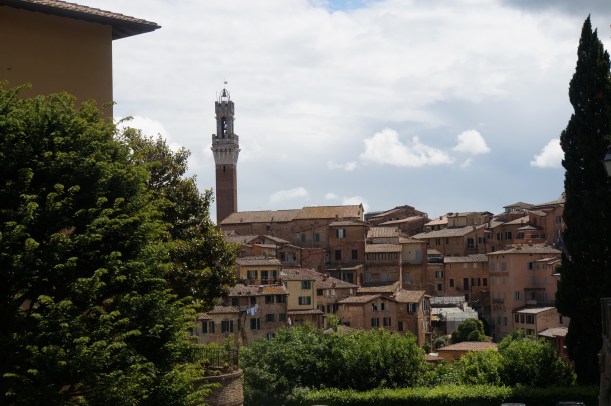
UNESCO describes Siena as the embodiment of a medieval city. “Its inhabitants pursued their rivalry with Florence right into the area of urban planning. Throughout the centuries, they preserved their city’s Gothic appearance, acquired between the 12th and 15th centuries. During this period the work of Duccio, the Lorenzetti brothers and Simone Martini was to influence the course of Italian and, more broadly, European art. The whole city of Siena, built around the Piazza del Campo, was devised as a work of art that blends into the surrounding landscape.”

Agriculture constitutes Siena’s primary industry. (Clearly, fertilizer is sexy!) And as of 2009, over 900 companies comprised a workforce with a total area of over 10 square kiometres (4 square miles) of useable agricultural area.

IMG_7589

There are four main sights of Siena that our guide walked us through before dropping us at what was the best gelato shop we encountered in Italy:

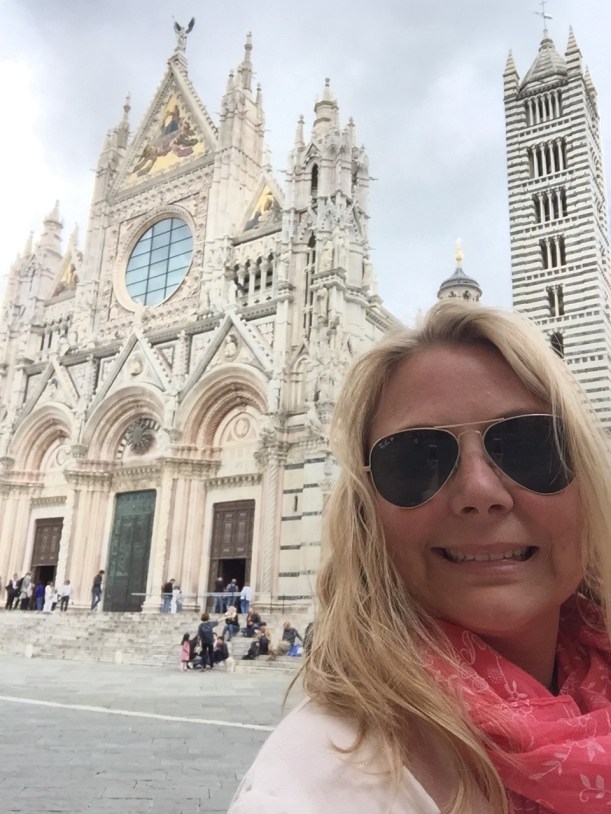
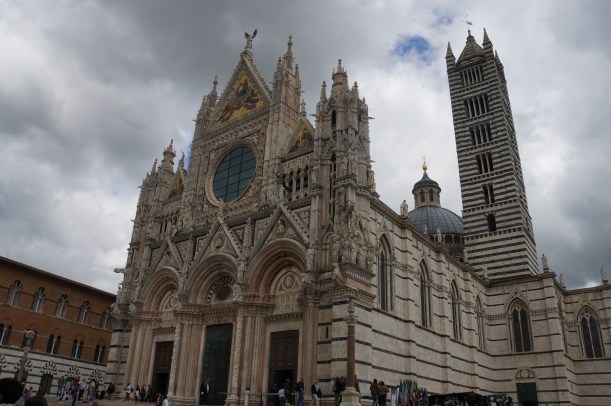
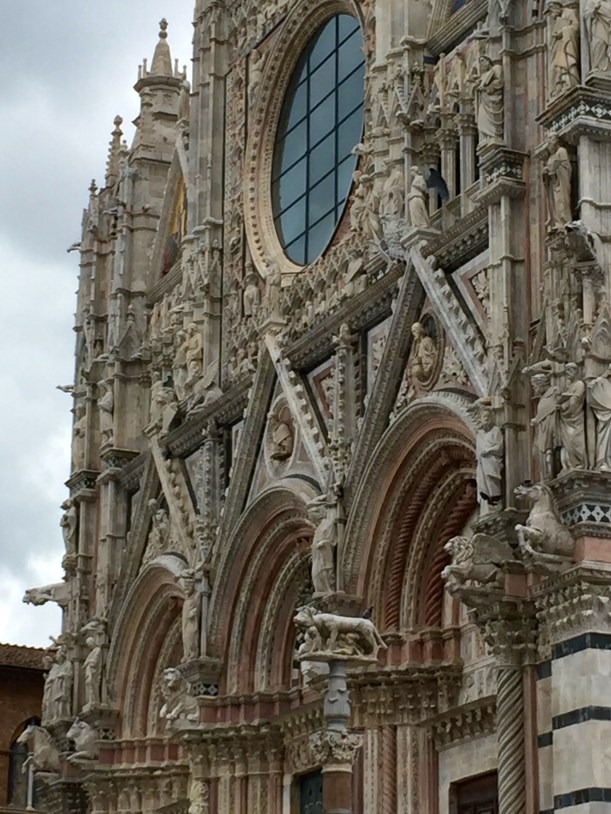
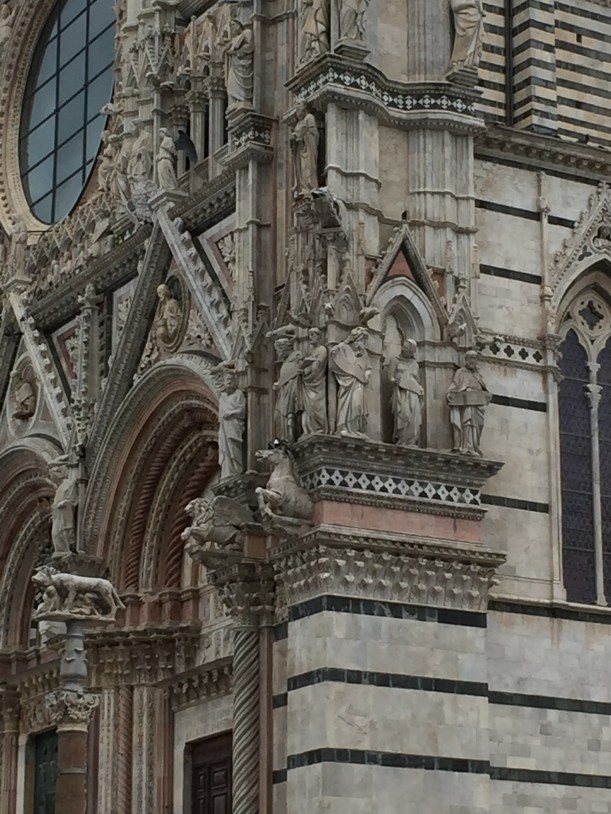
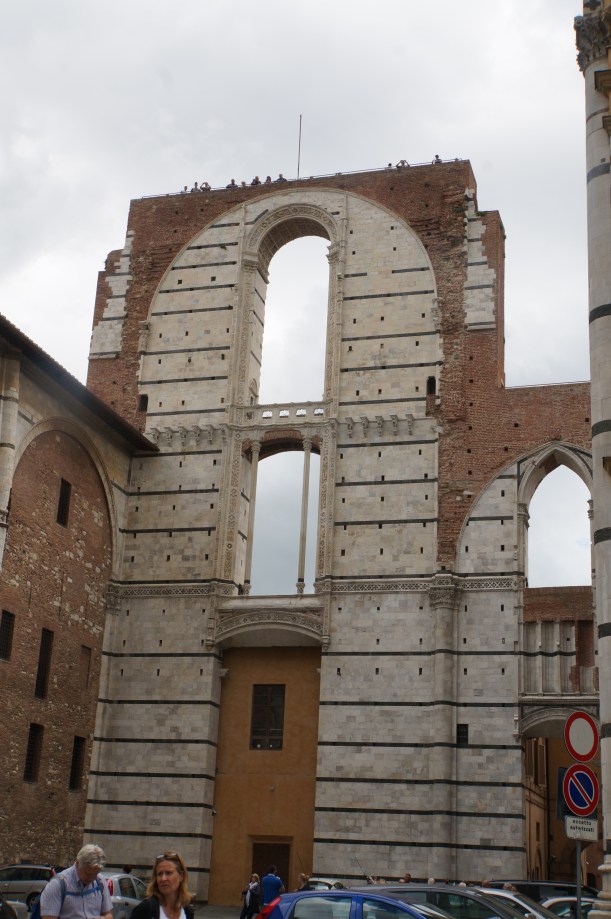
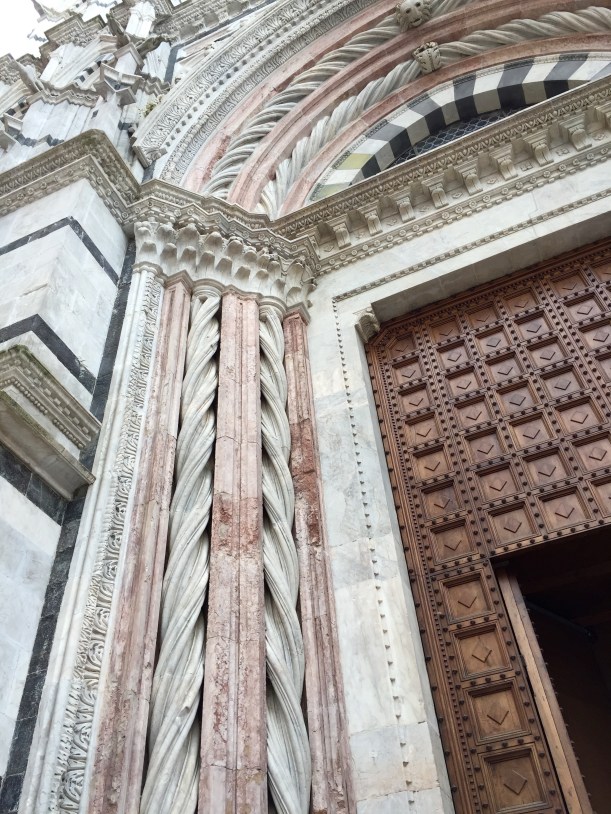
The Siena Cathedral/Duomo: best described as designed in Romanesque-Gothic architecture.  Believe it was built in the 12th century, with the main face of the church finished in 1380.  The history books say that it was originally planned to be a basilica – perhaps to be the largest in the word – however ‘best-laid plans, as they say’ and for a number of reasons the plan was scaled back to its current architectural state. (source: wikipedia)

IMG_7572

DSC02698

IMG_7560

IMG_7558

DSC02700

IMG_7578

The Siena Cathedral Pulpit: is an octagonal 13th-century masterpiece sculpted by Nicola Pisano with lion pedestals and biblical bas-relief panels. The inlaid marble mosaic floor of the cathedral, designed and laboured on by many artists, is among the most elaborate in Italy. The Sacristy and Piccolomini library have well preserved Renaissance frescos by Ghirlandaio and Pinturicchio respectively. Other sculptors active in the church and in the subterranean baptistry are Donatello, Lorenzo Ghiberti, Jacopo della Quercia and others. The Museo dell’Opera del Duomo contains Duccio’s famous Maestà (1308–1311) and various other works by Sienese masters. More Sienese paintings are to be found in the Pinacoteca, e.g. 13th-century works by Dietisalvi di Speme. (Source: wikipedia)

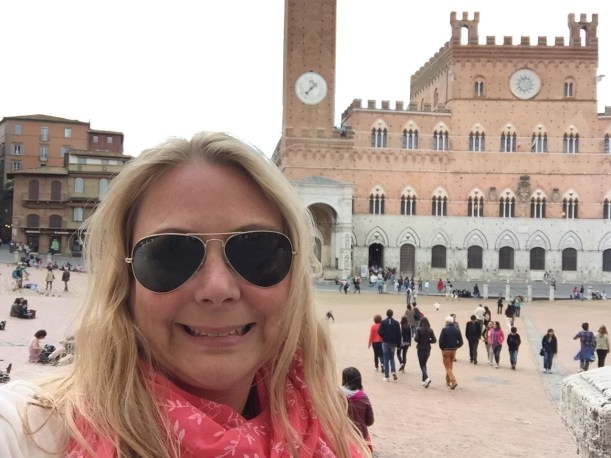
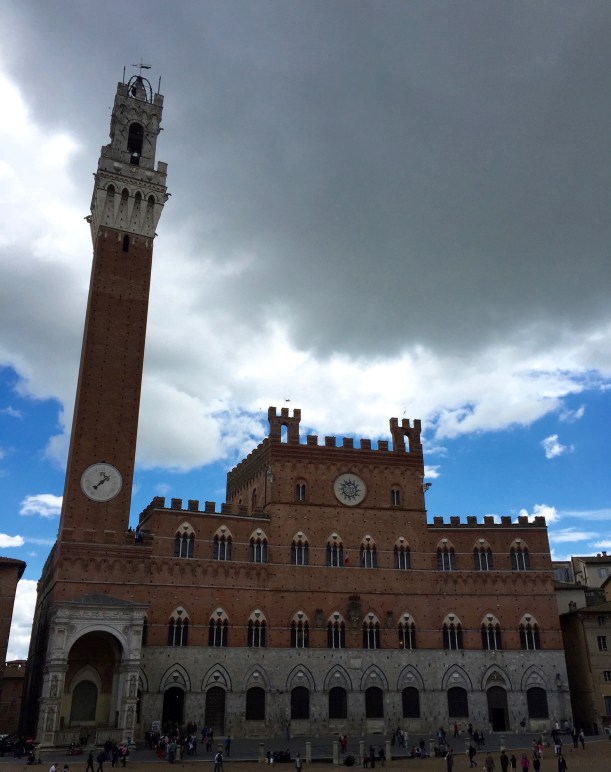
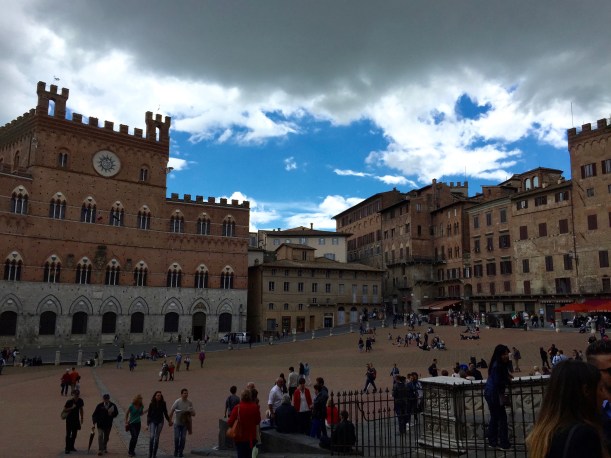
The Piazza del Campo:  was, for me, the highlight of the town’s architectural history. Wikipedia describes it best as a “shell-shaped town square, unfurls before the Palazzo Pubblico with its tall Torre del Mangia. The square is well known as a section of the Palio horse race. The Palazzo Pubblico, is an art museum housing works such as Ambrogio Lorenzetti‘s frescoes depicting the Allegory and Effects of Good and Bad Government and also some of the finest frescoes of Simone Martini and Pietro Lorenzetti. (Source: wikipedia)

IMG_7541

The Plazzo Salimbeni: is the original headquarters and current home of the Monte dei Paschi di Siena, one of the oldest banks in continuous existence in Europe. (Source: wikipedia)

But, back to the horses. Now in Calgary we have something called the Calgary Stampede – a western event that takes over the city for 10 (some say 11 – Sugar Shack, anyone?) days in early July. So, fair to say we know a little bit about horse racing – of the Chuck Wagon variety. But, our expertise in  medieval horse racing is understandably limited. The Palio di Siena is run twice a year in early July and mid August.  They run around the Piazza del Campo. Wikipedia tells me – and I’m sure our guide did on our tour when I may have tuned out- that “Seventeen Contrade (which are city neighbourhoods originally formed as battalions for the city’s defence) vie for the trophy: a painted banner, or Palio bearing an image of the Blessed Virgin Mary. For each race a new Palio is commissioned by well-known artists and Palios won over many years can often be seen in the local Contrade museum. During each Palio period, the city is decked out in lamps and flags bearing the Contrade colours. Ten of the seventeen Contrade run in each Palio: seven run by right (having not run in the previous year’s corresponding Palio) together with three drawn by lot from the remaining ten.”

IMG_7533

“A horse is assigned to each by lot and is then guarded and cared for in the Contrade stable. The jockeys are paid huge sums and indeed there are often deals and bribes between jockeys or between “allied” Contrade committees to hinder other riders, especially those of ‘enemy’ Contrade. For the three days preceding the Palio itself, there are practice races. The horses are led from their stables through the city streets to the Campo, accompanied by crowds wearing Contrade scarves or tee-shirts and the air is filled with much singing and shouting. Though often a brutal and dangerous competition for horse and bare-back rider alike, the city thrives on the pride this competition brings. (source: wikipedia)

IMG_7547

Wikipedia tells us that “the Palio is not simply a tourist event as a true Sienese regards this in an almost tribal way, with passions and rivalry similar to that found at a football ‘Derby’ match. In fact the Sienese are baptised twice, once in church and a second time in their own Contrade fountain. This loyalty is maintained through a Contrade ‘social club’ and regular events and charitable works. Indeed, the night before the Palio the city is a mass of closed roads as each Contrade organises its own outdoor banquet, often for numbers in excess of 1,000 diners. On the day of the Palio itself the horses are accompanied by a spectacular display of drummers and flag twirlers dressed in traditional medieval costumes who first lead the horse and jockey to the Contrade parish church and then join a procession around thePiazza del Campo square. This traditional parade is called the Corteo Storico, which begins in the streets and concludes in the Piazza del Campo encircling the square. There are often long delays while the race marshall attempts to line up the horses, but once underway the Campo becomes a cauldron of wild emotion for the 3 minutes of the race.”

DSC02653

Not unlike the Calgary Stampede, the event is not without its critics and much care is taken to ensure the safety and health of the horses who race.  And, there are those who not supportive of it at all – believing the horses would be better served not to be raced in this fashion.

Siena is also well-known for its art. And wikipedia tells me that “over the centuries, Siena has had a rich tradition of arts and artists. The list of artists from the Sienese School include Duccio and his student Simone Martini, Pietro Lorenzetti and Martino di Bartolomeo. A number of well known works of Renaissance and High Renaissance art still remain in galleries or churches in Siena.”

DSC02596

“The Church of San Domenico contains art by Guido da Siena, dating to mid-13th century. Duccio’s Maestà which was commissioned by the City of Siena in 1308 was instrumental in leading Italian painting away from the hieratic representations of Byzantine art and directing it towards more direct presentations of reality. And his Madonna and Child with Saints polyptych, painted between 1311 and 1318 remains at the city’s Pinacoteca Nazionale.” (source: wikipedia)

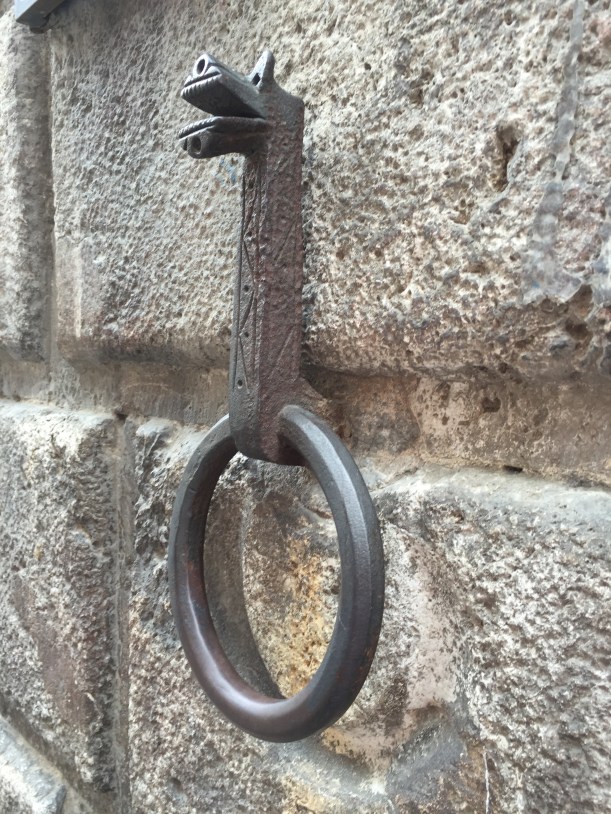
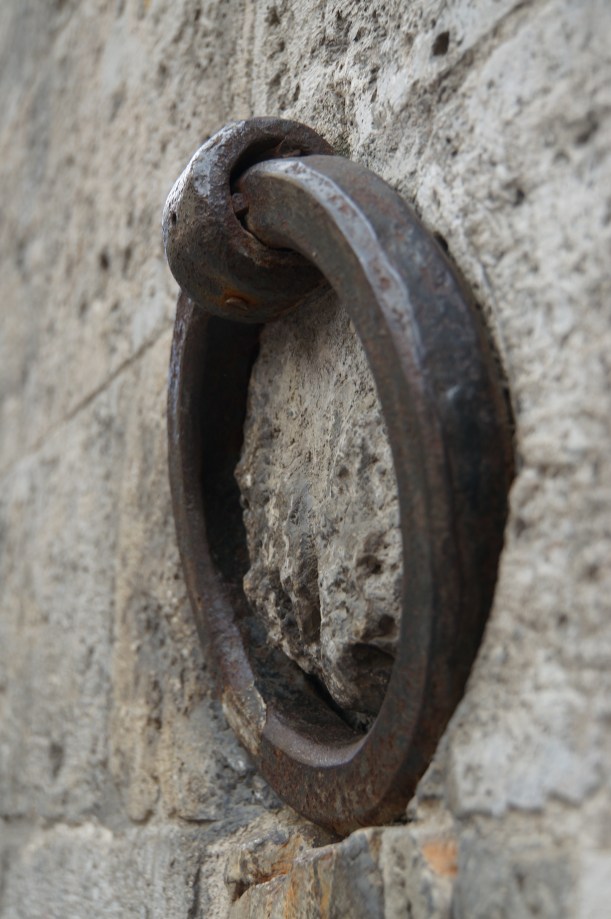
The other tidbit that we found interesting was the ironwork horse hitches that were sprinkled all over the city.  Obviously owners would need to tie their horses up when they “parked” them outside their homes and businesses, but the detail and humour of the ironwork itself certainly caught the attention of me and my camera lens.

IMG_7527

DSC02629 (1)

IMG_7525

DSC02634

From Siena we headed off to San Gimignano.  Stay tuned for more on that…

IMG_7586IMG_7587


1 Comment

Planes, Trains and Automobiles…a day in Cinque Terre

Its been about three  months since we left off on our Euro adventures. Since then the air here has cooled, snow has fallen and the air of the holiday season is upon us. And, three months ago I had taken on the task of wrapping up the blogging for our final few cities and clearly have not be on top of that responsibility.

You’ll recall mid-trip we were weathered out of Switzerland, allowing us the opportunity to arrive in Forence sooner and, based from that wonderful city, day-trip out to a number of near-by locations with our extra days.

So, off we treked one morning to the Cinque Terre which is located on the coastline of the Italia Riviera, west of La Spezia.  As my usual source of wikipedia describes it “The Five Lands” comprises five villages: Monterosso al Mare, Vernazza, Corniglia,Manarola, and Riomaggiore. The coastline, the five villages, and the surrounding hillsides are all part of the Cinque Terre National Park and is a UNESCO World Heritage Site.

IMG_7210

Cinque Terre – in reality – cannot be seen in any great depth in a day, even a long one so we decided to take our first organized excursion to maximize our footprint.  We left Florence on a Greyhound-style bus at dawn and drove for about 90 minutes to arrive at our starting point.  I am told we past some of the Italian marble quarries, however, I slept right through that. Vacation’s are exhausting!

What sets Cinque Terre apart from many of the tourist destinations we have visited is the lack of tourism development and don’t misunderstand me when I say this is not a bad thing.  While the cruise industry, sadly, is changing the foot traffic dramatically, those tourists arrive (in fairness as we did as well) en mass, and march through the 5 villages so quickly there is very little time to make a significant economic impact – eating in restaurants, staying in hotels and spending in the little shops along they way. The locals struggle with the increase in people traffic and the wear and tear of all those feet, especially because they don’t actually leave that money behind for those trying to earn a living.  But at the same time, while clearly tourism was an important part of the locals & their livelihood, we didn’t get the sense there was desire for mass commercialize and over-development.

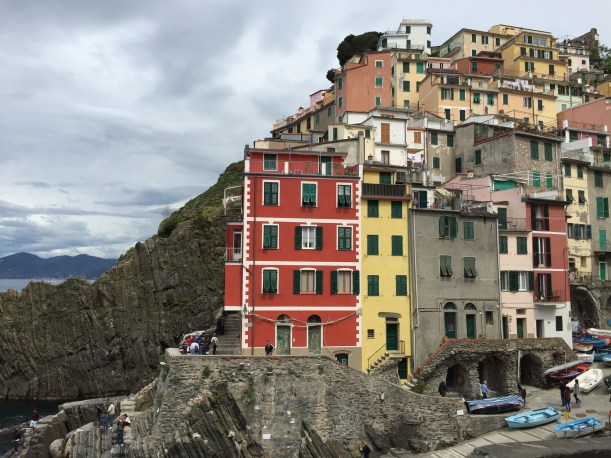
When one thinks of Cinque Terre you inevitably picture beautifully painted structures and terraces precariously built on the steep rugged coastline that history says would help guide the fishermen home.  They stretch all the way up to the cliffs that overlook the water.  What also makes Cinque Terre unique – and one of the ways it manages to sustain modern impacts is the connection of the villages by walking paths, trains and boats. Cars – and buses like ours – cannot reach them from the outside. We experienced all of these modes of transportation in our tour.

DSC02184

Wikipedia details the history better than I could ever summarize – “the first historical documents on the Cinque Terre date back to the 11th century. Monterosso and Vernazza sprang up first, whilst the other villages grew later, under military and political supremacy of the Republic of Genoa. In the 16th century to oppose the attacks by the Turks, the inhabitants reinforced the old forts and built new defence towers. From the year 1600, the Cinque Terre experienced a decline which reversed only in the 19th century,thanks to the construction of the Military Arsenal of La Spezia and to the building of the railway line between Genoa and La Spezia. The railway allowed the inhabitants to escape their isolation, but also brought about abandonment of traditional activities. The consequence was an increase in poverty which pushed many to emigrate abroad, at least up to the 1970s, when the development of tourism brought back wealth.”

The variation of house colors is because while fishermen were doing their jobs just offshore, they wanted to be able to see their house easily. This way, they could make sure their wives were still home doing the wifely duties. Most of the families in the five villages made money by catching the fish and selling them in the small port villages. Fish was also their main source of food.” Clearly femininsm had not yet reached these fishing villages….

DSC02473

In 2011 terrible rains caused flooding and mudslides, killing several and creating signicant damage to Vernazza and Monterosso al Mare.  It also washed popular trails that allows you to walk from village to village – something that with more time we would have loved to have done. Sentiero Azzurro (“Azure Trail”), connects the five villages. The trail from Riomaggiore to Manarola is called the Via dell’Amore (“Love Walk”). The stretch from Manarola to Corniglia (still closed in June 2012 for ongoing repairs since the October 2011 damage) is the easiest to hike, although the main trail into Corniglia finishes with a climb of 368 steps. (source: wikipedia)

DSC02185

DSC02197


DSC02194

DSC02433

Upon arrival at Manarola,  our first of the five cities that make up the village our tour guide – who I can only describe as an umbrella weilding maniac – ushered us off the bus and marched us to our second form of transportation for the day – the train.  Her rationale was that if we didn’t move it we would be trapped behind all of the other hundreds of tourists swarming the parking lot.  So we booked it down past lovely gardens, old buildings and, for Justified fans, Joelle Carter and an unidentfied man, unpacking their Fiat for a few days in a secluded villa.

DSC02208

From there we spend the day going from village to village – the train taking us to our second location where we had little time to wander, snap some photos and then – unbrella waving – we were herded on to the top of  ferry boat and toured along the breath taking coastline where you could really get a sense of the impressive coastline and imagine the painstaking work it would have taken to build up the coastline to the cliff points.

Our ferry pulled into the marina shortly before lunch in Monterosso al Mare and we had the opportunity to chat over pasta, fresh bread, wine and seafood with some of our fellow tour-sticker wearing tourists. It is always interesting to hear others motivations to travel and the various “routes” people take when they do a trip like this – some had come via Ireland and London, others -like us – France.

IMG_7355

DSC02469DSC02452

After lunch we had time to wander about, so we toured a tiny “lemon festival” and explored our way up the hillsides and down into town. That is when the grey skies that had joined us that day, opened up and and sent us scurring for our afternoon cappuccino.

DSC02432

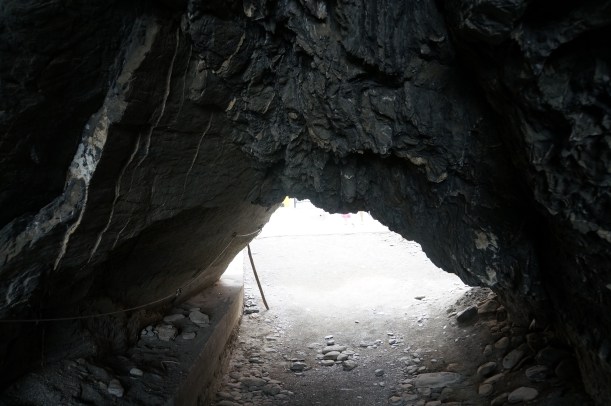
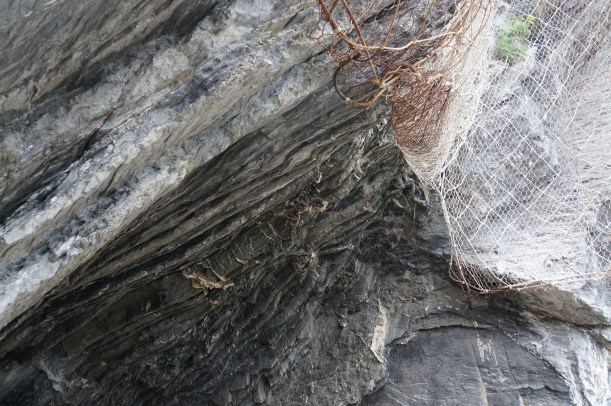
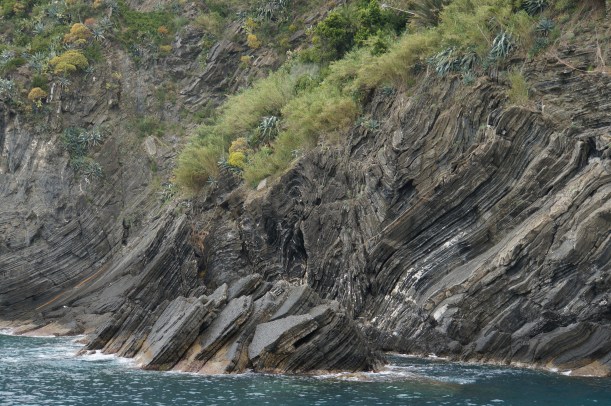
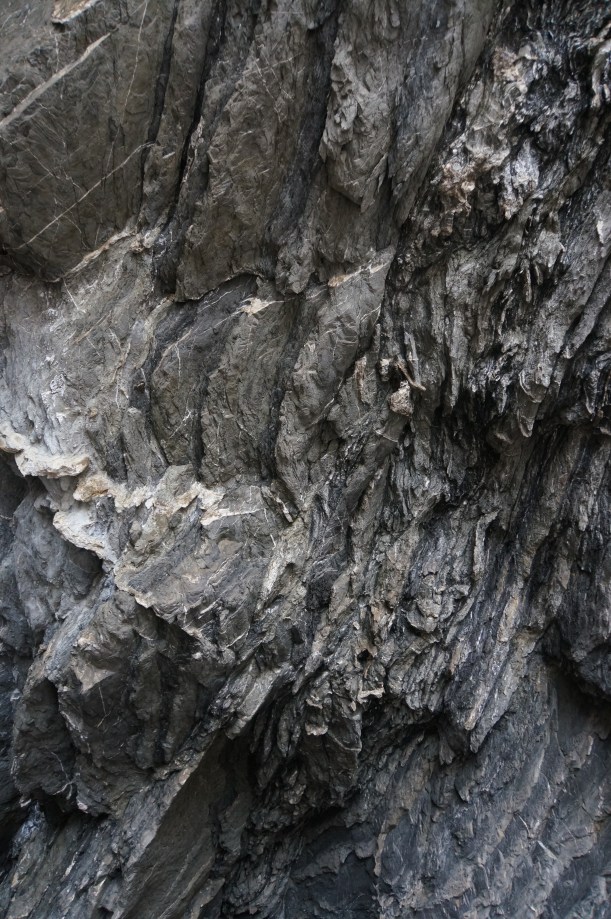
Meeting up with the group, we were next herded back onto the train which took us to our last stop. Along they way – against some pretty serious threats that had occured since daybreak not to do so – several folks were seperated from the tour. We carried on and ended our tour in Vernazza which can best be described as a harbour watched over by a ruined castle and an old church. A bar is perched off the edge of the castle. There are little shops to wander through and a breakwater of rocks to scramble across to get a better look at the little boats bobbing up and down in the water and the late day sun (as much as there was) bouncing off “some of the coolest rock walls….geology!” we had seen that day.

DSC02458

IMG_7333

DSC02258


DSC02509

DSC02498

DSC02503

DSC02483

DSC02505

The drive back to Florence was quiet as the scenary zipped by and darkness began to fall. Astrid was able to point out – and explain the significance of – the quarries I had missed on the way out that morning.  It was also a chance to reflect on the scenes of the day and our usual “Would one go back?” assessment of any rushed day trip. The consensus was yes. It is the kind of place you could go and Slothcation.  Find a little villa, settle in and just wander from village to village – hike, read, wander, sun on the beach (in better weather) and just ‘vacation’.

IMG_7197


Leave a comment

Leaning Towards a Half Day in Pisa….

Pisa is a one-hour drive from Florence and a quick hop by train to Pisa Centrale. So we decided to make a quick trip so that Astrid could see this leaning marvel in all its glory.

She can offer some additional details – and video – on the staircase that winds its way to the top & the view from above, as I chose to stay below (with both feet firmly planted on solid ground), scribble out some postcards and people watch in the sun.  What she did tell me – upon her return to safe, solid earth – is that as you ascend the staircase what is most interesting is that you don’t feel “on a tilt”.

IMG_7848

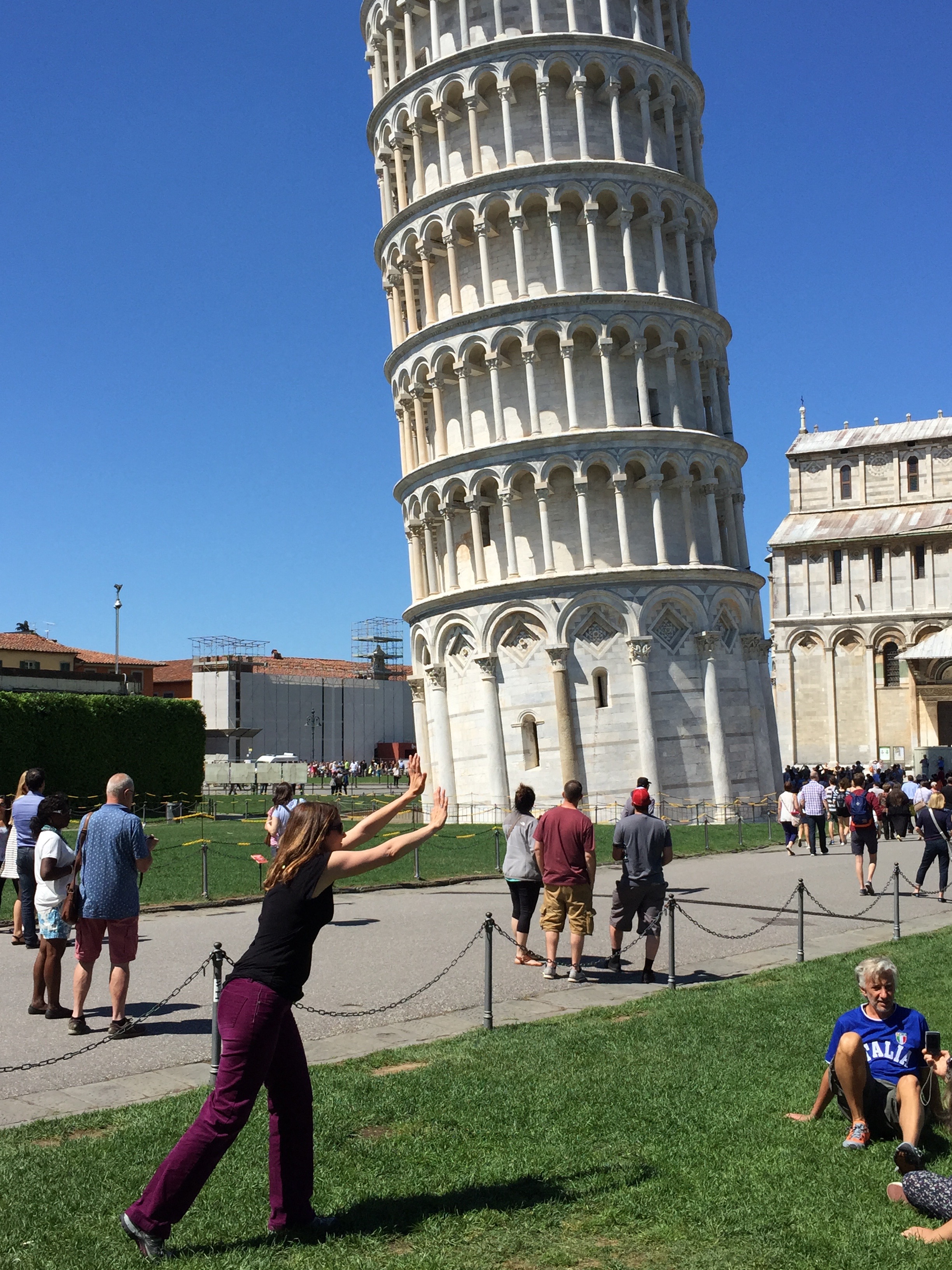
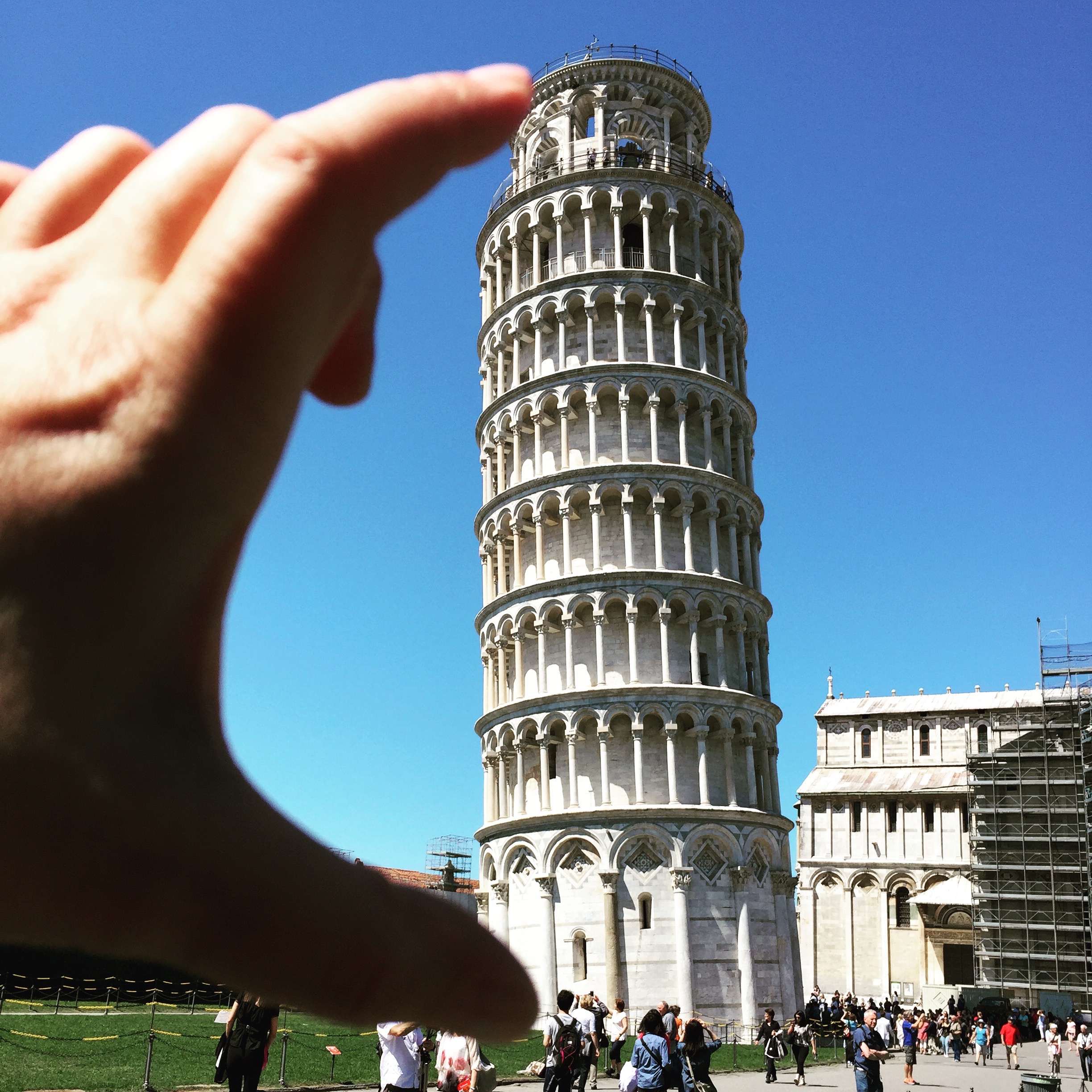
One of the more fun things to watch is all the tourists trying to find a new way to do “this”

Wikipedia explains that “Pisa (pronounced pee-zaah) in Tuscany, on the right bank of the River Arno on the Tyrrhenian Sea.  Although Pisa is known worldwide for its leaning tower (the bell tower of the city’s cathedral), the city of over 89,523 residents (around 200,000 with the metropolitan area) contains more than 20 other historic churches, several palaces and various bridges across the River Arno. Much of the city’s architecture was financed from its history as one of the Italian maritime republics.”

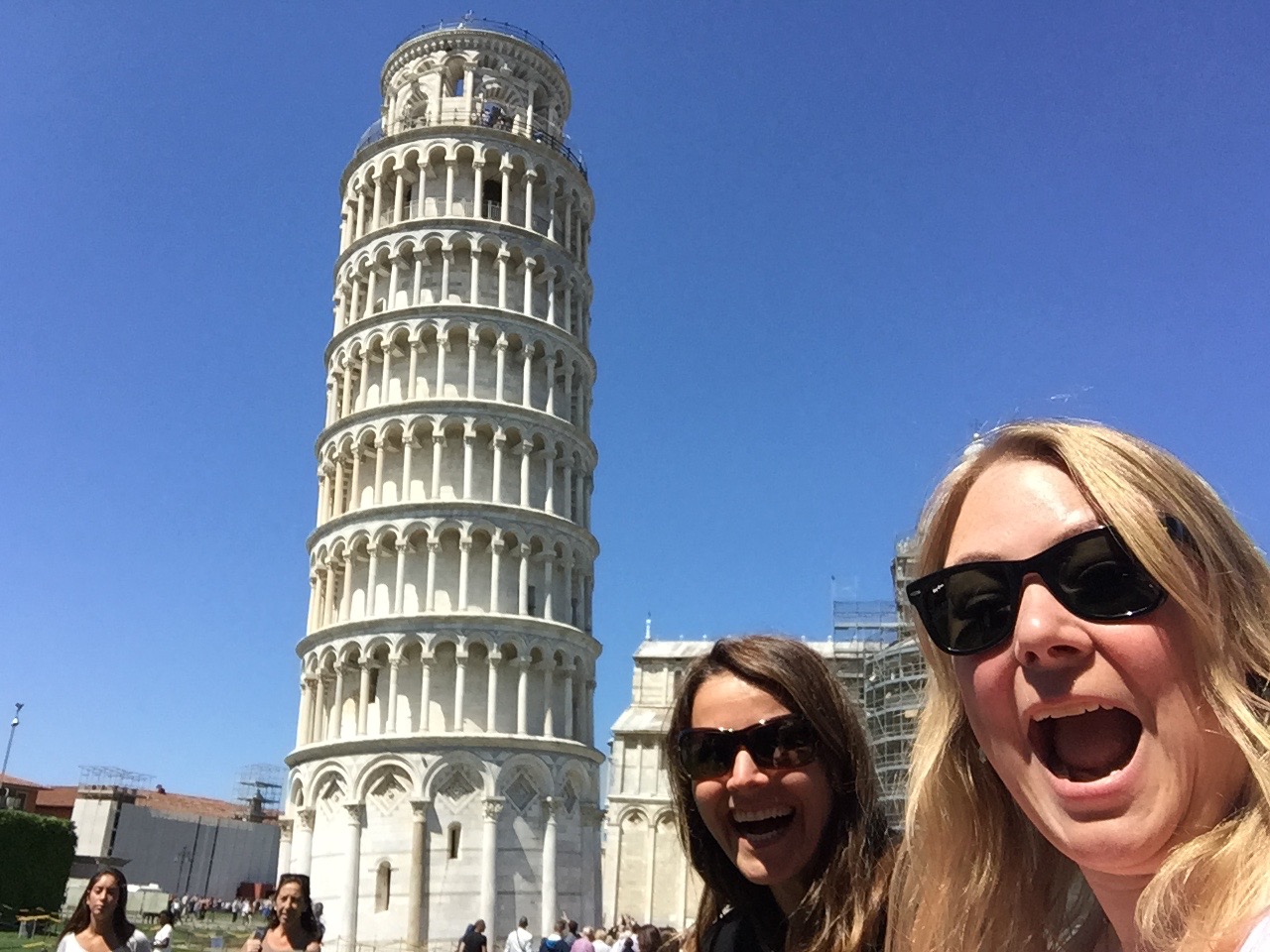
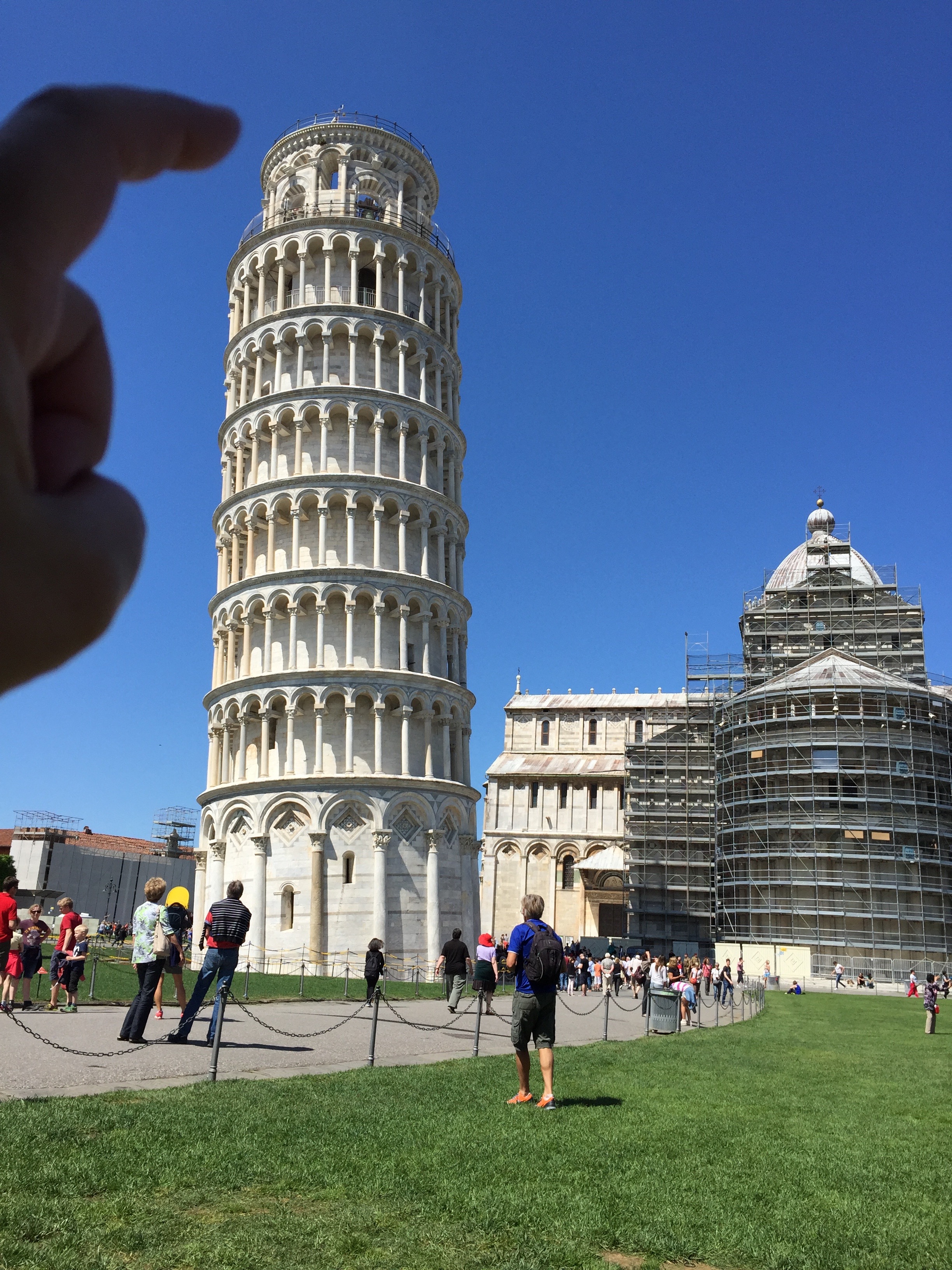
Ironically as you try to capture its "lean", it looks rather straight across the grassy knoll.

Ironically as you try to capture its “lean”, it looks rather straight across the grassy knoll.

The story of how it was built

Begun in 1173, it took over 800 years to complete the tower, made of limestone and lime mortar, and includes a variety of elements in its design such as columns, arch’s and carvings. According to this source, “for medieval Europe, these types of design themes and construction processes were way ahead of their time, resulting in a structure that has remained timeless in appearance through the ages.”

The same source also tells us “The tower was built with limestone and lime mortar, though the exterior of the tower is covered in marble. Ironically, the limestone is probably why the tower has not cracked and broken the rock is flexible enough that it can withstand the pressures placed on it by the lean. It is doubtful that the original architect, Bonanno Pisano, had any idea that the qualities of limestone would play a role in preventing its ultimate collapse.” (Junior geologist tidbit included here!)

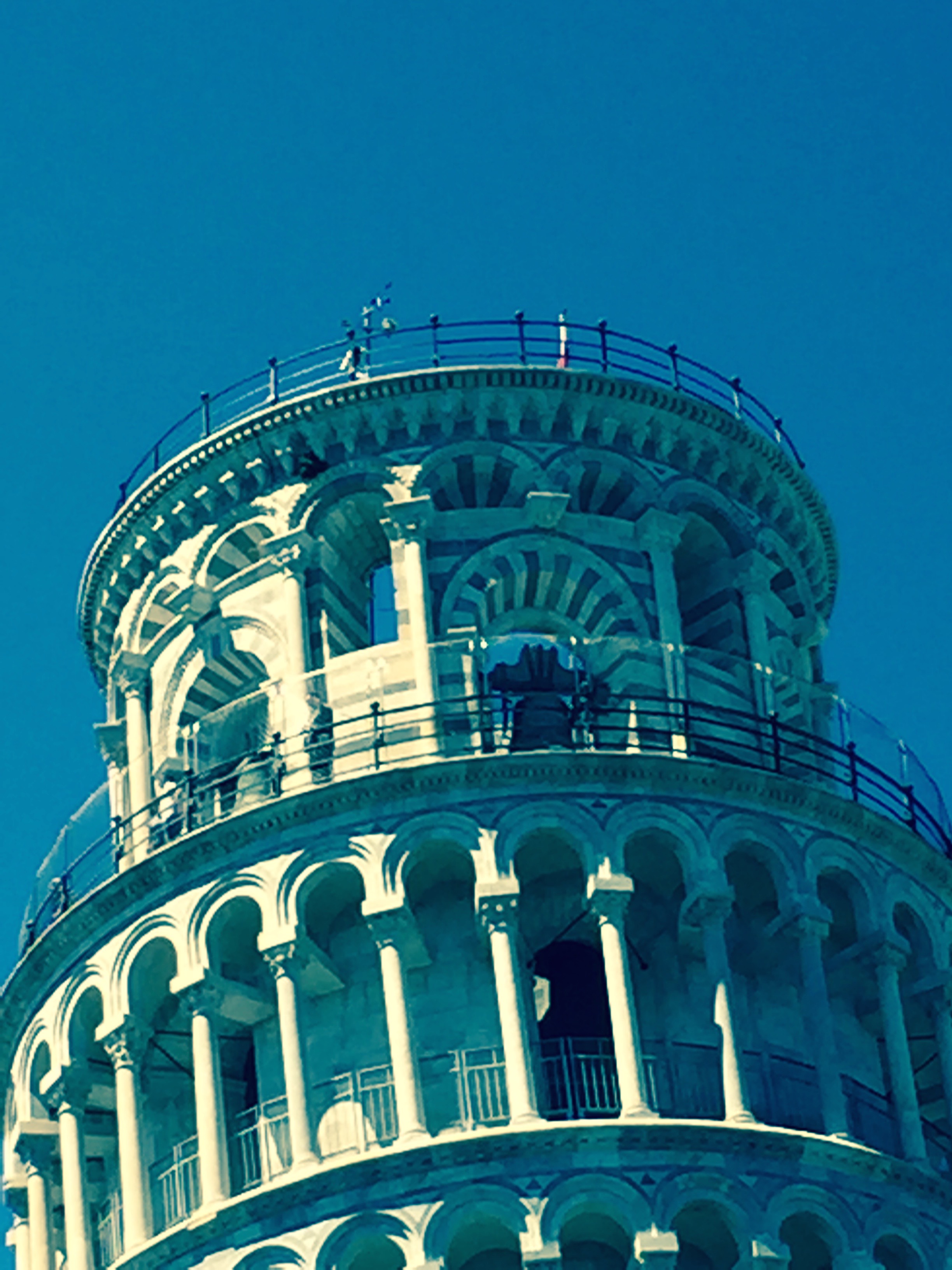
The detail is captured in this close up.

The detail is captured in this close up of the tower. Do you see Astrid waving down at us?

The original plan was that the tower was to be part of a cathedral.  Our historical source tells us that ” Five years after the initial construction of two floors it began to lean once the third floor was completed. At the time the cause of the lean was not known, though it was discovered many years later that the lean was the result of the tower being built on a dense clay mixture that was unable to fully support the weight of the tower.”

IMG_7844

So construction stopped – for about 100 years – thinking things would settle out and then they’d be able to course-correct the problem. Though, as four more floors were constructed more mistakes were made by the architects and instead of fixing the problem, the tower began to tilt even further.

The last addition was the bell chamber in 1372 and then it sat, as is, until the 19th century. There were further efforts to correct the tilt – one involving the digging of a pathway (spoiler alert: it flooded & tilted further) and then some drilling was done to the foundation and cement was added but guess what happened?  Yup, cement created a counter-weight and over she went even further. #timber

"I'm crushing yer head".  (Canadian KITH fans will know what I mean)

“I’m crushing yer head”. (Canadian KITH fans will know what I mean)

She's riiighht 'there'.

She’s riiighht ‘there’.

In 1990 – around the time grunge took off in Seattle and the millennial generation began its, umm, invasion – the Leaning Tower of Pisa closed for more construction. This means this structure, in some way, shape, or form, has been in a state of “Pardon Our Dust” for about 800 years. Suddenly, that bathroom renovation doesn’t seem so far behind, now does it?


Leave a comment

Math, Science, Fashion, Art…oh my!

Bloggers Note: The summer in Calgary has been pretty spectacular so Maps & I have been busy spending time outdoors & have neglected our blog a bit.  Trying to get back at it today.

When I visited Italy in 2013, I ended up having a couple of spare days before I flew out of Rome back to Canada. After doing a Facebook poll – as you do – the overwhelming advice was to high-speed train it up to Florence for the day. So, I was on the first train out, did some speed-sightseeing, overdid it on leather goods shopping, and took the train back to Rome in the early evening. It was a great day, but I knew that I had not done the beautiful and historic city justice. Thus, Astrid & I put Florence on the list for our Euro-Adventures.

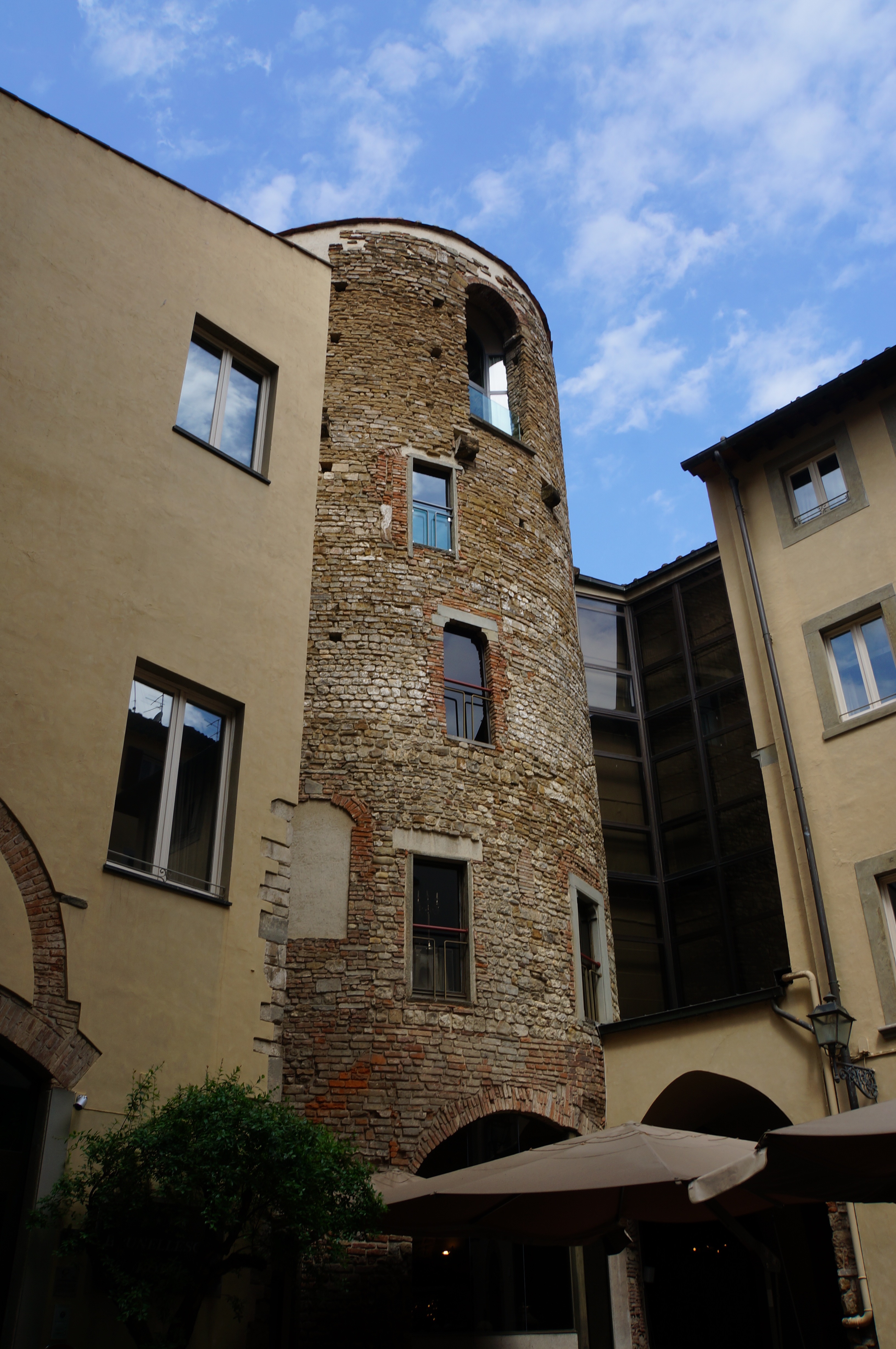
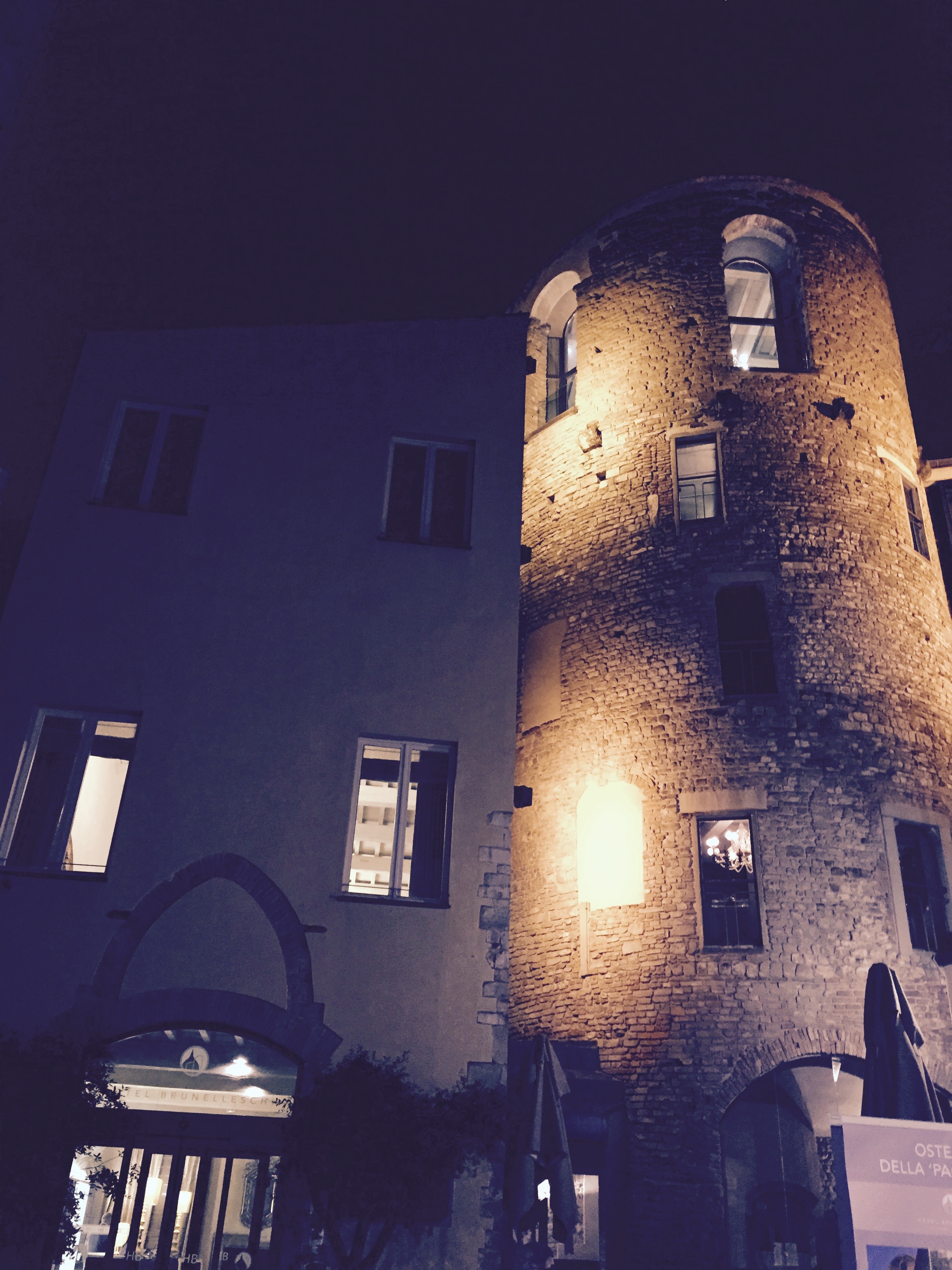
When we last met, I had described how we had arrived in a monsoon-like rainstorm and found ourselves standing in a much nicer hotel than we thought, dripping rainwater on a marble lobby floor from our big backpacks. Well, as luck would have it, the hotel was oversold and the room we’d booked online the night prior was not available. While you wouldn’t think that was good news, turns out the front desk agent (who was Dutch and immediately bonded with Astrid) had a trick up his sleeve – and off he marched us to what we thought was the attic of the hotel. Turns out, they were “upgrading” us to a 1-bedroom suite with a direct view overlooking the city of Florence and a spectacular view of The Duomo. Add in the walk-in closet for pack storage, an espresso machine, a pair of super comfy twin beds and a waiting complimentary bottle of champy and, well, I am not sure in that moment we ever planned on leaving! When you travel with friends, a huge part of doing that successfully is space and downtime. This hotel allowed for both. But, it was not without its failing – it was, by far, the worst wi-fi we had during the entire trip. Apparently, 500-year-old structures were not designed for me to watch True Detective on my iPad after a long day of sightseeing.  This is also why we lost a bit of momentum on our blog mid-trip. Part of the hotel was formerly a women’s prison so that added an extra little bit of excitement to our stay. While certainly not a hotel we would have normally chosen if we had planned further out (slim pickings the night before on the travel sites), with the upgrade we certainly got far more for our dollar than we had expected. Check it out here:
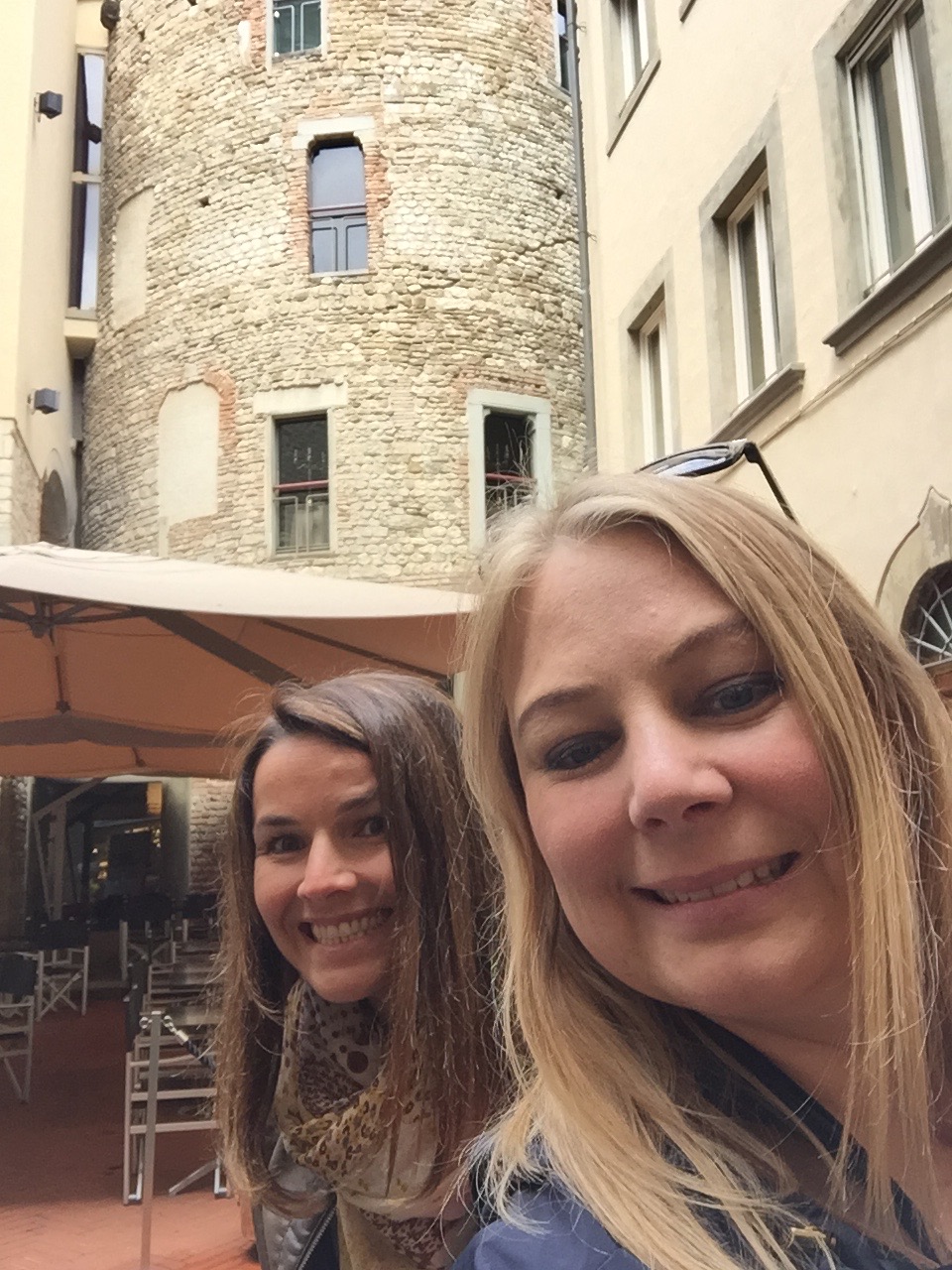
The tower which housed female prisoners - a history landmark within our hotel

The tower which housed female prisoners – a history landmark within our hotel
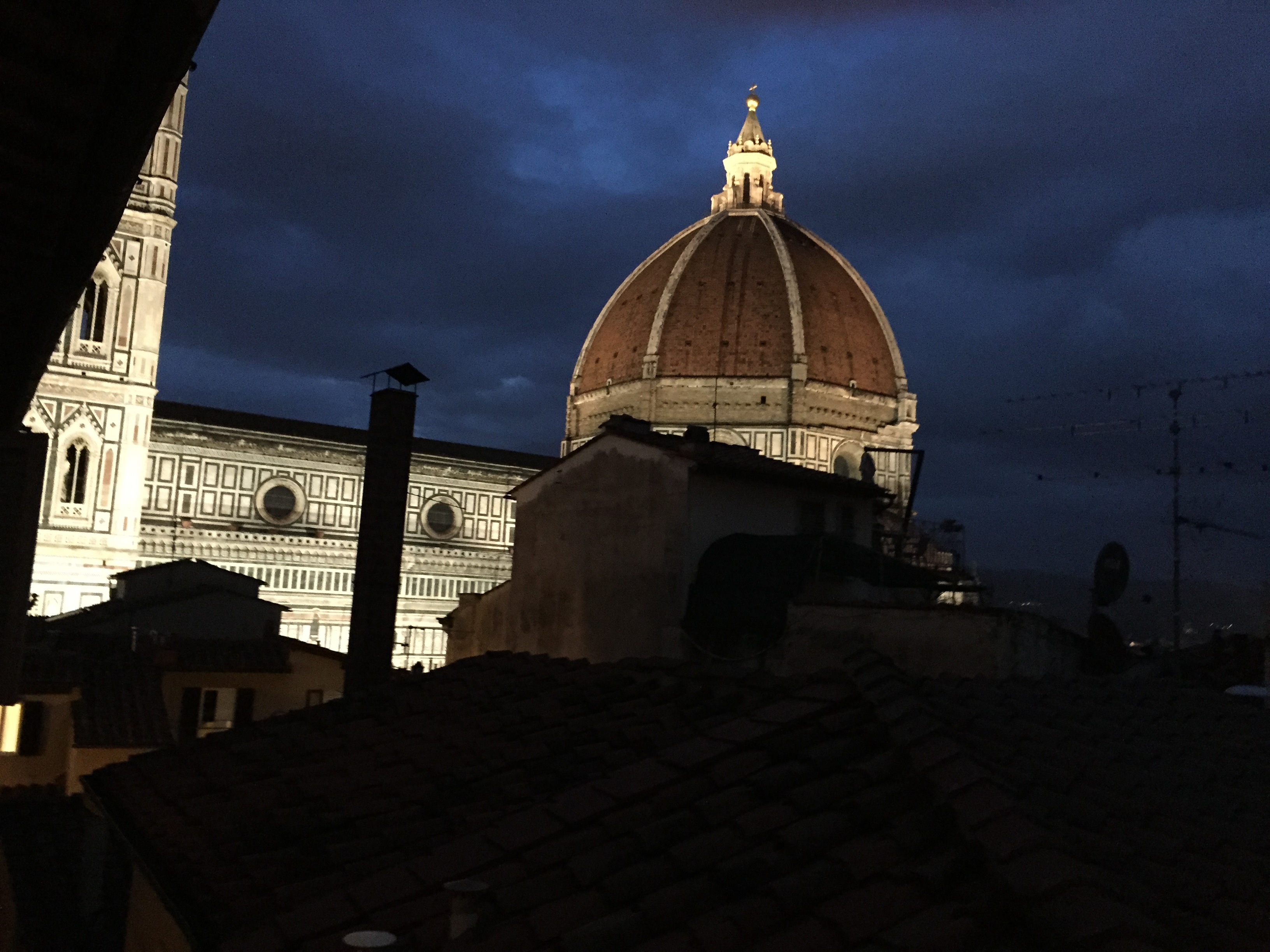
Our hotel, lit at night.
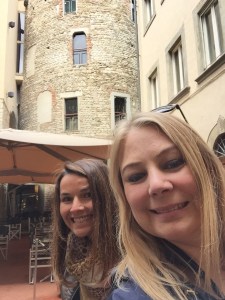
Our hotel, lit at night.

Astrid and Cecily about to head out on an excursion.
Astrid and Cecily about to head out on an excursion.

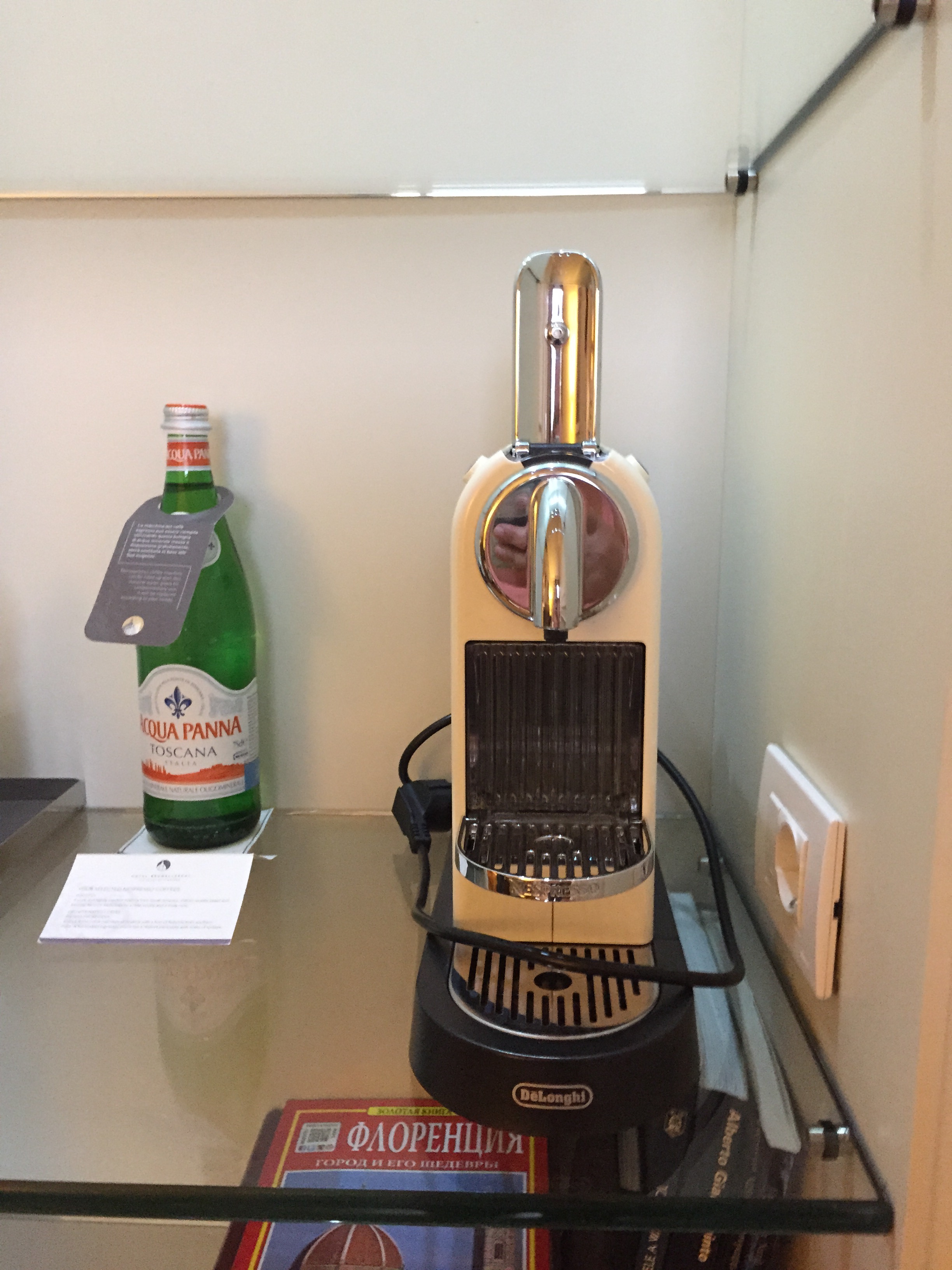
The espresson maker in our amazing hotel room.

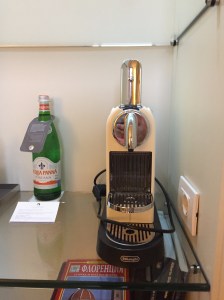
The espresso maker in our amazing hotel room.

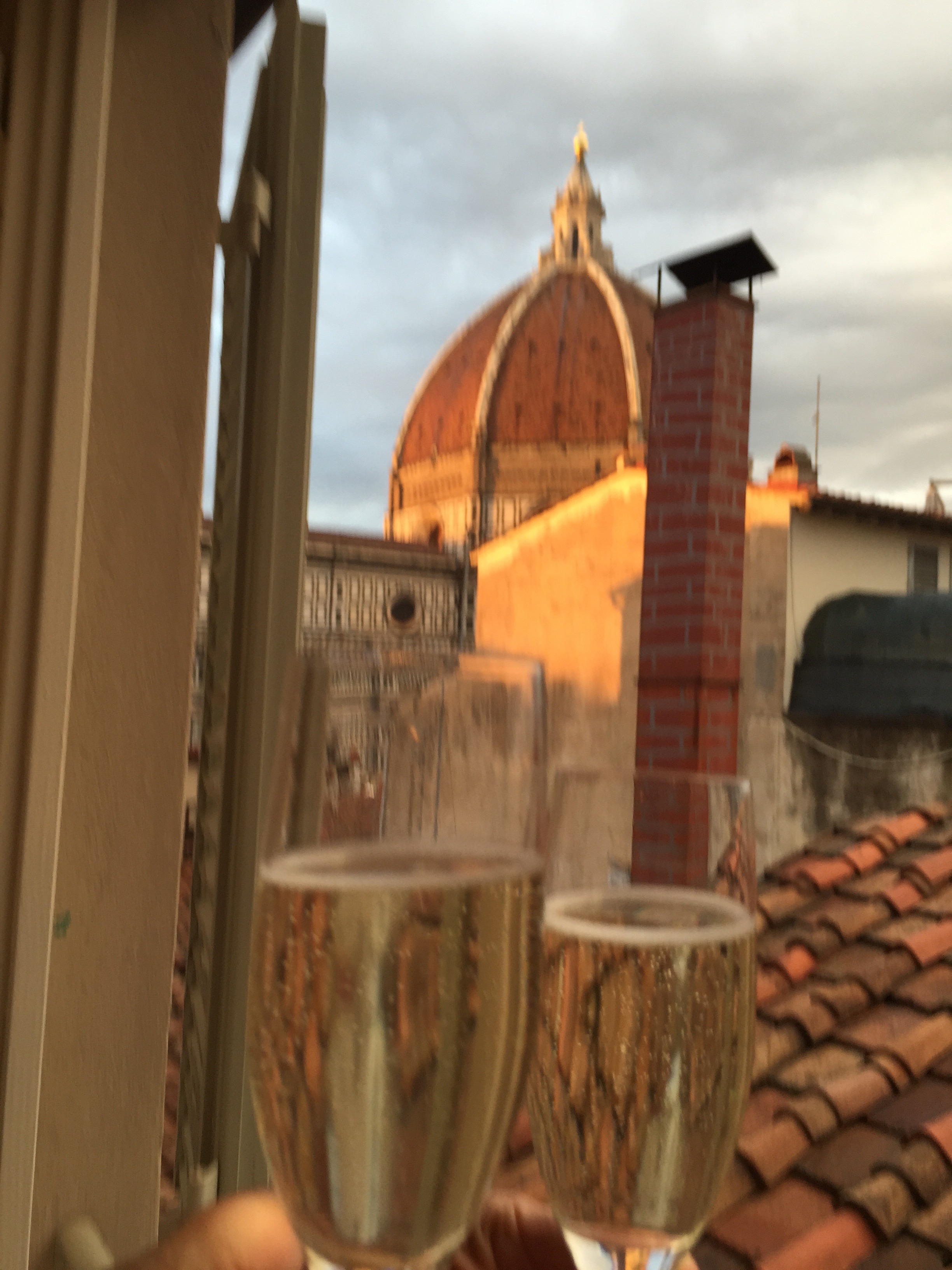
Toasting our amazing view with the complimentary (yet again) bottle of champy  - the Duomo in the evening light in the background.

Toasting our amazing view with the complimentary (yet again) bottle of champy – the Duomo in the evening light in the background.

Florence (or Firenze) itself is a wonderful city – with 382,000 residents and more than 1,520,000 in the metro area it is the most populous city in Tuscany.  It is the capital city of Tuscany and the province of Florence. Politically, economically and culturally it was likely one of the more important cities in Europe for about 250 years from about the 1300’s to the mid 1500’s.
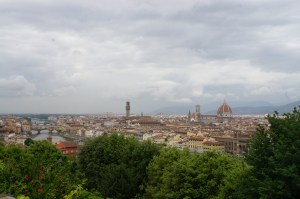
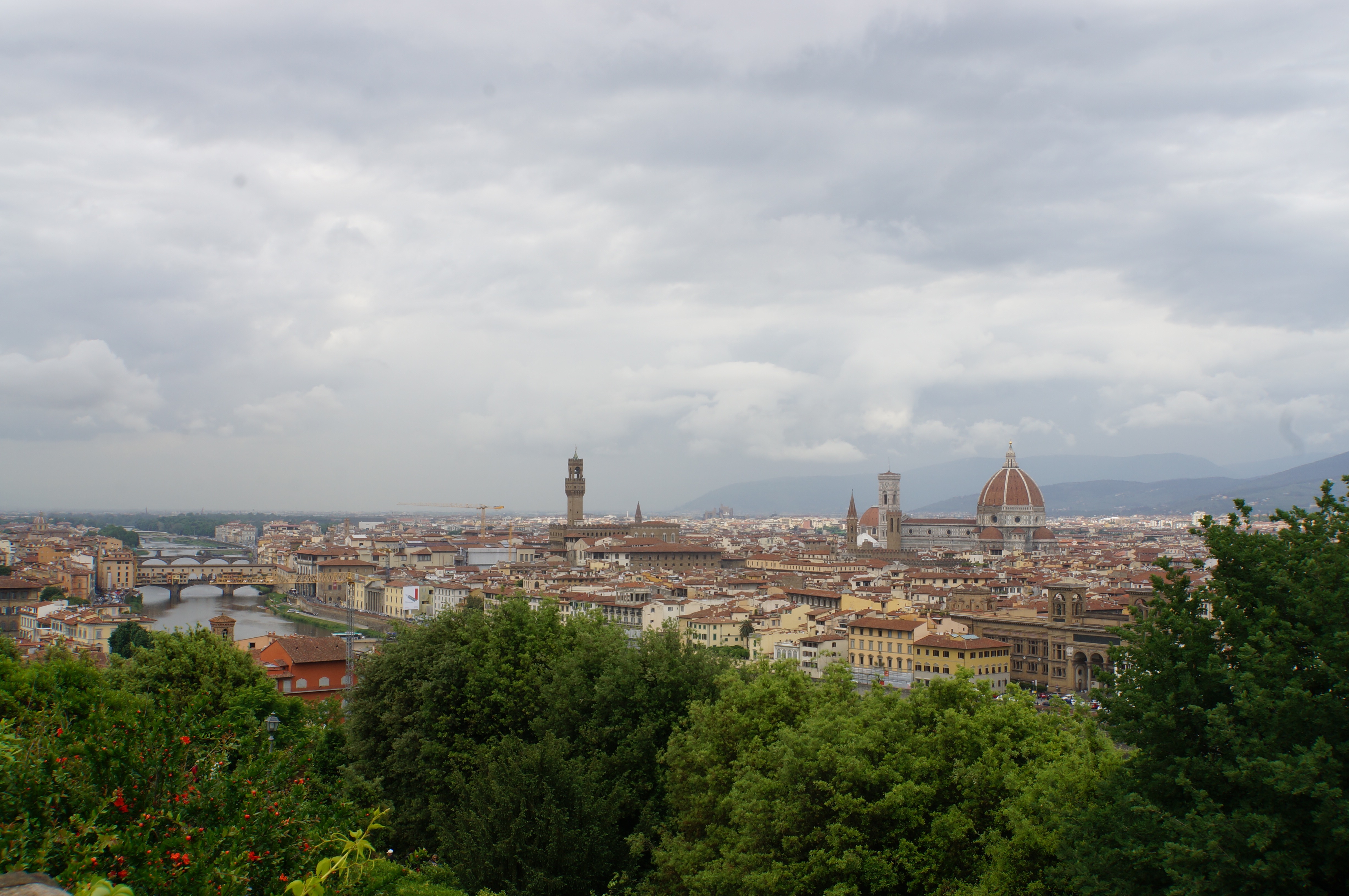
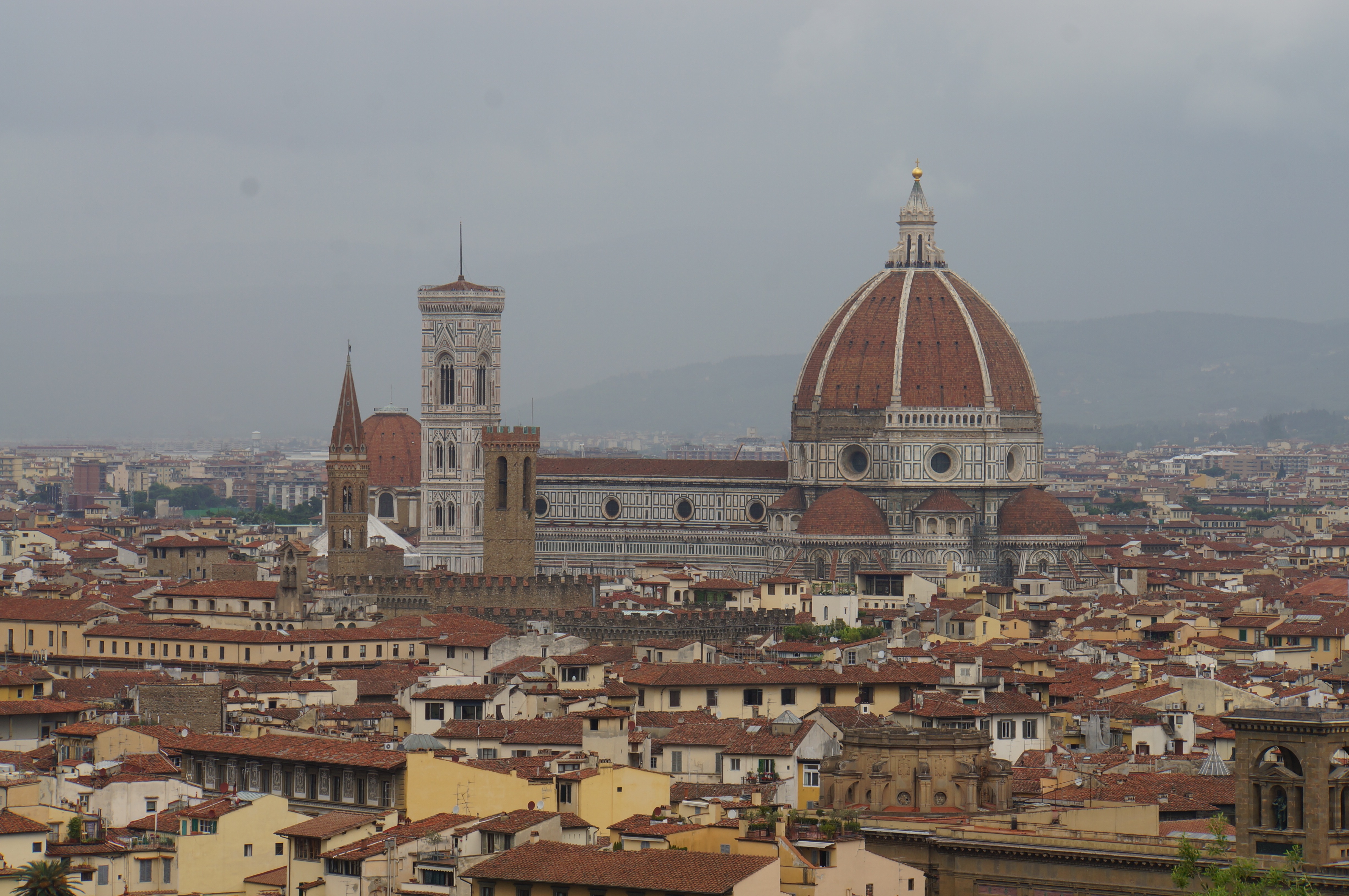
A birds eye view of Florence

A bird’s eye view of the city

According to wiki travel “Florentines reinvented money in the form of the gold florin. This currency was the engine that drove Europe out of the “Dark Ages” a term invented by Petrarch, a Florentine whose family had been exiled to Arezzo. They financed the development of industry all over Europe, from Britain to Bruges, to Lyon, to Hungary. They financed the English kings during the Hundred Years War. They financed the papacy, including the construction of the papal palace in Avignon and the reconstruction of St. Peters and the Vatican when the papacy returned to Rome from the “Babylonian captivity”.
IMG_6506

IMG_6443

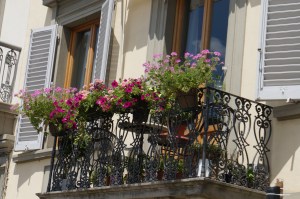
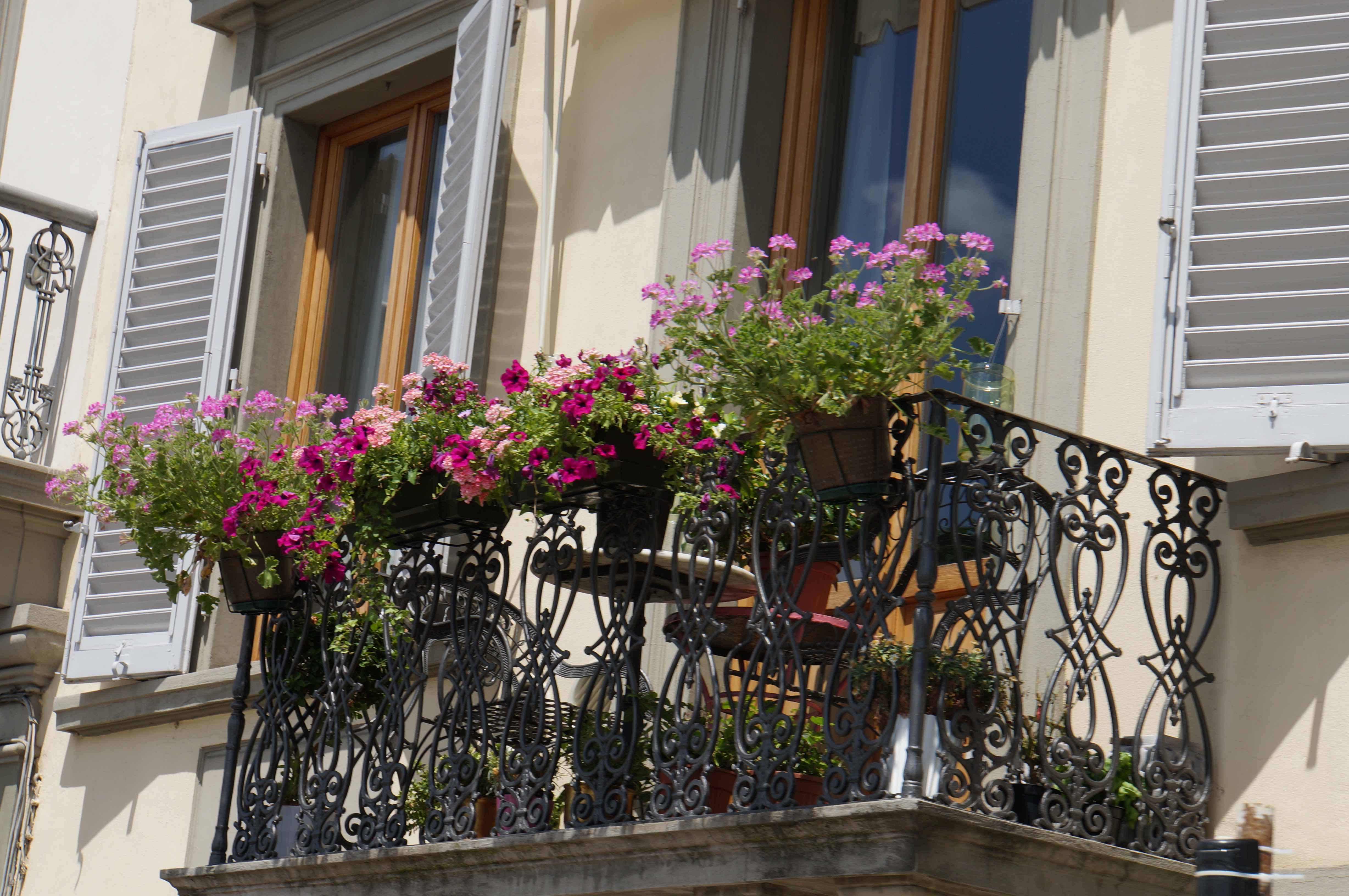
Colourful window boxes adorn the apartments around the city. Signs of spring

Colourful window boxes adorn the apartments around the city. Signs of spring

The Florentines, perhaps most notably Filippo Brunelleschi (1377-1466) and Leon Batist’Alberti (1404-1472) invented both Renaissance and neoclassical architecture. These architectural styles revolutionised the way Rome, London, Paris and every other major city in Europe from Barcelona to St. Petersburg were built.

Florentines were the driving force behind the Age of Discovery. Florentine bankers financed Henry the Navigator and the Portuguese explorers who pioneered the route around Africa to India and the Far East. It was a map drawn by the Florentine Paulo del Pozzo Toscanelli, a student of Brunelleschi, that Columbus used to sell his “enterprise” to the Spanish monarchs, and which he then used on his first voyage. Mercator’s famous “Projection” is a refined version of Toscanelli’s map, taking into account the Americas, of which the Florentine was obviously ignorant. The western hemisphere itself is named after a Florentine writer who claimed to be an explorer and mapmaker, Amerigo Vespucci.

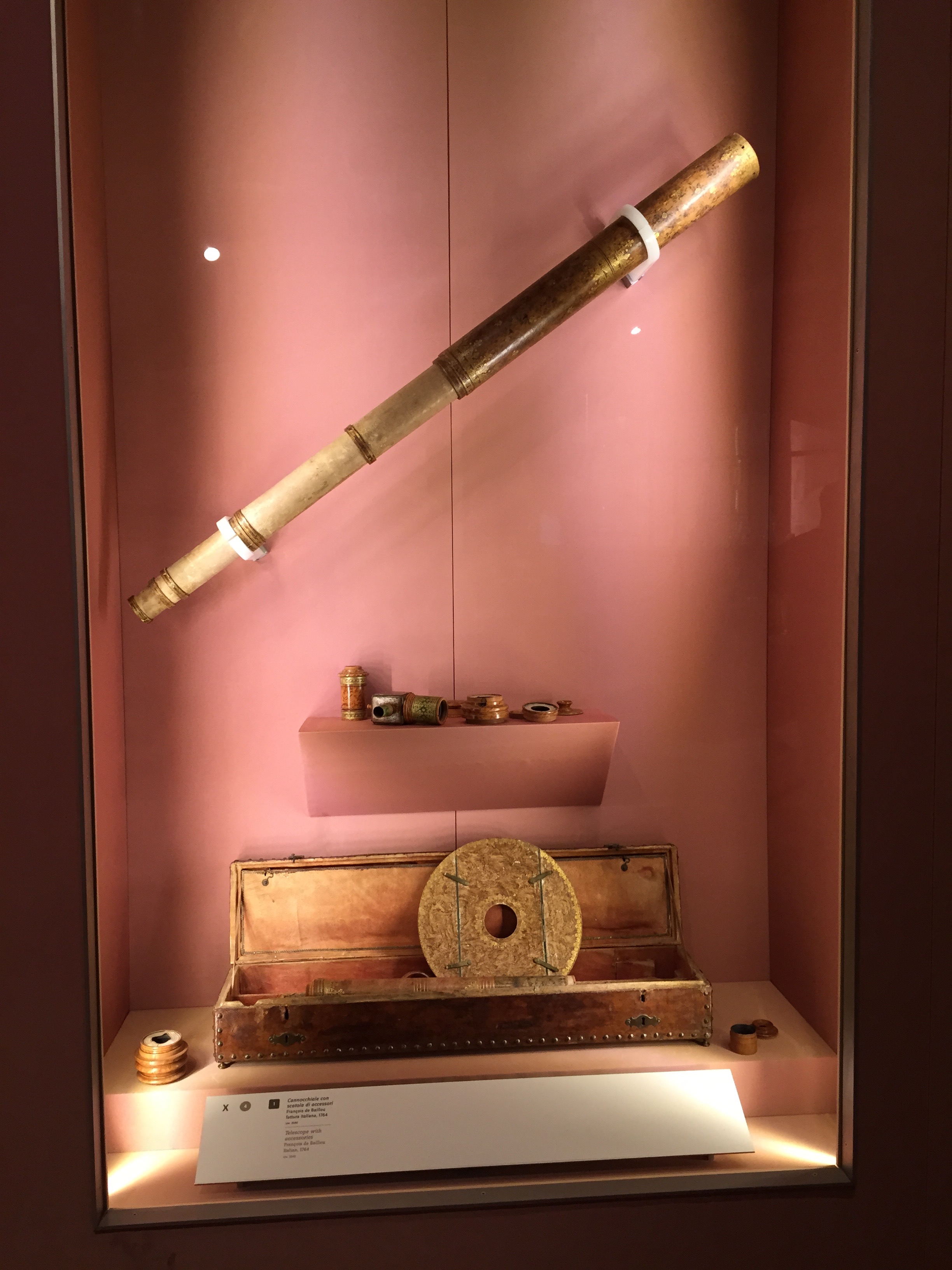
Gallileo and other scientists pioneered the study of optics, ballistics, astronomy, anatomy, and so on. Pico della Mirandola, Leonardo Bruni, Machiavelli, and many others laid the groundwork for our understanding of political science.”
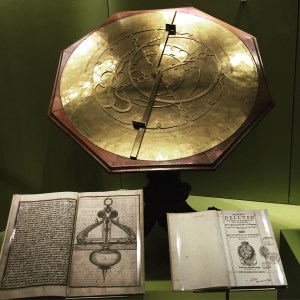
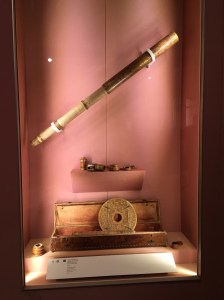
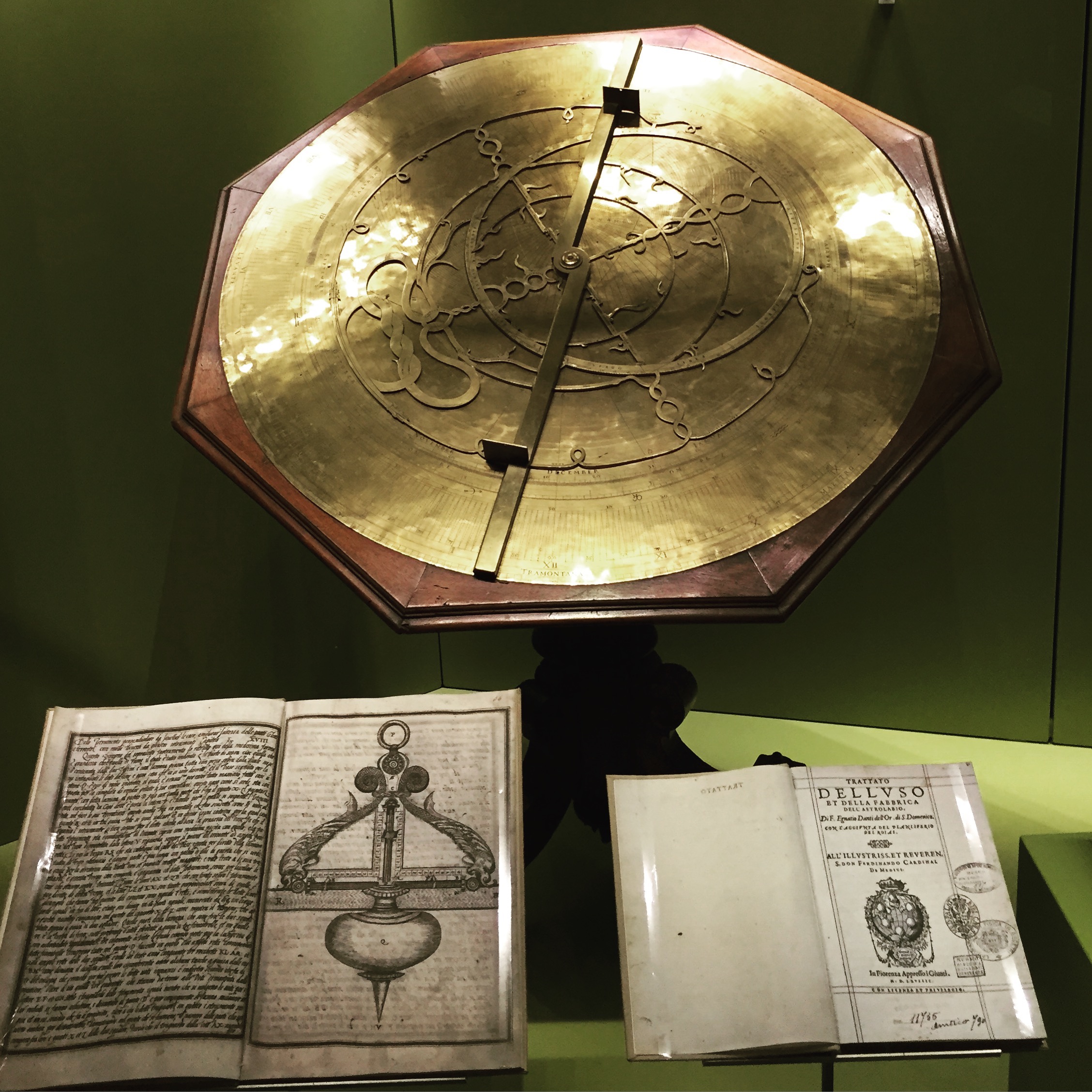
An Astrolabe...

An Astrolabe…

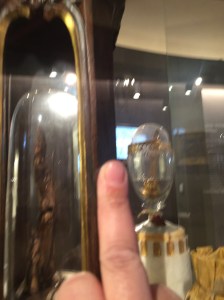
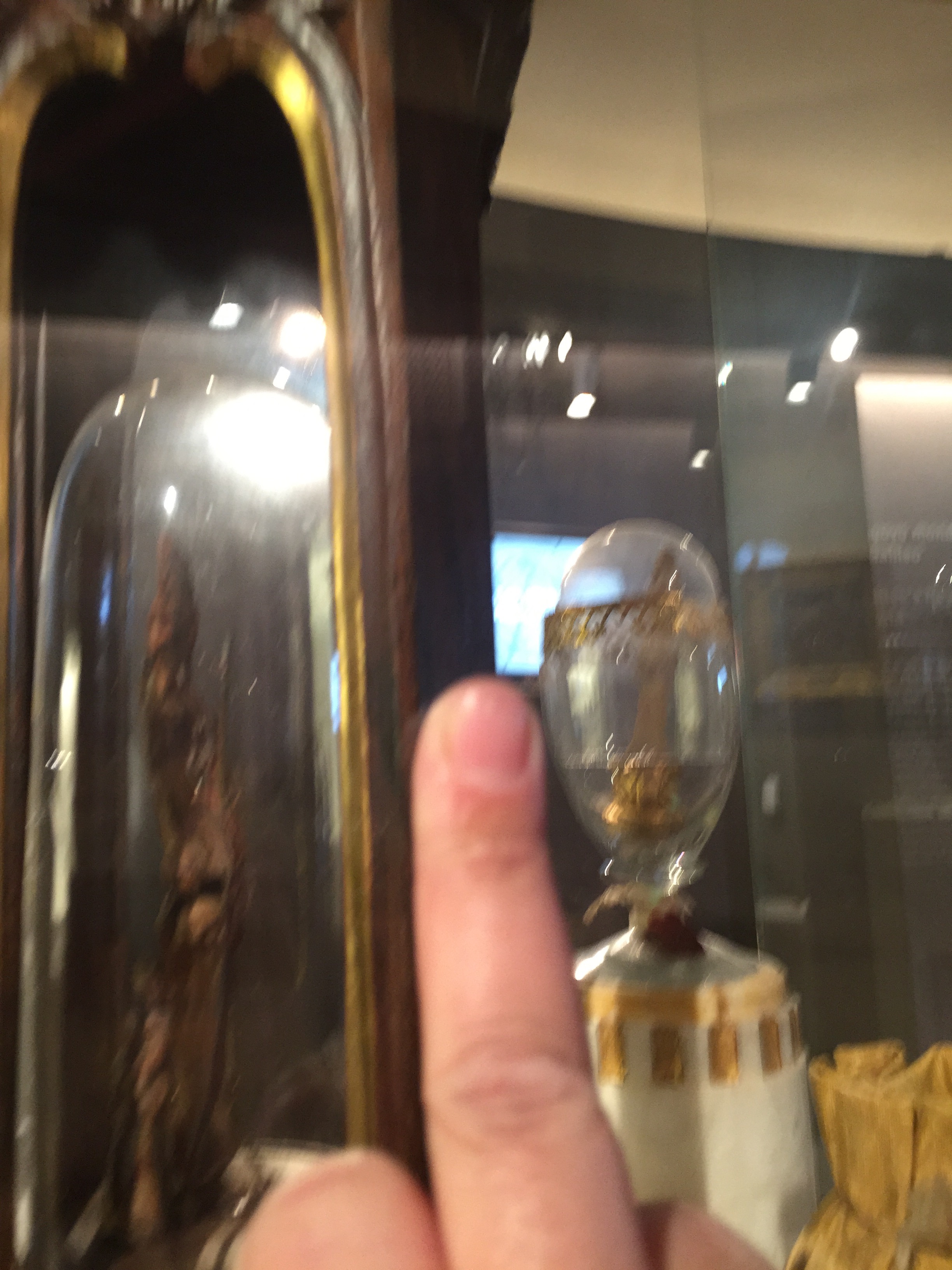
Galilaeo's middle finger...with mine.

Gallileo’s middle finger…with mine.

Galileo's telescope

Gallileo’s telescope

Tour guide after tour guide called it the birthplace of the Renaissance and it seemed as though there was much rebel rousing of political figures throughout its history such as a period of rule by the powerful Medici family and a number of revolutions – religious and republican. It was declared a World Heritage Site by UNESCO in 1982. And, if that all wasn’t enough to get this city of your bucket-list, opera was invented in Florence.
IMG_6432

Wiki travel will also tell us all about the Medici family – our taxi drivers and tour guides often saying comparing to what we would know today as ‘mafia’ (allegedly). The site says “And there were the Medici, perhaps the most important family that ever lived. The Medici’s changed the world more than any other family. Forget all the art for which they paid. They taught first the other Italians how to conduct state-craft, and then they taught the rest of the Europeans. Just to cite one example: Catherine de Medici (1519-1589), married Henry II of France (reigned 1547-1559). After he died, Catherine ruled France as regent for her young sons and was instrumental in turning France into Europe’s first nation-state. She brought the Renaissance into France, introducing everything from the châteaux of the Loire to the fork. She also was to 16th and 17th century European royalty what Queen Victoria was to the 19th and 20th centuries – everybody’s grandmamma. Her children included three kings of France, Francis II (ruled 1559-1560), Charles IX (ruled 1560-1574) and Henry III (ruled 1574-1589). Her children-in-law included a fourth king of France, Henry IV (ruled 1589-1610), plus Elizabeth of Hapsburg, Philip II of Spain (of Armada fame), and Mary Queen of Scots.”

DSC01698

Sightseeing ...

Sightseeing …

Florence is well known for Italian fashion and has a massive number of museums and art galleries. It would be impossible to remember it all, so for more depth ont the artists who called Firenze home, the wide array of museums available to explore and the famous works of art to be found in the city, visit our friends at Wikipedia to learn more.
DSC01887

Because we had done an itinerary adjustment whilst in Zermatt, we ended up being in Florence much longer than originally planned. Despite that, once we started making a list of the things we wanted to do, there wasn’t nearly enough time. We used Florence as our base for a number of ‘day trips’ outside the city, but also took advantage of the extra time to explore, eat well and – now that we only had one major stop left – a little bit of shopping for some leather goods.
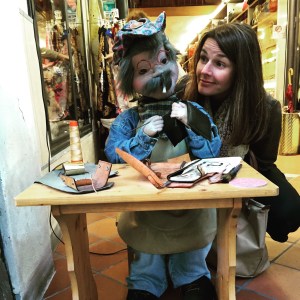
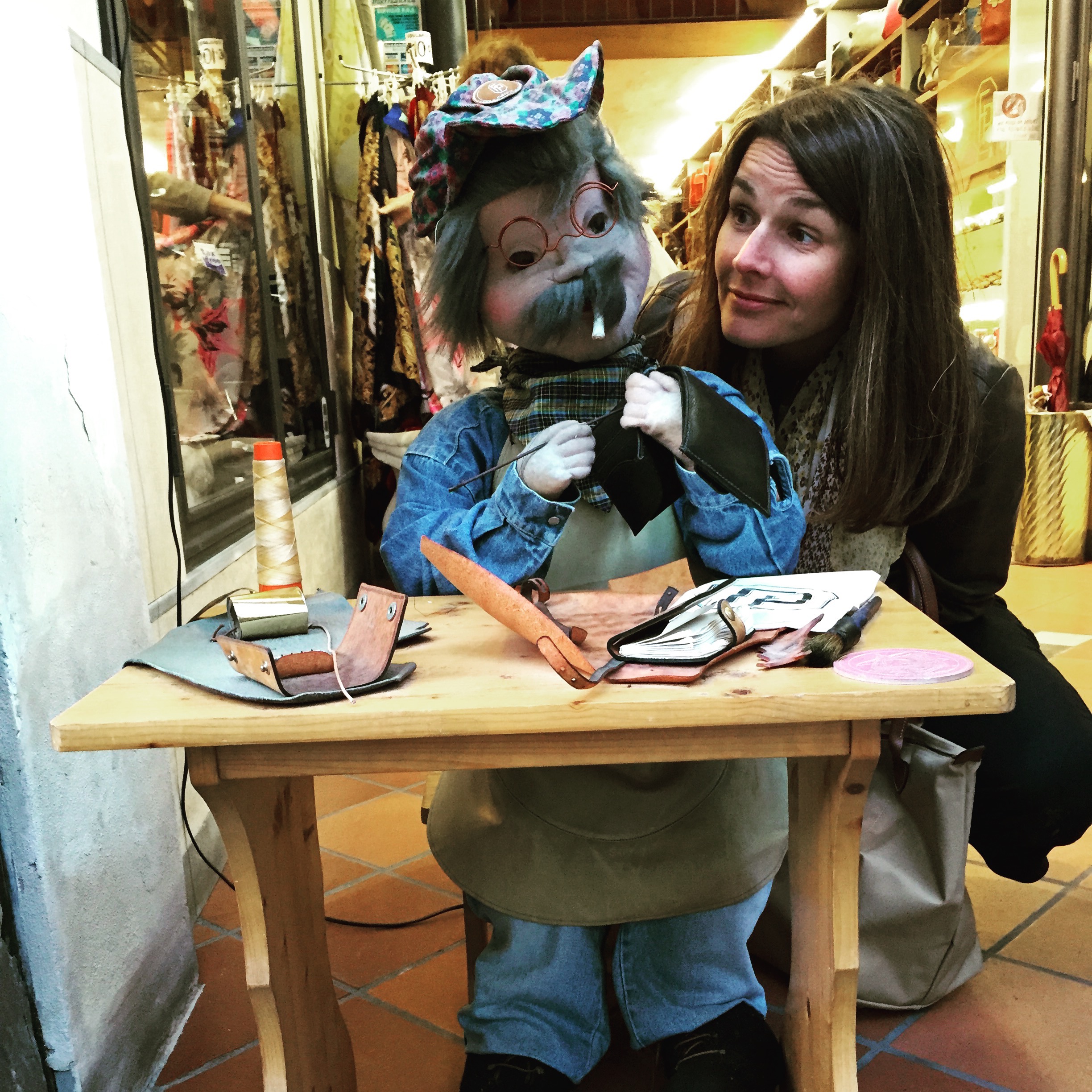
Astrid watching a local leather craftsman work.

Astrid watching a local leather craftsman work.

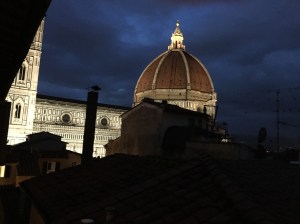
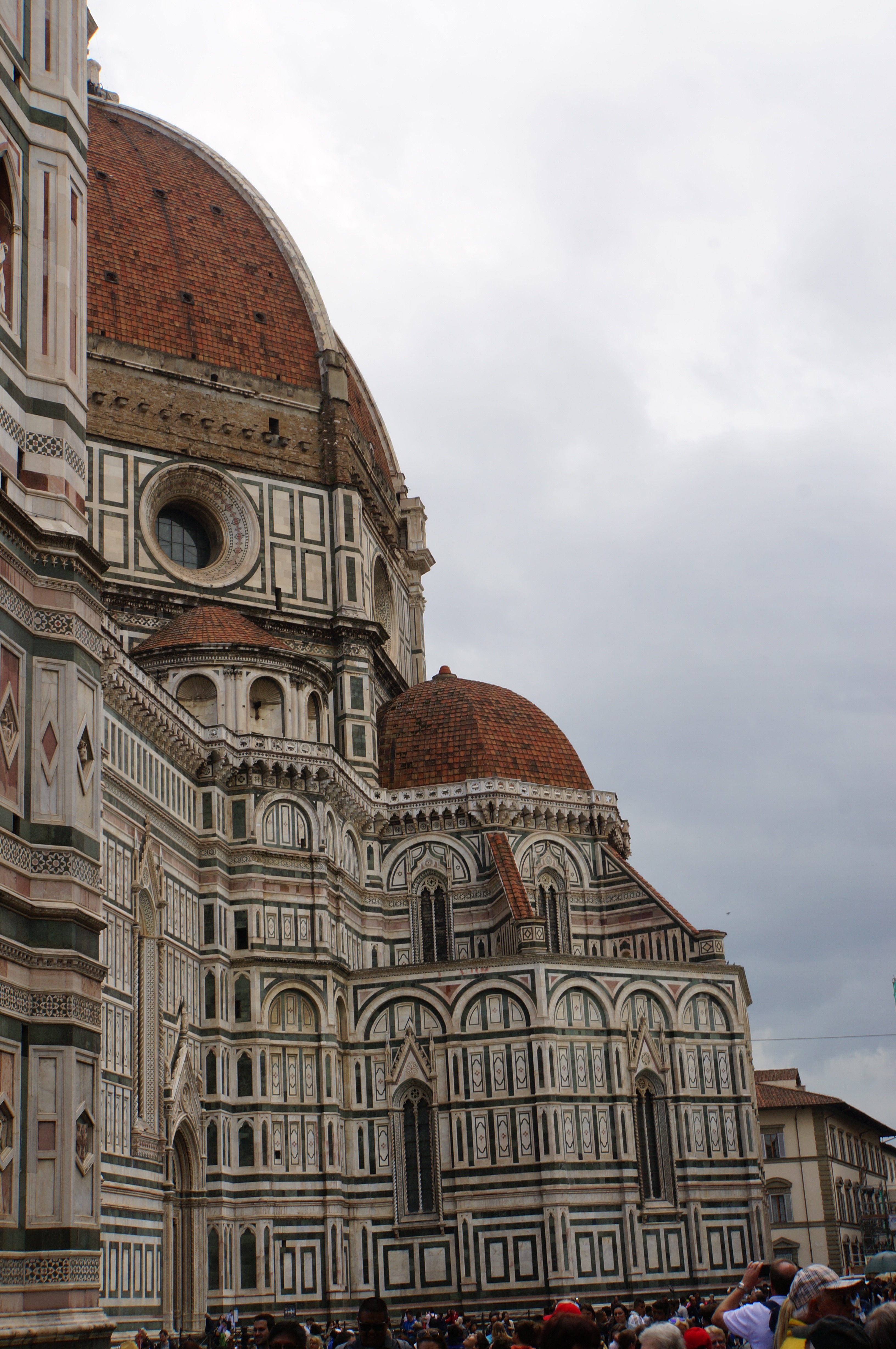
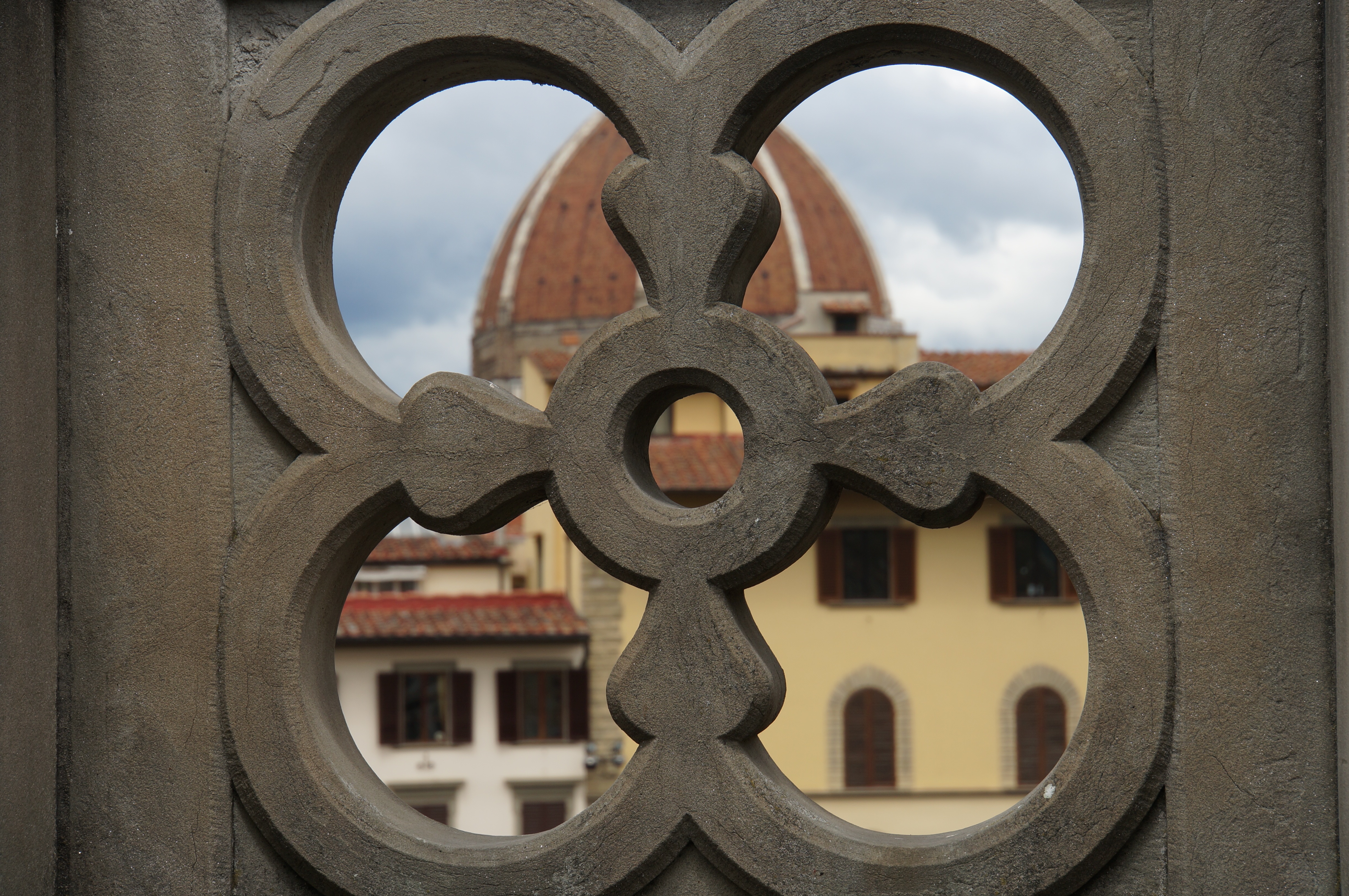
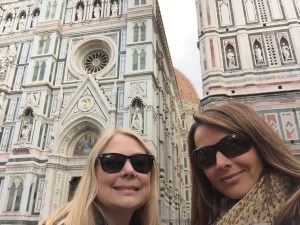
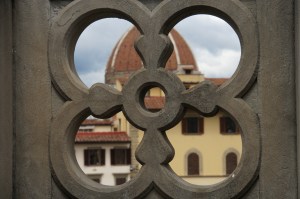
Visible from our amazing hotel room, one of the most recognizable sites is the domed cathedral of the city, commonly known as The Duomo, and that dome was built by Filippo Brunelleschi. The dome, 600 years after its completion, is still the largest dome built in brick and mortar in the world. Wiki travel would add this: “The cathedral topped by Brunelleschi’s dome is the third largest Christian church and dominates the skyline. The Florentines decided to start building it in the 1200s. At the outset they were unsure how they were going to do it. It was “technology forcing”, like the American Kennedy Administration’s decision to put a man on the moon. The dome was the largest ever built at the time, and the first major dome built in Europe since the two great domes of Roman times: the Pantheon in Rome and the Hagia Sophia in Constantinople. In front of it is the medieval Baptistery, where every Florentine was baptized until modern times. The two buildings incorporate the transition from the Middle Ages to the Renaissance in their decoration. In recent years, most of the important works of art from those two buildings and from the wonderful Bell Tower, designed by Giotto, have been removed and replaced by copies. The originals are now housed in the spectacular Museum of the Works of the Duomo, just to the east of the Cathedral.”
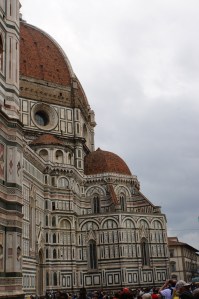
The Duomo could be seen from all points of the city and it was impossible to capture its grandness in one image.
The Duomo could be seen from all points of the city and it was impossible to capture its grandness in one image.

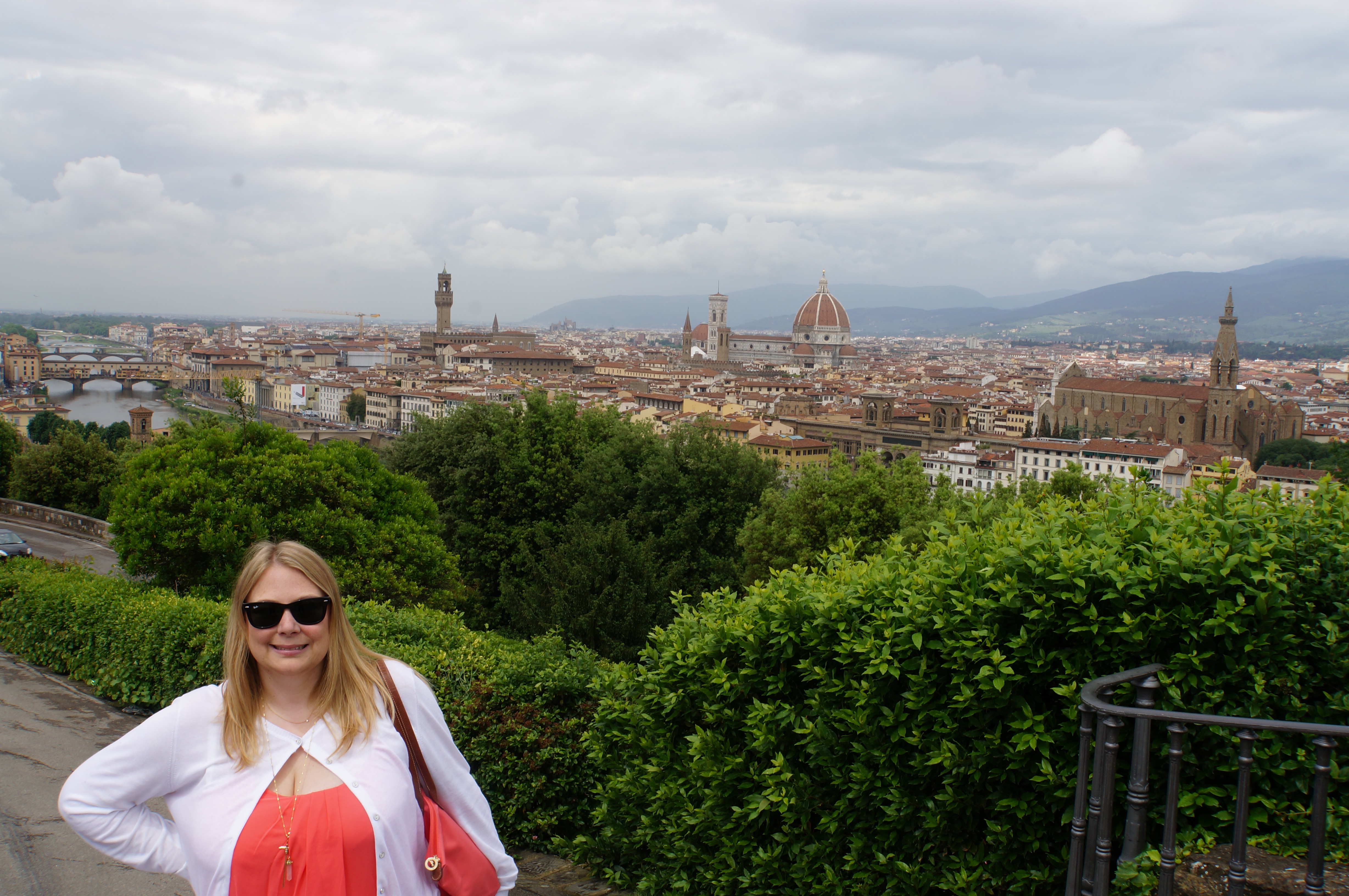
DSC01722

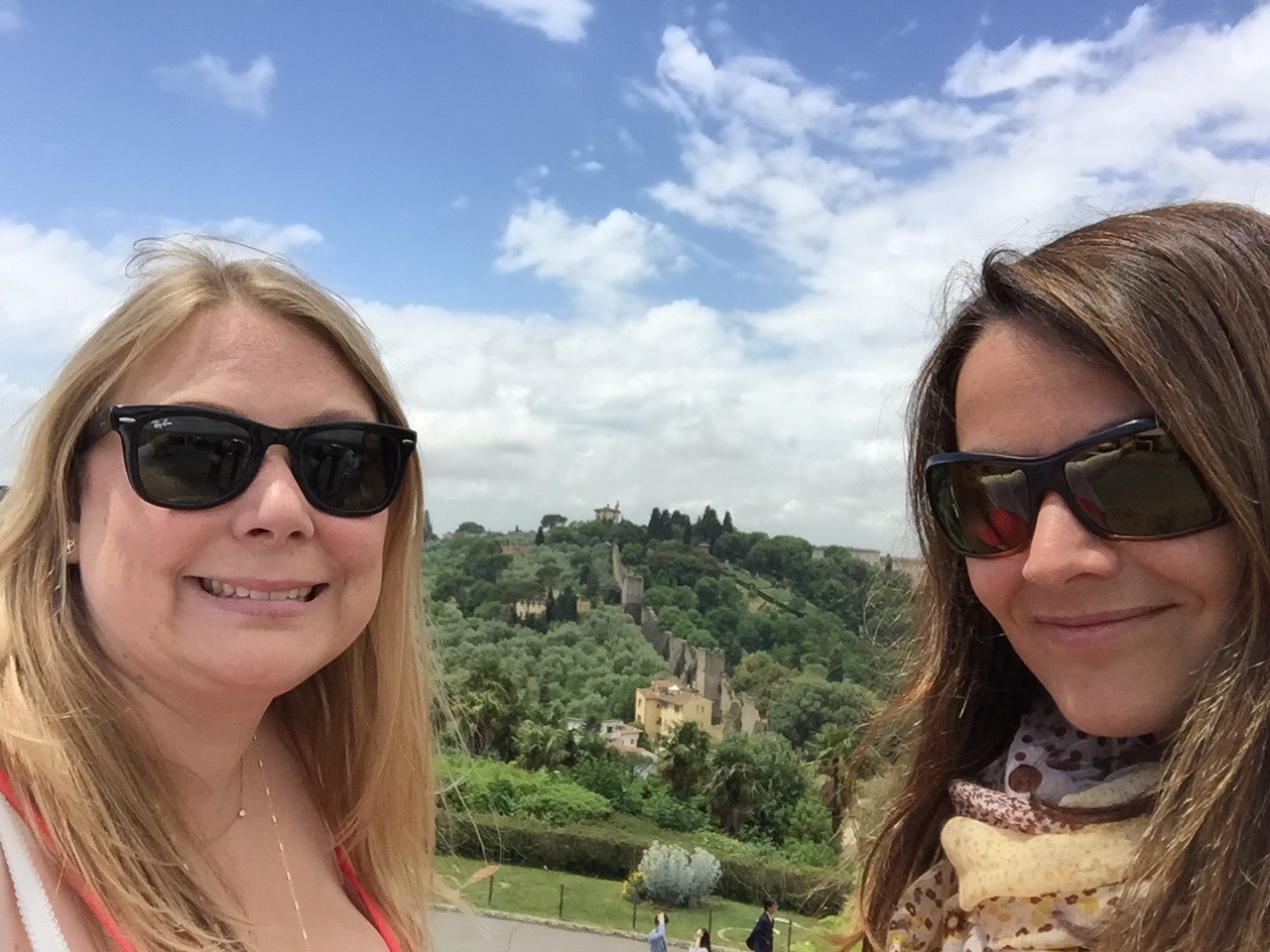
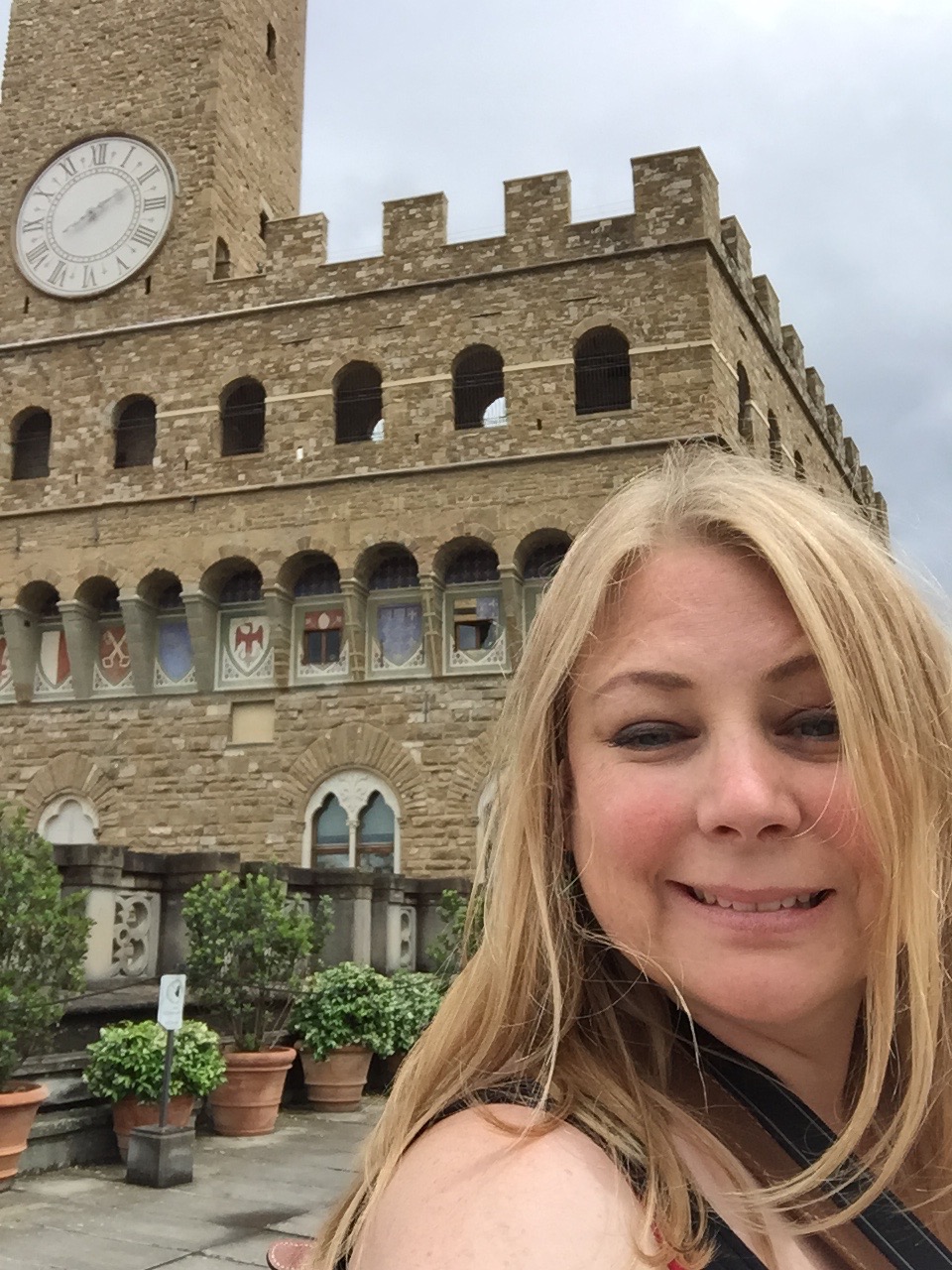
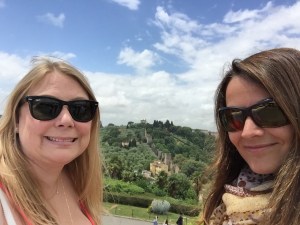
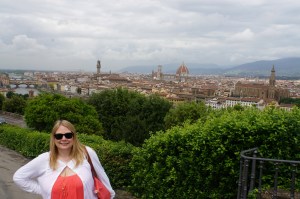
Cecily standing over the skyline of Florence, taking in the green of spring, the turbulent skies and curious about how monotone the architecture was – in colour at least.
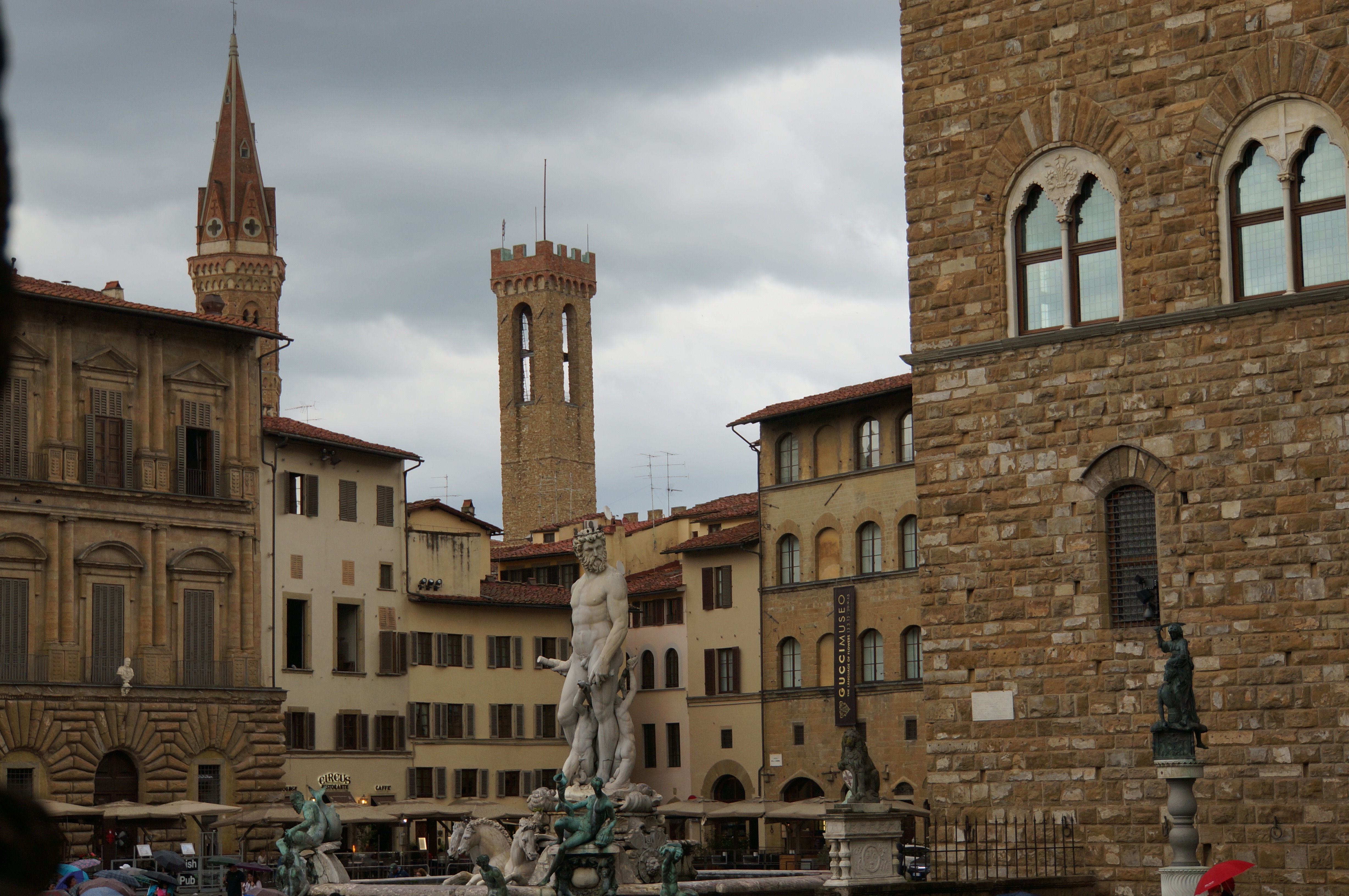
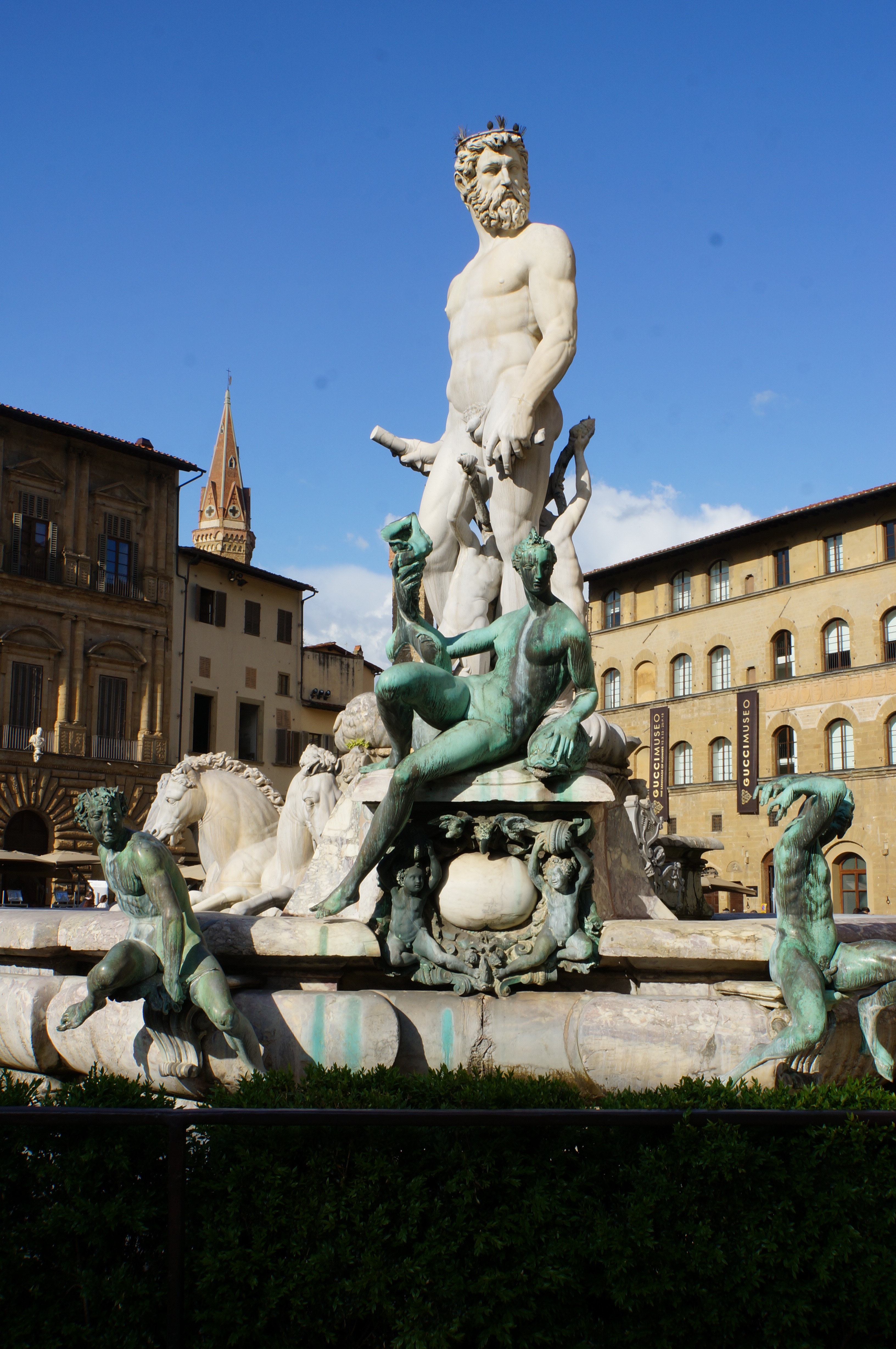
DSC01901

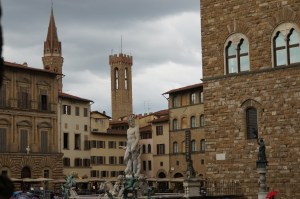
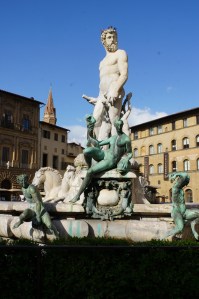
Sun shines over the square, the Gucci Museum in the background. By the time we reached the end of our visit in Florence, we were sort of “amazing fountain-ed” out.

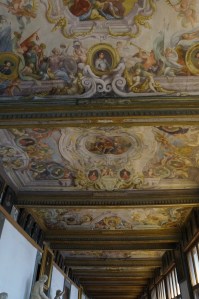
Oh, and the art galleries….they are everywhere. The Uffizi and the Pitti Palace are two of the most famous picture galleries in the world. But wiki travel would argue “the heart and soul of Florence are in the two superb collections of sculpture, the Bargello and the Museum of the Works of the Duomo. They are filled with the brilliant, revolutionary creations of Donatello, Verrochio, Desiderio da Settignano, Michelangelo, and so many other masterpieces that create a body of work unique in the world. And, of course, there is the Accademia, with Michelangelo’s David, perhaps the most well-known work of art anywhere, plus the superb, unfinished prisoners and slaves Michelangelo worked on for the tomb of Pope Julius II.”
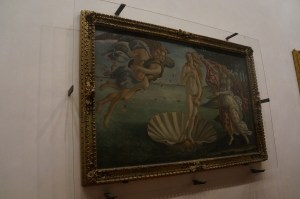
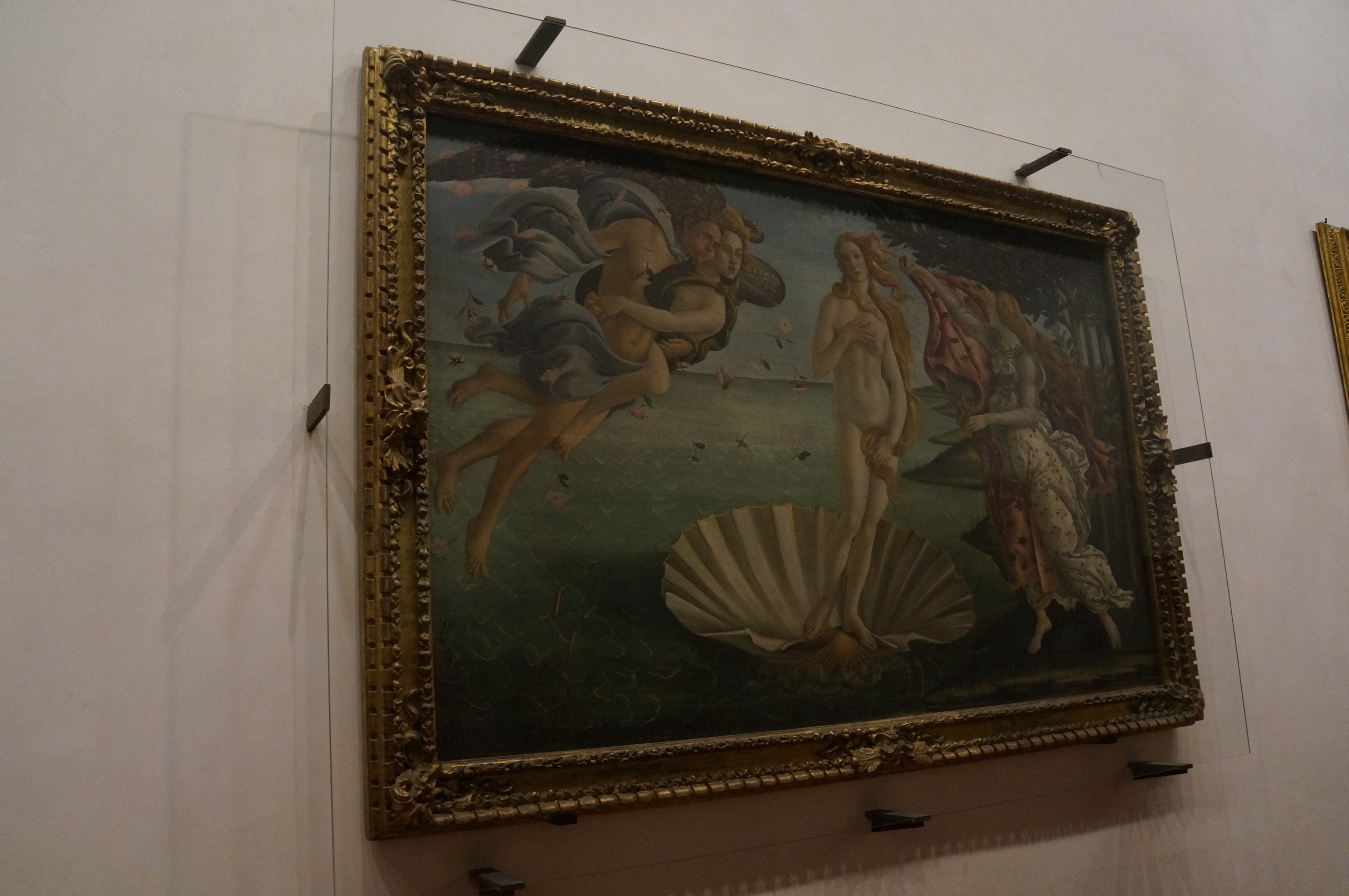
The Birth of Venus was a highlight.

The Birth of Venus was a highlight.
DSC01975

DSC02000

DSC02024

IMG_6684

The Duomo at night

The Duomo at night

There is something like 80 museums in Florence, more in a 5km radius than anywhere else in the world a local told us. We made quick work of just a handful during our time in Florence – Galleria degli Uffizi was a must stop to admire the Birth of Venus and Primavera by Sandro Boticelli, as well as Titian’s Venus of Urbino; Accademia Gallery for Michelangelo’s David and the unfinished Slaves; Institute and Museum of the History of Science (where we encountered a school field trip creating my worst museum experience of all time) was a showcase of the evolution of the instruments used in various scientific fields such as mathematics, physics, biology, chemistry, astronomy and homage to Galileo. Including the middle finger of Galileo’s right hand on display; and of course, Gucci Museum which was recently developed to showcase the history of the fashion house from luggage and cars to handbags and amazing fashion.
DSC01853 DSC01847 (1)

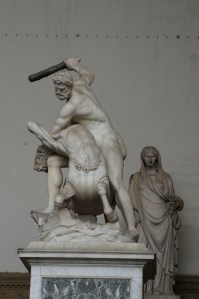
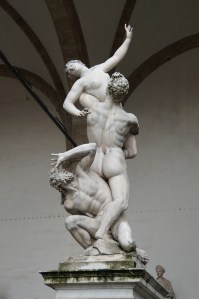
The sculptures across the city were spectacular - each with its own unique story. The efforts in their carving impossible to articulate

The sculptures across the city were spectacular – each with its own unique story. The efforts in their carving impossible to articulate
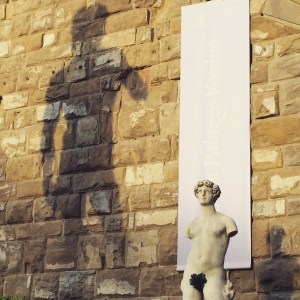
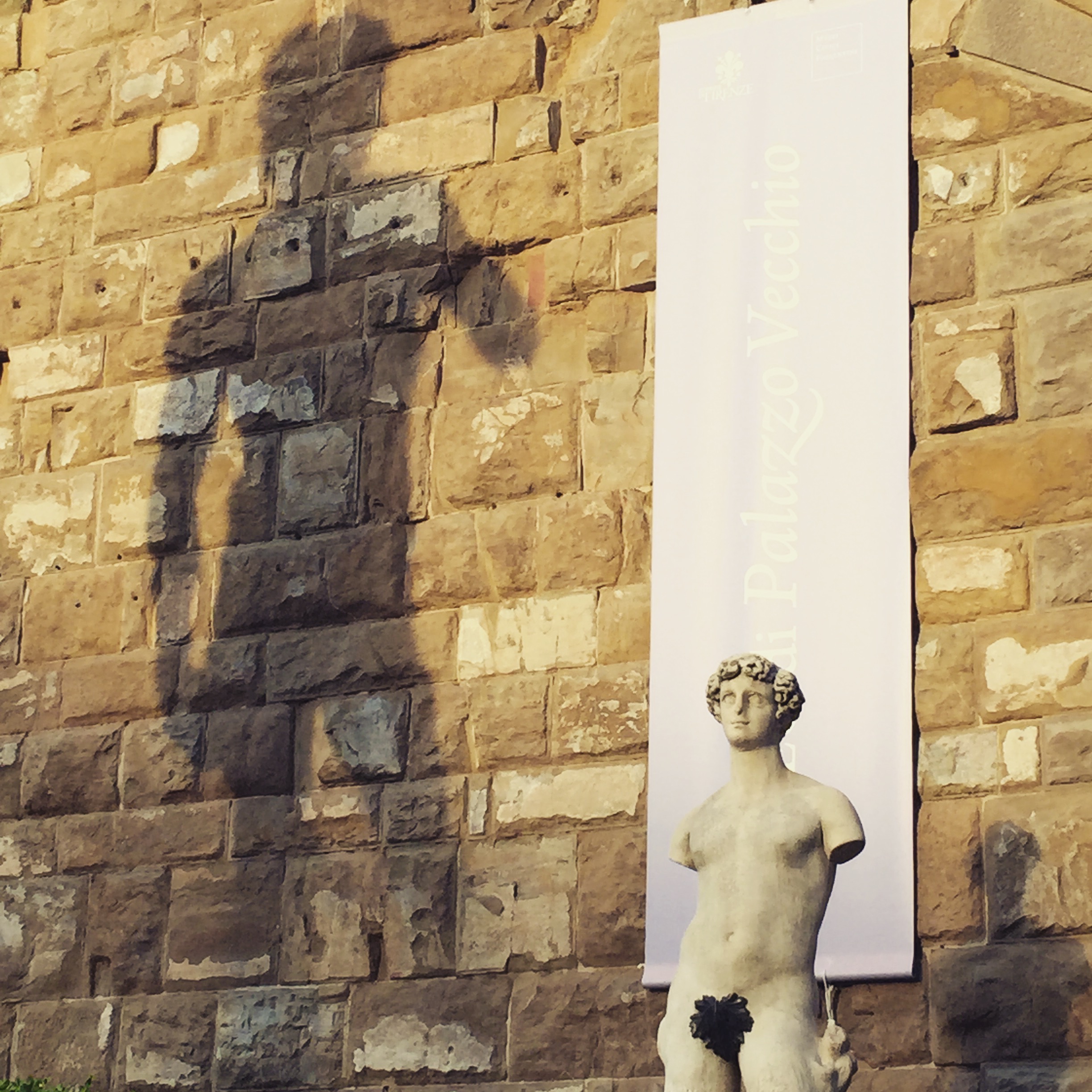
A shadow of himself...

A shadow of himself…

Seeing the sights...

Seeing the sights…

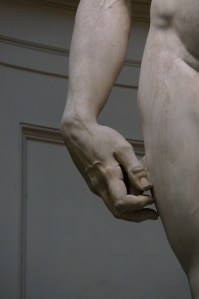
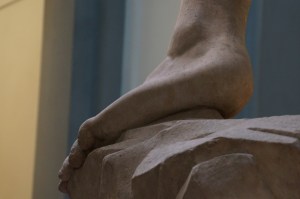
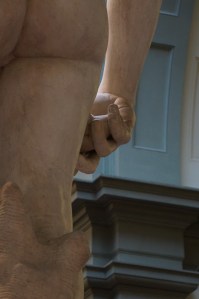
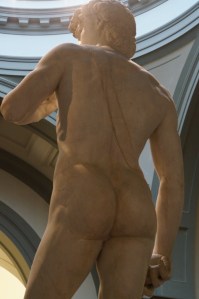
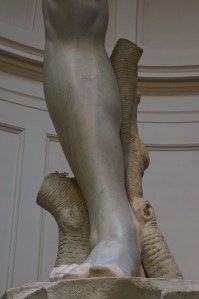
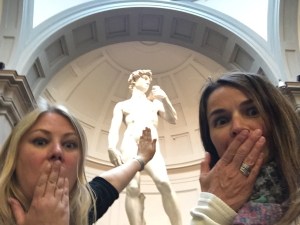
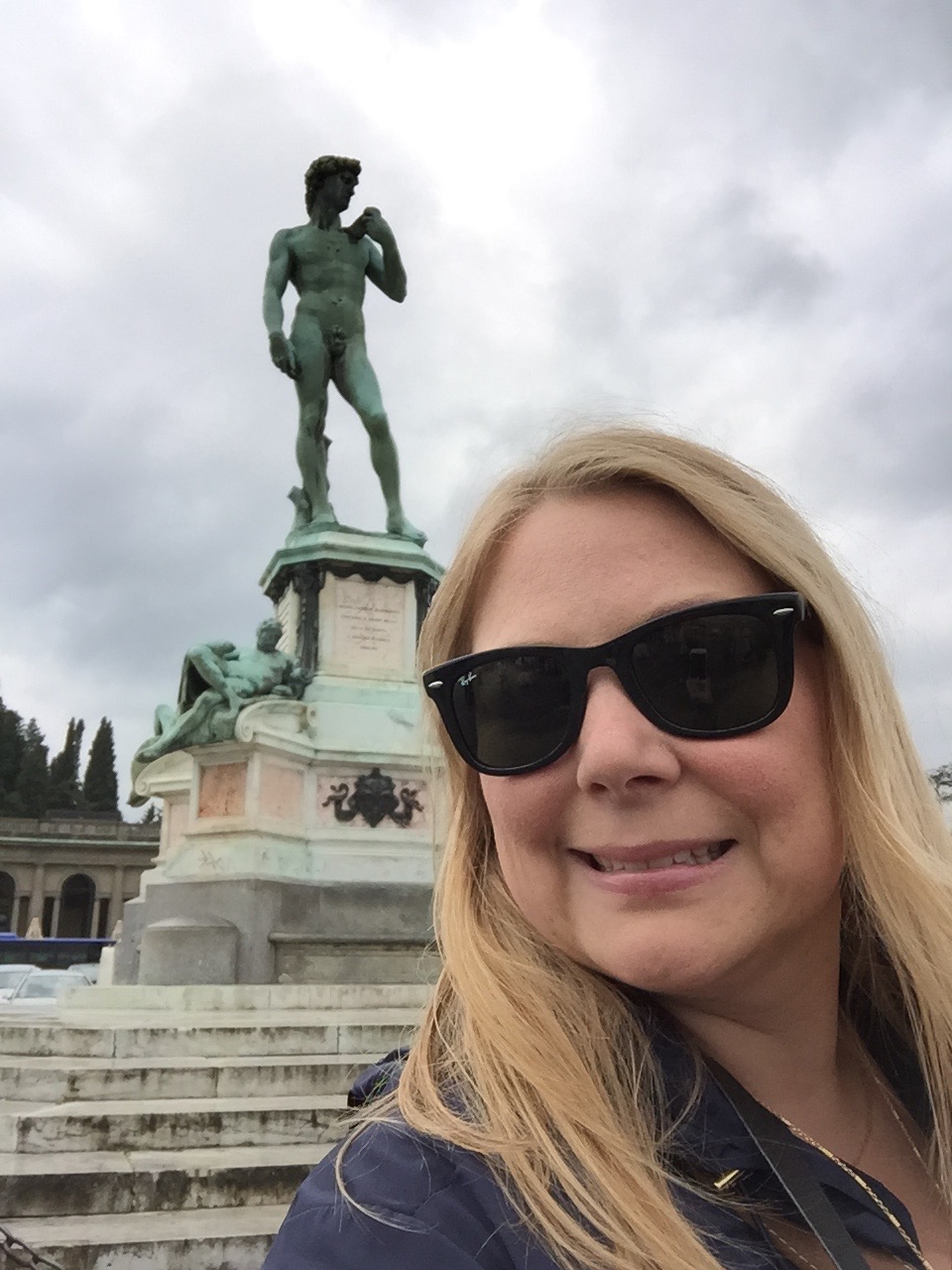
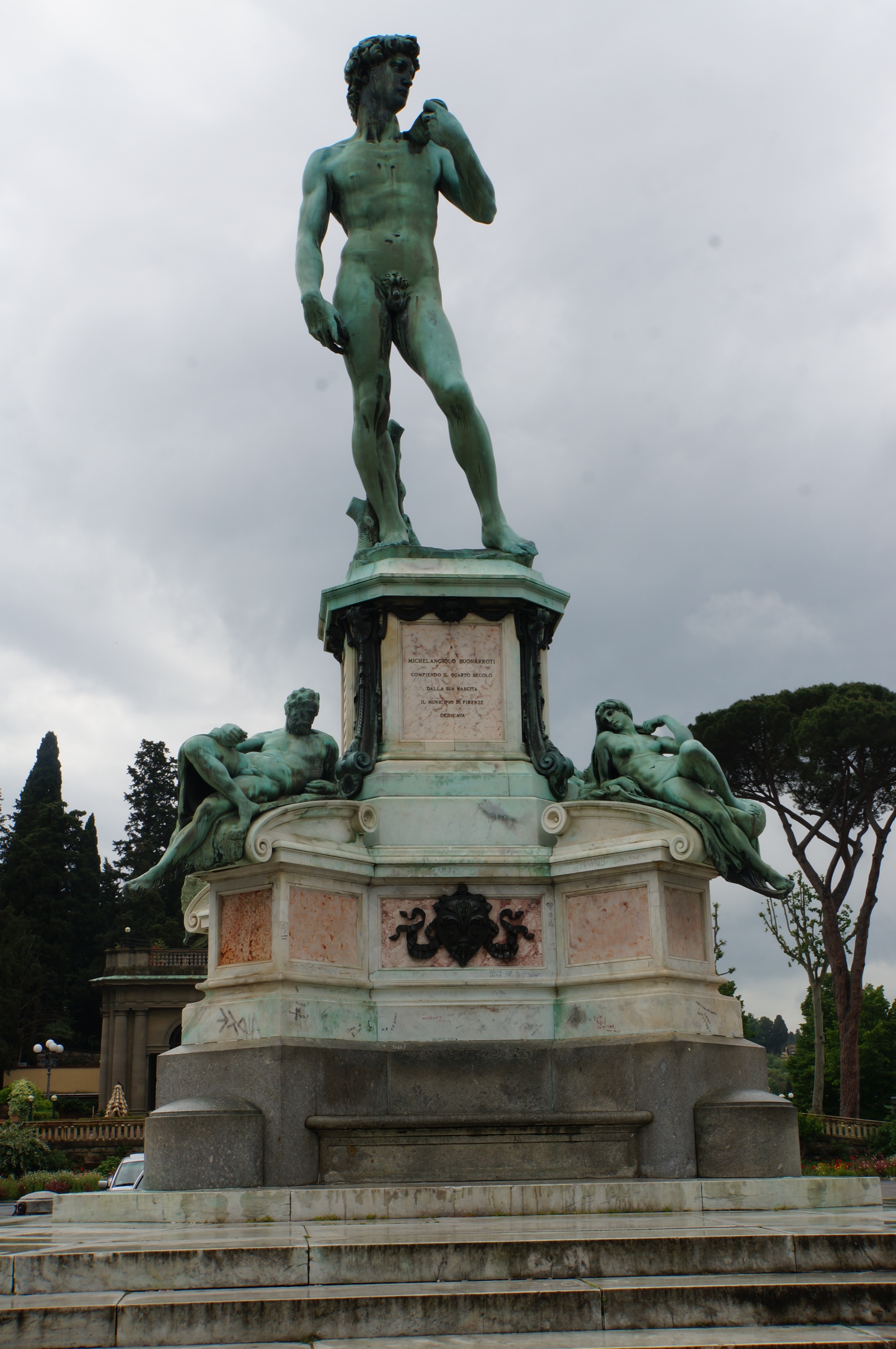
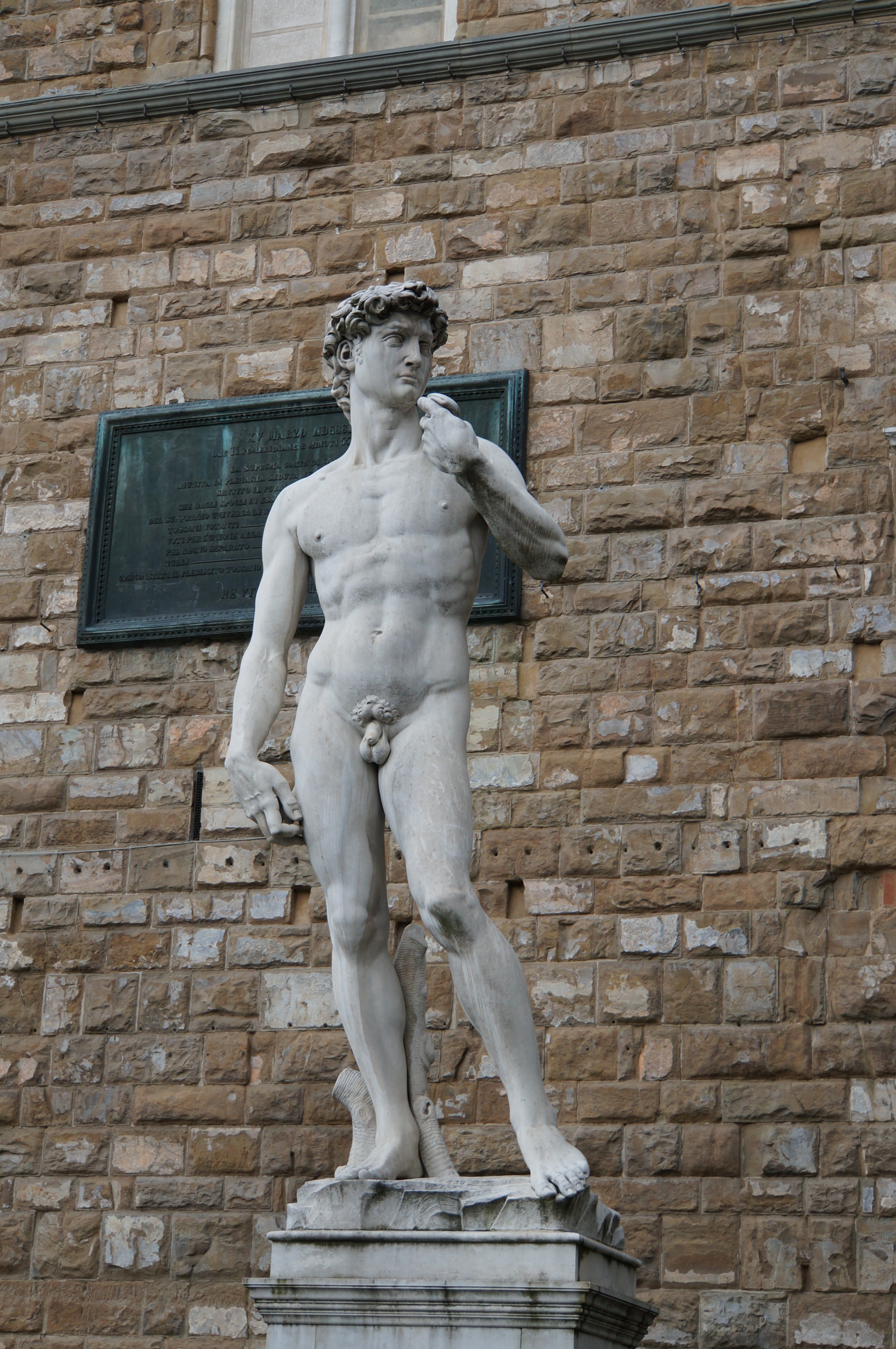
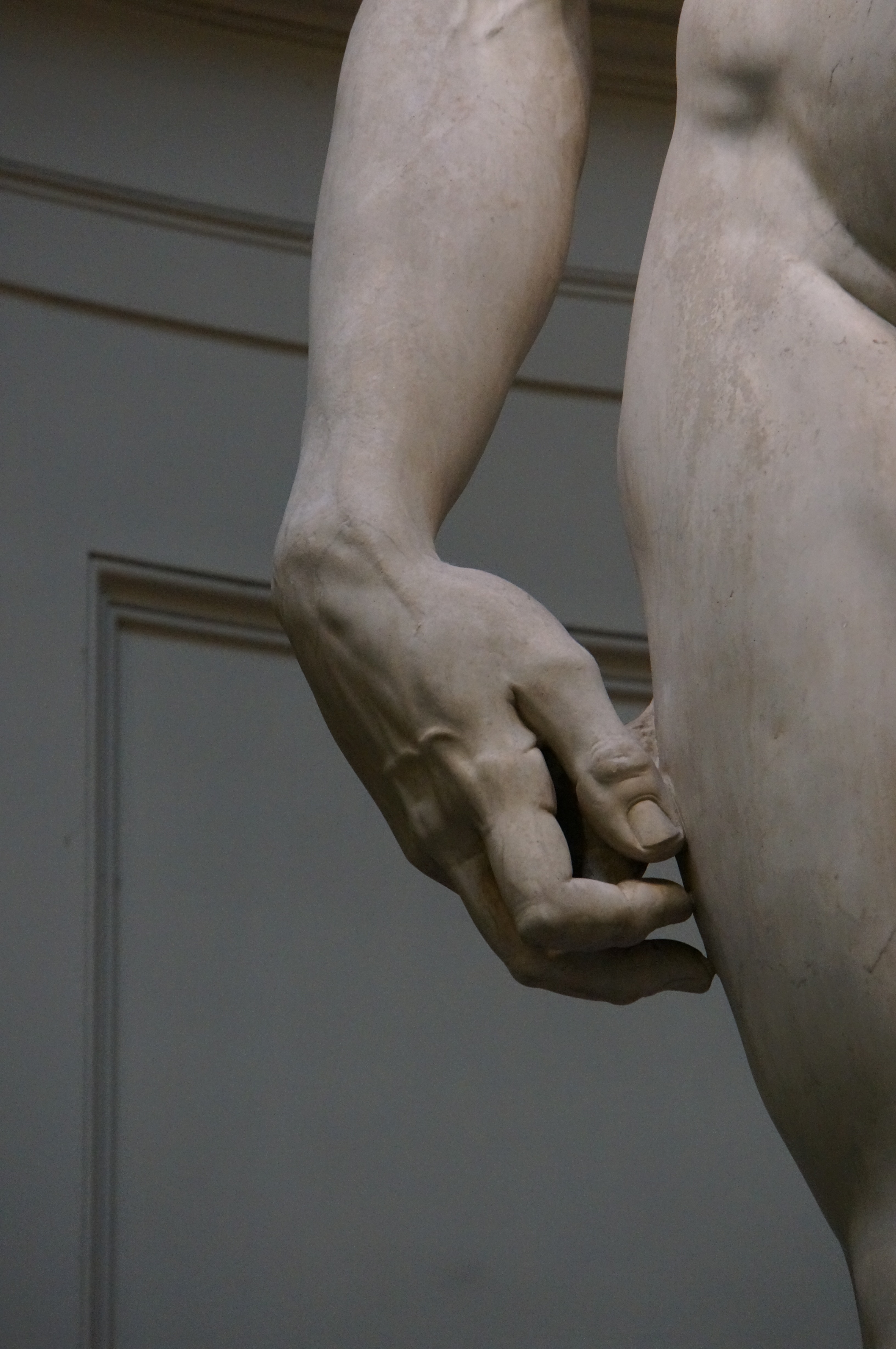
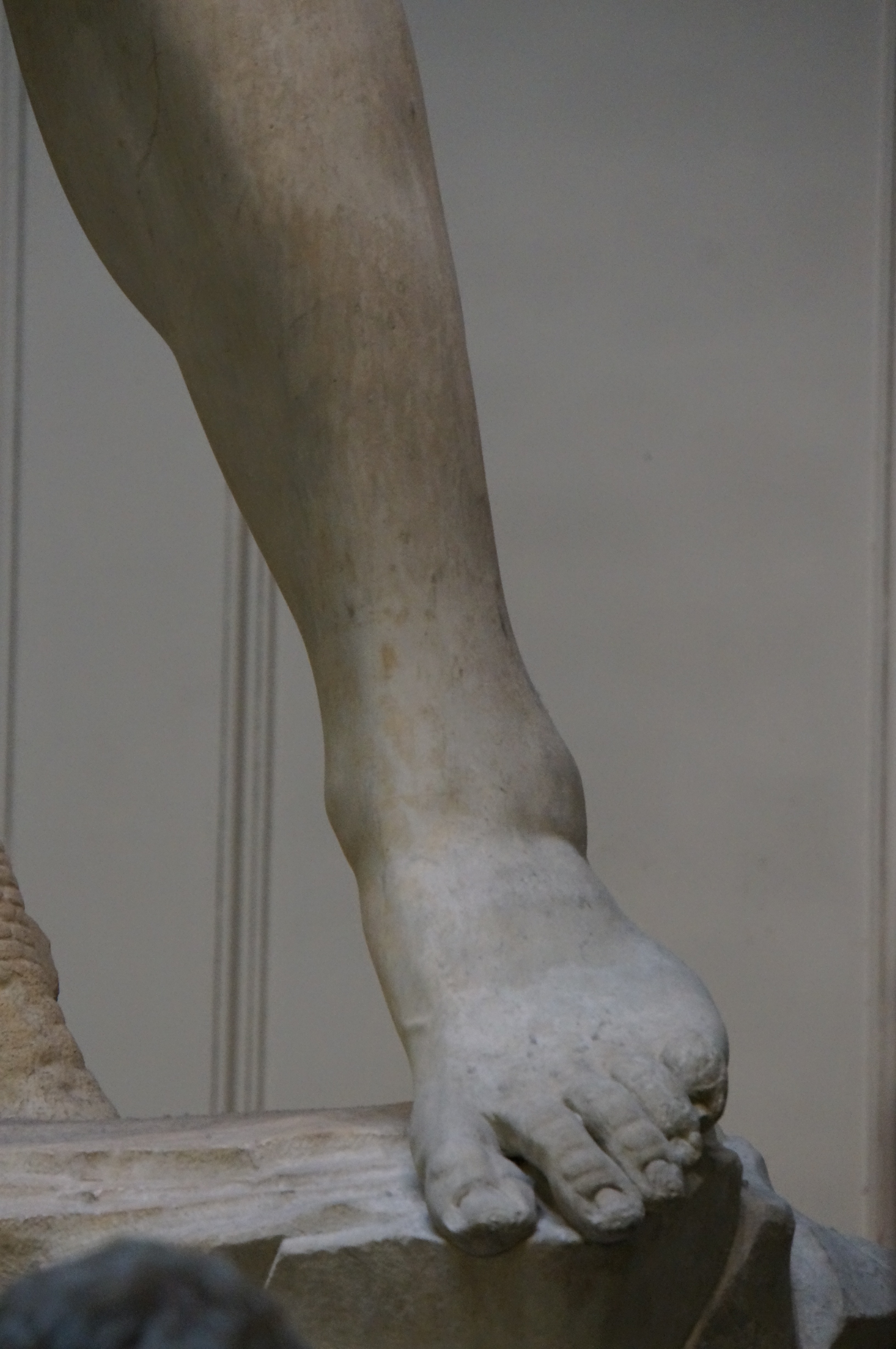
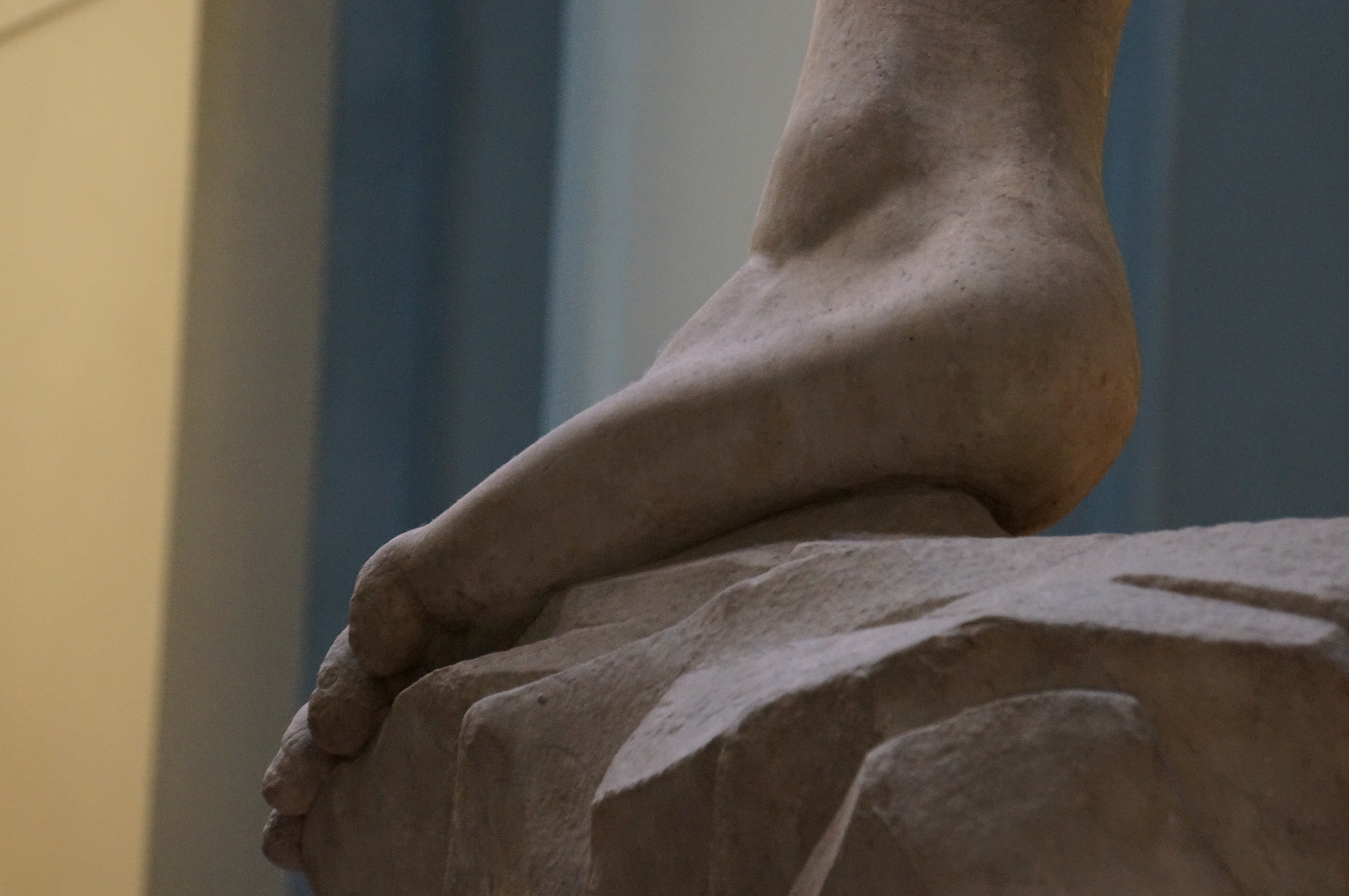
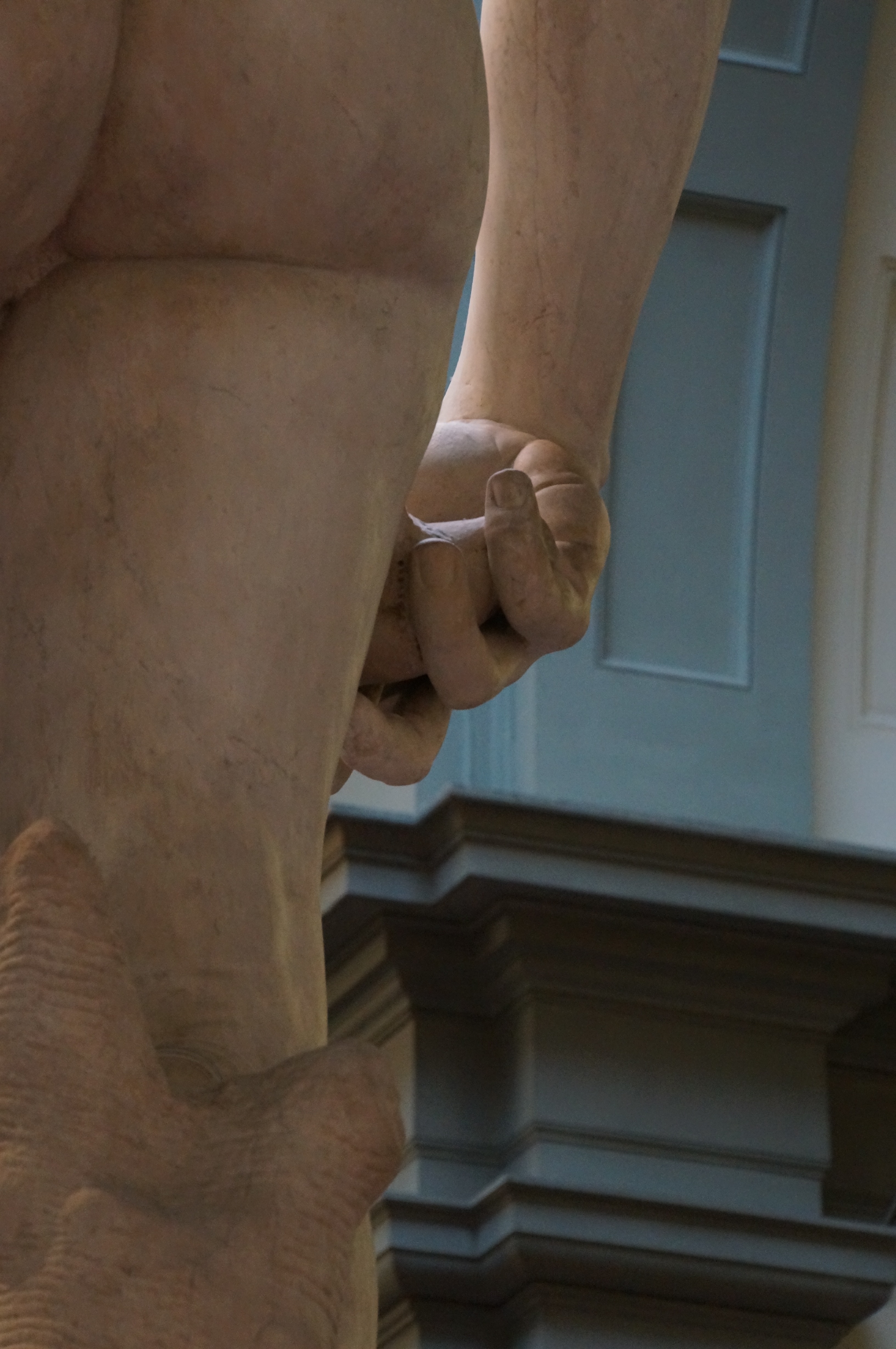
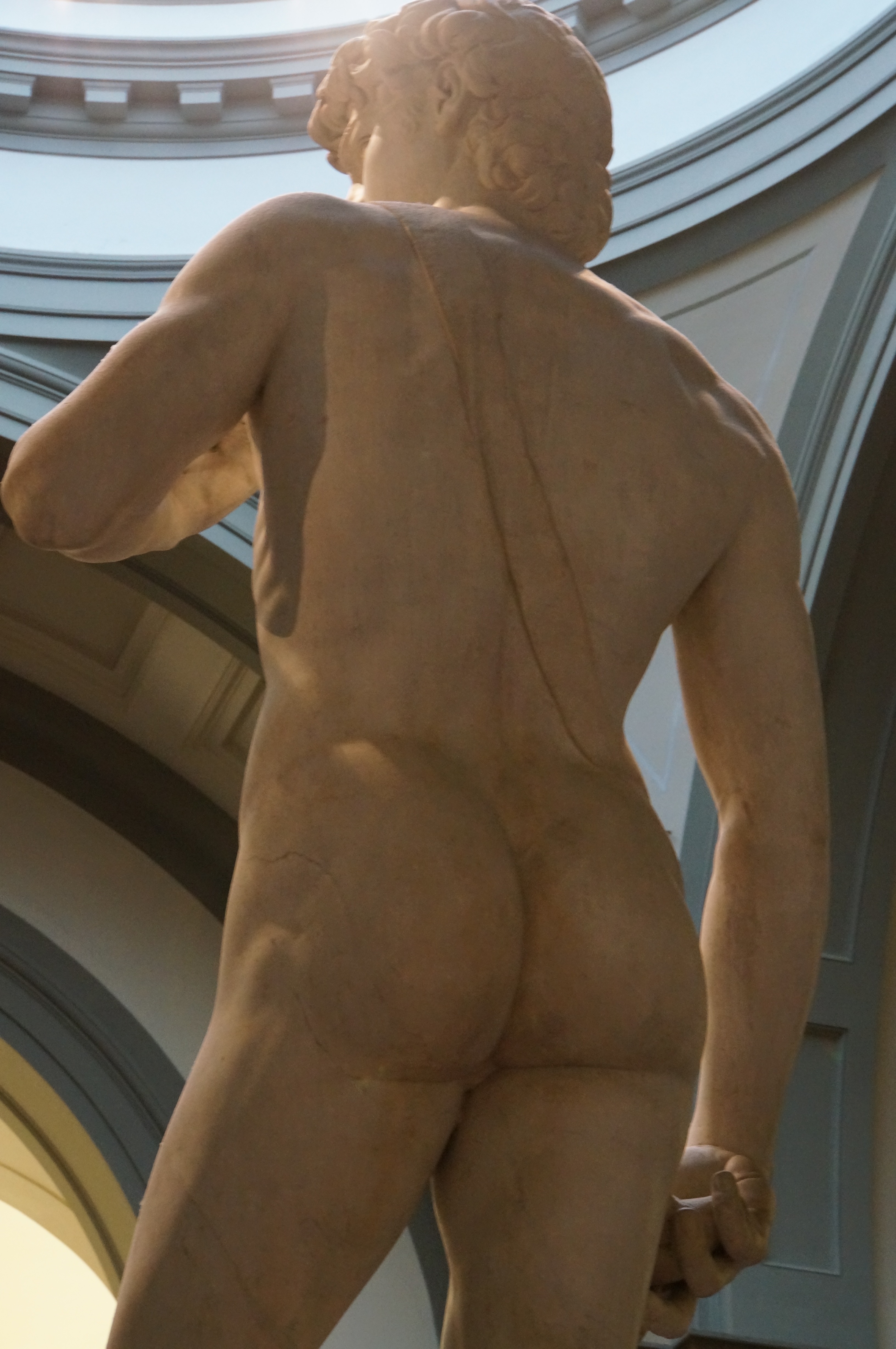
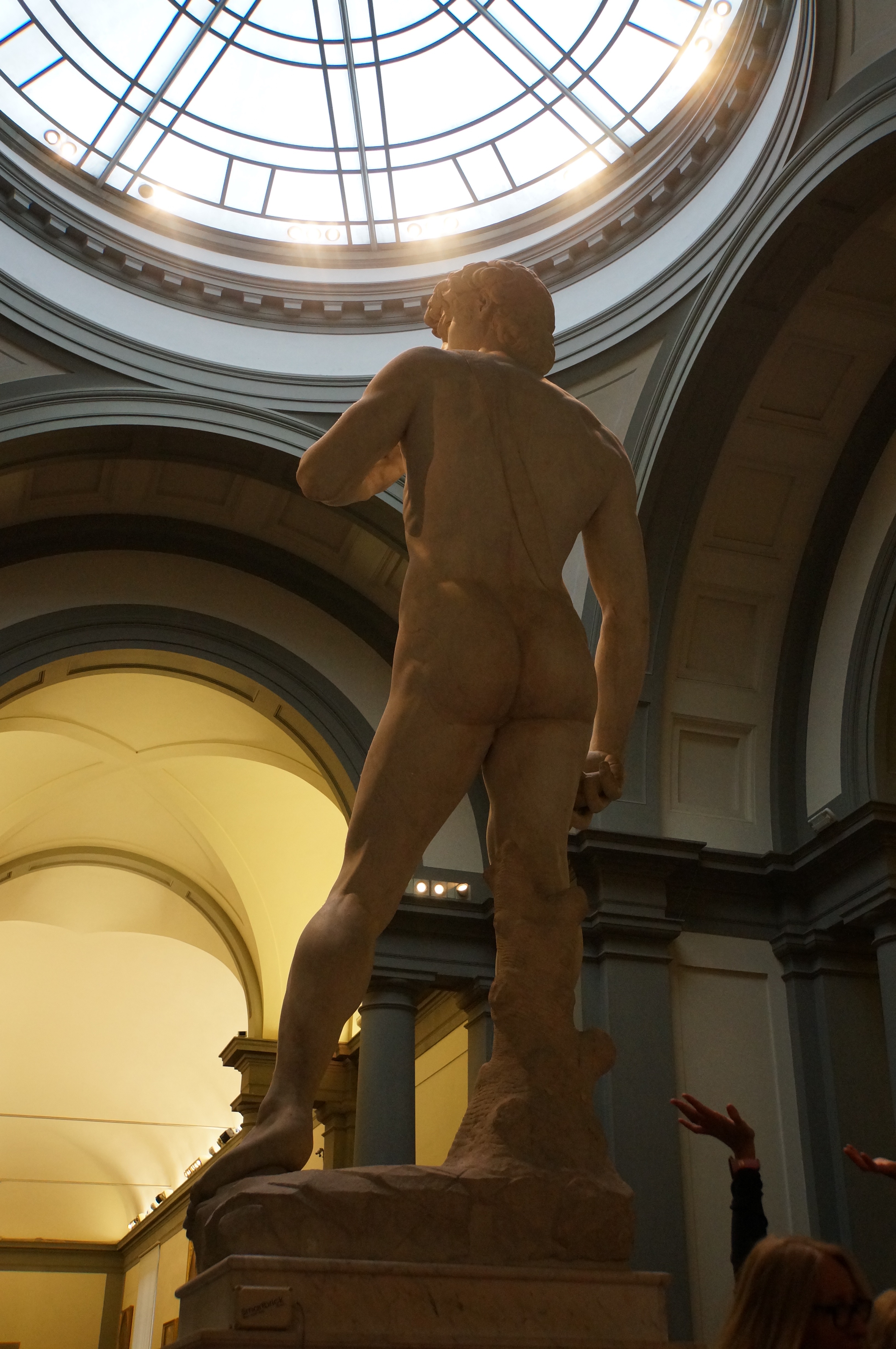
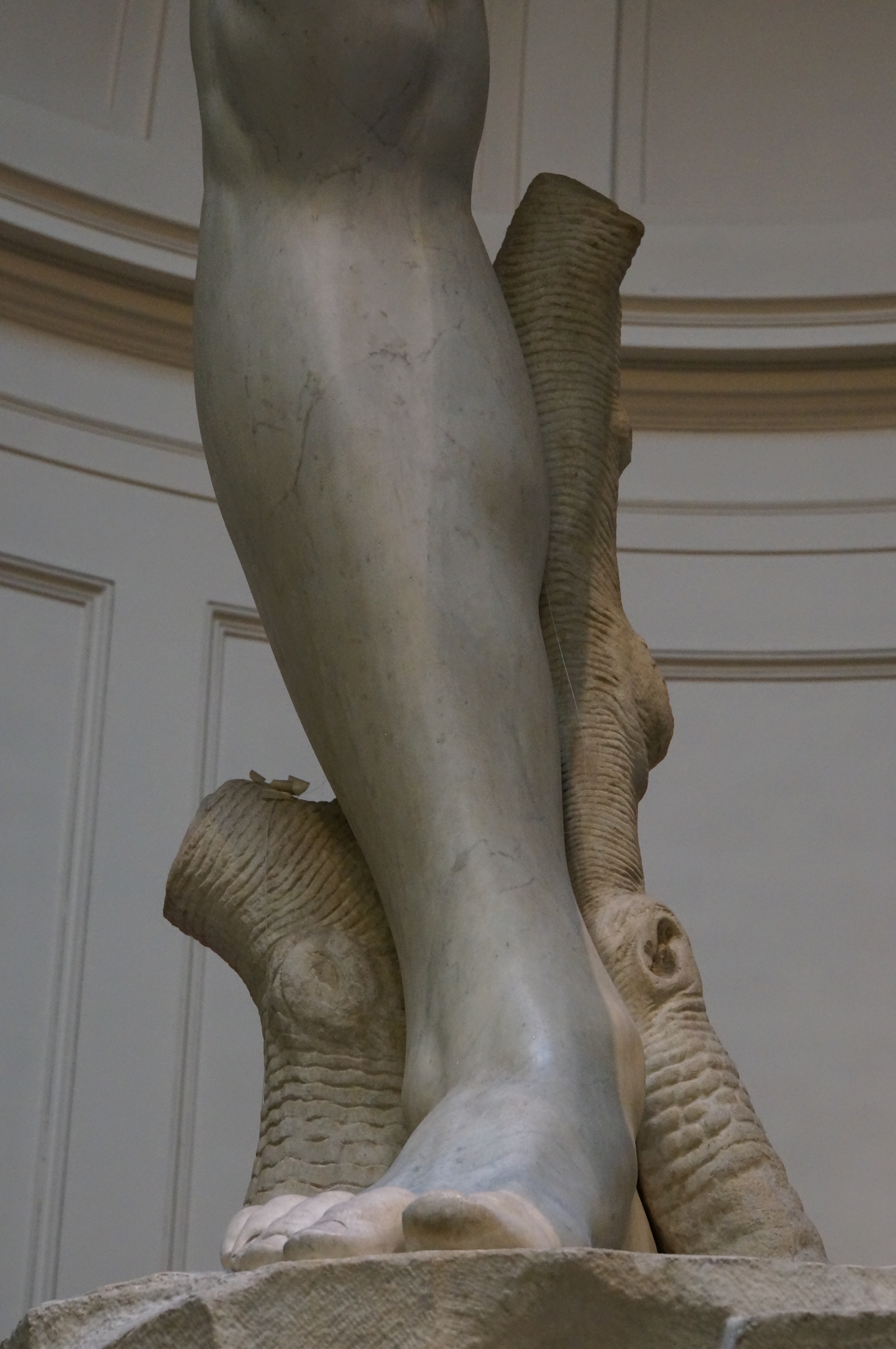
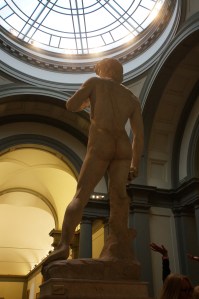
Seeing The David in person was a personal highlight for me. For those who aren’t in the know, there are actually three statues around the city. One in Copper, overlooking the city, a second replicate situated outside the municipal building and the third – the original marble carving – within the Accadamia. We happened upon the first two as part of our wandering and sightseeing so when it came time for our tour of Accadamia, it is indescribable to explain how The David takes your breath away. In the fading late day light, as it streamed from the domed skylight above, the intricate detail was amazing. We sat on the benches that circle the statue and quietly took in each angle marvelling at how it was carved, how lifelike it was and how – no matter how hard you tried – the likelihood of a self-consumed tourist walking into a perfect photo angle.
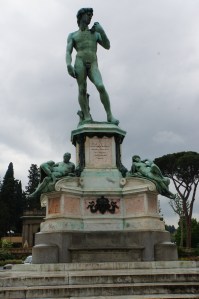
The copper version of The David, keeping watch over the city. Our first sighting!

The copper version of The David, keeping watch over the city. Our first sighting!

A replica of The David outside the municipal building

A replica of The David outside the municipal building

DSC02075

The David – the original statue.
DSC02067 DSC02064

DSC02111 DSC02097 DSC02090

DSC02087 DSC02078

Oh my goodness!

Oh my goodness!

Hmmmm....

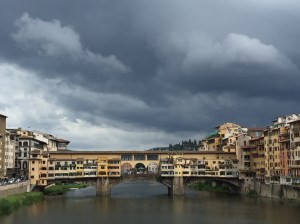
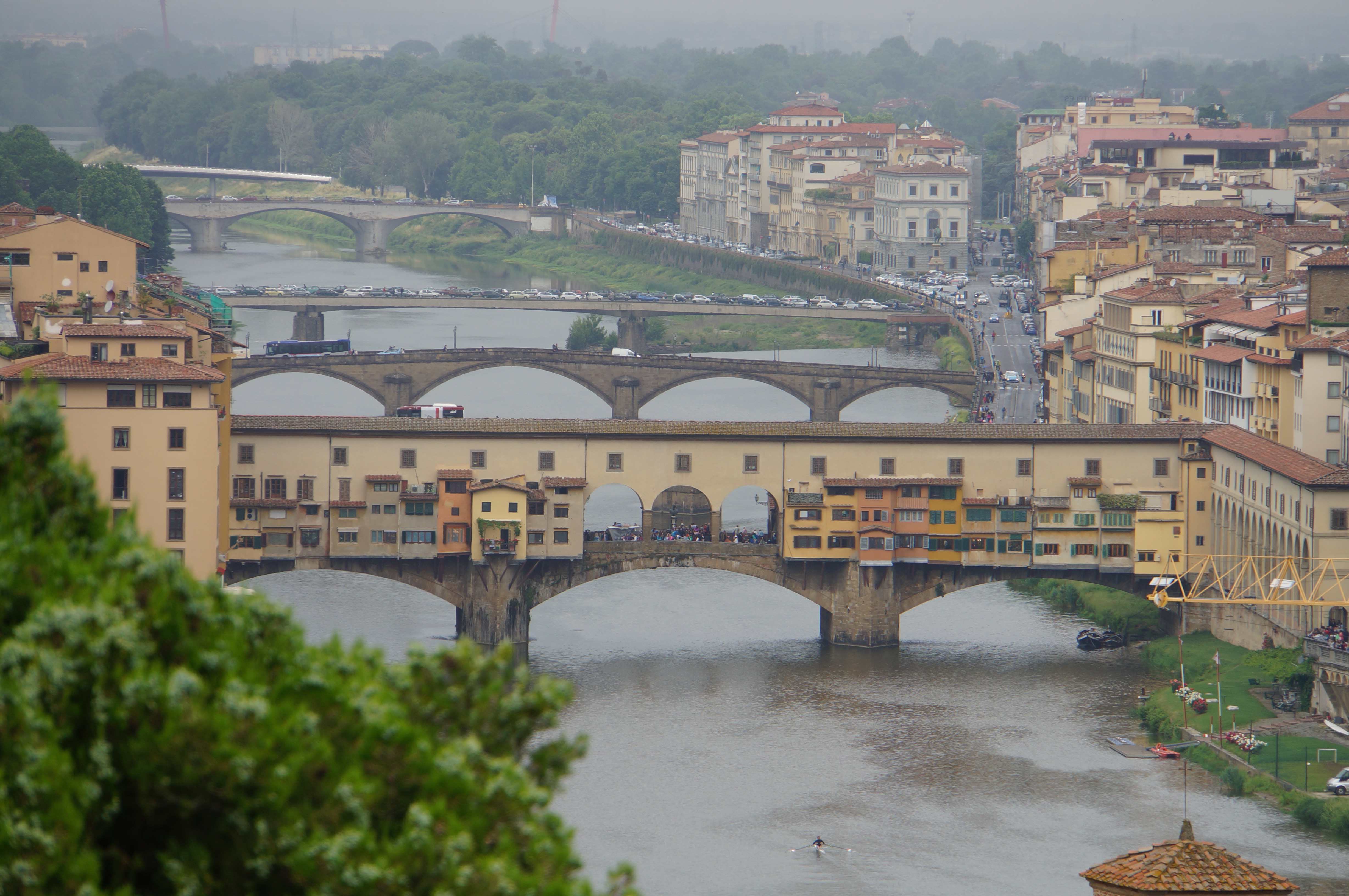
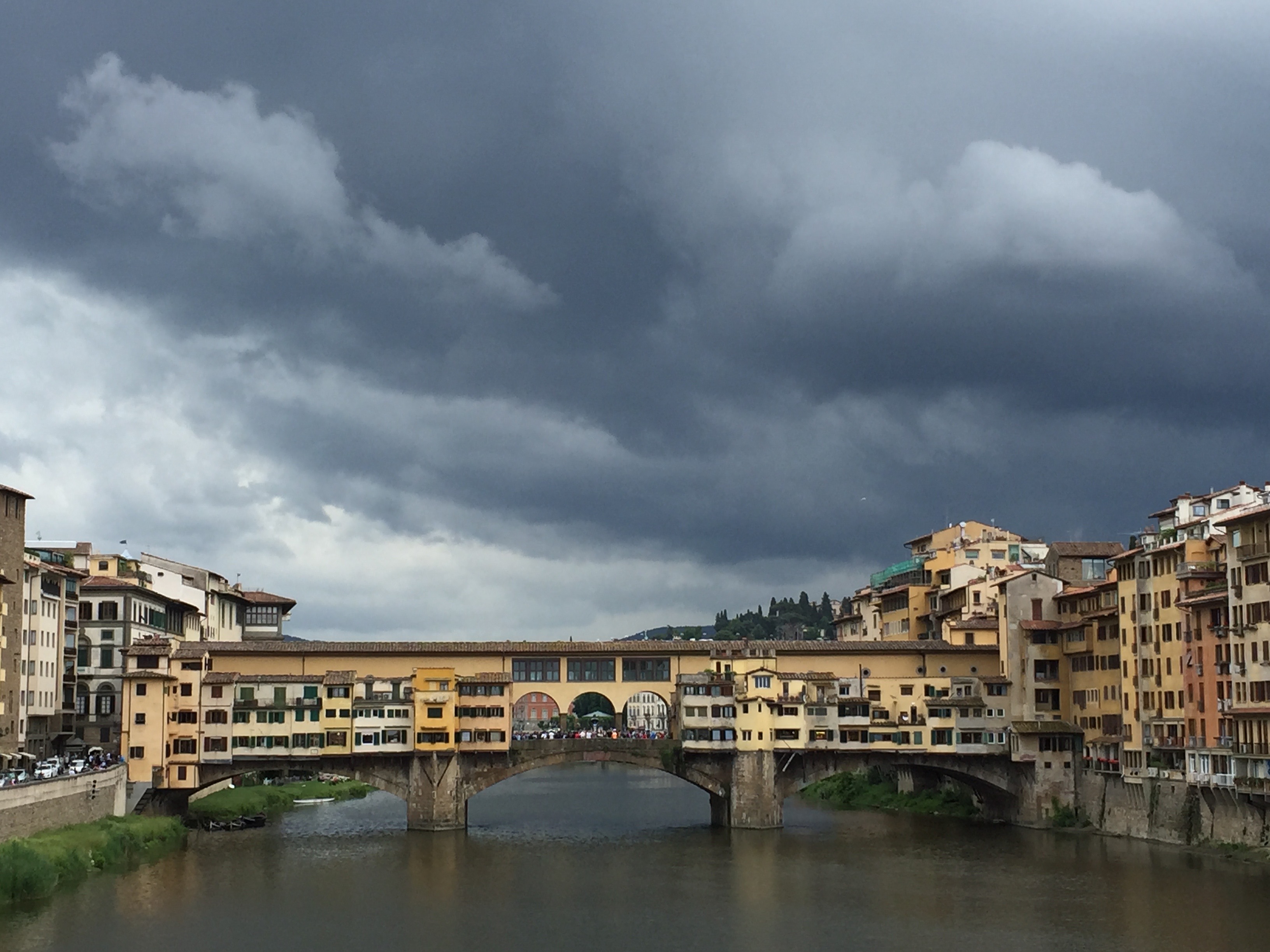
Wiki travel describes the Ponte Vecchio as “the oldest and most famous bridge over the Arno; the only Florentine bridge to survive WW2. The Ponte Vecchio (literally “old bridge”) is lined with shops, traditionally mostly jewellers since the days of the Medici. Vasari’s elevated walkway crosses the Arno over the Ponte Vecchio, connecting the Uffizi to the old Medici palace.
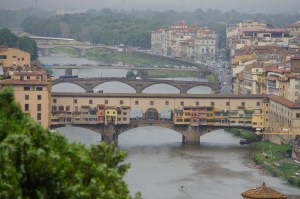
The famous Ponte Vecchio where one can purchase all kinds of jewellery at unreasonable prices!
The famous Ponte Vecchio where one can purchase all kinds of jewellery at unreasonable prices!

DSC01931

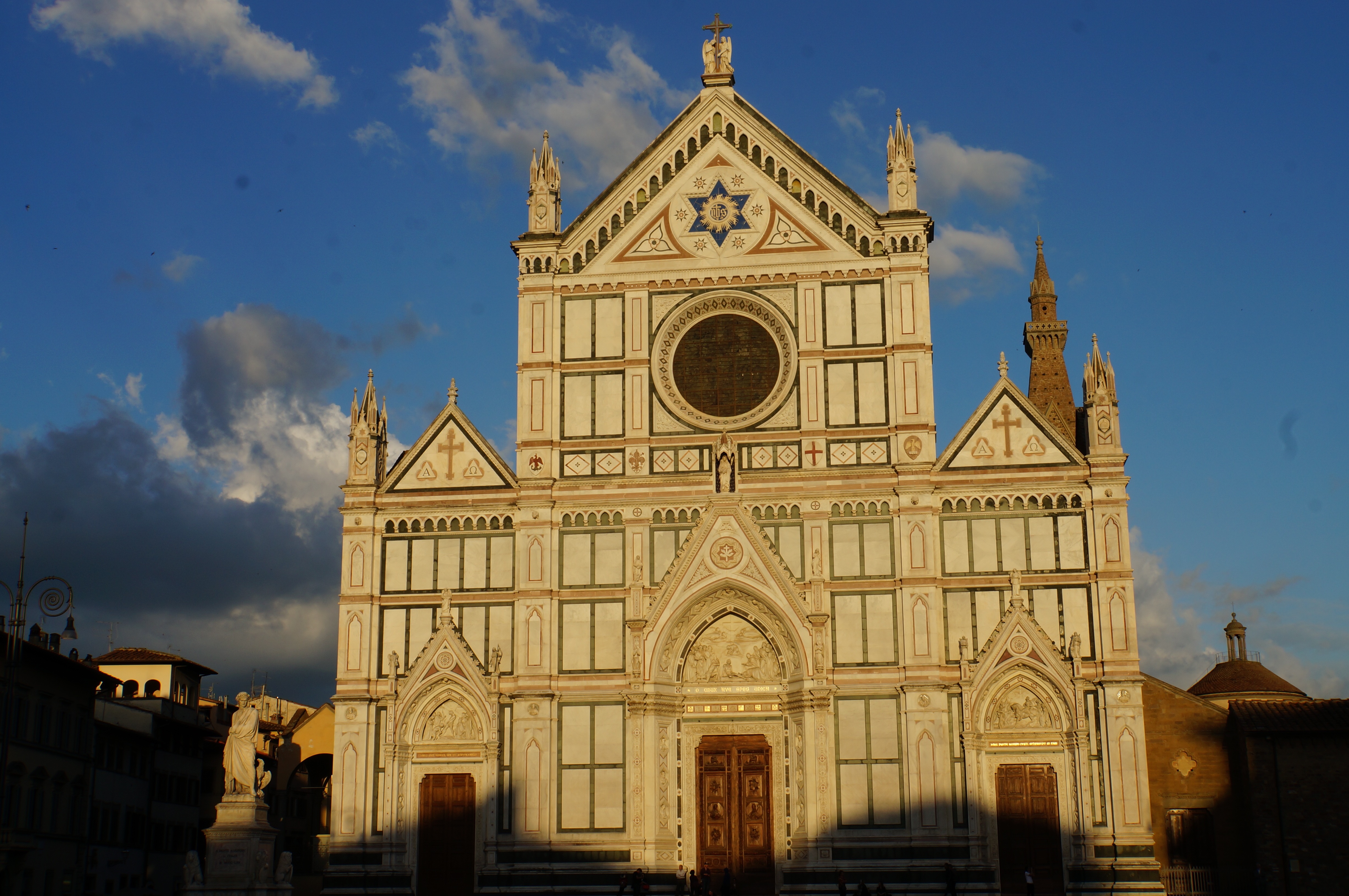
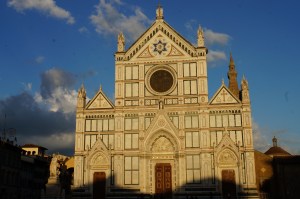
Exterior view of Santa Croce in the early evening light.
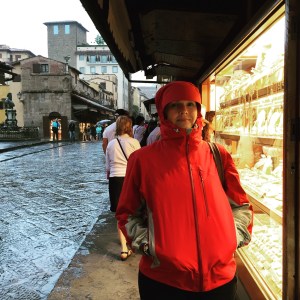
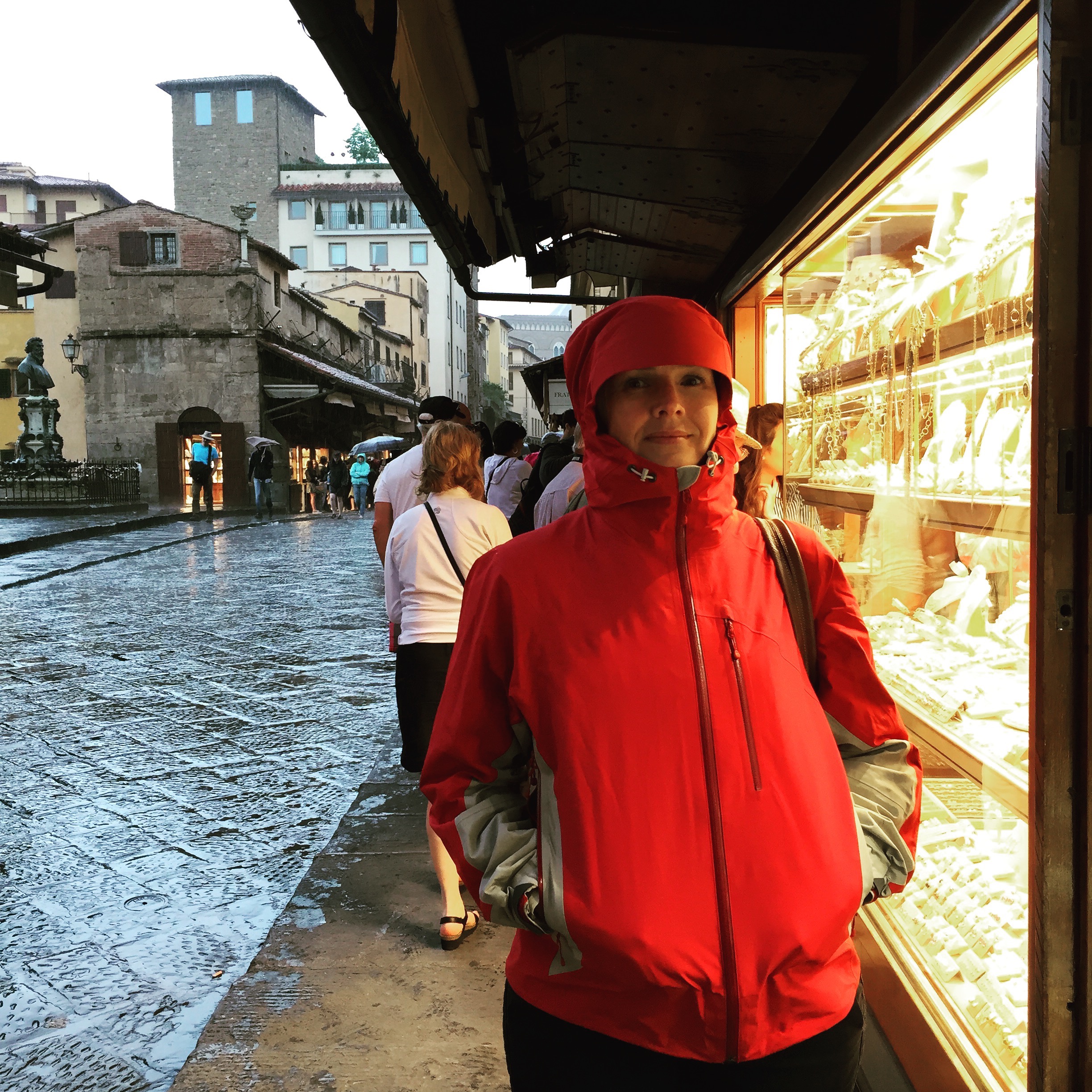
We got caught in a rainstorm...

We got caught in a rainstorm…

And we saw it coming...

And we saw it coming…

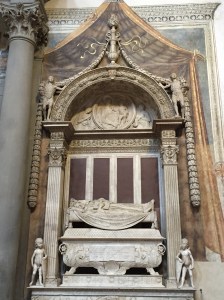
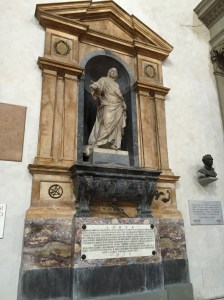
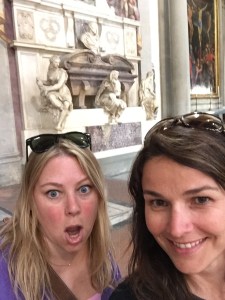
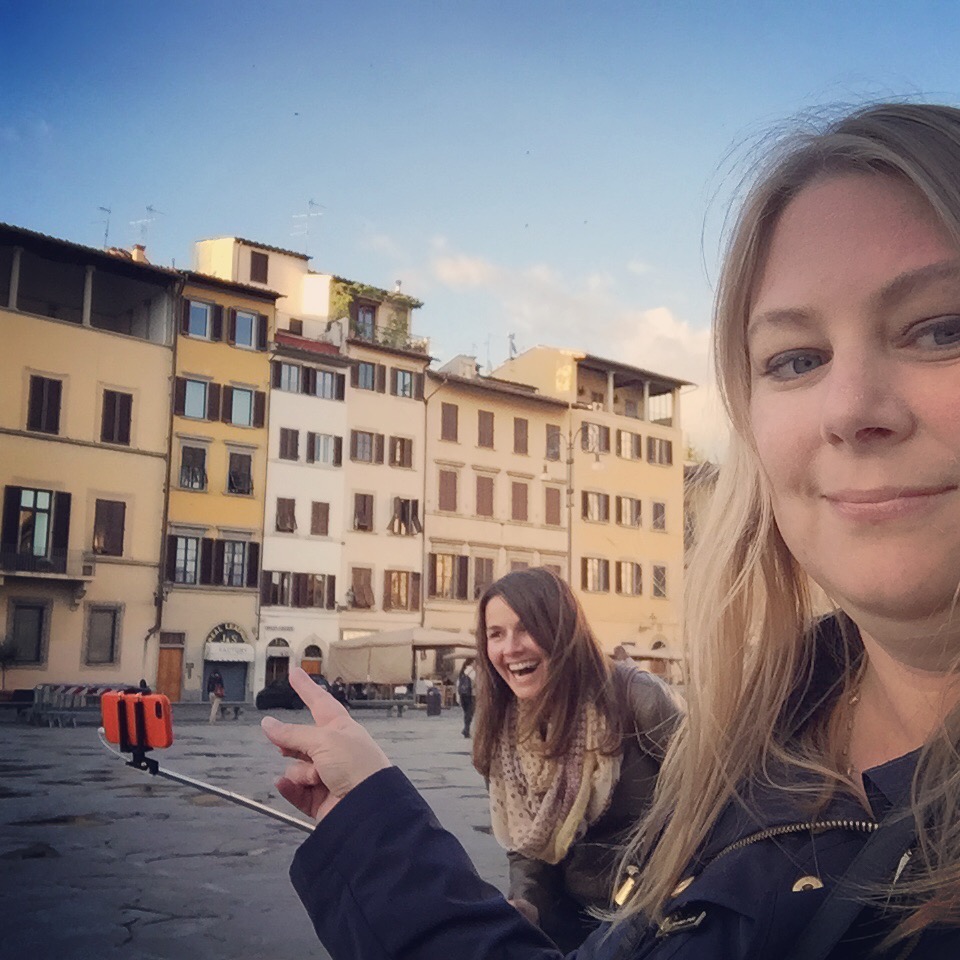
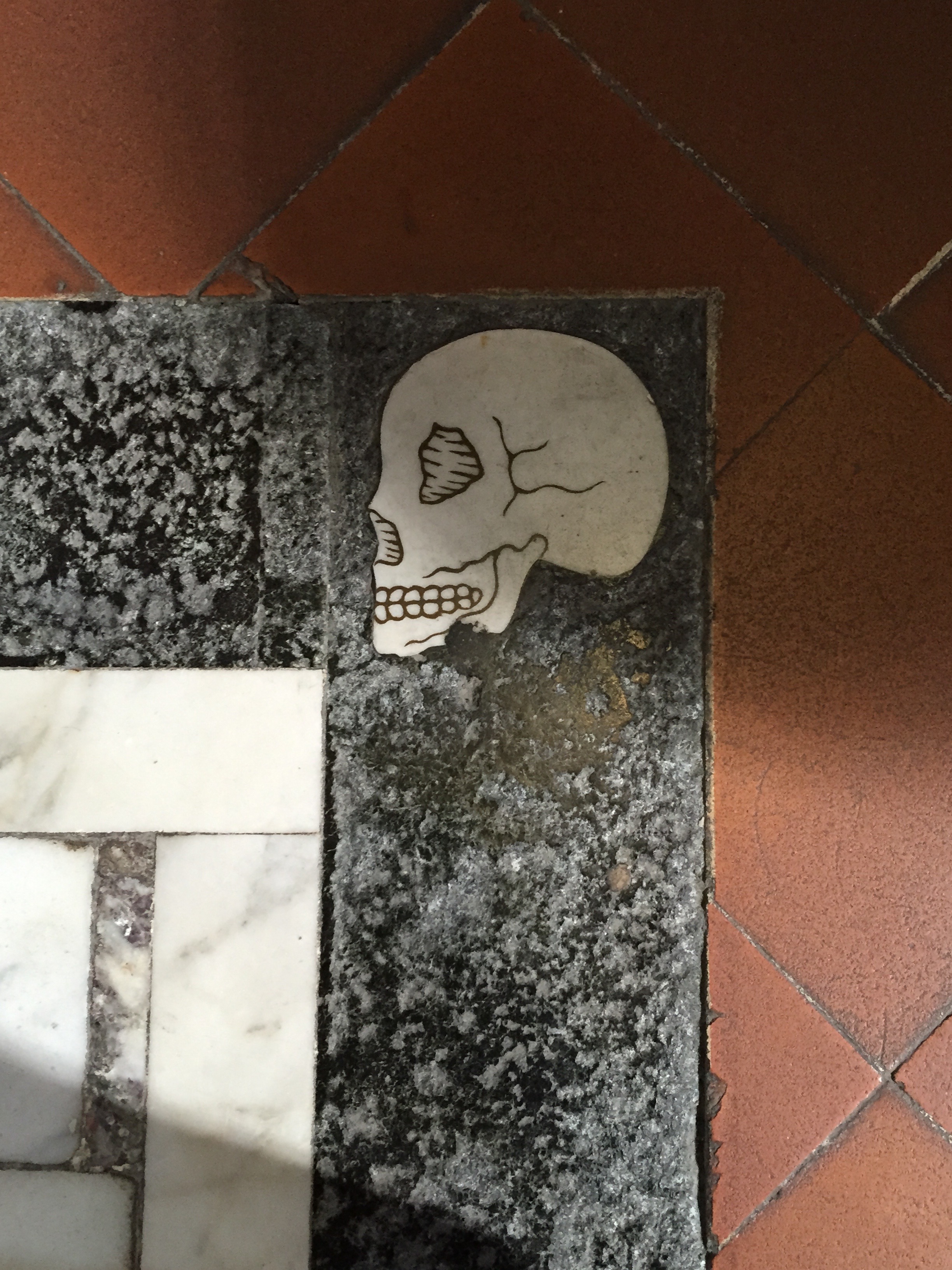
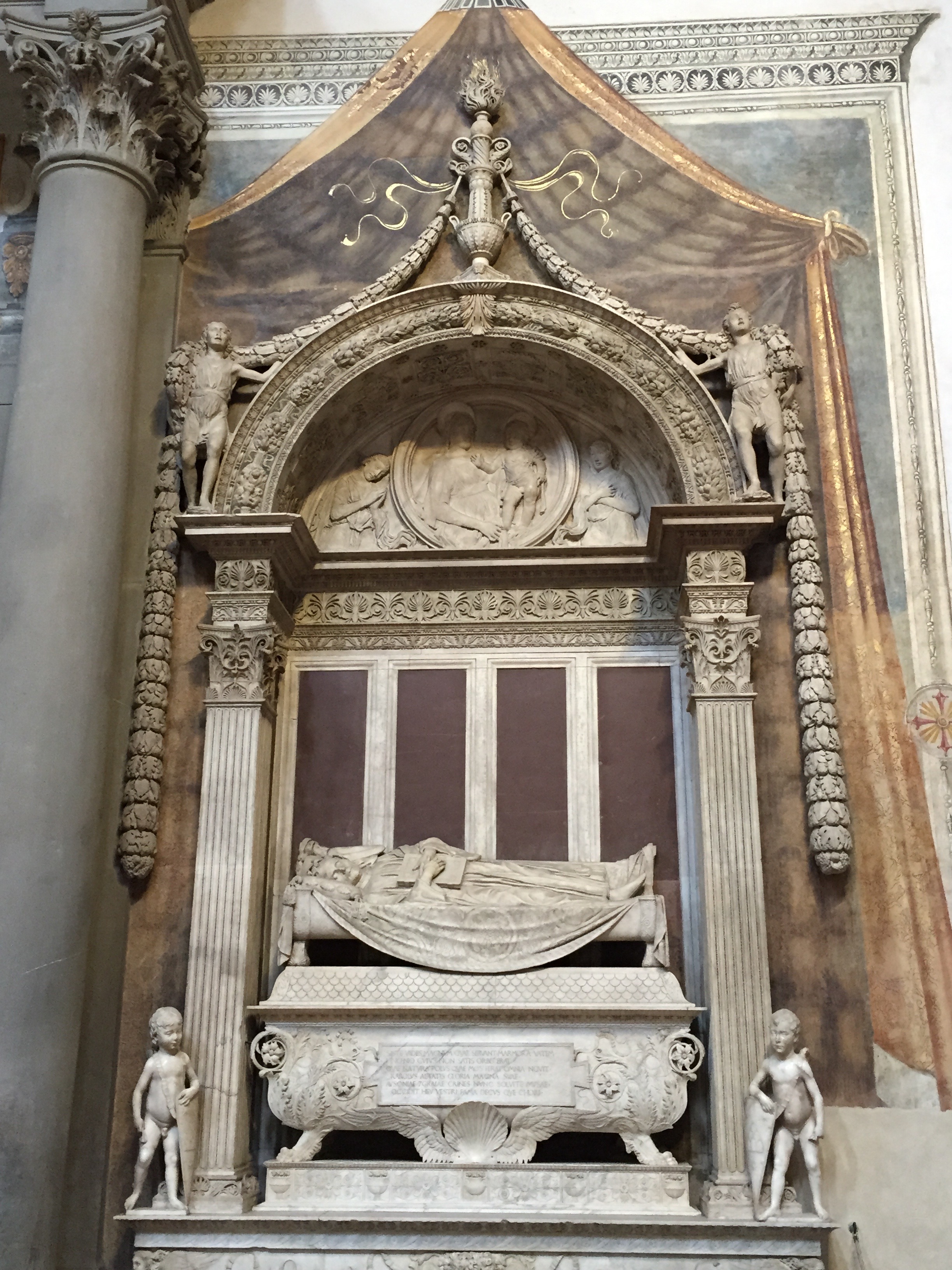
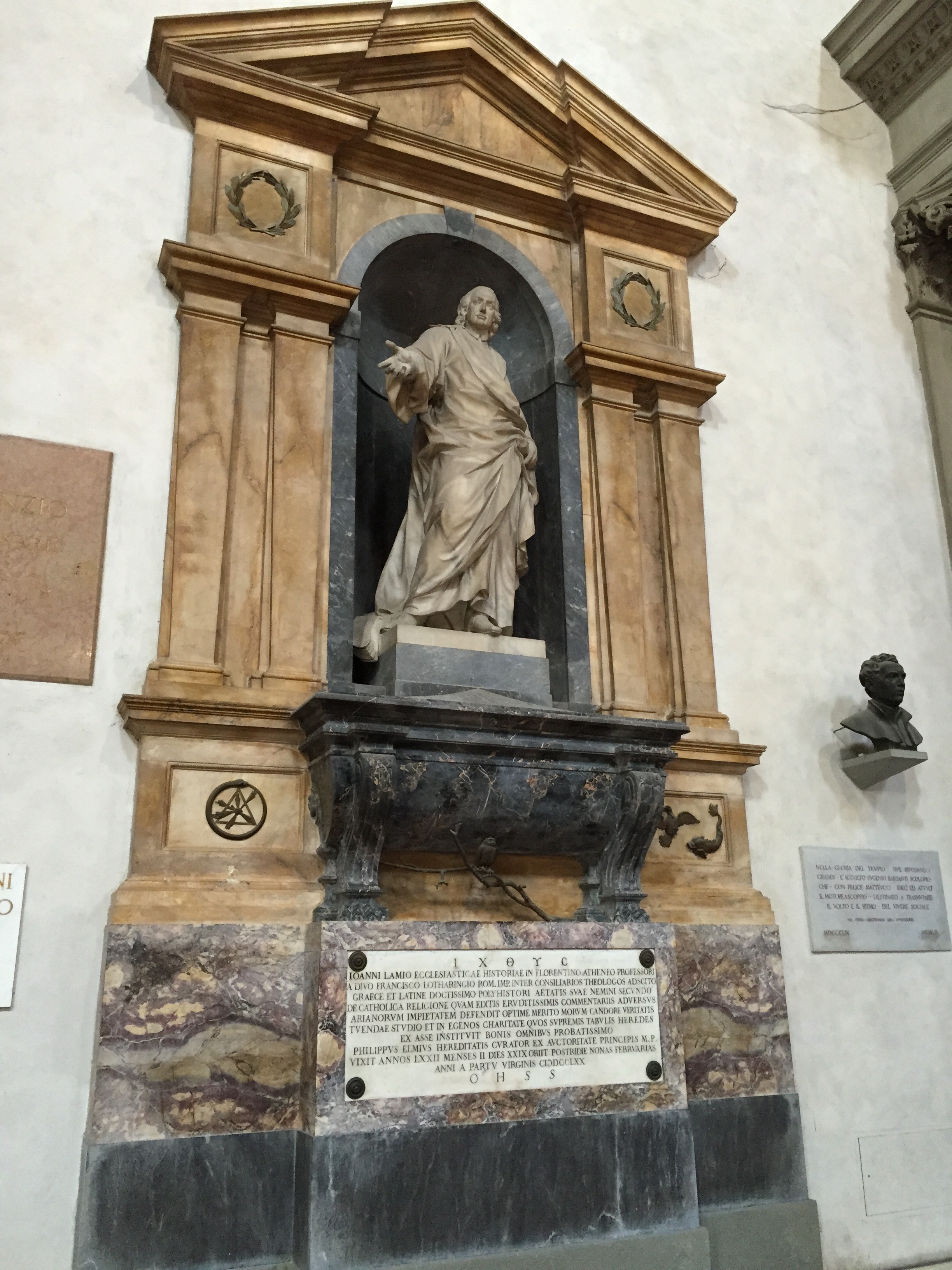
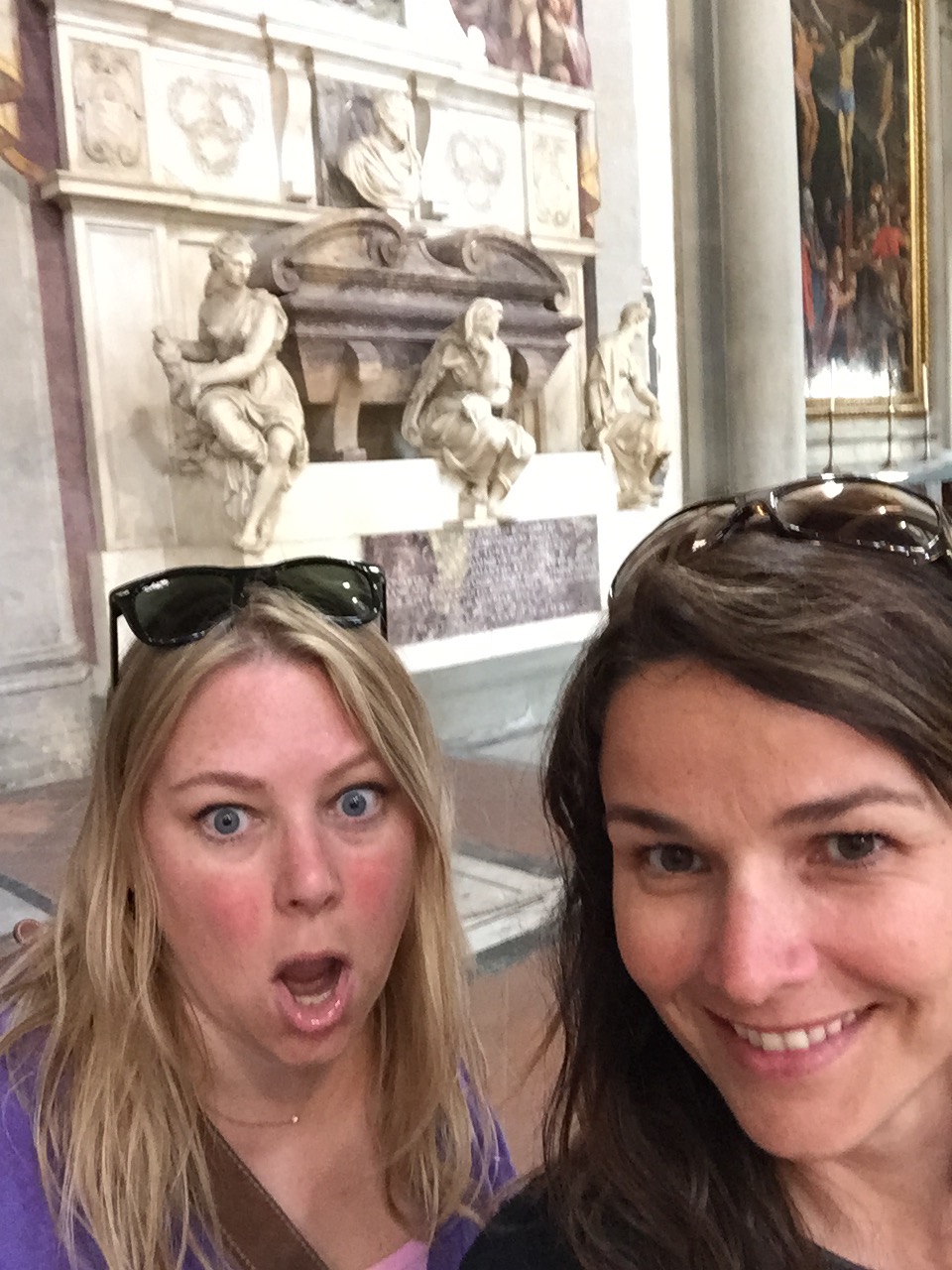
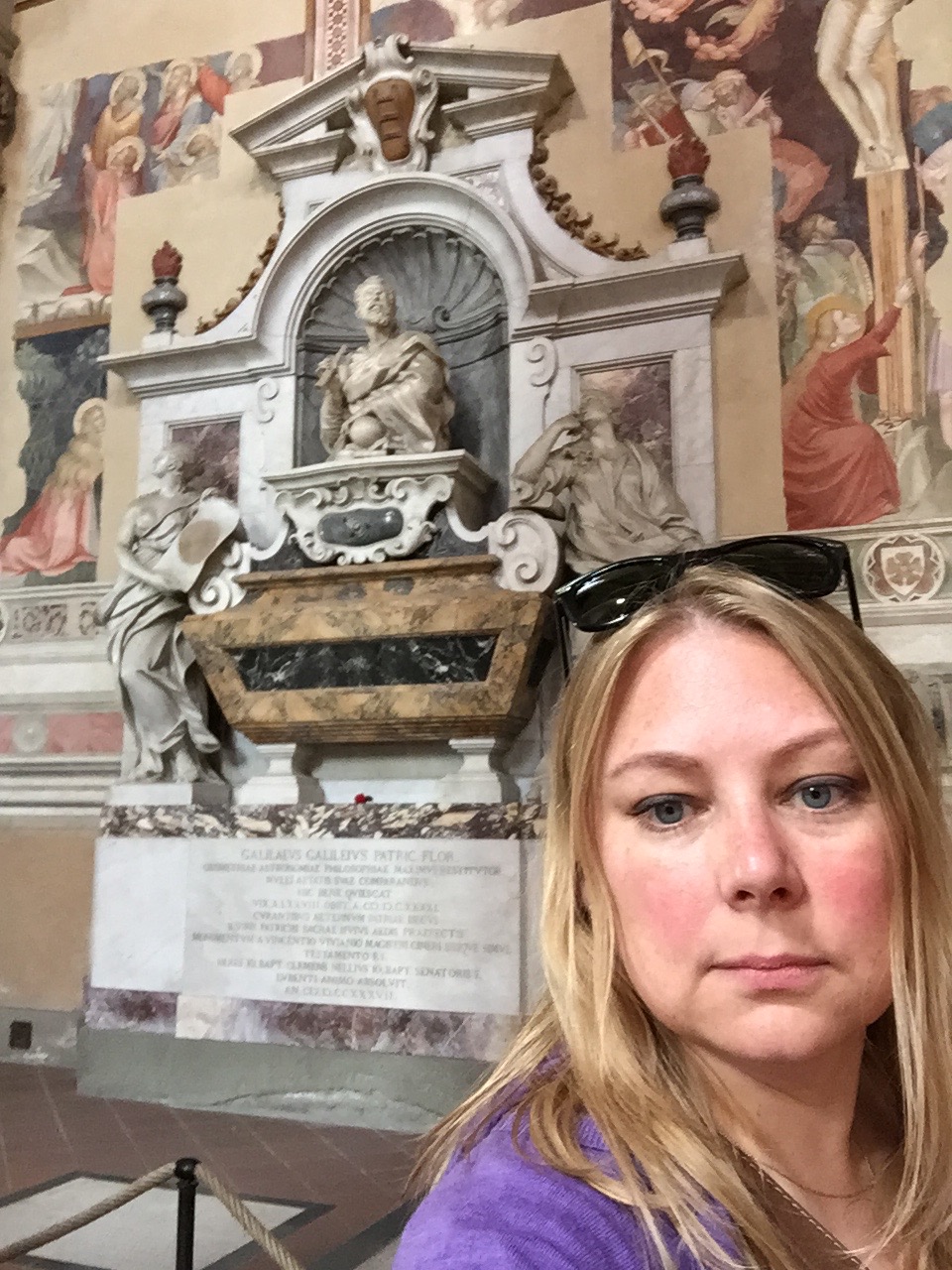
Ensuring that we got in as much as we can, we also spend a morning wandering the Ponte Vecchio in search of fine jewels and ended our last day in Florence with a wander through Santa Croce, which is home to one of the largest collections of crypts of the well-known.  The monumental tombs of Machiavelli, Michelangelo, Galileo, Dante and others rest here. IMG_6694IMG_6432

IMG_7941 IMG_7942 IMG_8082

IMG_8023

Continuing the “I see dead people” series, as we tour the crypts in Santa Croce
IMG_8066

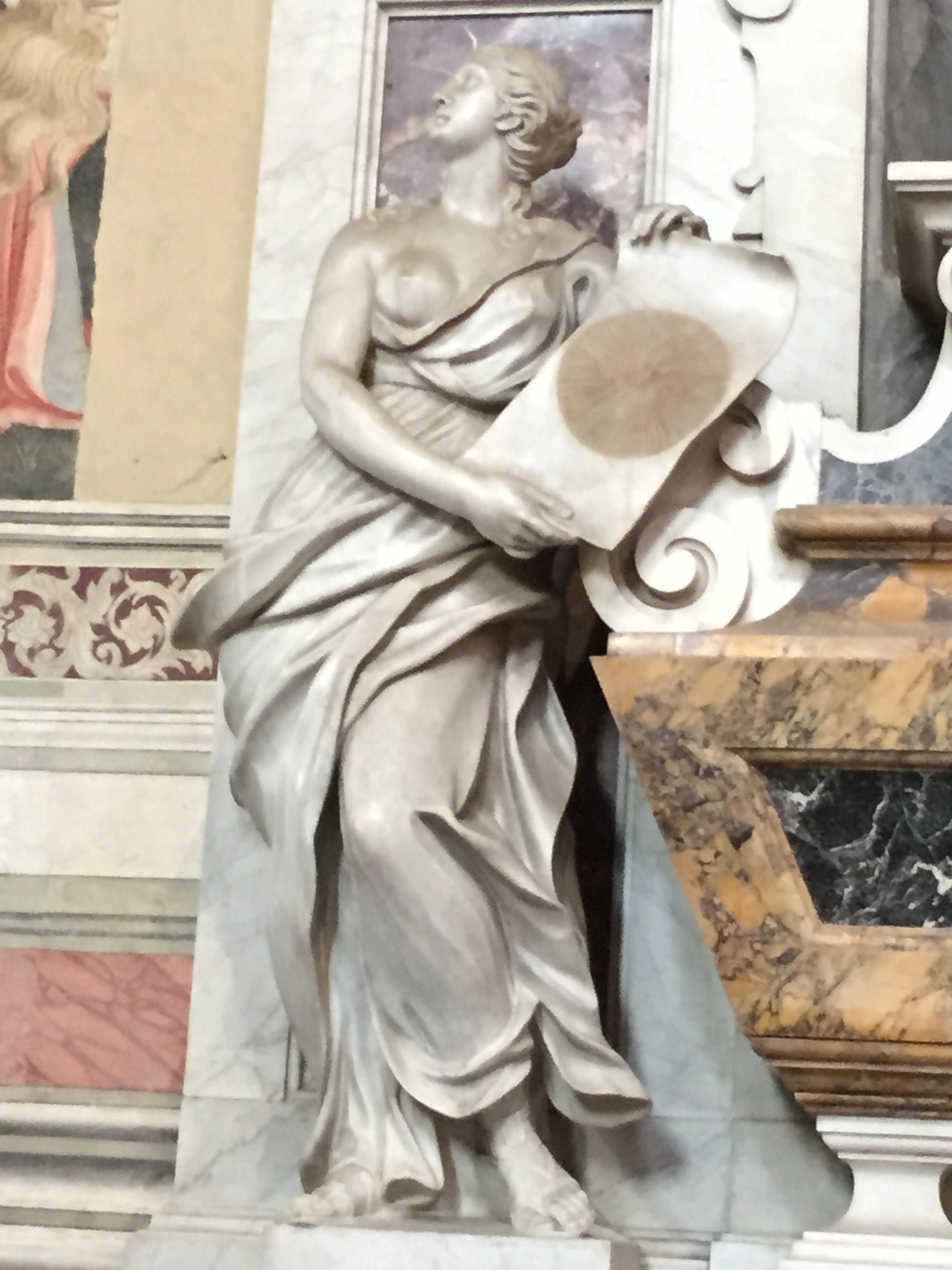
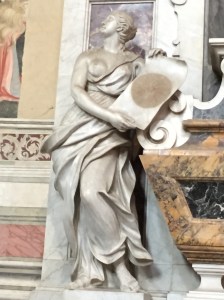
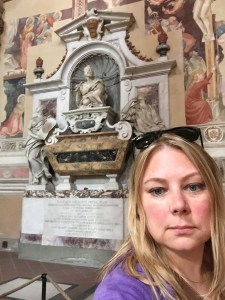
Gallileo’s crpyt was adorned in a number of detailed statues, each depicting a key area of science, math and exploration.
IMG_8056

From Florence, we hopped the high-speed train to Rome which would be one of our final cities (and our final two hotel stays) of the trip.  More to come on that…stay tuned.

C

Leave a comment

A Day Riding the Rails from Zermatt to Florence

It took the better part of a day and four different trains to get from Chamonix, France to Zermatt, Switzerland. What a beautiful part of the world and a lovely adventure to get there. Though Astrid frowned on my idea – jumping roof to roof on the train cars. Spoil sport…

When we made the decision to leave Zermatt and skip the rest of Switzerland due to poor weather we were heartbroken. Bernese Overland was going to be a trip highlight but knowing they were calling for rain, ice and snow (and temps below the freezing point), well we knew that meant low cloud, little to no hiking, limited visibility on any cable cars or gondolas and we figured it just wasn’t meant to be. So, we rerouted ourselves, hopping the train back to Visp en route to our connecting high-speed train that would carry us to Florence. It was a full day of travel, but who doesn’t love to ride the rails.

IMG_6309 IMG_6311

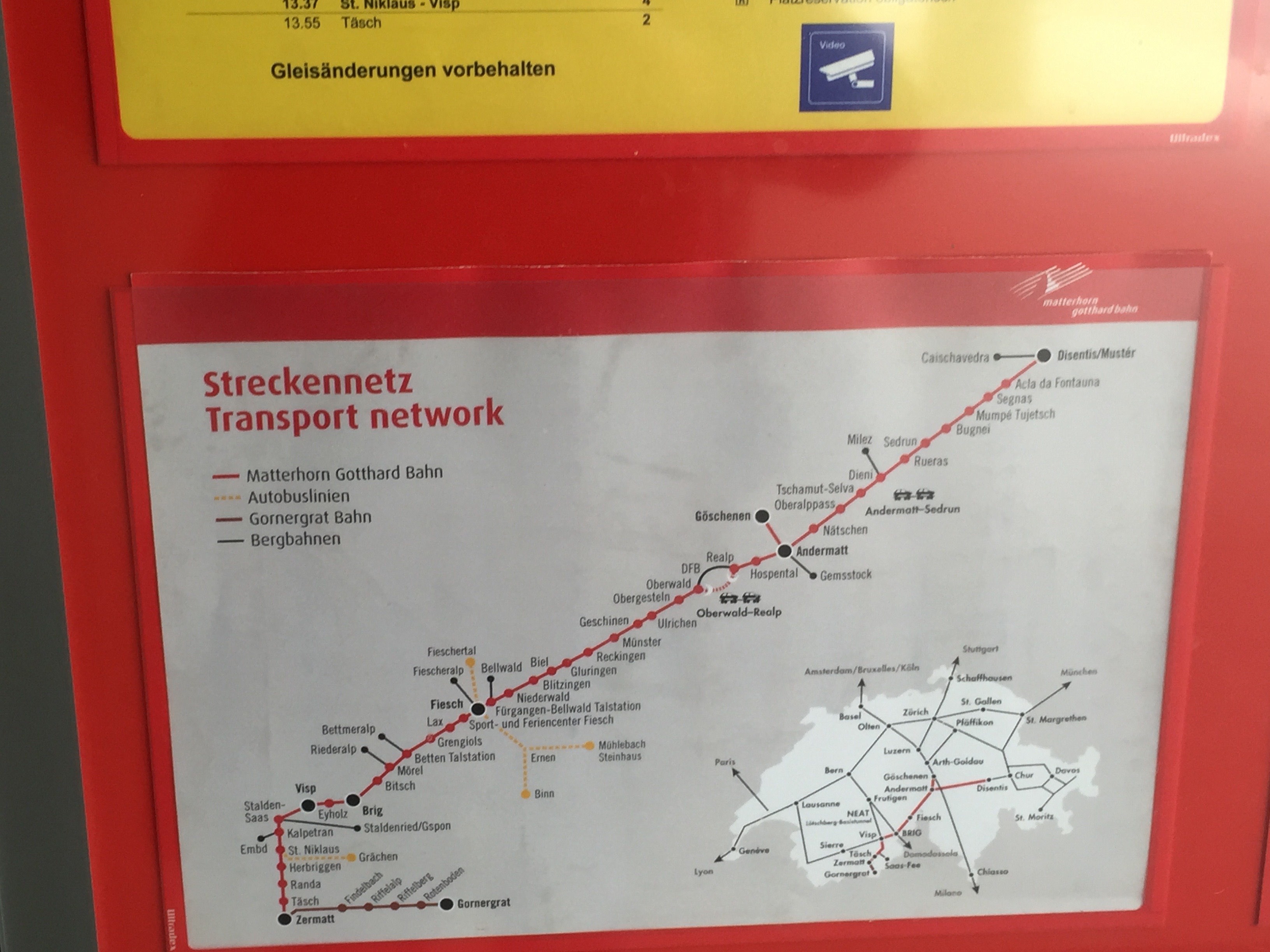
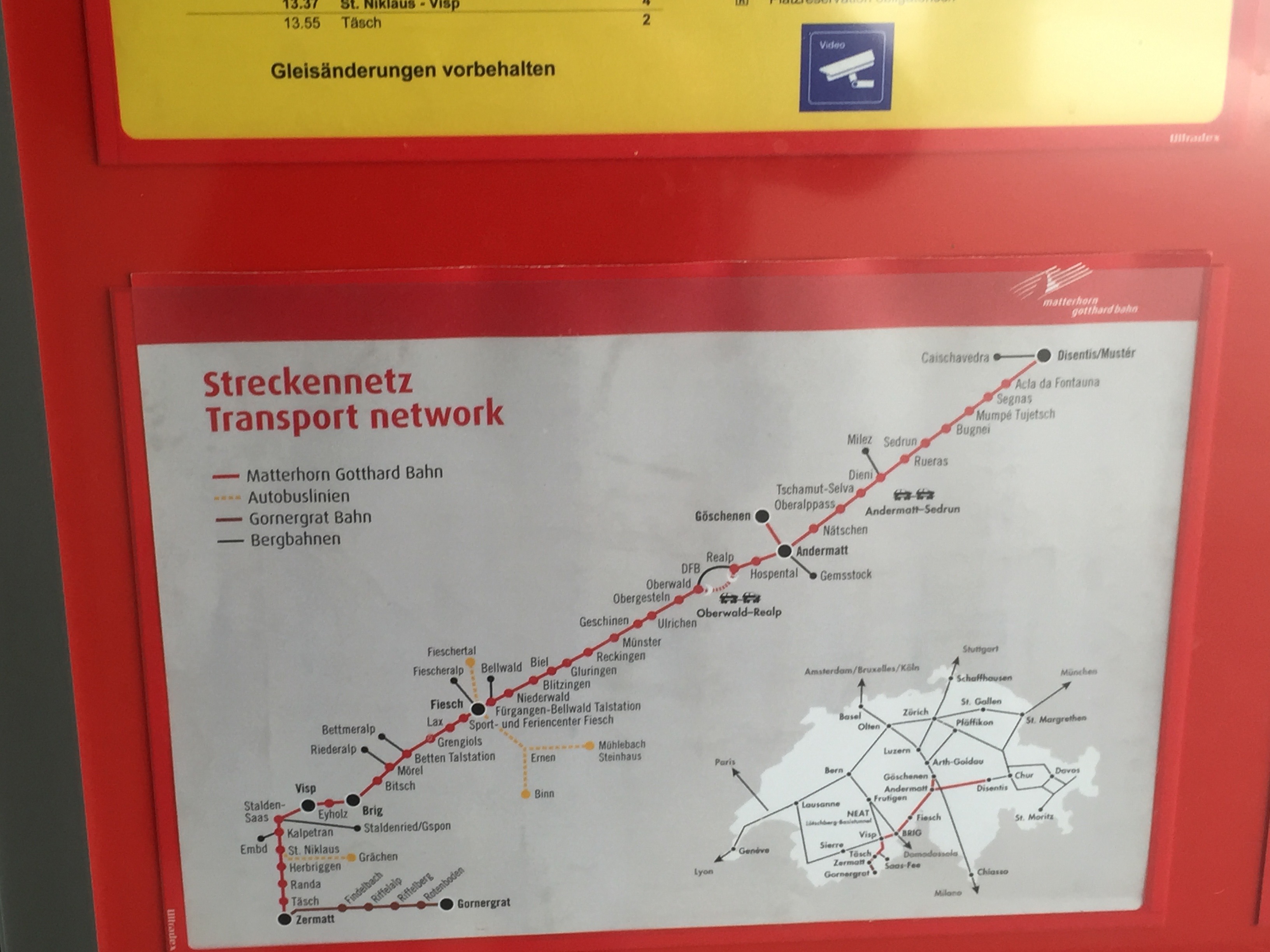
Preparing to ride the rails. Map show parts of our route.

Preparing to ride the rails. Map show parts of our route.


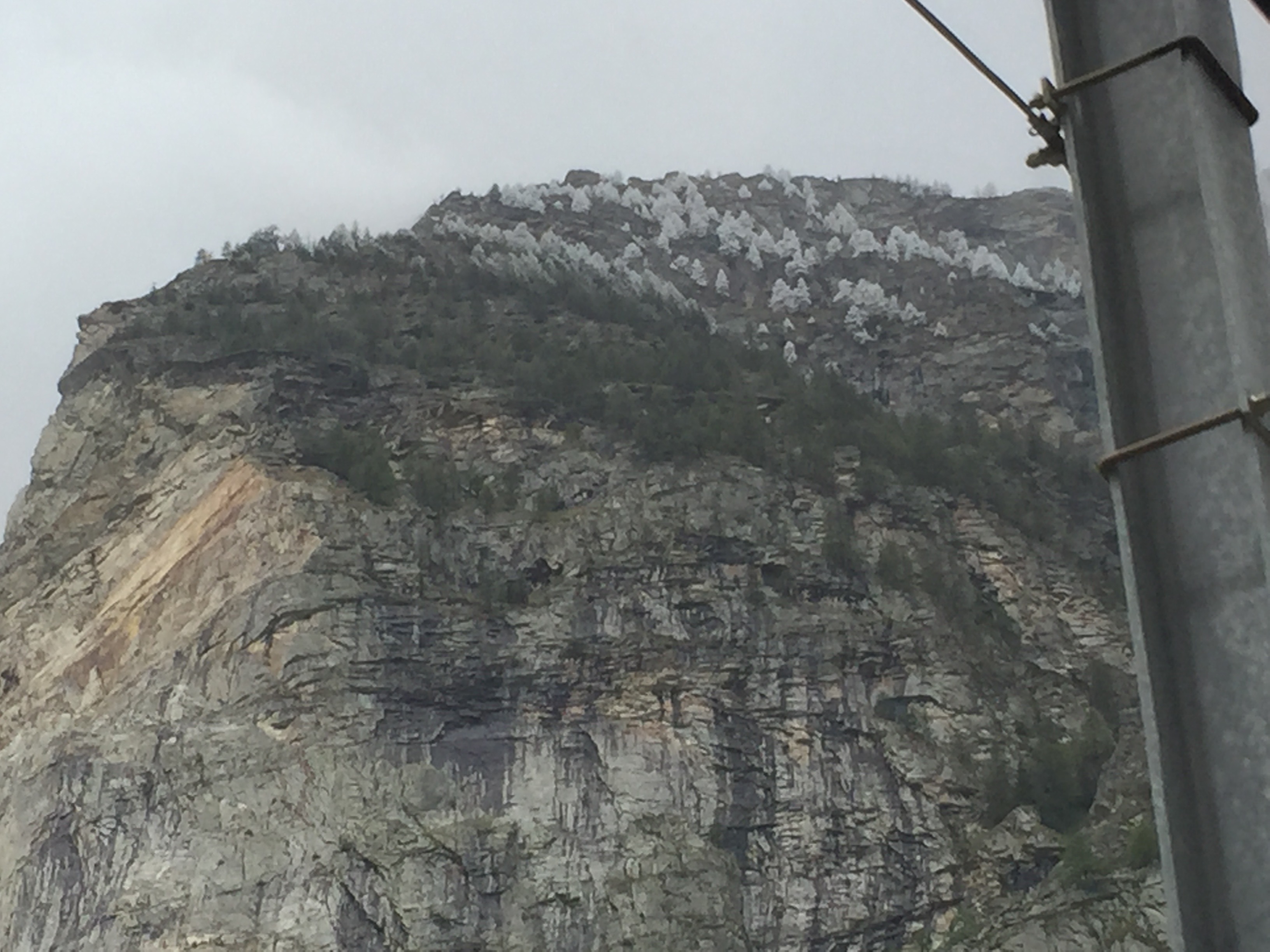
If you look closely you can see the snow dusted evergreen trees. A sign that it was not warm as we left Zermatt that morning.

If you look closely you can see the snow dusted evergreen trees. A sign that it was not warm as we left Zermatt that morning.

IMG_6326IMG_6321

The train ride was general uneventful. Breathtaking scenery, epic mountains, blah blah blah – we had pretty much gotten used to the fact that this is how we roll. Save for a rather undescribedly unhygienic pack of teenage boys on the ride from Zermatt to Visp and some rockin’ music from another group, we quietly enjoyed the scenery and had some downtime on iPad catching up on our HBO – Astrid glued to The Affair, me starting True Detective.

IMG_6334 IMG_6335

Just feels, you know, typical...

Just feels, you know, typical…

IMG_6319

Matthew and Woody are freaking me out..

Matthew and Woody are freaking me out..


Chillin' out on th trail. Watching the world go by.

Chillin’ out on th trail. Watching the world go by.

IMG_6337

Waiting in Visp (I think) for our train connection. This was the only place - the entire trip - where we found take-away coffee. And it was decent. From something like a 7-11 meets Co-op grocery store.

Waiting in Visp (I think) for our train connection. This was the only place – the entire trip – where we found take-away coffee. And it was decent. From something like a 7-11 meets Co-op grocery store.

As I said, it was a full day of travel from Zermatt to Florence, and when we arrived, it was like a monsoon as we marched our way from the train station to our hotel about 10 minutes away. Because we had booked it from Switzerland early, I’d found us a hotel on booking.com. Much nicer than we would have needed, but options were slim at the last-minute and we got a really good rate.

We arrived in the lobby, dripping, like a pair of wet dogs that had run straight from a rainstorm outside into a formal living room. My favourite line from the hotel front desk – as I looked confused as to why the bellman was hovering well into my personal space – “Miss, he’d like to take your backpack”, because it (and I) were causing a massive puddle on their spotless, polished marble floor.

But, that’s a story for another time….stay tuned.

CKD


Leave a comment

Better than Disneyland – Zermatt and the Matterhorn

Probably the country I was most excited to see was Switzerland. Sure we live here in the foothills of the Rockies and I grew up surrounded by the coastal mountains of British Columbia. But as Astrid liked to explain to those who asked “Why the Alps?”, these mountains are different that those mountains.

Our Swiss leg originally was to involve a couple of stops – the first being Zermatt, most famous for being the second location for the Matterhorn. With Disneyland, of course, being the typical North American’s first encounter with this majestic mountain. And I’ve been asked – the one in Zermatt is SO much cooler.

Our second planned stop was to be the Bernese Overland – specifically Lauterbrunnen and Gimmelwald.  Sadly, the weather turned on us on day two in Zermatt so this became our only stop in this beautiful and expensive country, complete with exceptionally efficient and well-run rail service. But, the point of this post isn’t to whine about where we didn’t get to go, rather to tell you all about our adventure in Zermatt.

First – the background…thanks again to our friends at Wikipedia we can tell you that Zermatt in the district of Visp and is primarily in the German-speaking section of the canton of Valais. A canton, we learned, is like a province or state. 

There are about 5,800 residents in Zermatt and during our visit – remember it was inter season – about two dozen tourists. It’s a pretty tiny place, you can probably walk from one end of the other in about half an hour.  From what I can tell, there are 3 main drags, all running along the banks of the river Matter Vispa – which rises at the glaciers at the feet of the highest peaks – Gorner Glacier (east) and Zmutt Glacier (west).  Many of the cross streets cut around the train station and the local church – which seemingly is the centre of ‘town”.

IMG_6087 IMG_6085IMG_6117

Wes Anderson Fans - its even better in the low cloud! Right?

Wes Anderson Fans – its even better in the low cloud! Right?

IMG_6097

The little village – which could have been taken straight out of a children’s book – was EMPTY during our visit! While we had been warned, I still expected a bit more hustle and bustle, even though it was inter-season. Most things were closed and that which was open seemed to be under some form of construction.

The upside to this – no lines and no need for our #donttouchme hashtag. The downside was the restaurants that had been recommended to us were closed and I feel like, after the lovely vibe of Chamonix, we missed out on truly getting a real feel for Zermatt and why everyone I talked to who has been loves it so much. A return visit during ski or hiking season will be necessary. Perhaps when we finally make it to the Bernese Overland – hopefully soon at that!

Wikipedia tell me – though likely if I had a map with me (as Astrid always does) I could figure this out myself – that the town lies at the upper end of Mattertal at an elevation of 1,620 m (5,310 ft), at the foot of Switzerland’s highest peaks. The town of Zermatt lies at the southern end of the Matter Valley, which is one of the lateral branches of the great Valley of the Rhone.

Until the mid-19th century, it was predominantly an agricultural community; the first and tragic ascent of the Matterhorn in 1865 was followed by a rush on the mountains surrounding the village, leading to the construction of many tourist facilities.

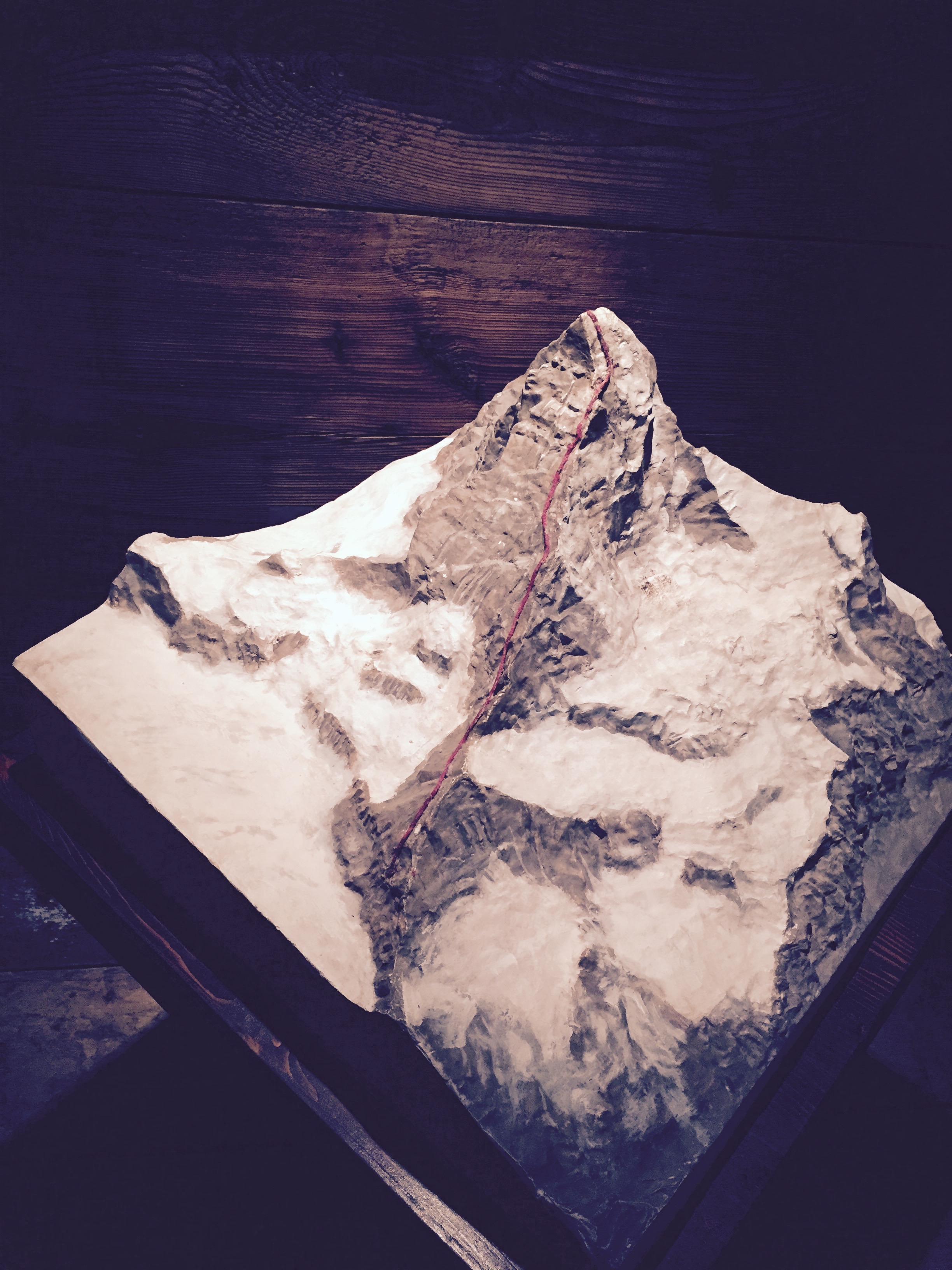
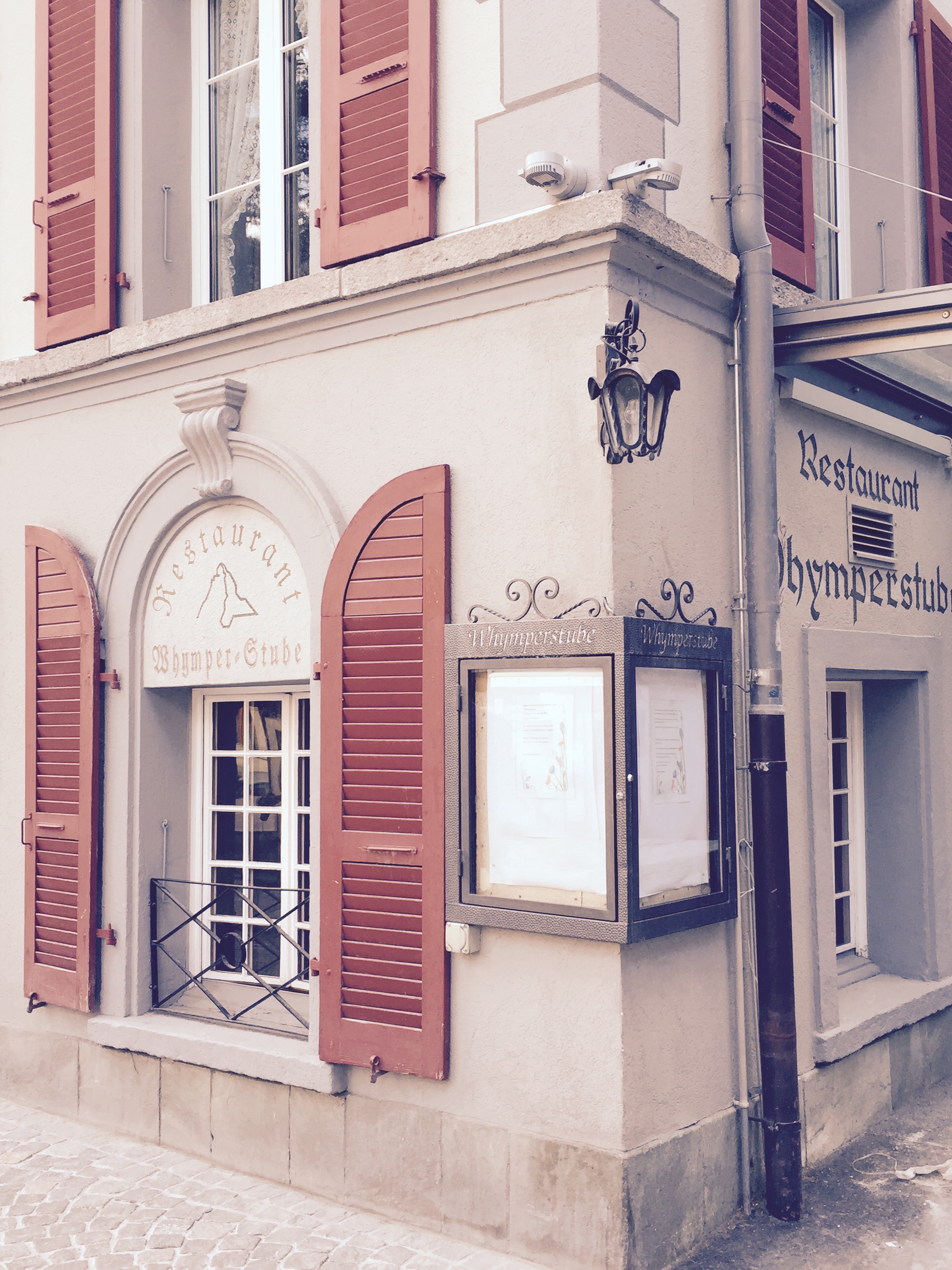
The Whymper Route - named for Edward Whymper - the first mountainer to successfully climb the Matterhorn.

The Whymper Route – named for Edward Whymper – the first mountainer to successfully climb the Matterhorn.

It is well known as a mountaineering destination and of course, ski resort. You can actually ski year-round if you really wanted to. We watched a few seasoned pros climb on and off the gondola as we traveled the gondola to the Glacier Mountain Paradise and on the lower slopes where tourists who likely had just strapped a pair of planks on for the first time, and likely never seen snow before.

Wikipedia says “The name of Zermatt, first as Zur Matte (“at the meadow”) and became later Zermatt. It does not appear until 1495 on a map or 1546 in a text, but may have been employed long before. Praborno or Prato Borno (prato also means meadow) are the older names of Zermatt; they appear in the ancient maps as early as the thirteenth century.

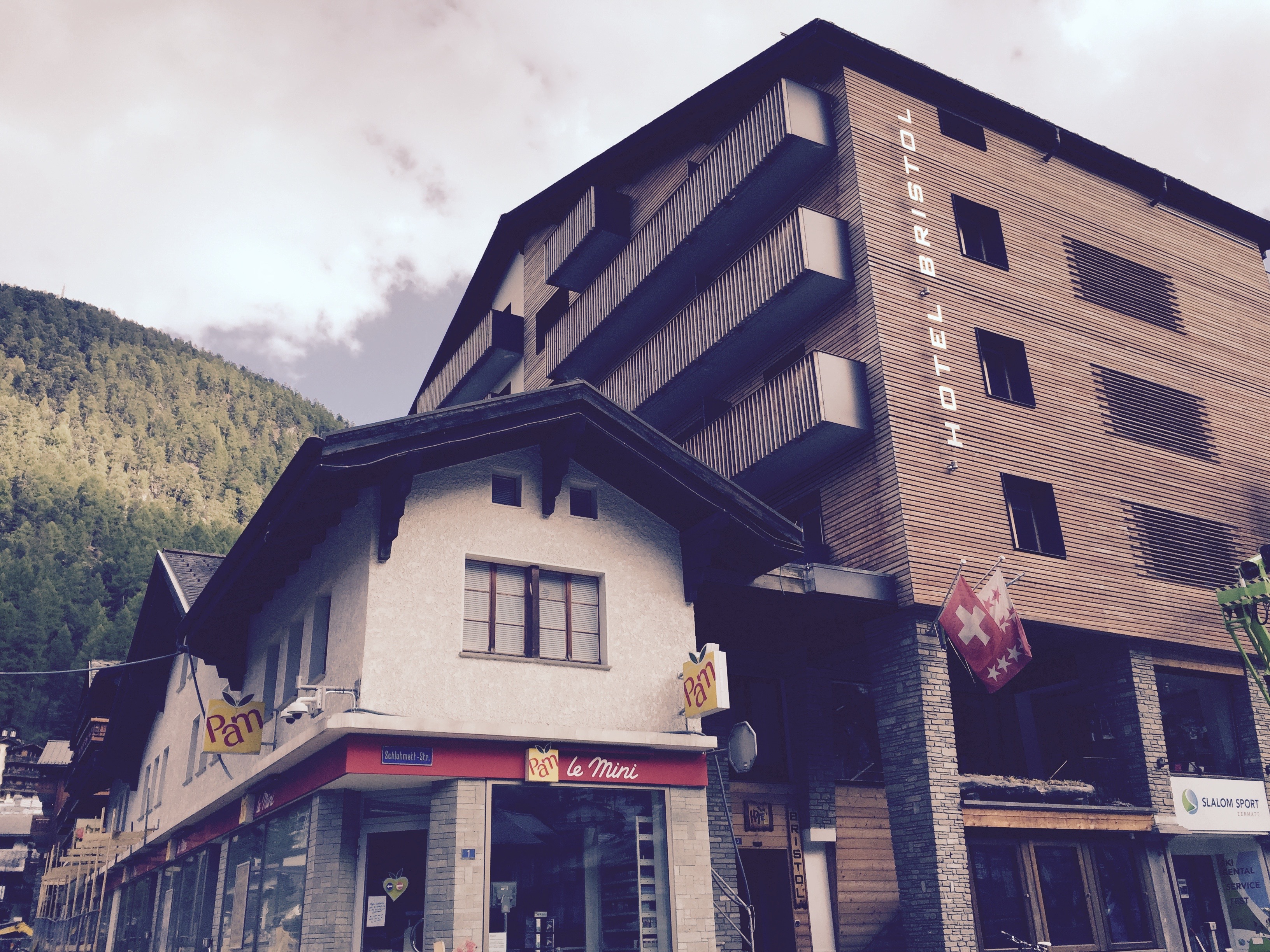
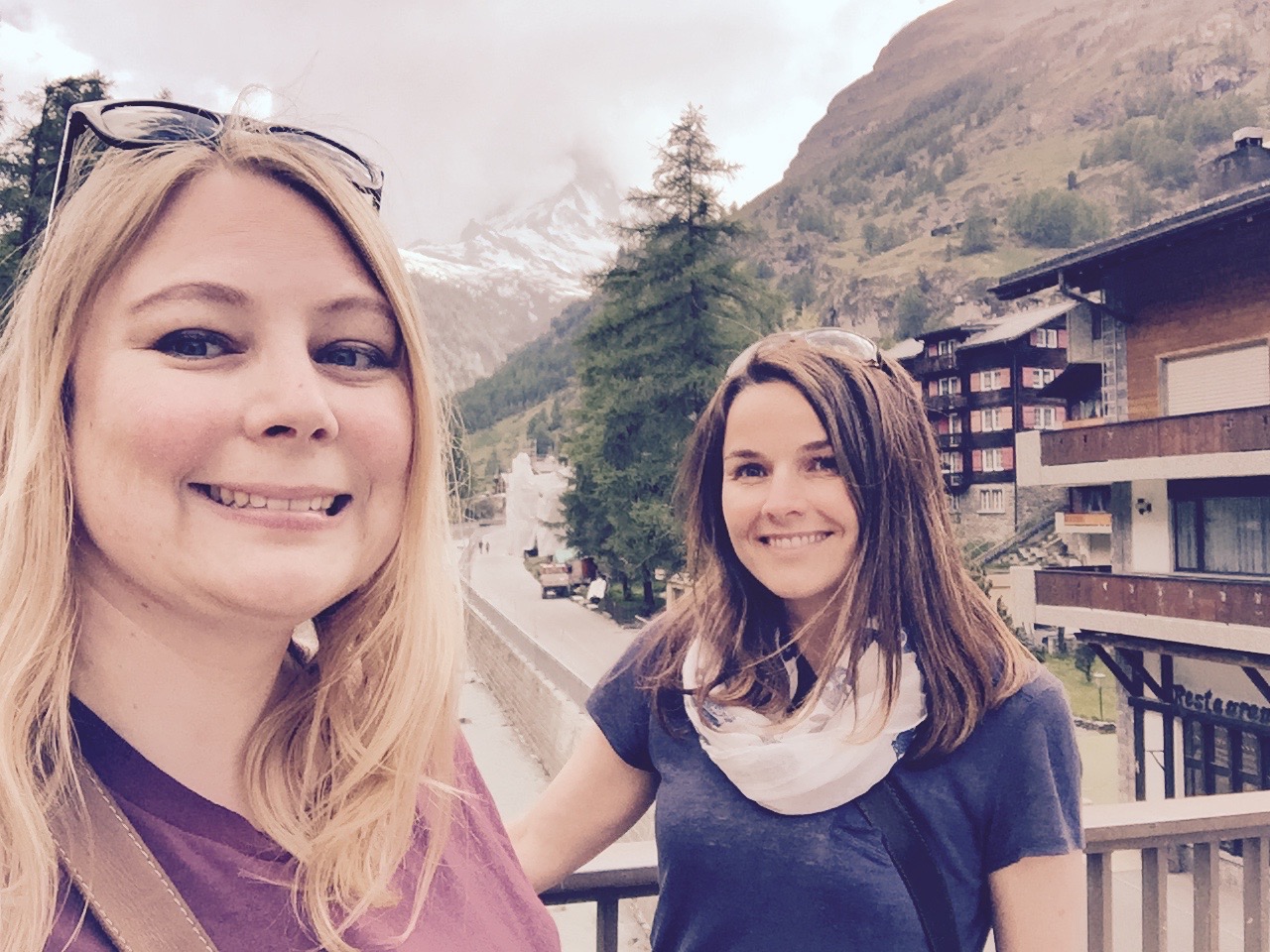
Despite being quiet, we didn’t lack for fun things to do. After checking into the Hotel Bristol, we made quick work of getting our shots with the Matterhorn. One of the things I had read was that she is a bit shy – and if the weather and clouds are not on your side, you can go days (or even an entire visit) without seeing her.

Our Hotel - the Hotel Bristol was on the far end of town but nicely situated between the gondola that rose to the GMP and the river and bridge that walked us into "downtown"

Our Hotel – the Hotel Bristol was on the far end of town but nicely situated between the gondola that rose to the GMP and the river and bridge that walked us into “downtown”

IMG_6080

IMG_6131 IMG_6097IMG_6093

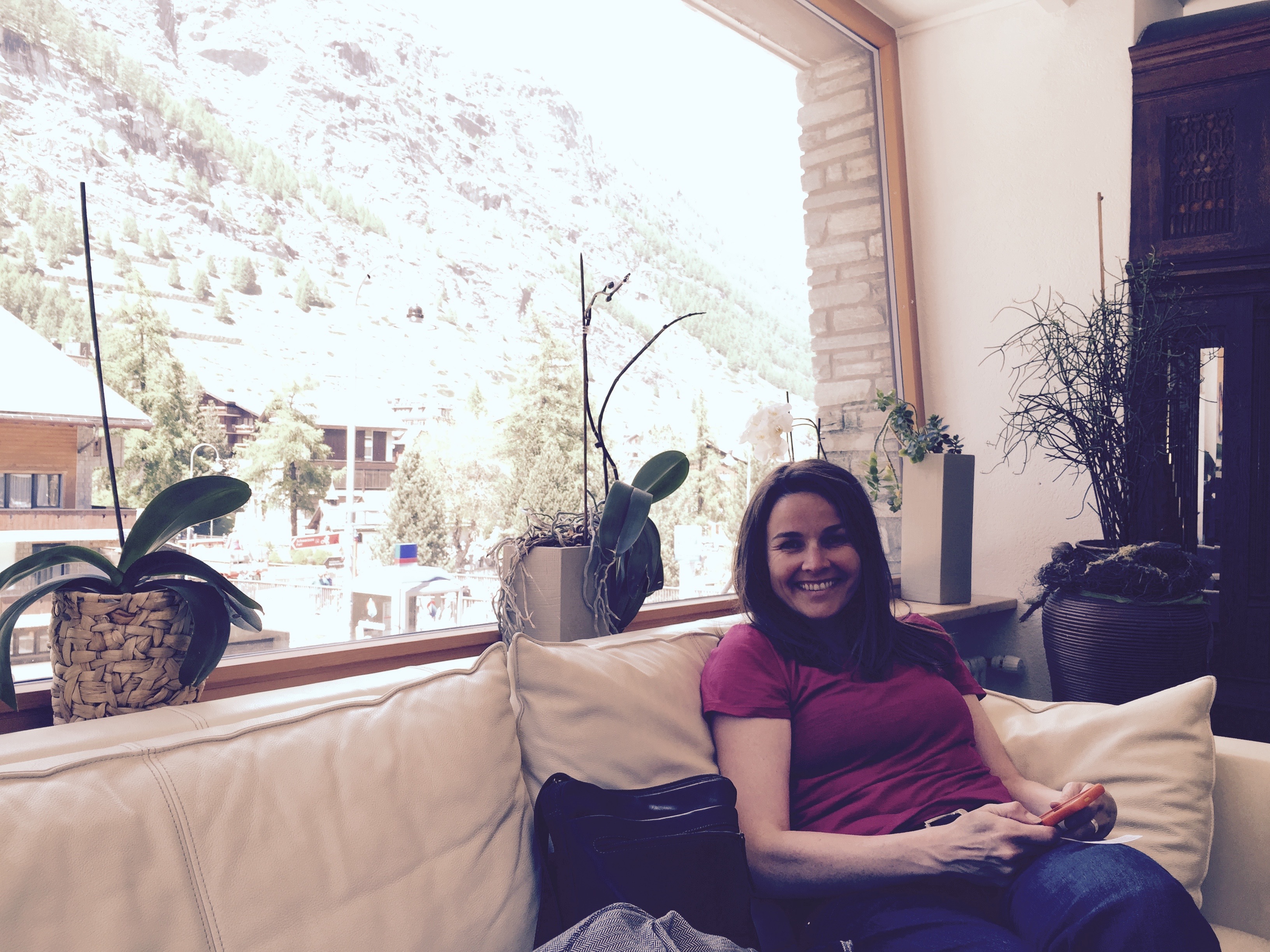
Chilling out in the hotel lobby waiting for our room to be ready.

Chilling out in the hotel lobby waiting for our room to be ready.


Would be a lovely place to curl up in ski season.

Would be a lovely place to curl up in ski season.


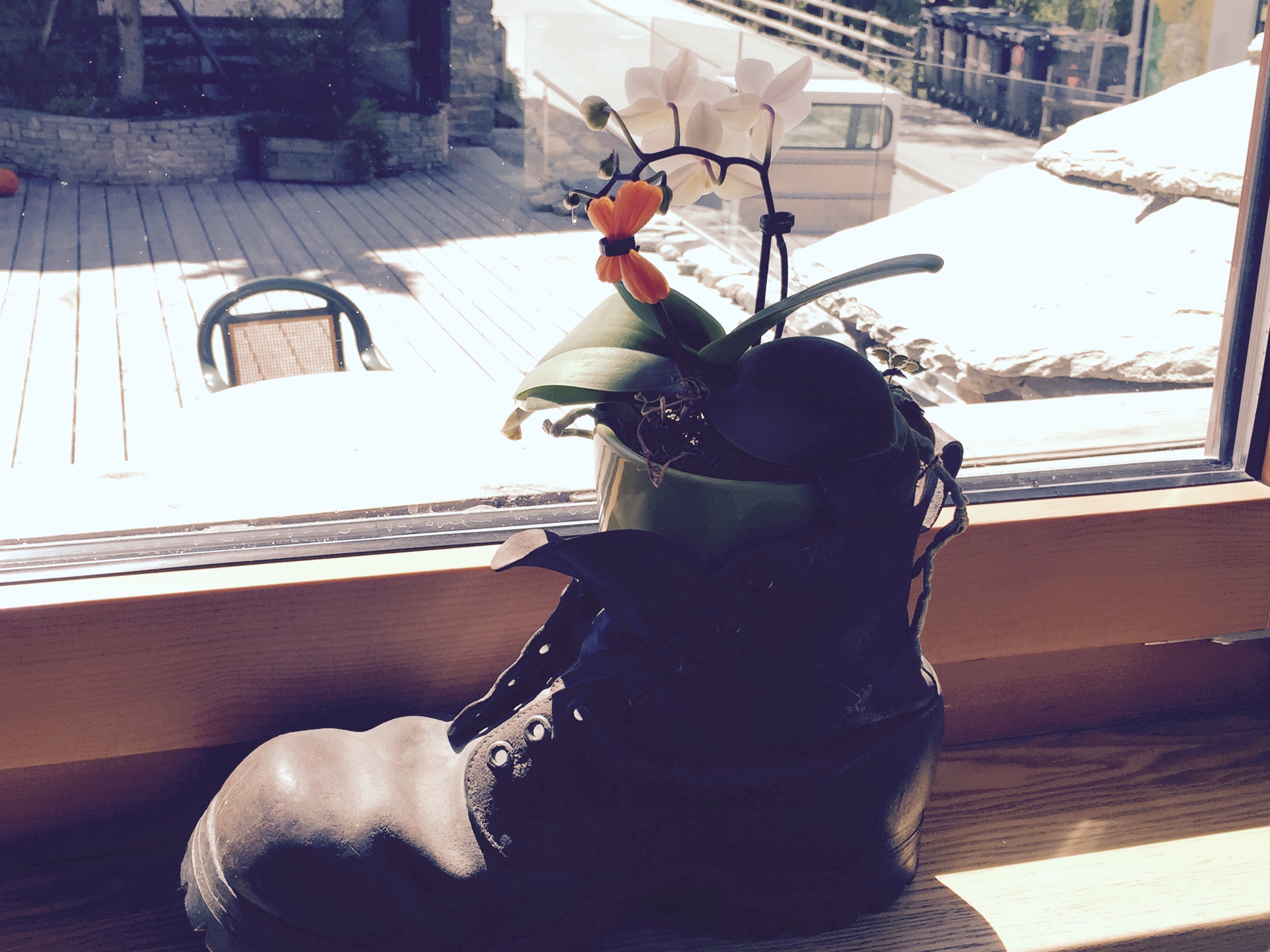
The hiking boot with the orchd growing out of it at our hotel.

The hiking boot with the orchid growing out of it at our hotel.


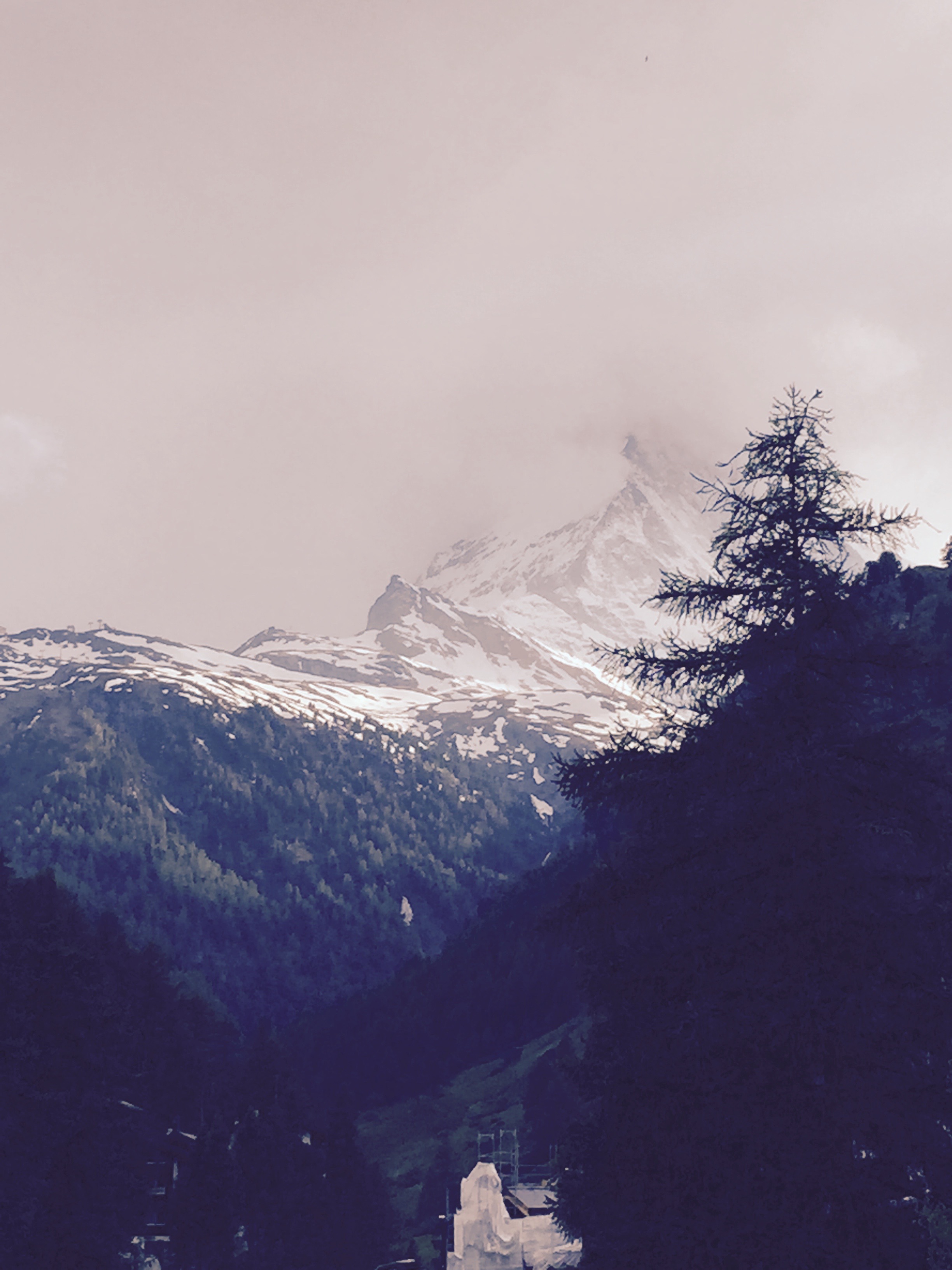
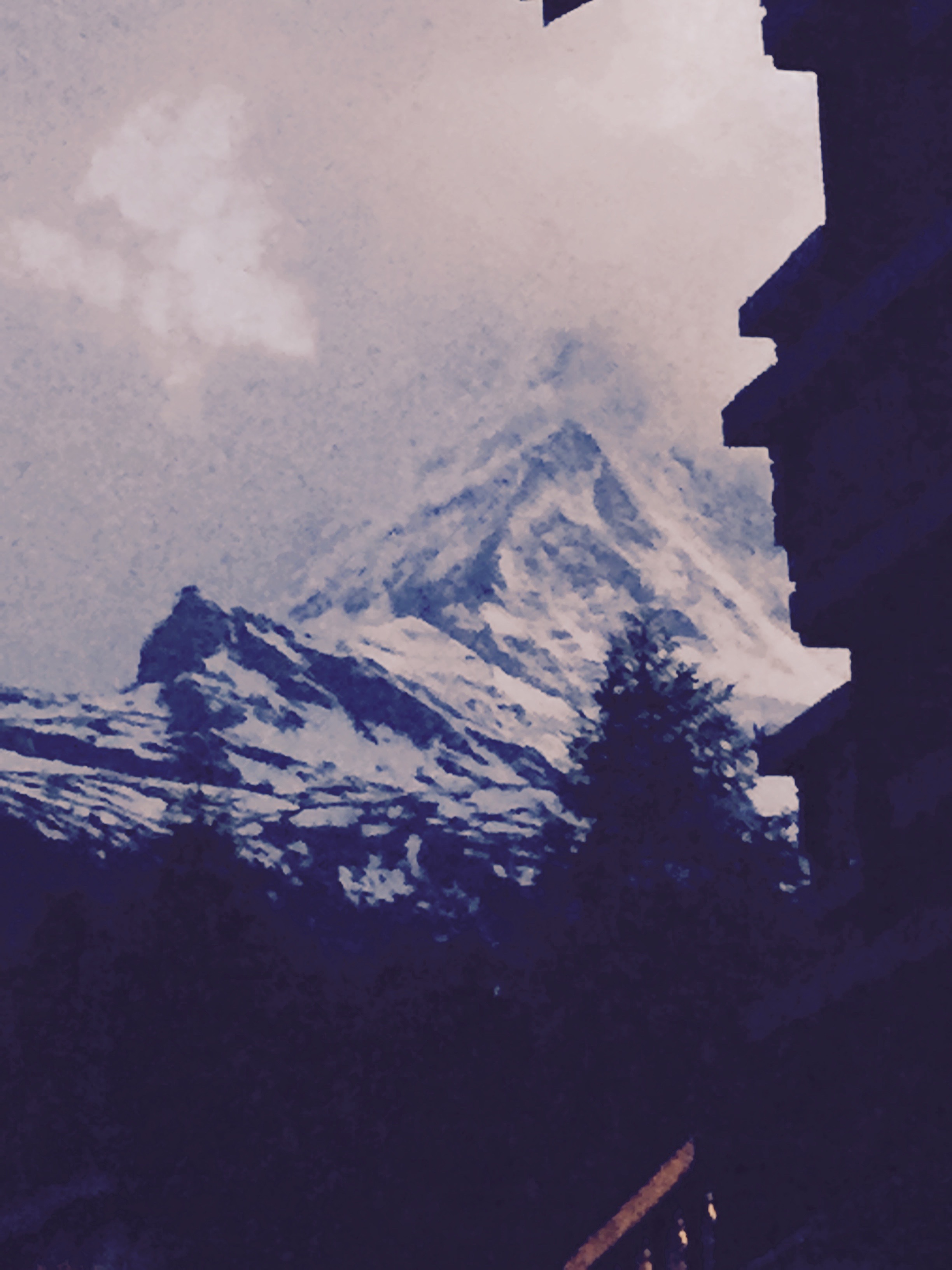
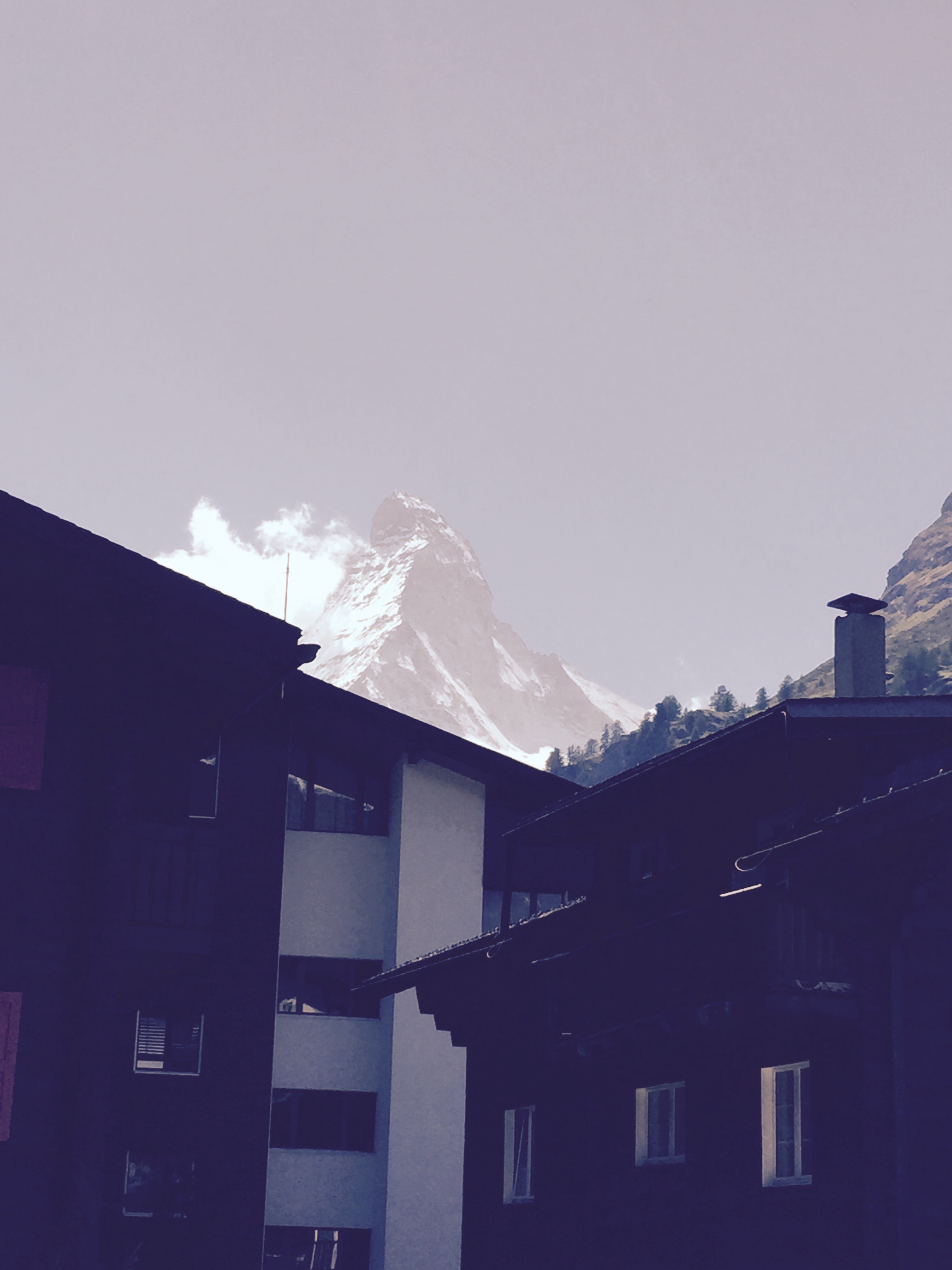
The Matterhorn before she disappeared

The Matterhorn before she disappeared

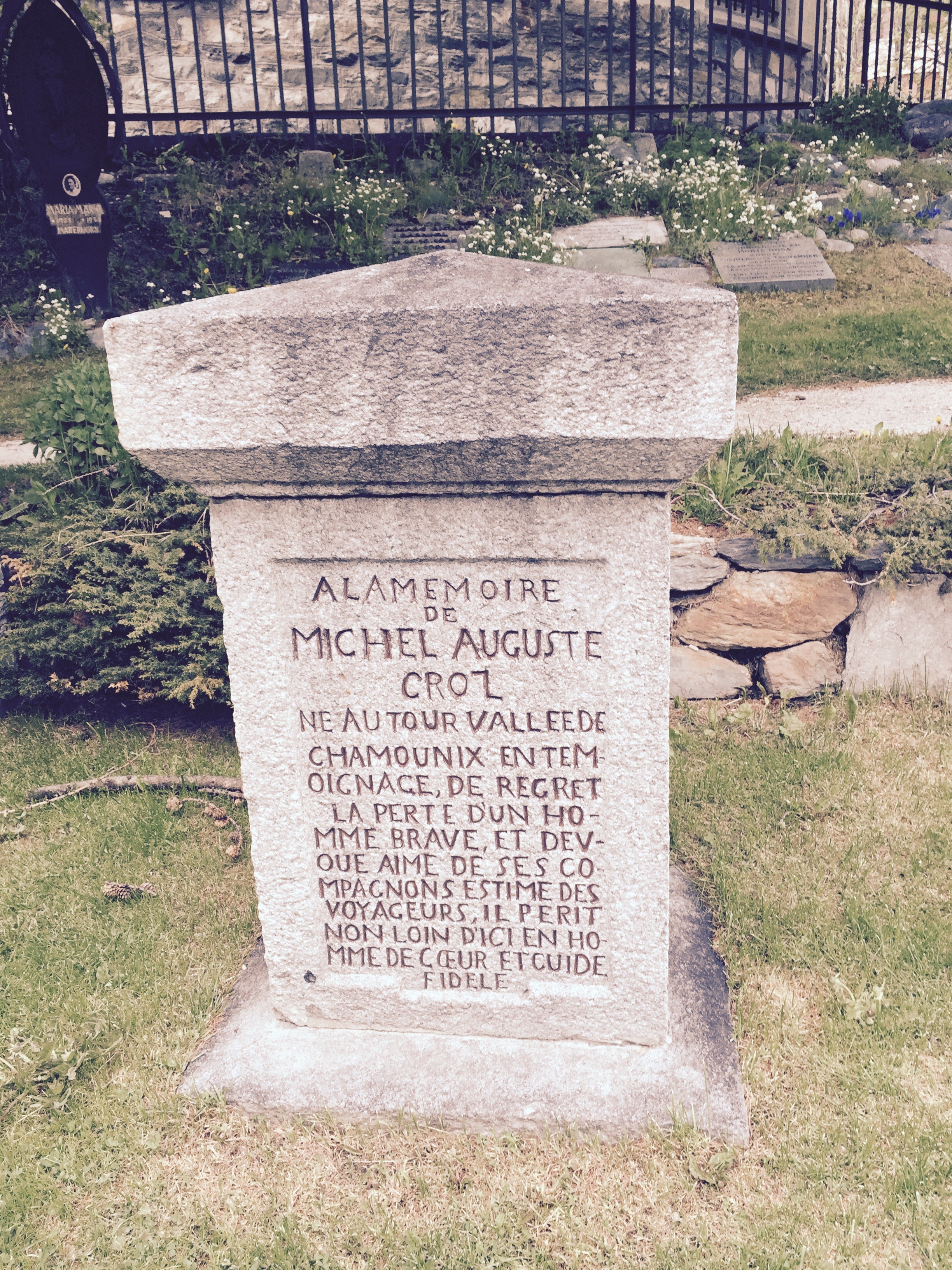
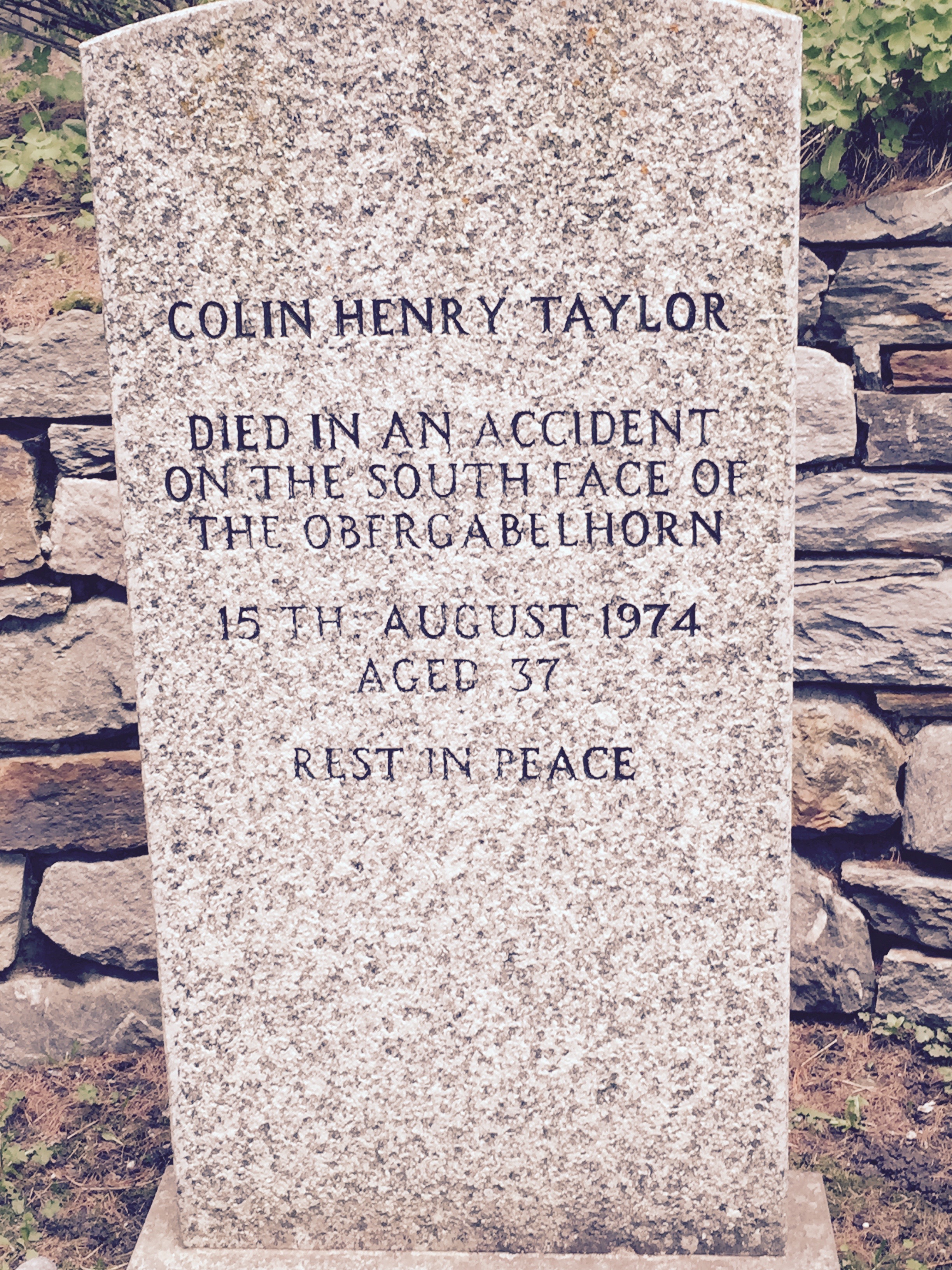
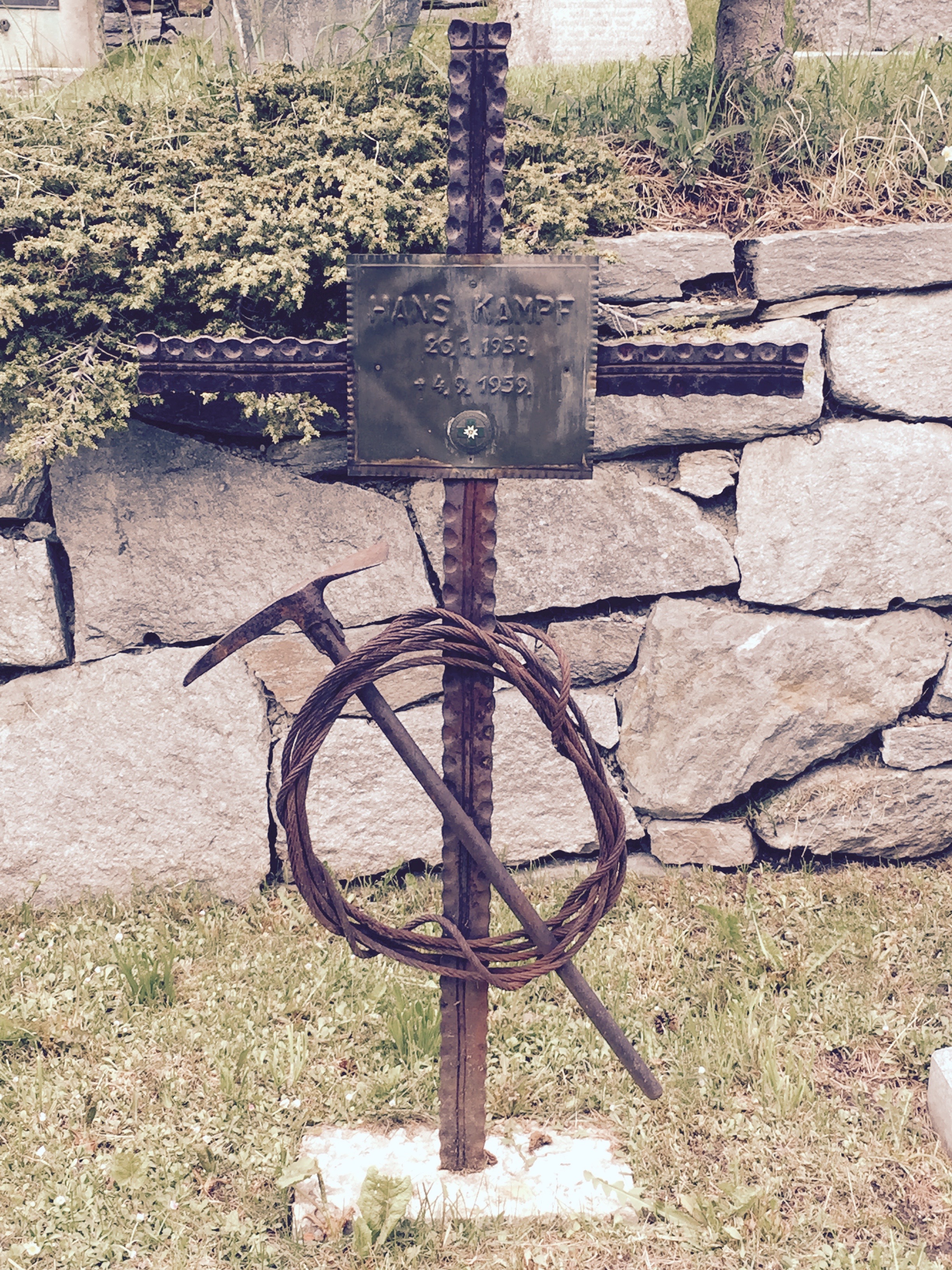
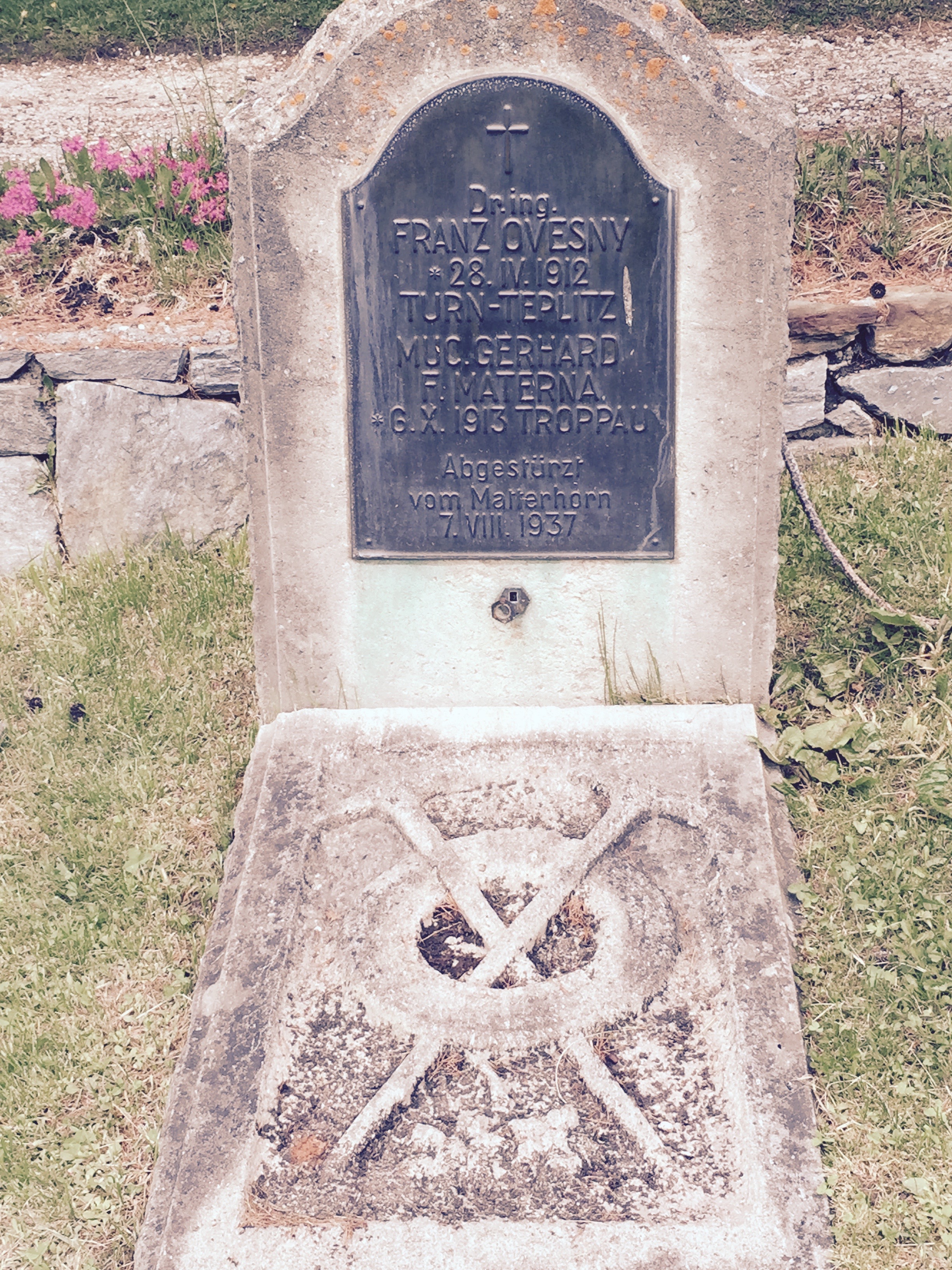
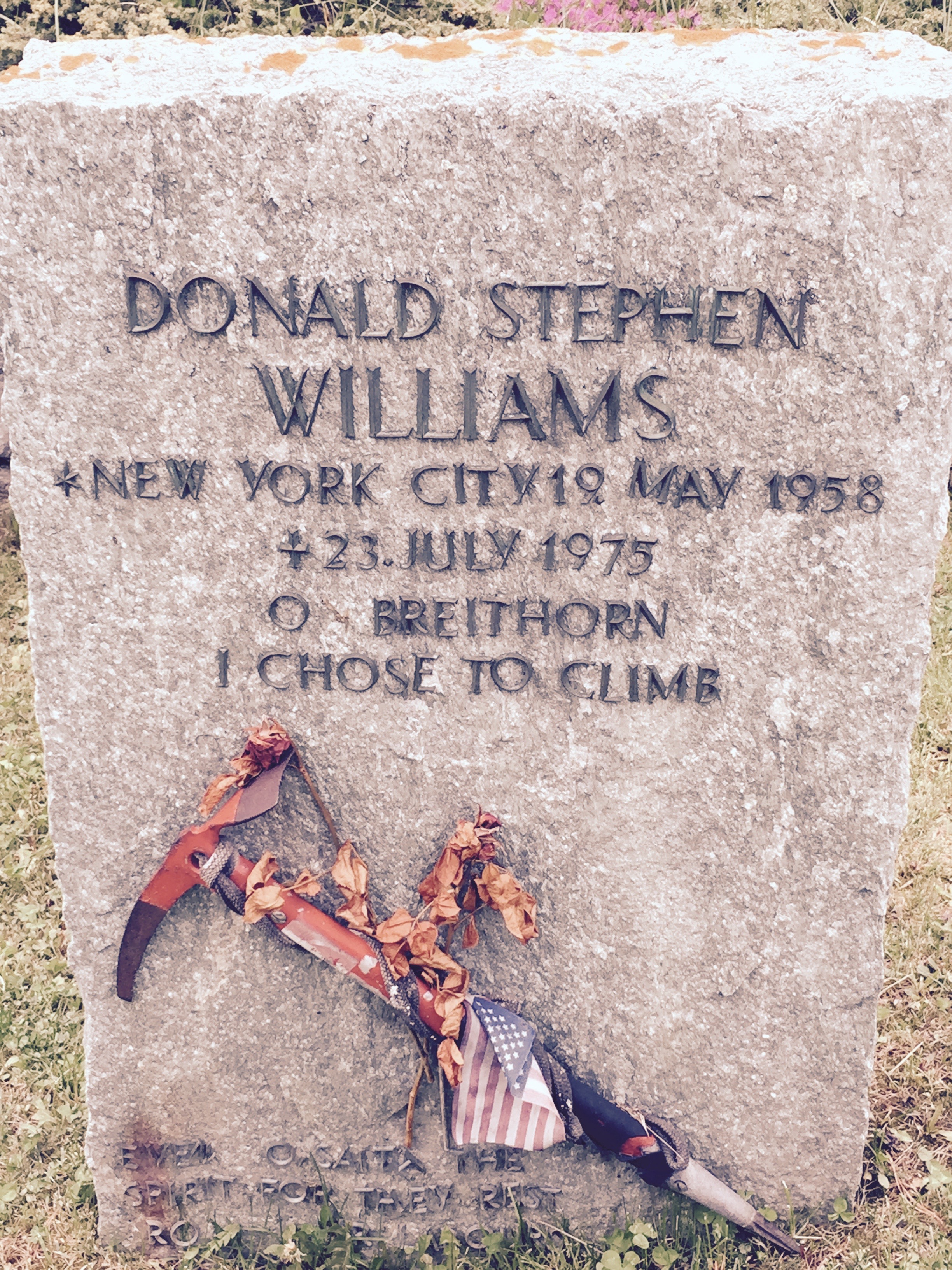
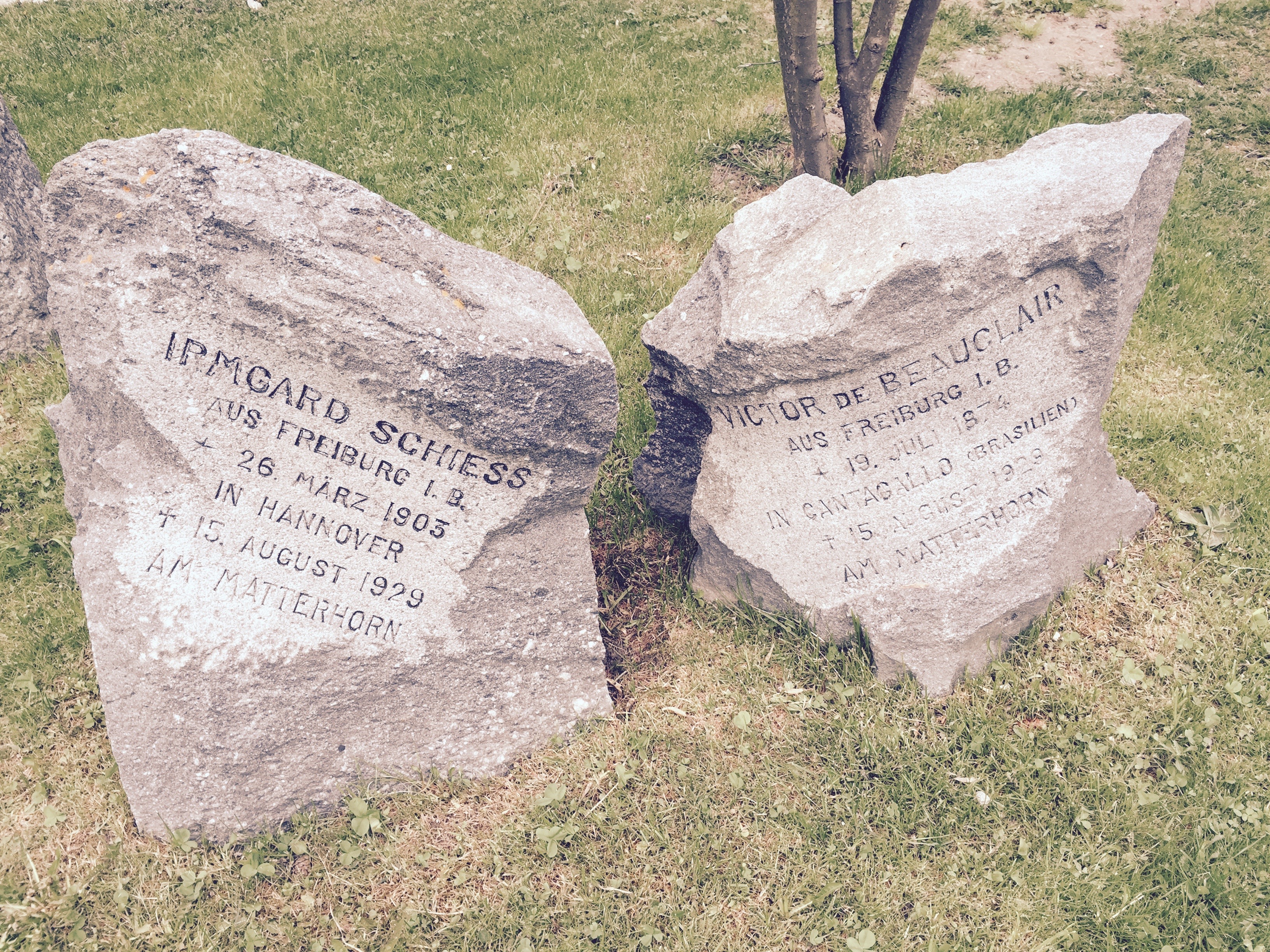
From there, we took some time to reflect on the lives lost – as memorialized in the tiny Mountaineers cemetery next to the church. Here there were gravestones that dated back to the 1800’s and many of families had gone to lengths to ensure the decor (?) of the stones reflected the individuals passion for the mountains and the risky sport. 

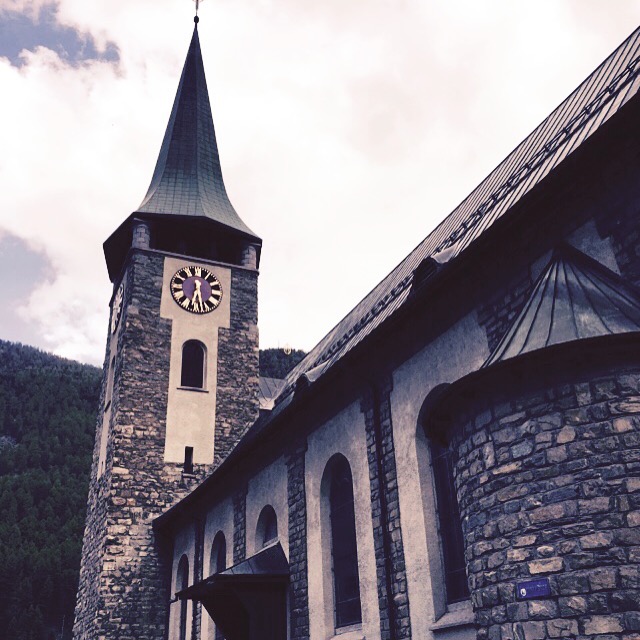
The church in the centre of town.

The church in the centre of town.

IMG_6044 IMG_6041IMG_6036IMG_6074IMG_6033 IMG_6030

We believe these two climbers were buried together - a fitting memorial to these souls.

We believe these two climbers were buried together – a fitting memorial to these souls.

From there, we walked up and down the main streets doing a little shopping for Astrid’s boys and maybe even for ourselves. 

Window shopping

Window shopping


Was told this was a fantastic place for fondue. Closed for inter-season, still feeling the emptiness in my heart and my stomach.

Was told this was a fantastic place for fondue. Closed for inter-season, still feeling the emptiness in my heart and my stomach.

IMG_6111

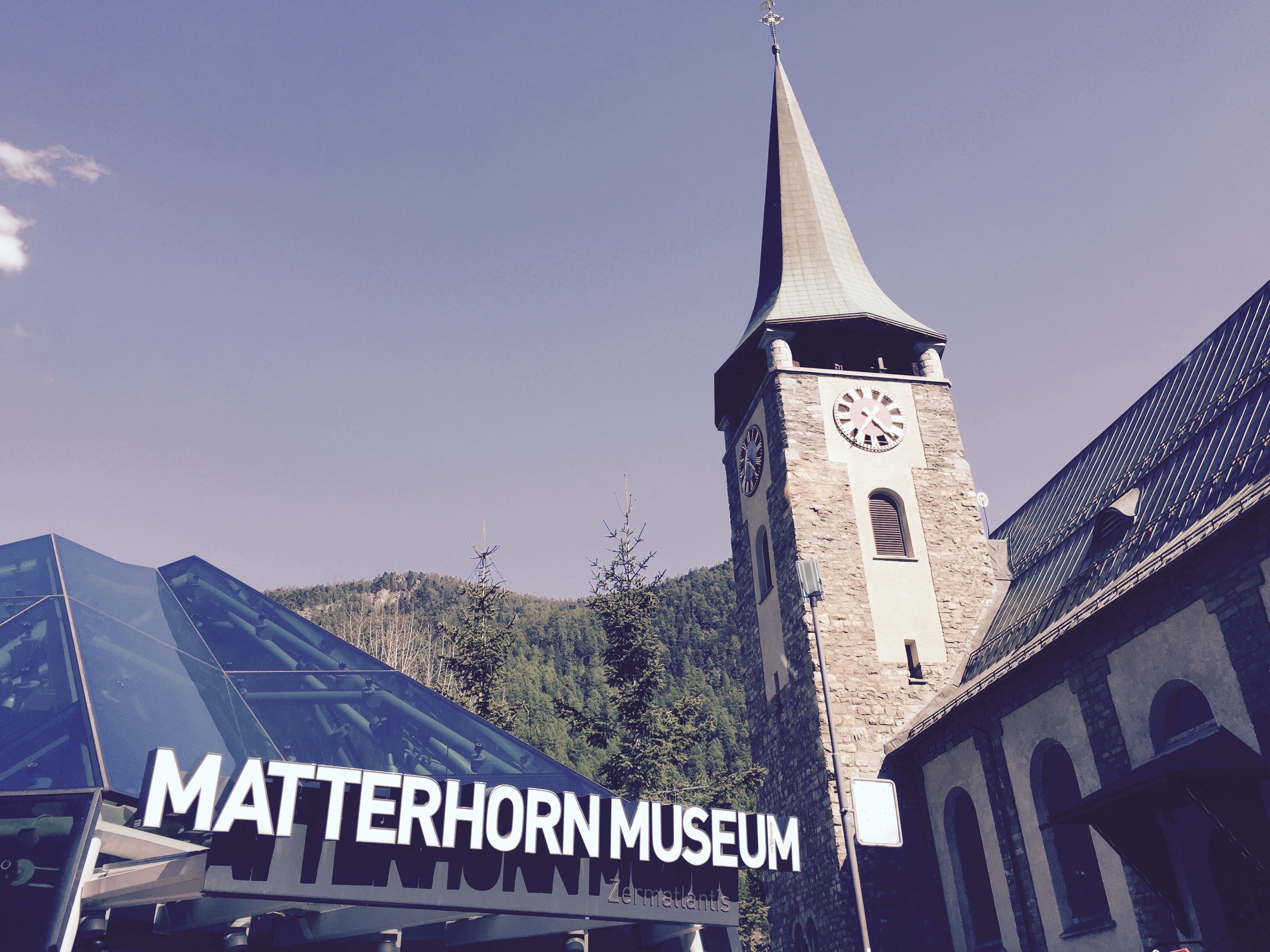
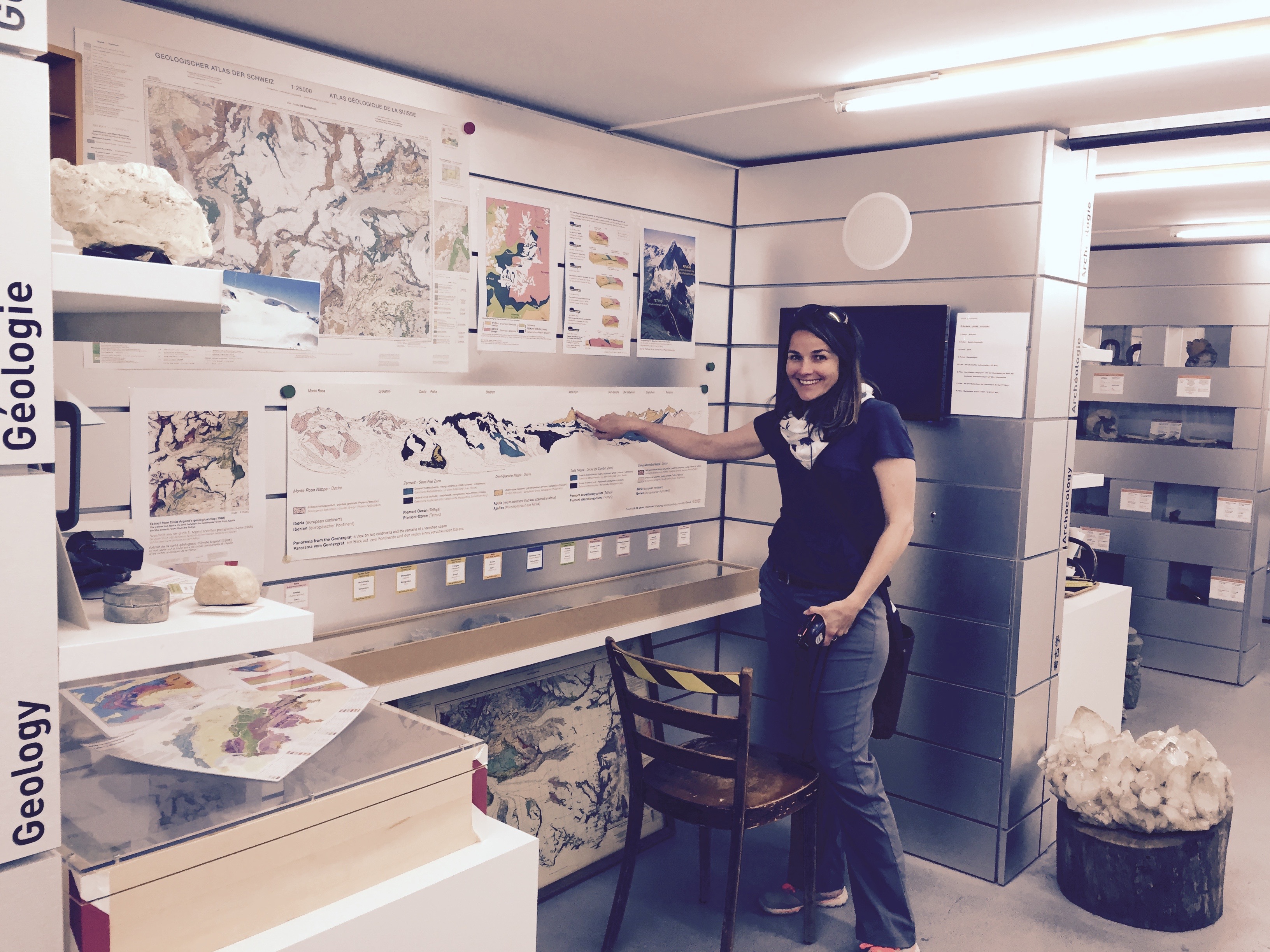
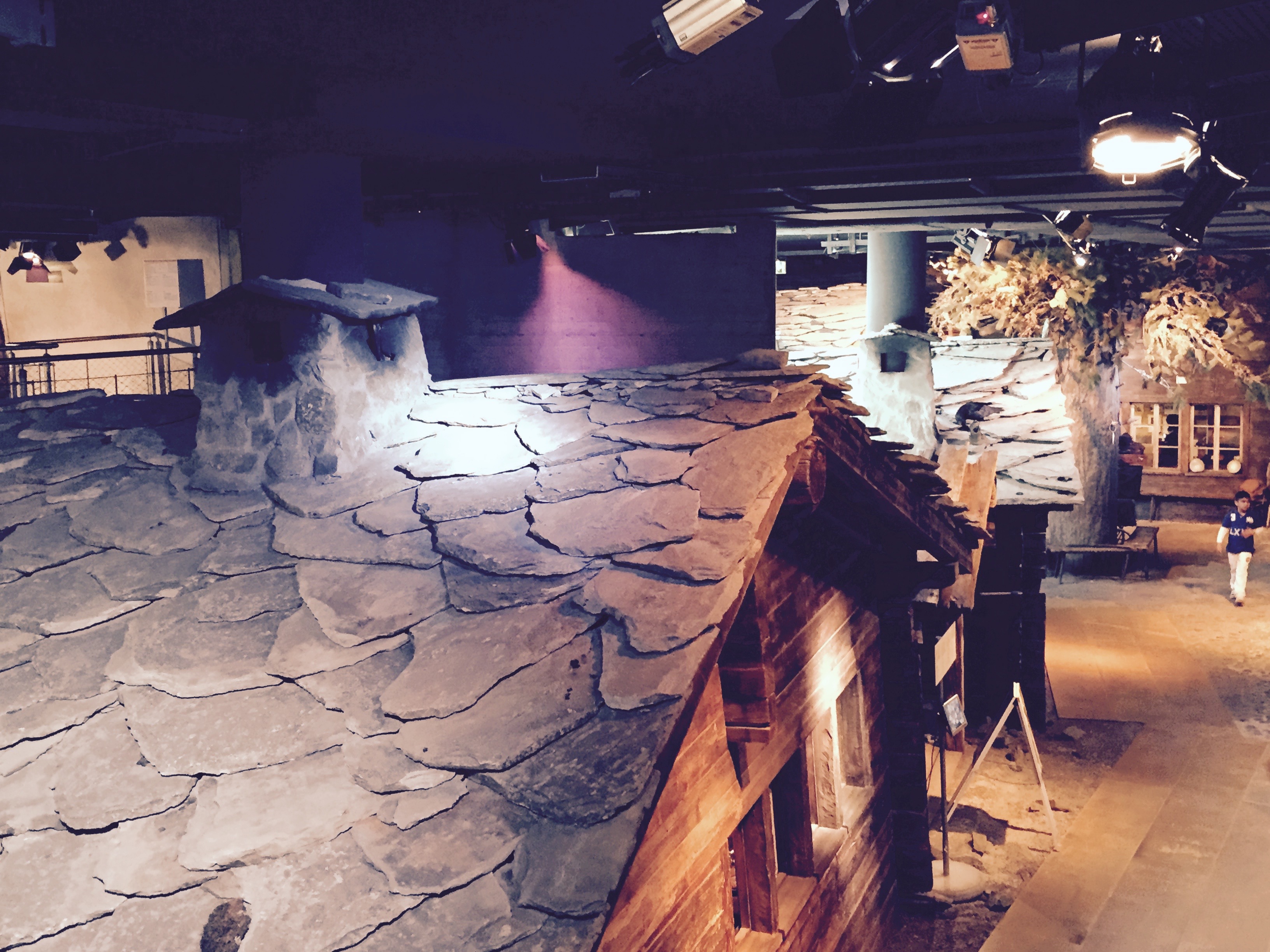
We encountered the Matterhorn Museum – and Astrid, powerless to not increase her educational levels – suggested we drop in. What a cute little place – the audio tour was done by some folksy guy – think he was the founder of the museum and the place was a dorky and kitschy as you’d expect a tiny museum in this tiny little town to be.

IMG_5963

Of course, there is a geology section. With German maps - someone squeals with glee. And it wasn't Cecily...

Of course, there is a geology section. With German maps – someone squeals with glee. And it wasn’t Cecily…


Making friends - you can only spend so much time with one person before you crack.

Making friends – you can only spend so much time with one person before you crack.


The interior of the Matterhorn Museum. Perhaps it was all the opulance of the museums in Paris (and the Museum of Crystals and Minerals in Chamonix). Somehow it didn't feel quite a grand...

The interior of the Matterhorn Museum. Perhaps it was all the opulence of the museums in Paris (and the Museum of Crystals and Minerals in Chamonix). Somehow it didn’t feel quite as grand…


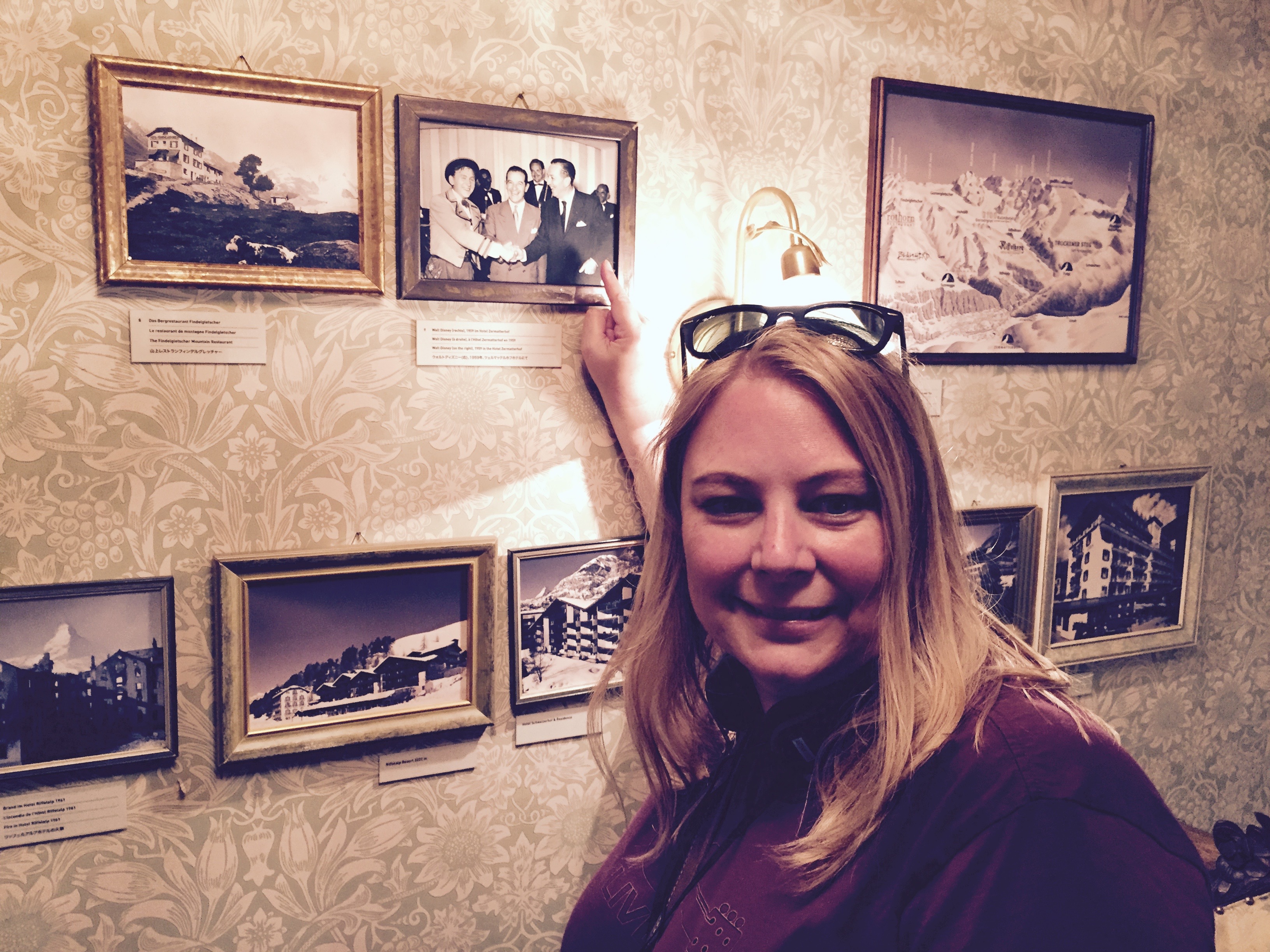
As a former Cast Member, you're always on the look out for a Walt Disney sighting?

As a former Cast Member, you’re always on the look out for a Walt Disney sighting?


Audio guide to the tiny Matterhorn Museum.

Audio guide to the tiny Matterhorn Museum.

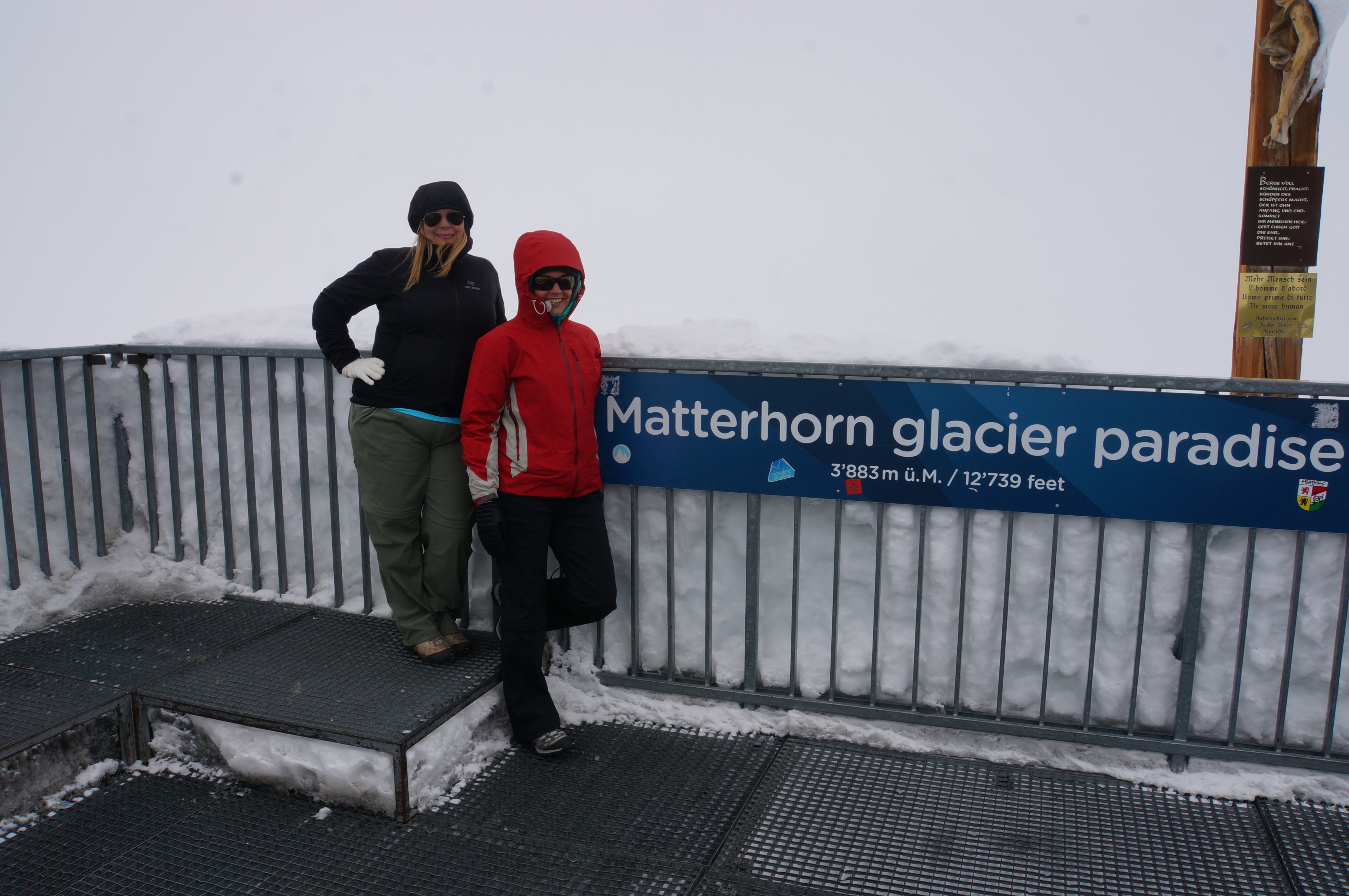
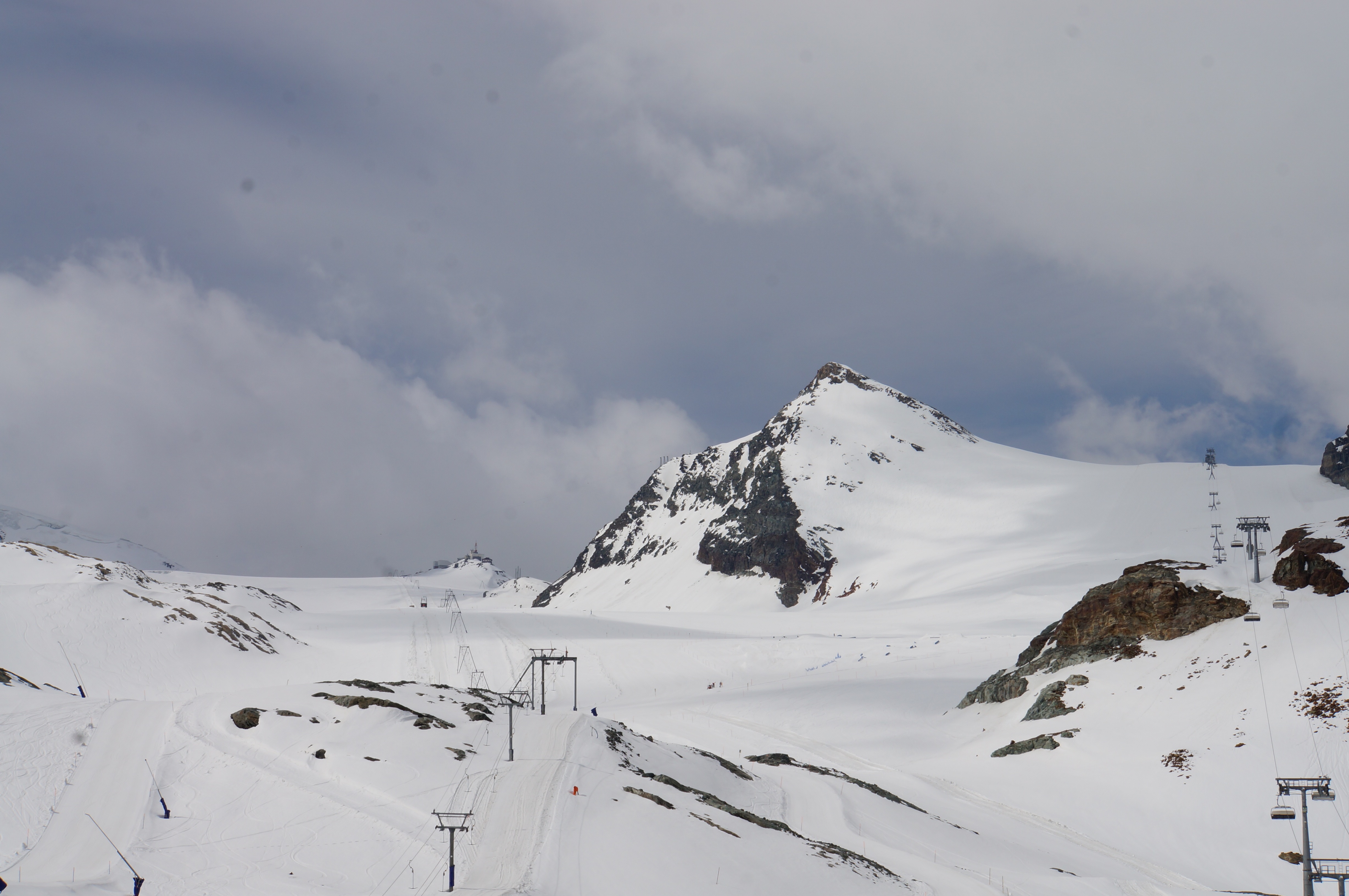
Our second day in Zermatt, we rose to sketchy weather so we booked it up top to the Glacier Mountain Paradise.  Astrid will likely provide a second blog with more geological significance, but for me it was simply a beautiful ride up and another spectacular adventure. We rose in elevation to of over 12,000 feet – and you bet the air was thin! 

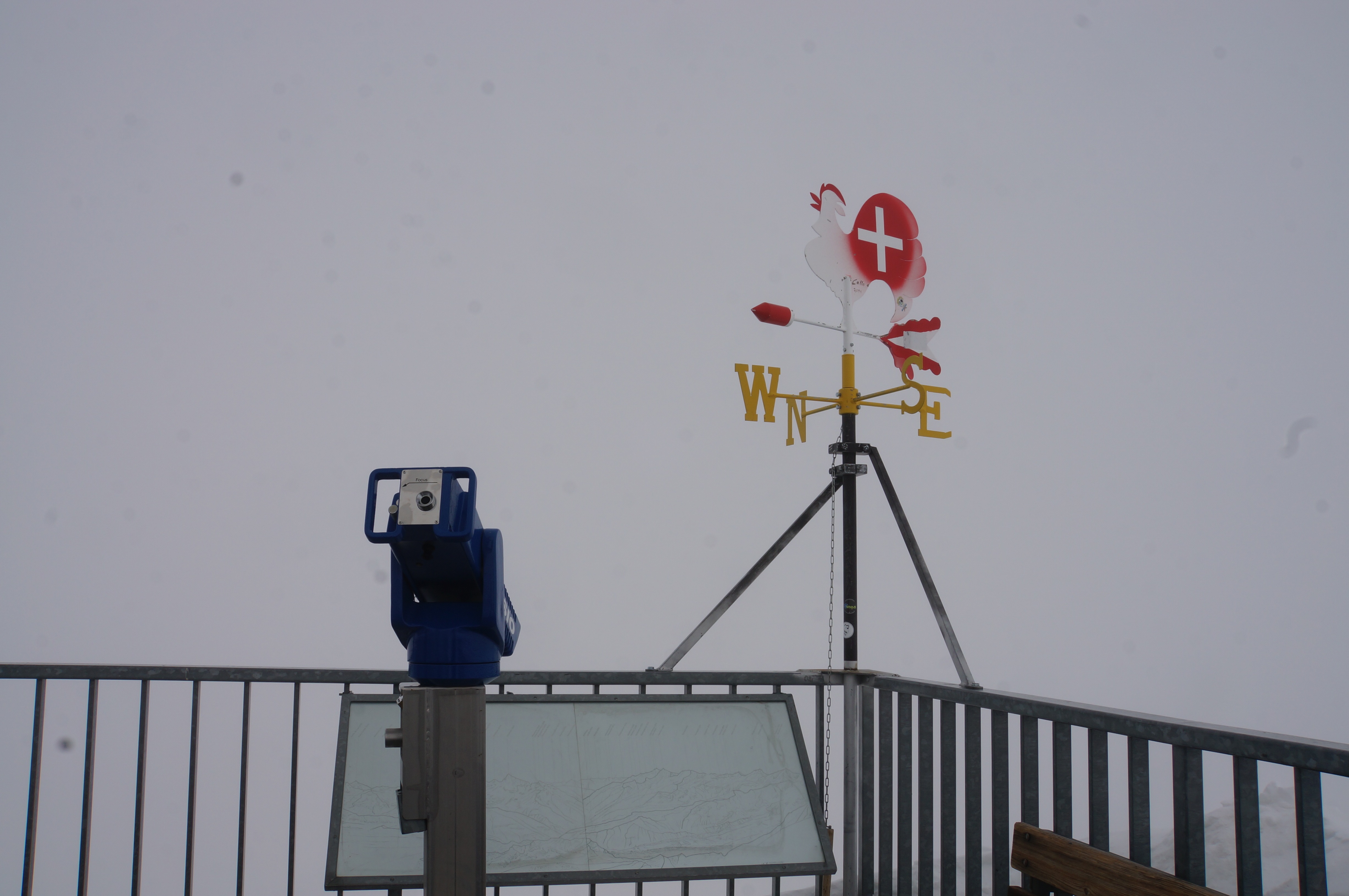
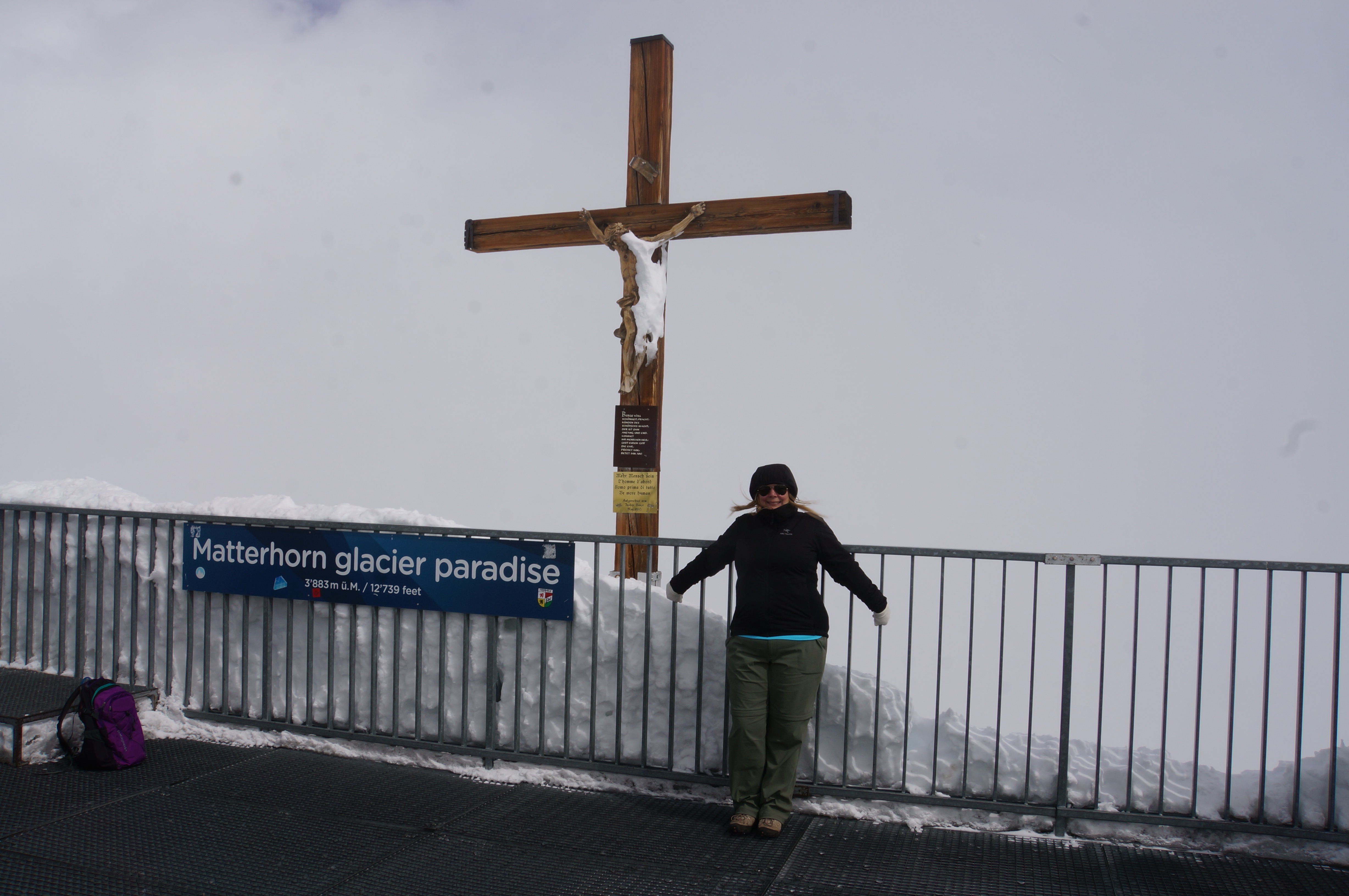
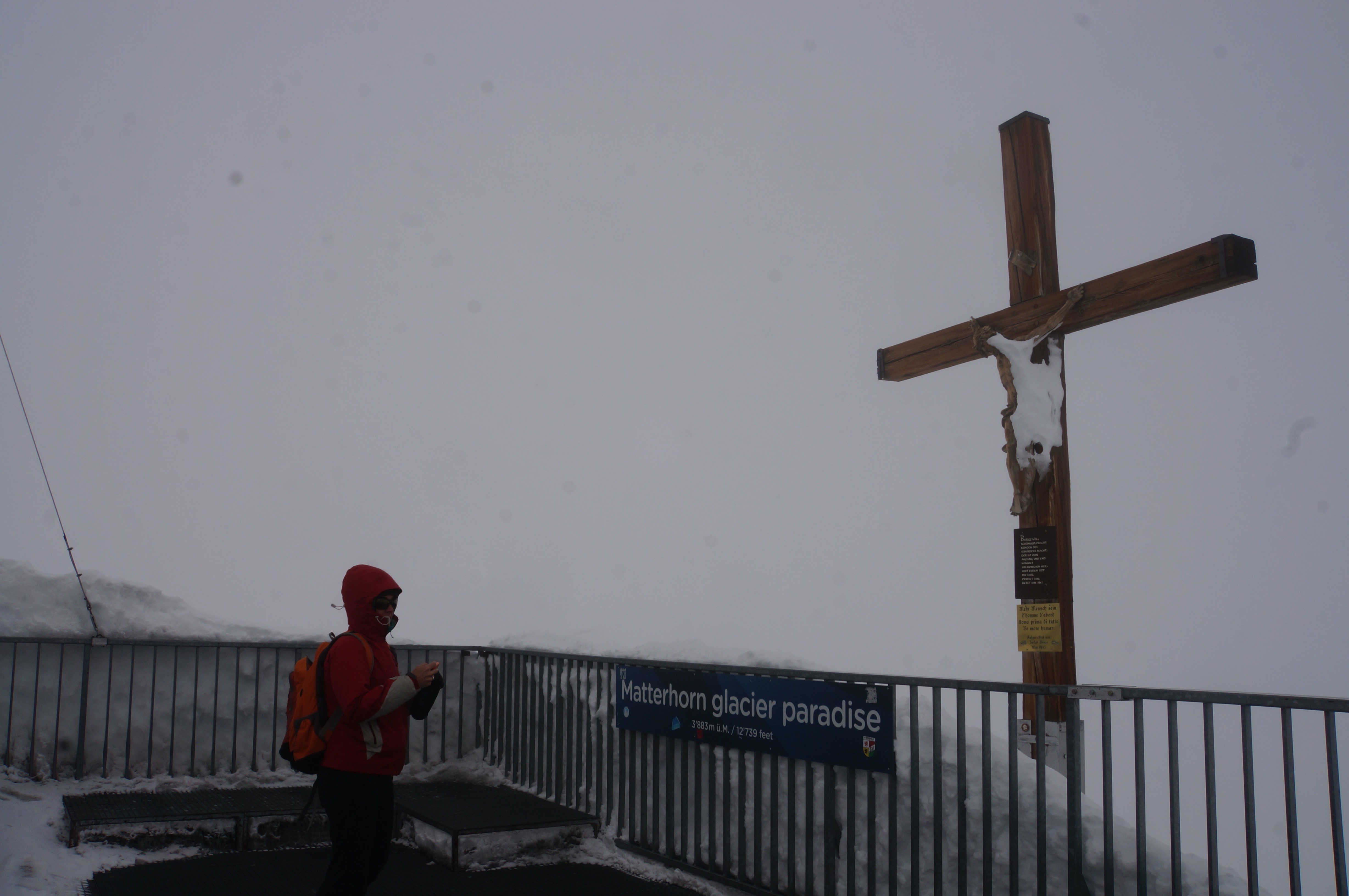
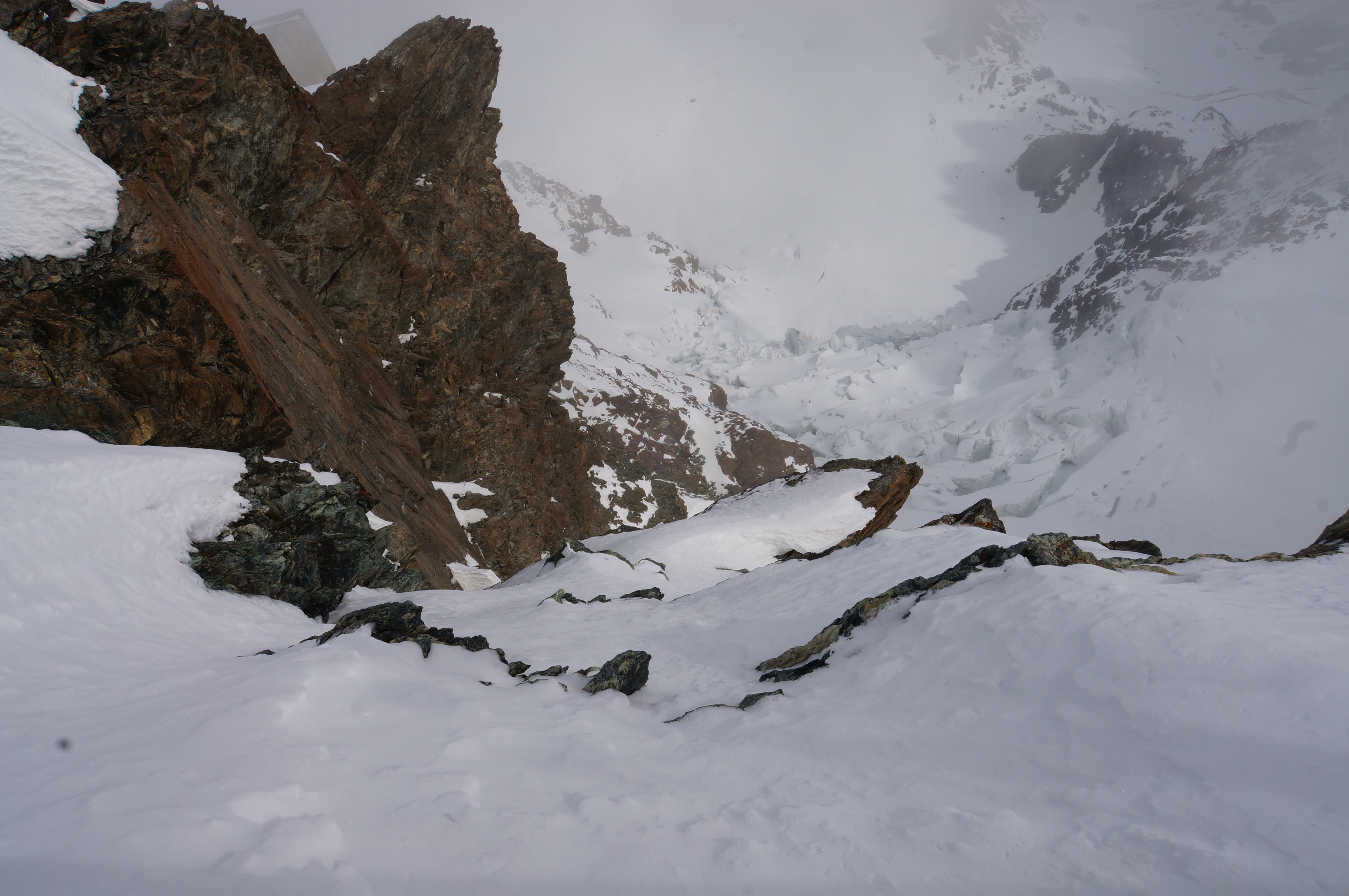
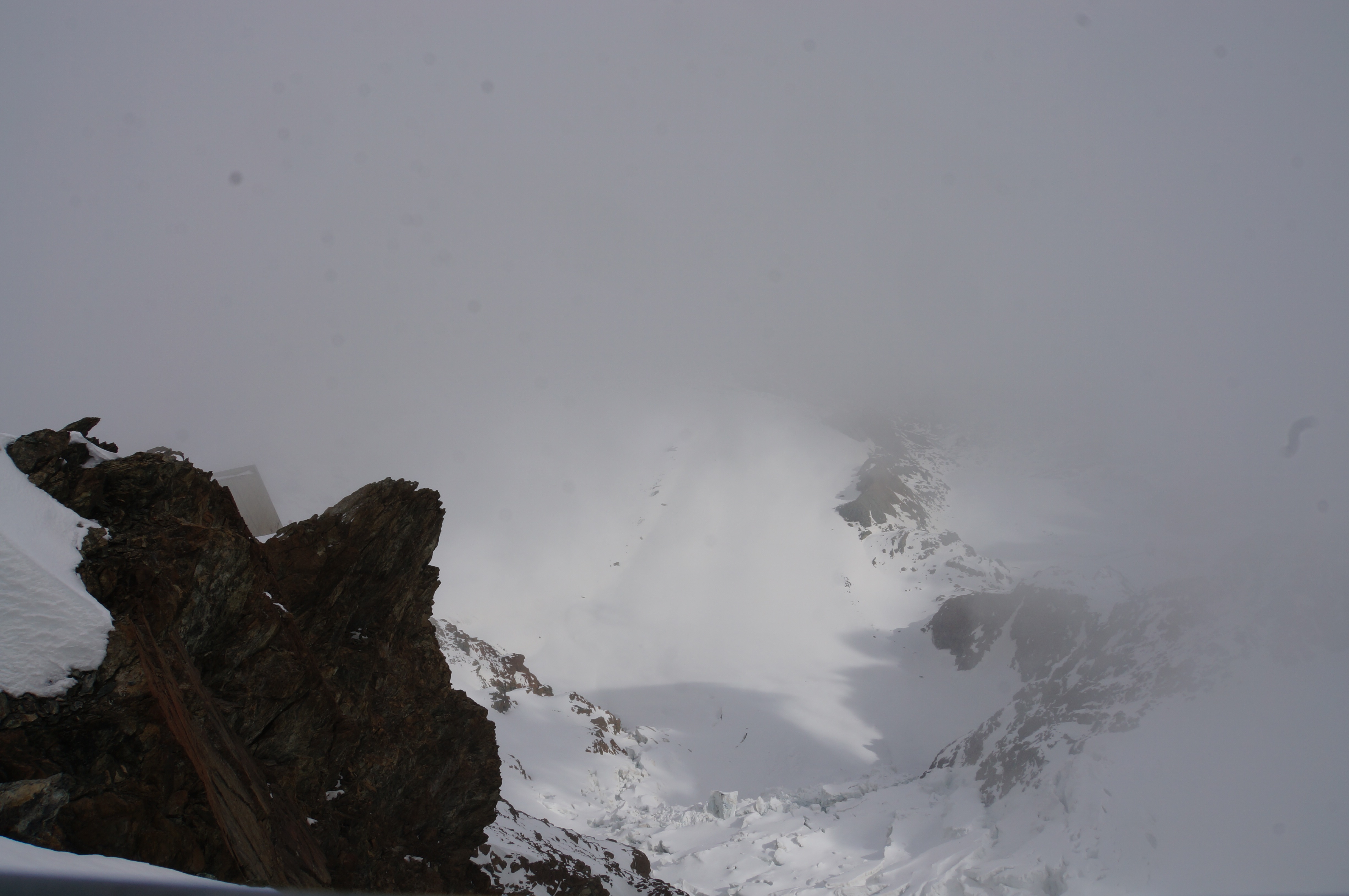
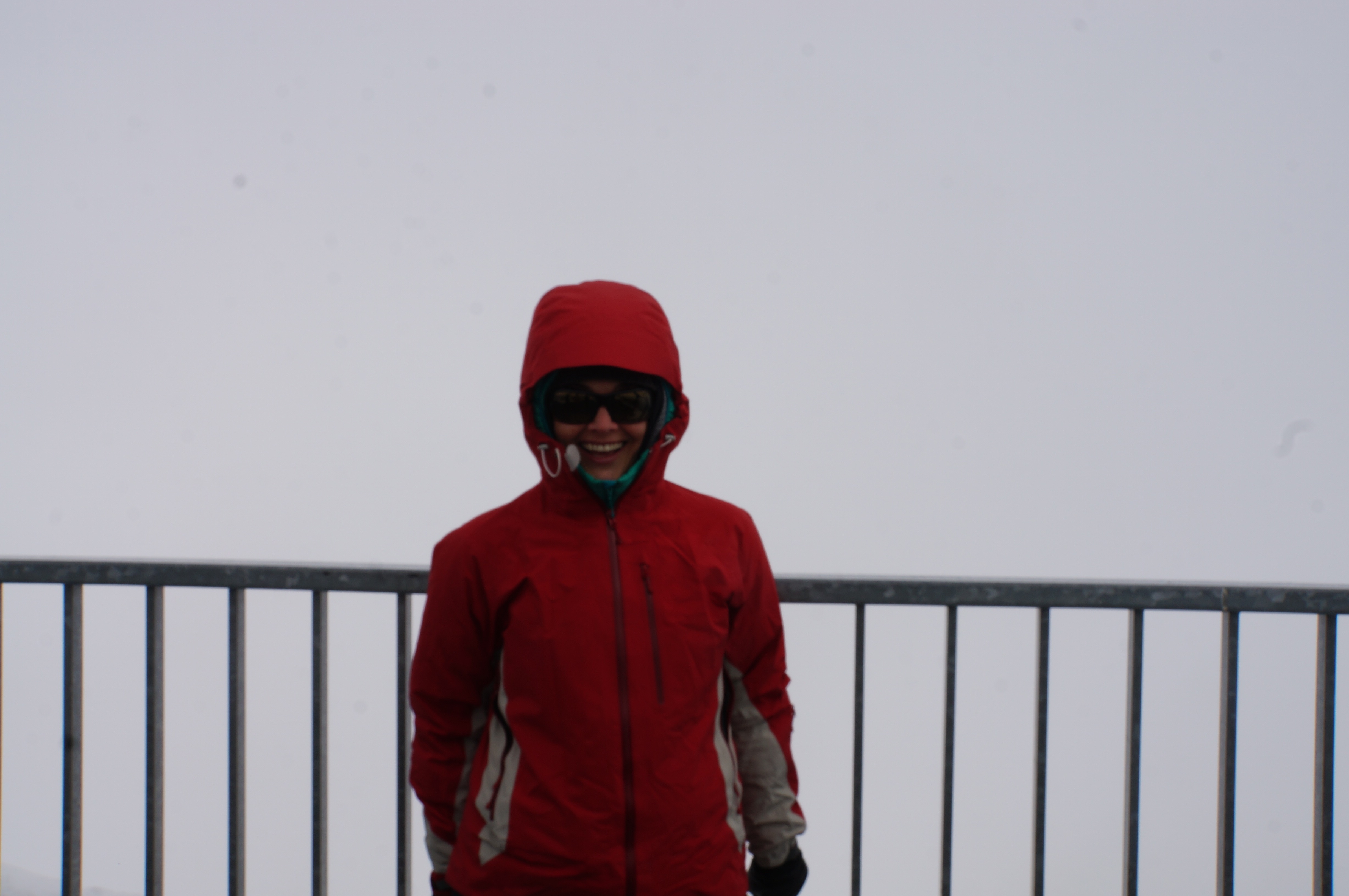
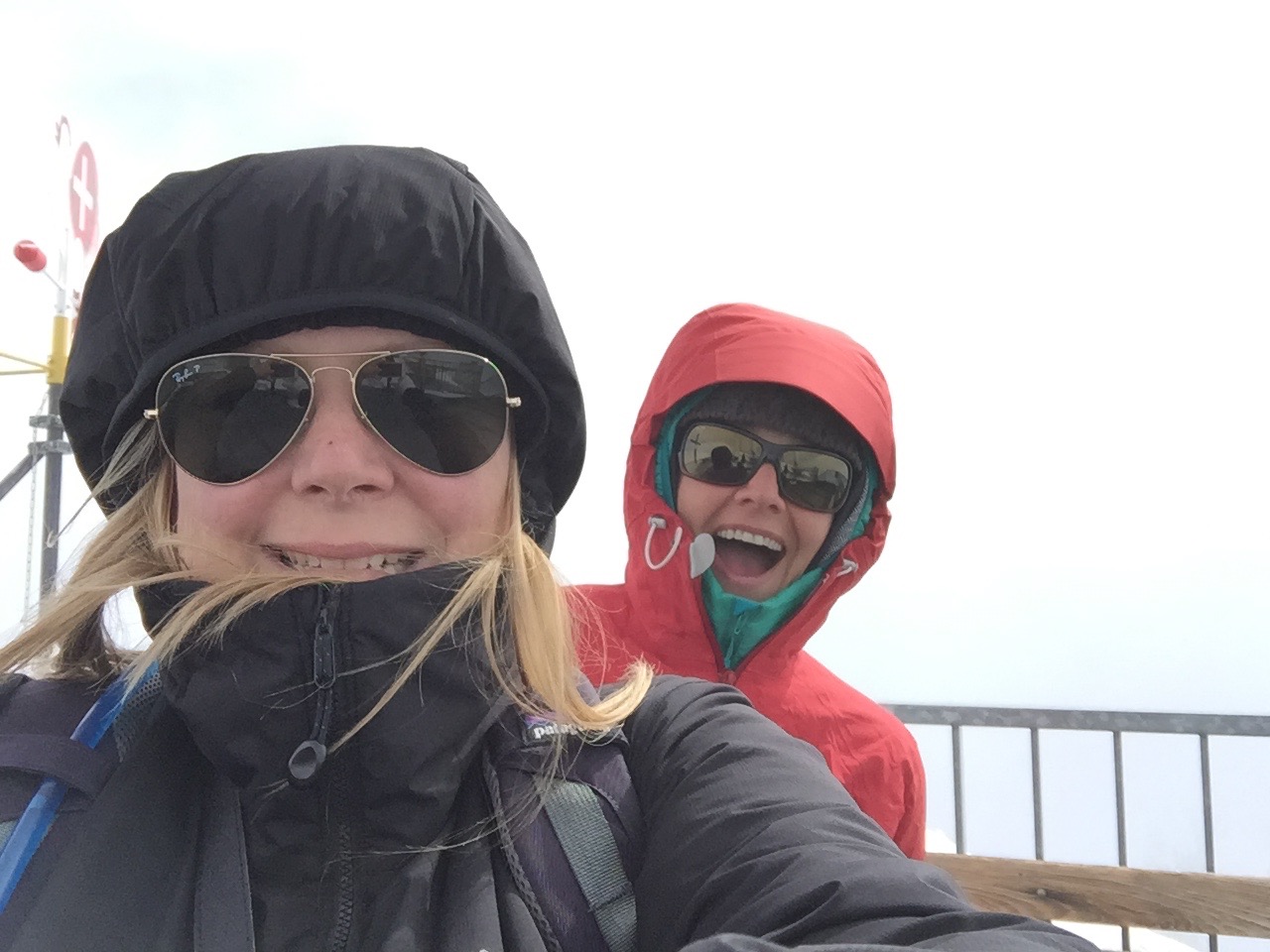
Over 12,000 feet in the air at the Glacier Mountain Paradise. Weather could have been better...

Over 12,000 feet in the air at the Glacier Mountain Paradise. Weather could have been better…

DSC01287

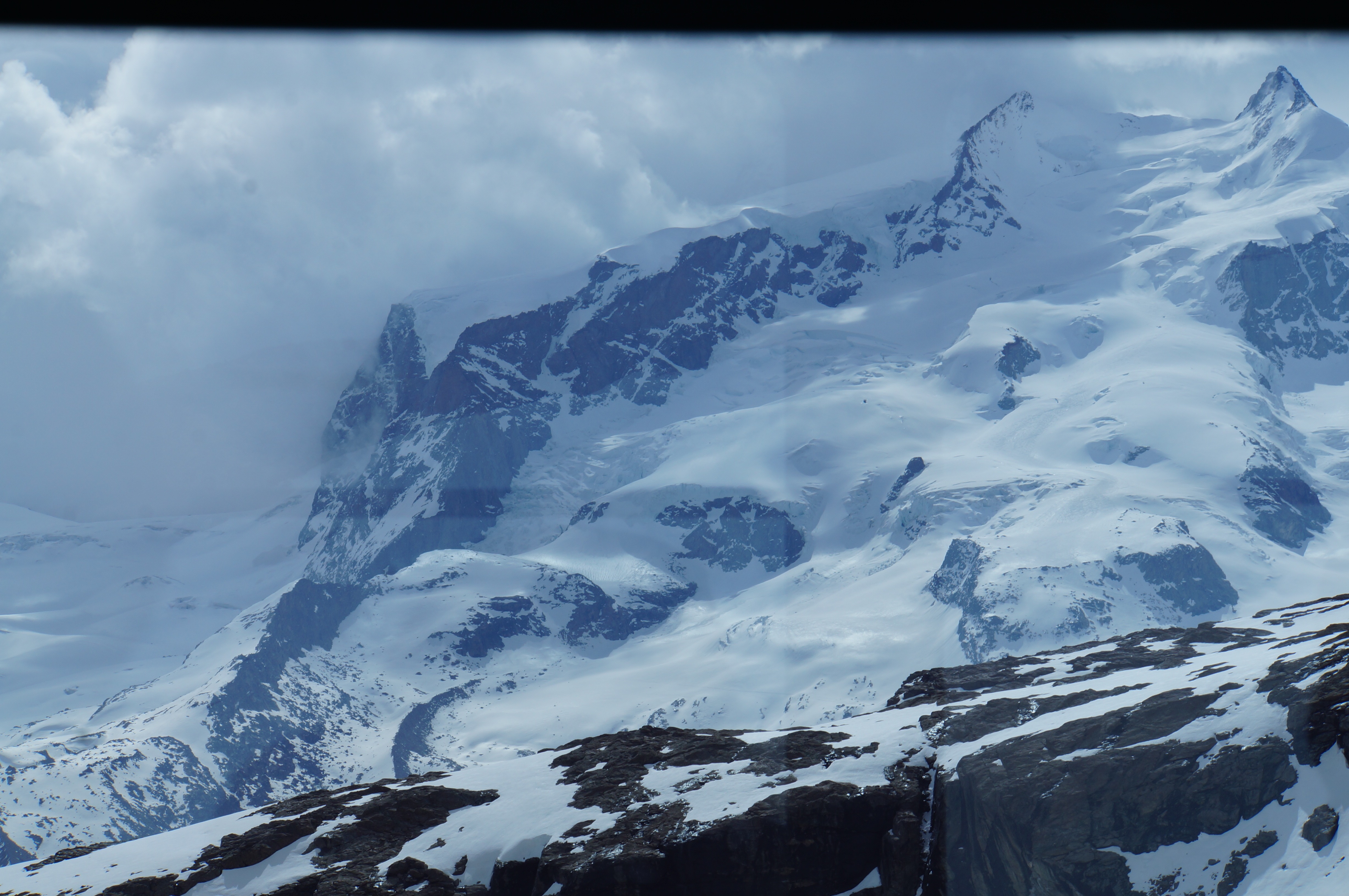
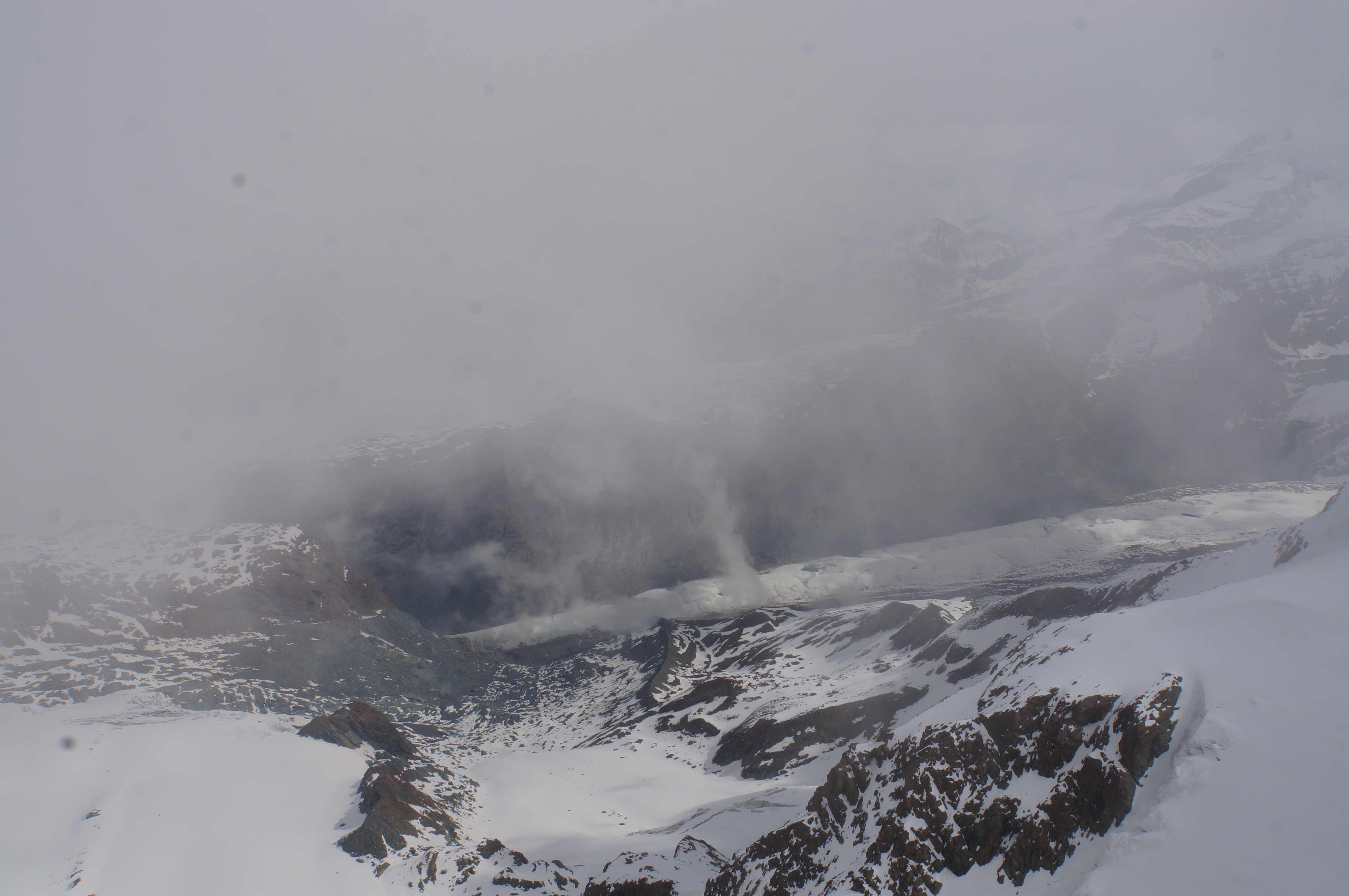
On a clear day – and that was not the case the day we were there – the views from the observation platform include Mount Blanc (4,810 metres) – which is the highest mountains in the Alps (and part of our Chamonix adventures) and the summit of the Grand Paradiso (4,061 metres), which is Italy’s highest mountain. Normally you should also be able to see the Matterhorn. We – sadly – saw none of those, but had a grand old time taking snapshots from the platform in the cold, with crazy gusts of wind blowing us around. Astrid kept squinting into the clouds in hopes of getting a glimpse of Matterhorn but it felt like a lost cause. For true Mountaineers – unlike ourselves – you can scale this 4,164 metre climb in about 2 1/2 hours.

DSC01326 DSC01286

DSC01381DSC01350

DSC01274

DSC01334

DSC01289

DSC01303

Desperately searching the clouds for the Matterhorn

Desperately searching the clouds for the Matterhorn


And maybe, Astrid wasn't the only one who had hope we'd see it!

And maybe, Astrid wasn’t the only one who had hope we’d see it!

DSC01273 DSC01258

DSC01272

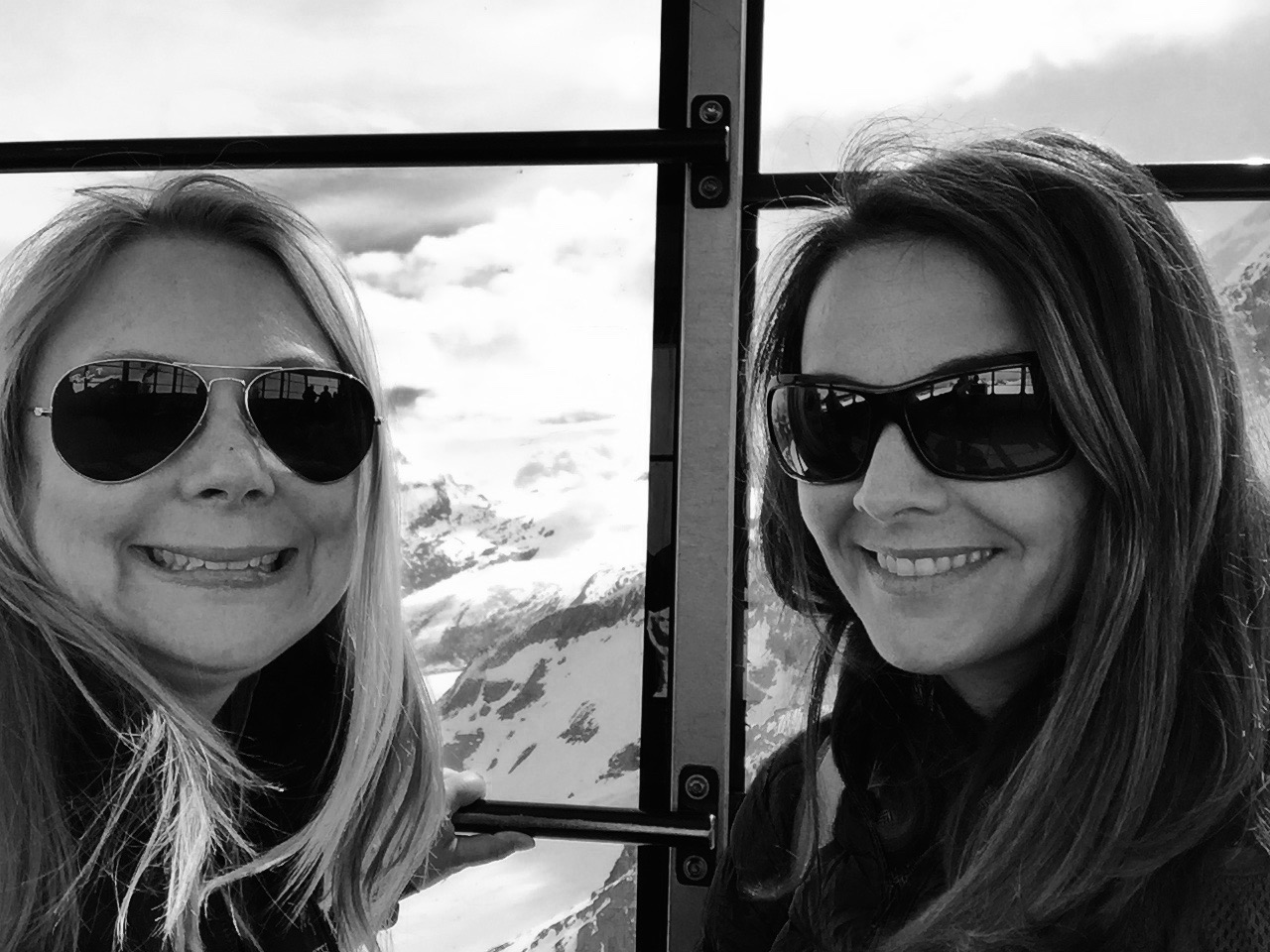
We called this trip Muppets Take Europe - in this picture I fear we have begun the transformation.

We called this trip Muppets Take Europe – in this picture I fear we have begun the transformation.

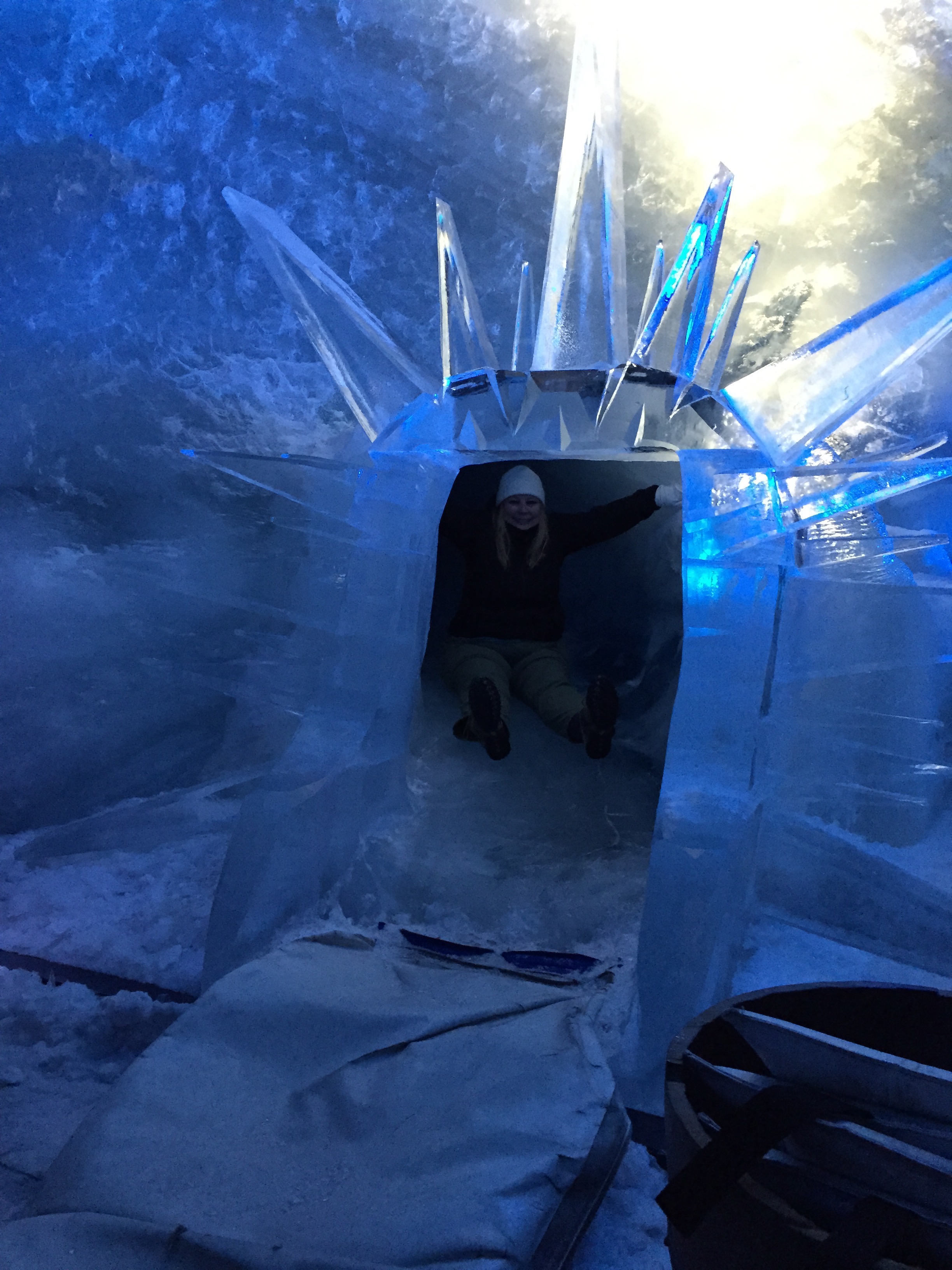
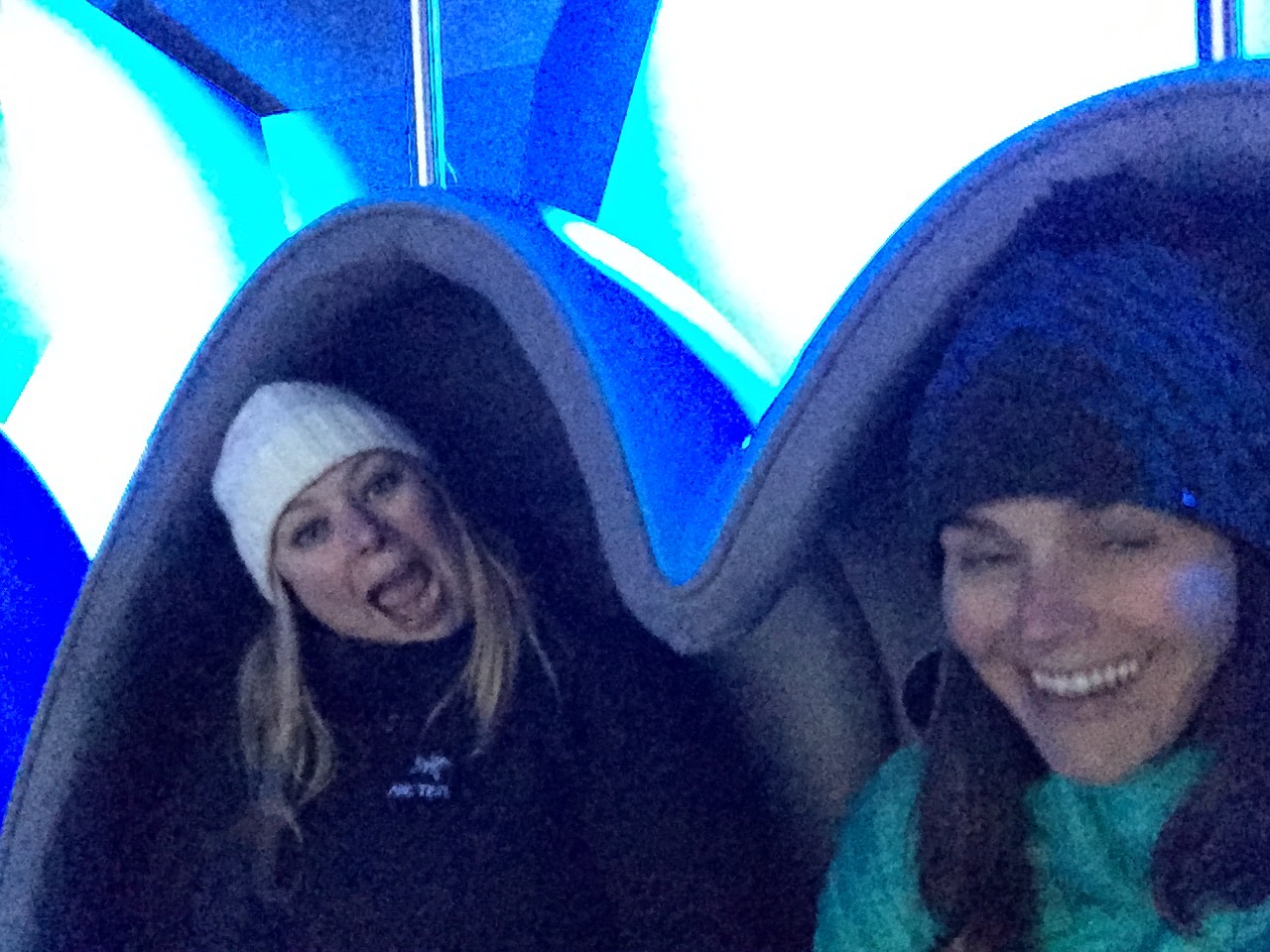
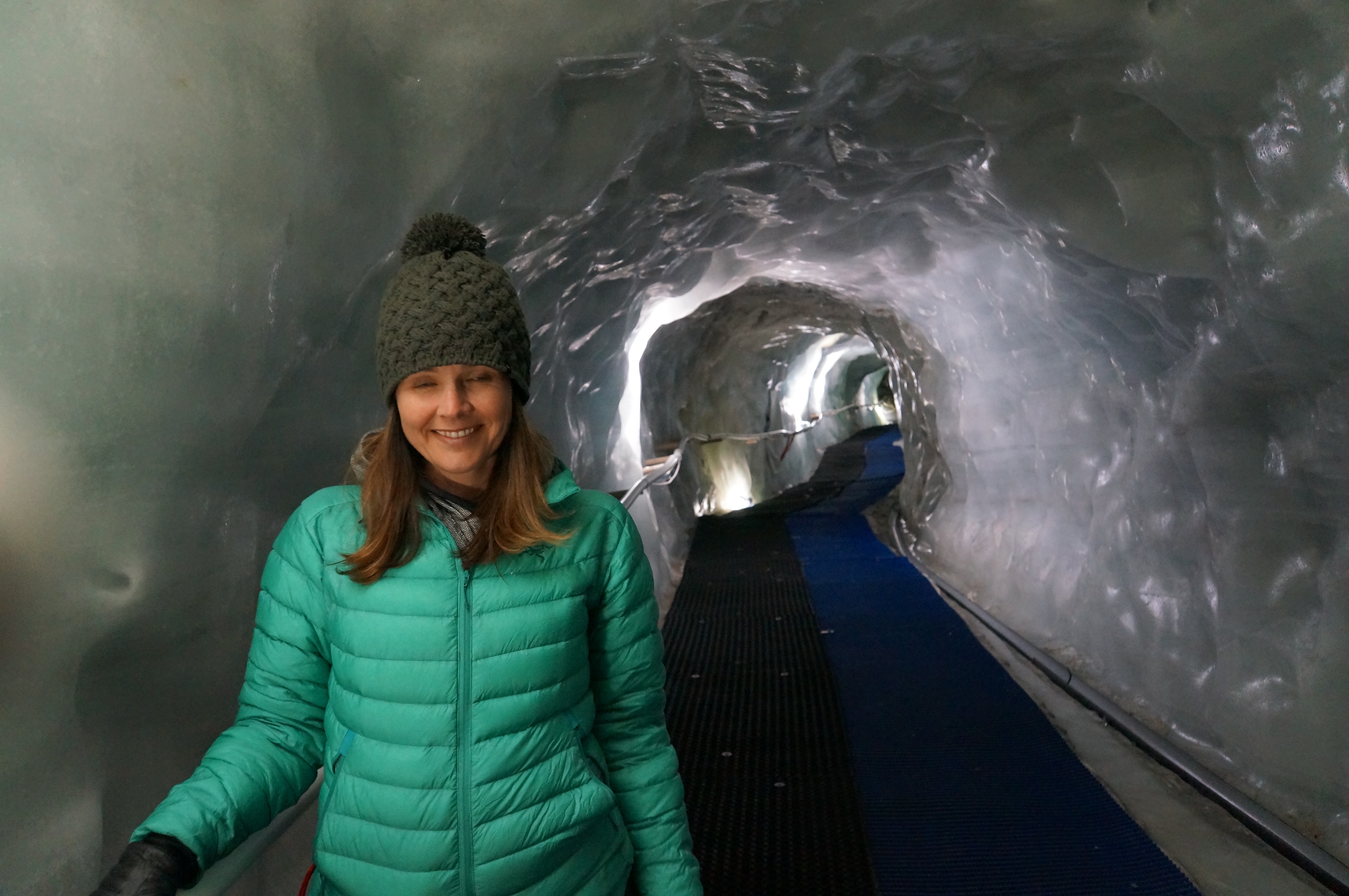
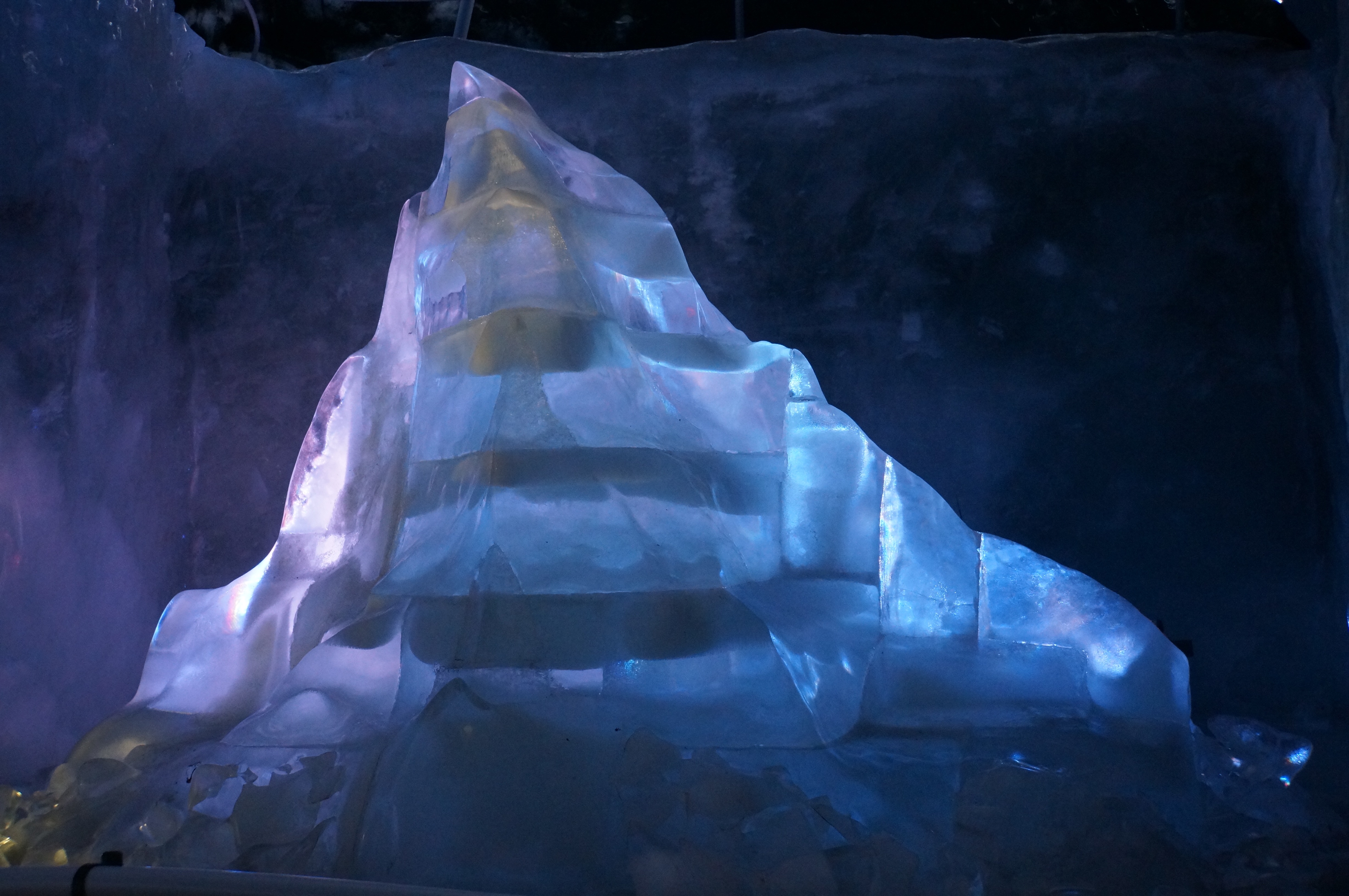
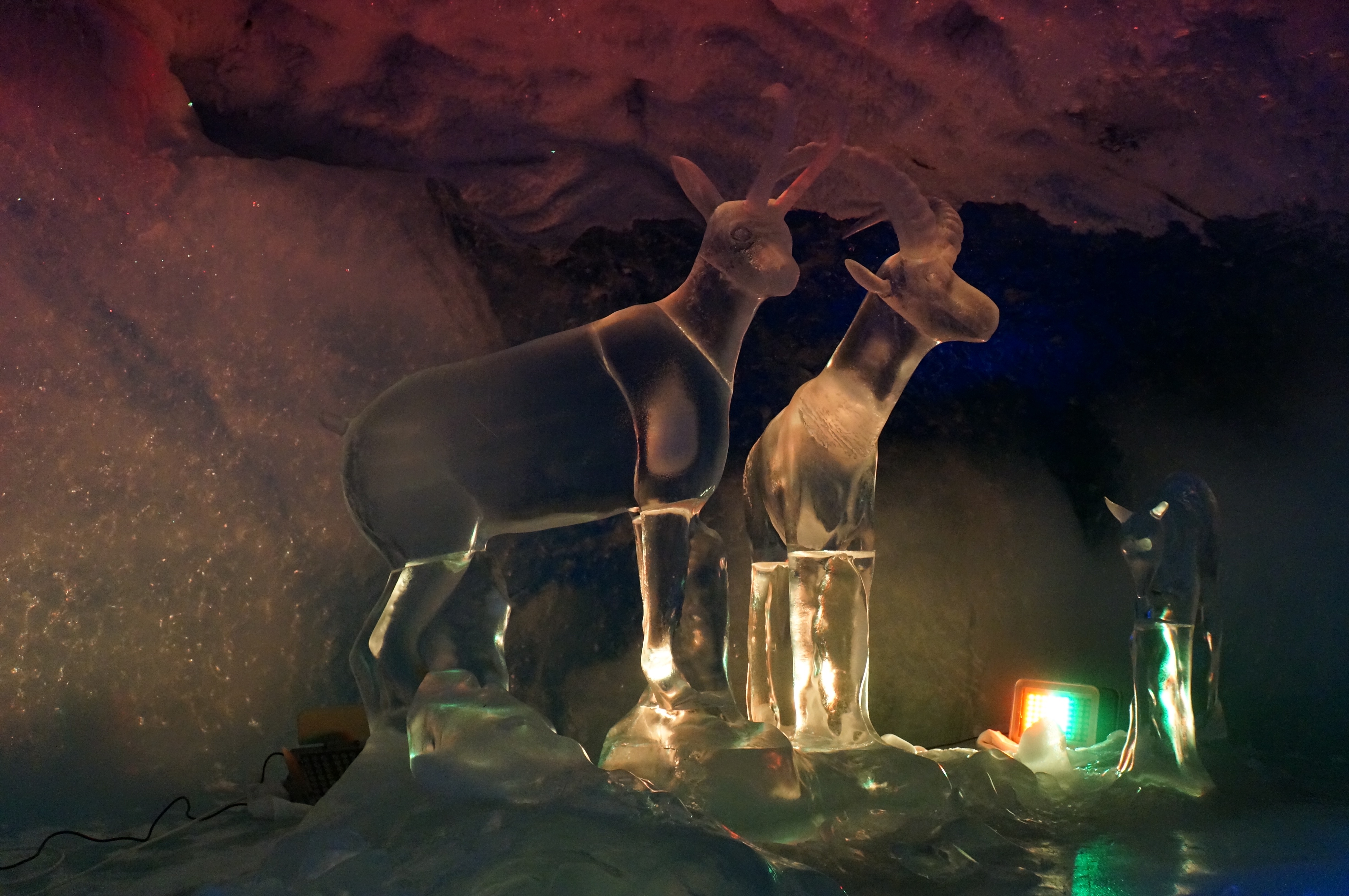
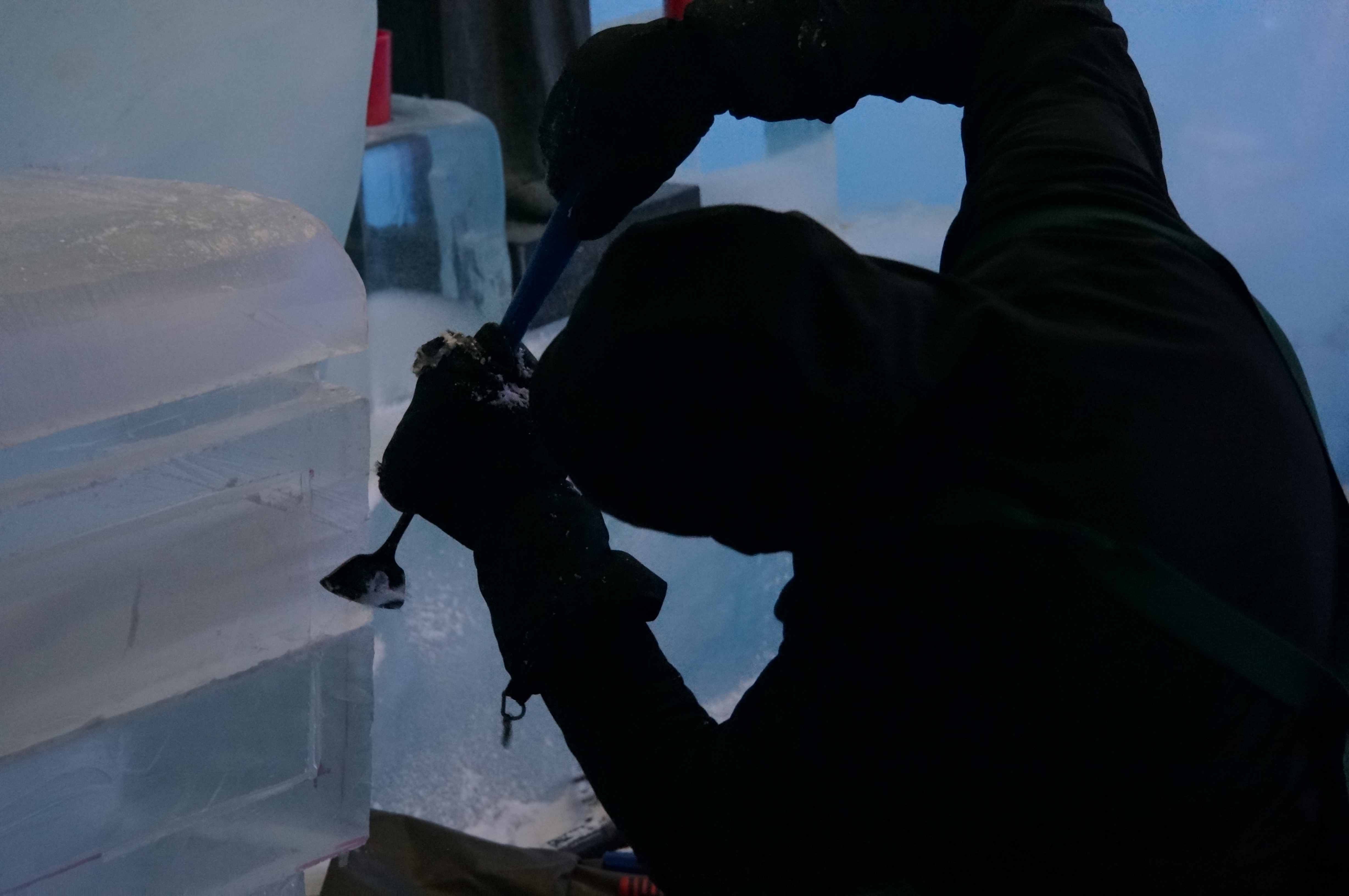
The other highlight from our time at top of Europe was the glacier cave, which provided endless entertainment with ice sculptures, a ice slide and a mini Matterhorn. A visit to a glacier cave would also not be complete without an educational video, which had cute little egg-shaped chairs viewers could sit in, the best part being that they were heated which was sure welcome after that gusty outdoor platform.

Whhhhhheeeeee! The ice slide at Glacier Mountain Paradise - in the glacier cave.  How much fun is that!

Whhhhhheeeeee! The ice slide at Glacier Mountain Paradise – in the glacier cave. How much fun is that!


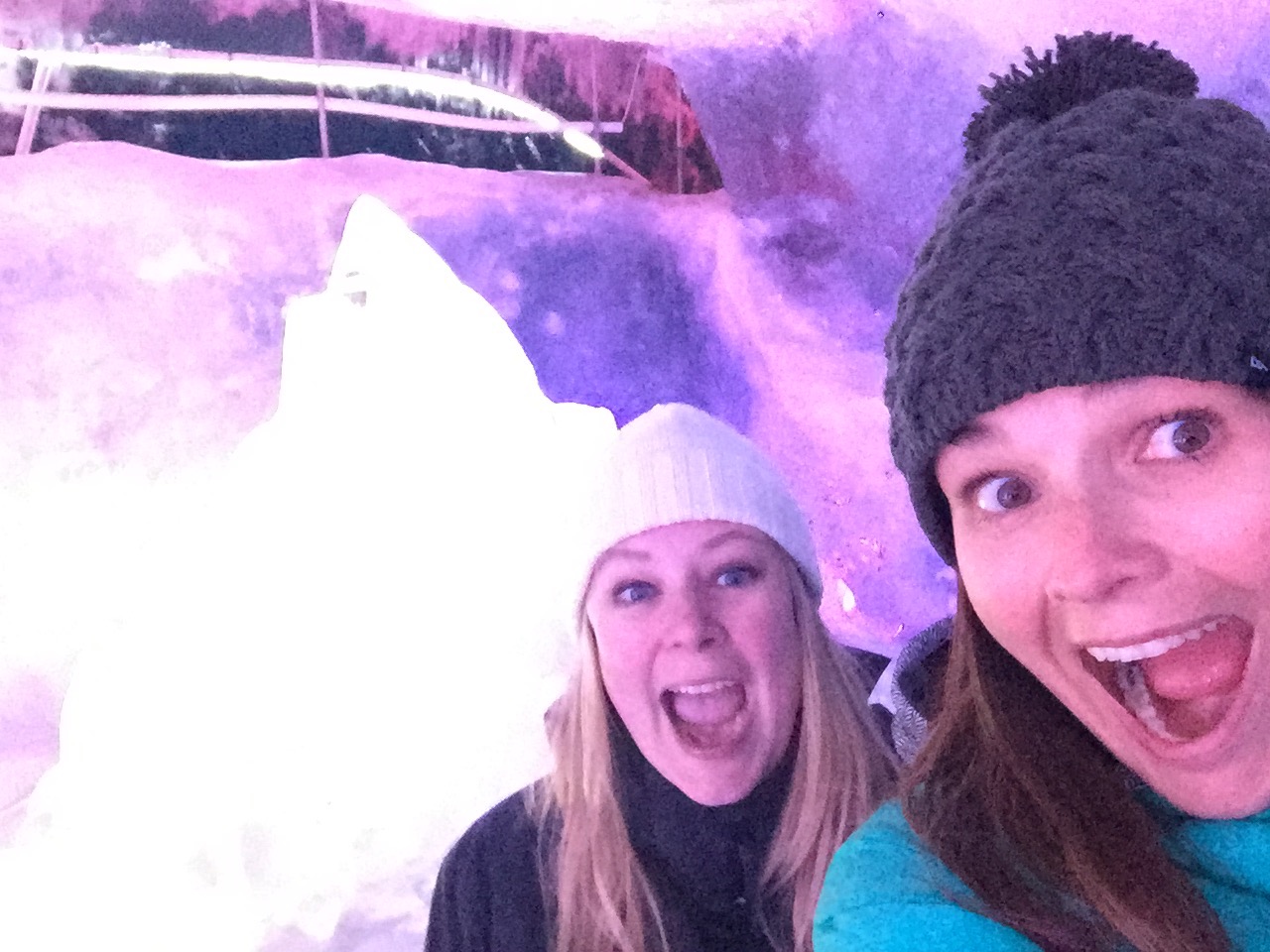
We are powerless to goofy photo opp. Mini Matterhorn selfie anyone?

We are powerless to goofy photo opp. Mini Matterhorn selfie anyone?

IMG_6256

IMG_6265

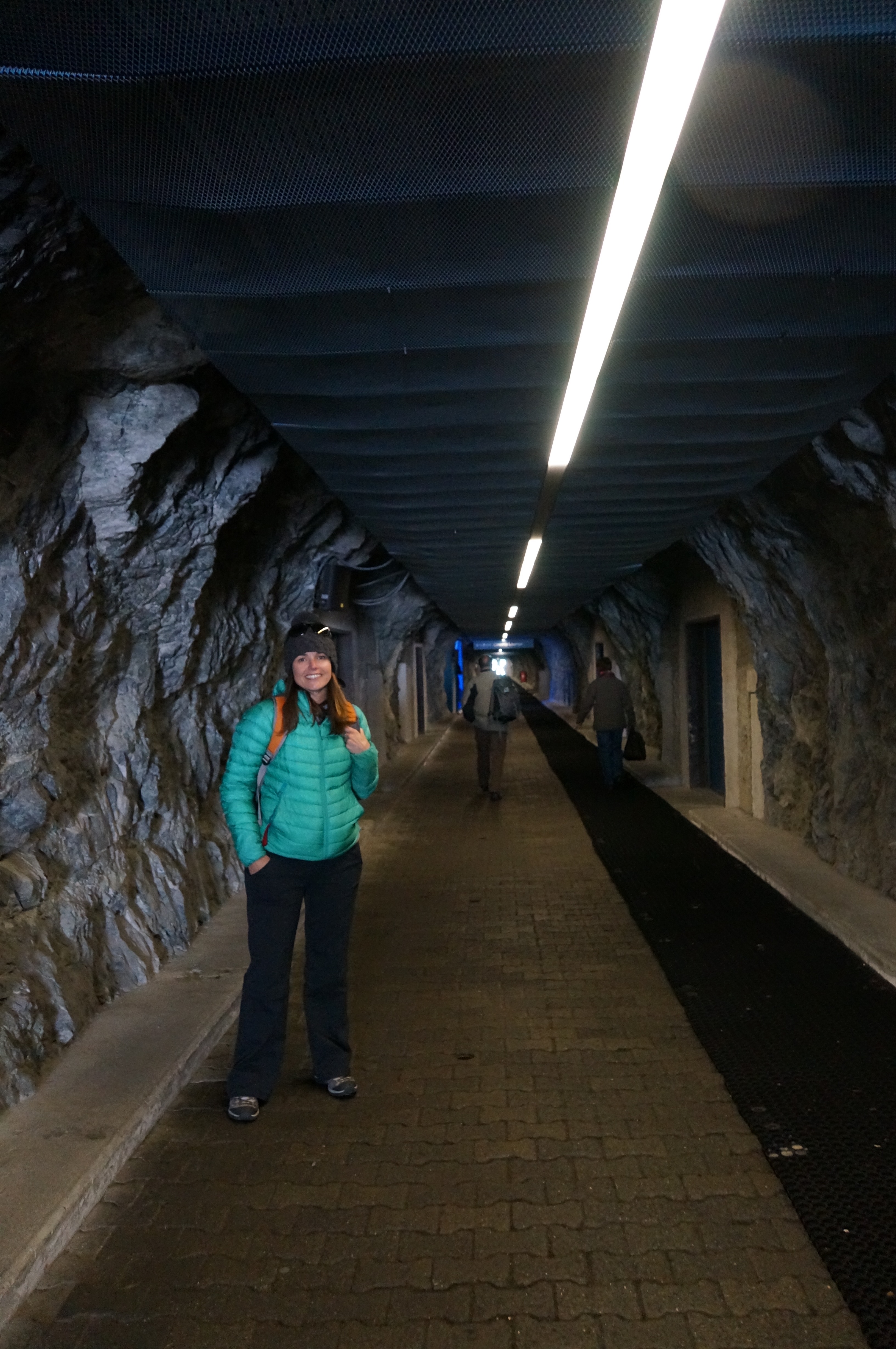
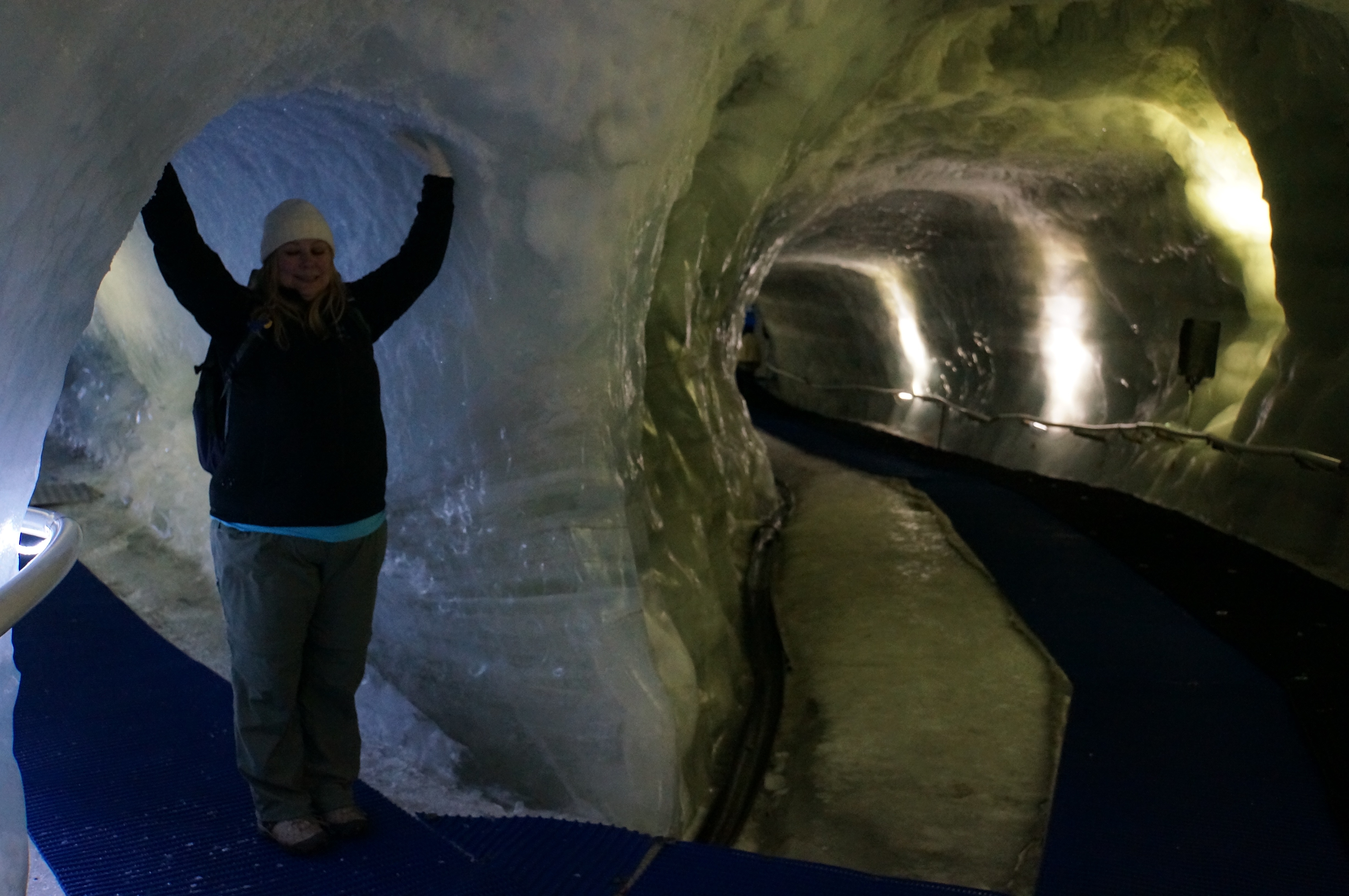
Astrid in the glacier cave tunnel

Astrid in the glacier cave tunnel


Mini Matterhorn

Mini Matterhorn

DSC01478DSC01472

DSC01453

DSC01284

DSC01419

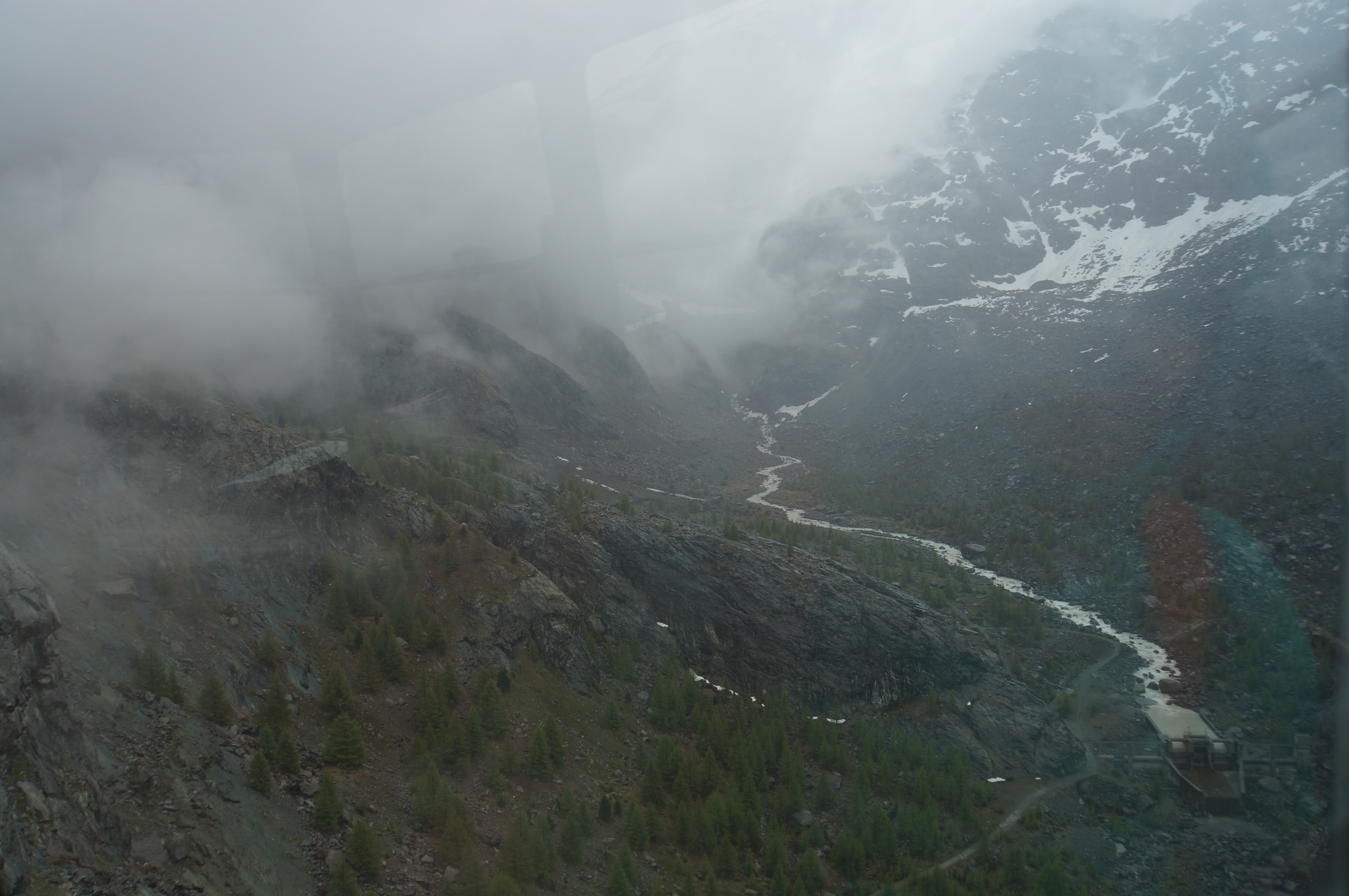
We had originally intended to descend only to the mid-point and then hike out to town in the cool but decent weather we had left on the ground. We quickly realized as we began our ride down through snow and then rain that we would need to abort that plan. As we got closer and closer to town the rain came down heavier and heavier. It was a teaming, wet walk back to our hotel, but we were sure glad we’d started the day as early as we did – I don’t think we would have wanted to miss that for the world.

IMG_6150 IMG_6152

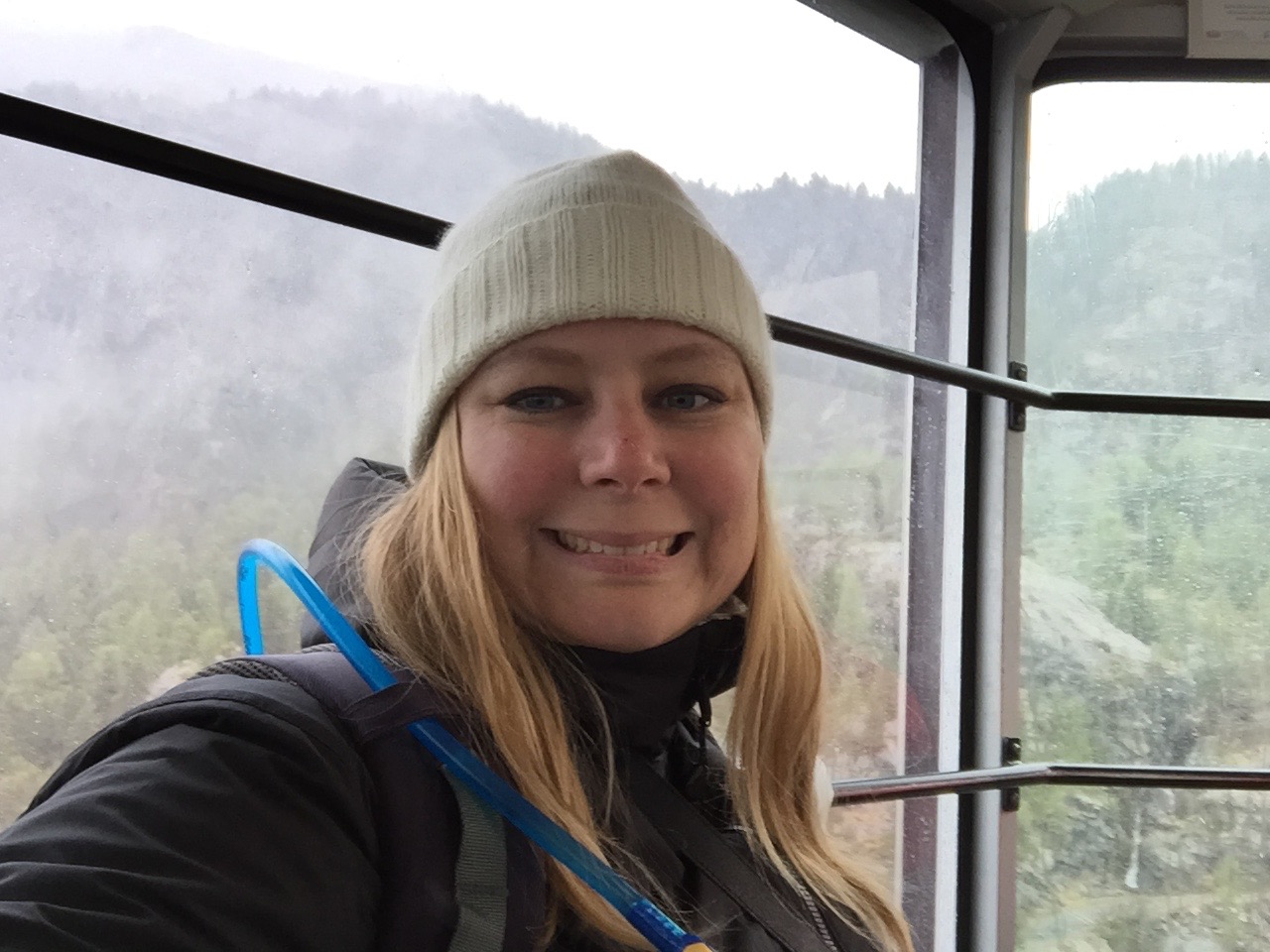
Starring hopelessly out the gondola window at the rain and snow. So much for our hike out.

Starring helplessly out the gondola window at the rain and snow. So much for our hike out.


The low cloud had arrived as we got back to the village and at that point, it was here to stay

The low cloud had arrived as we got back to the village and at that point, it was here to stay

DSC01295

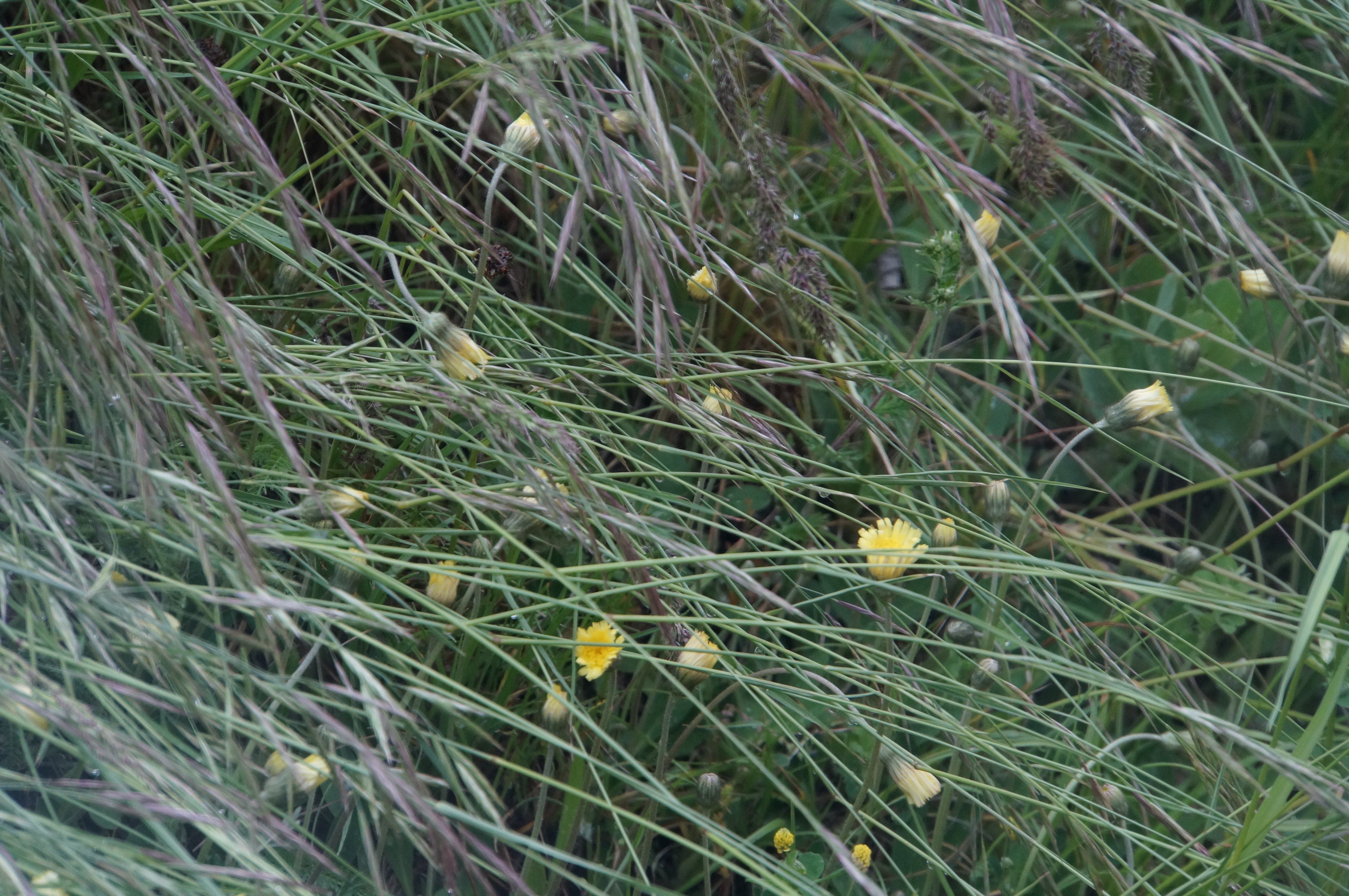
Spring flowers peaking out - ready for the fine weather to return

Spring flowers peaking out – ready for the fine weather to return


Spring in Zermatt

Spring in Zermatt


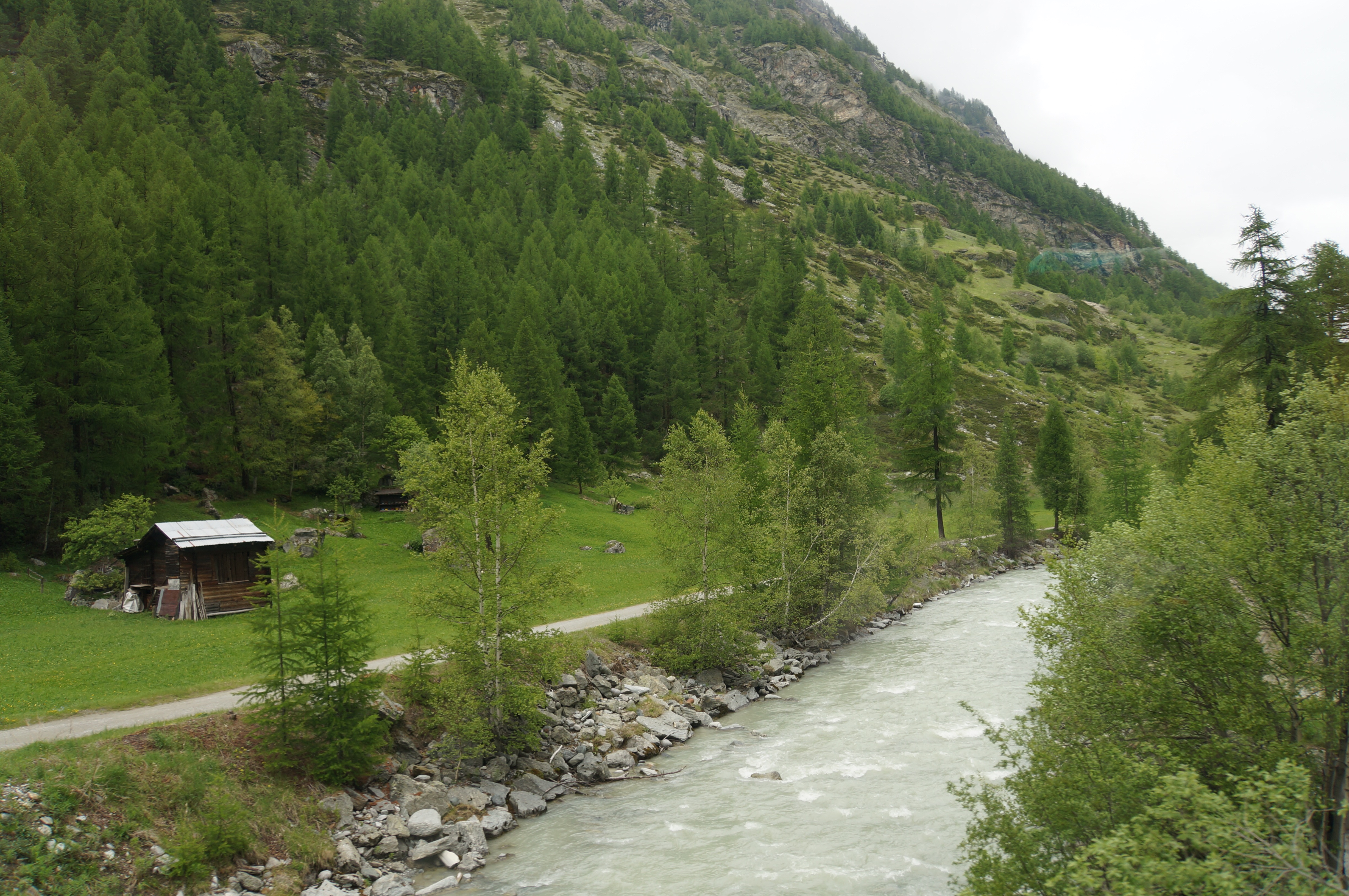
Typically village-side view

Typically village-side view

IMG_6281

We agreed that night – after checking the forecasts – that going further into Switzerland simply wasn’t a good idea.

The weather called for ice, snow, rain, low cloud and overnight temperatures below the freezing mark. Hell, we can get that in Alberta in May, we thought, and knowing it was 25 and sunny in Italy we made our move.

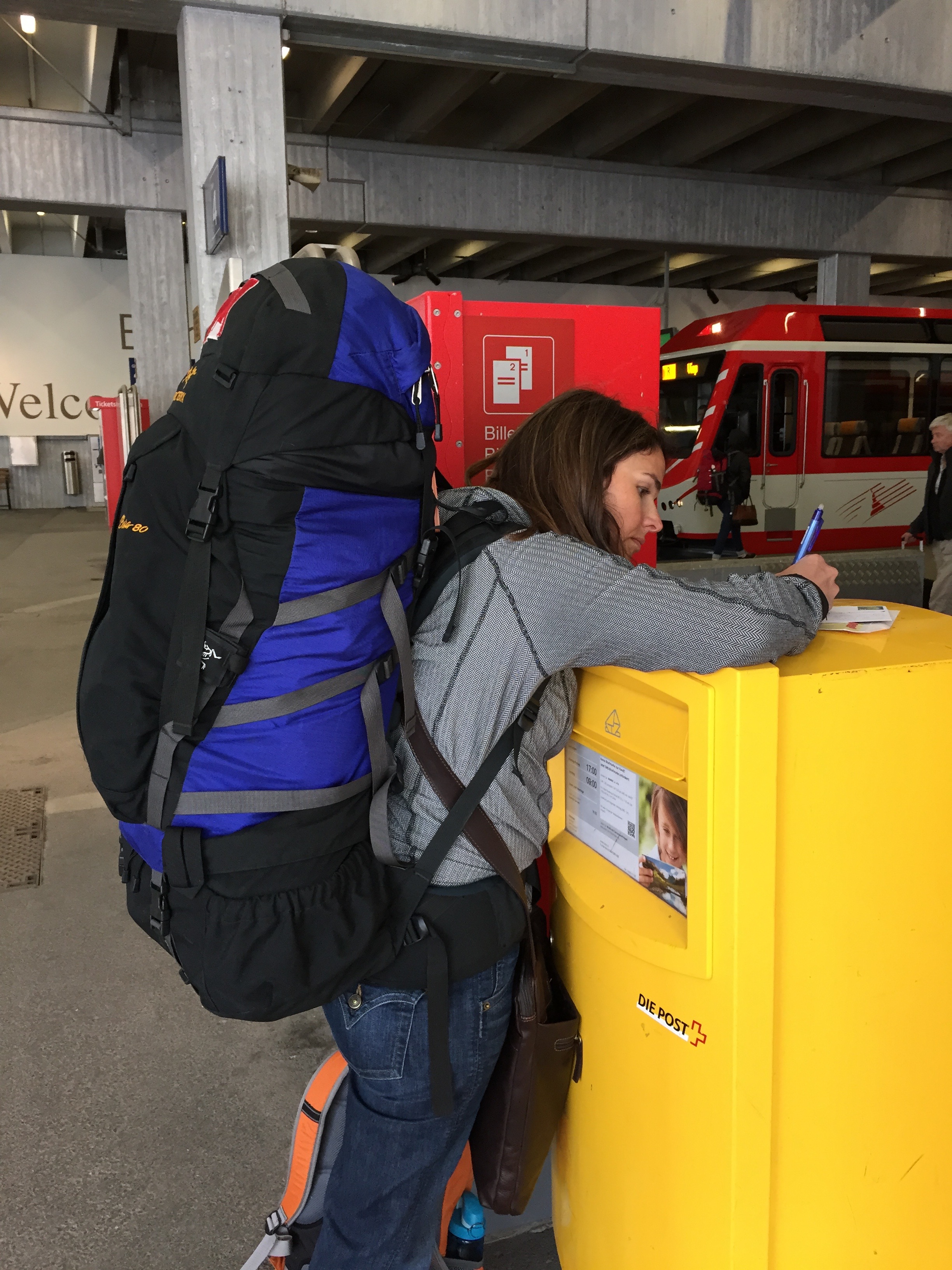
Not that we wrote our postcards AT the mailbox....at the train station in Zermatt.

Not that we wrote our postcards AT the mailbox….at the train station in Zermatt.


The ever so efficient Swiss rail system. Taking us back to Visp en route to Florence.

The ever so efficient Swiss rail system. Taking us back to Visp en route to Florence.

Next up – adventures from Florence. Stay tuned….

CKD

Writers note: Our friends at Wikipedia assisted with facts and history for this post. Writer has cited where referenced as possible, but for more information and a complete look at Zermatt, visit https://en.wikipedia.org/wiki/Zermatt


Leave a comment

Birds Eye View from Chamonix

While we covered our time in Chamonix, France fairly extensively while we were on the road. Upon returning to Calgary and uploading my SLR camera files, I found some pretty great shots that I thought were worth sharing with those still following along with our adventure.  The similarities to BC mountains and the spectacular mountain views of Canmore here in Alberta seem to be how I describe our time there. Hope you enjoy these shots – certain brings back the awe and amazement of that portion of our trip. So beautiful.

DSC00583

DSC00491DSC00602

DSC00550 DSC00483

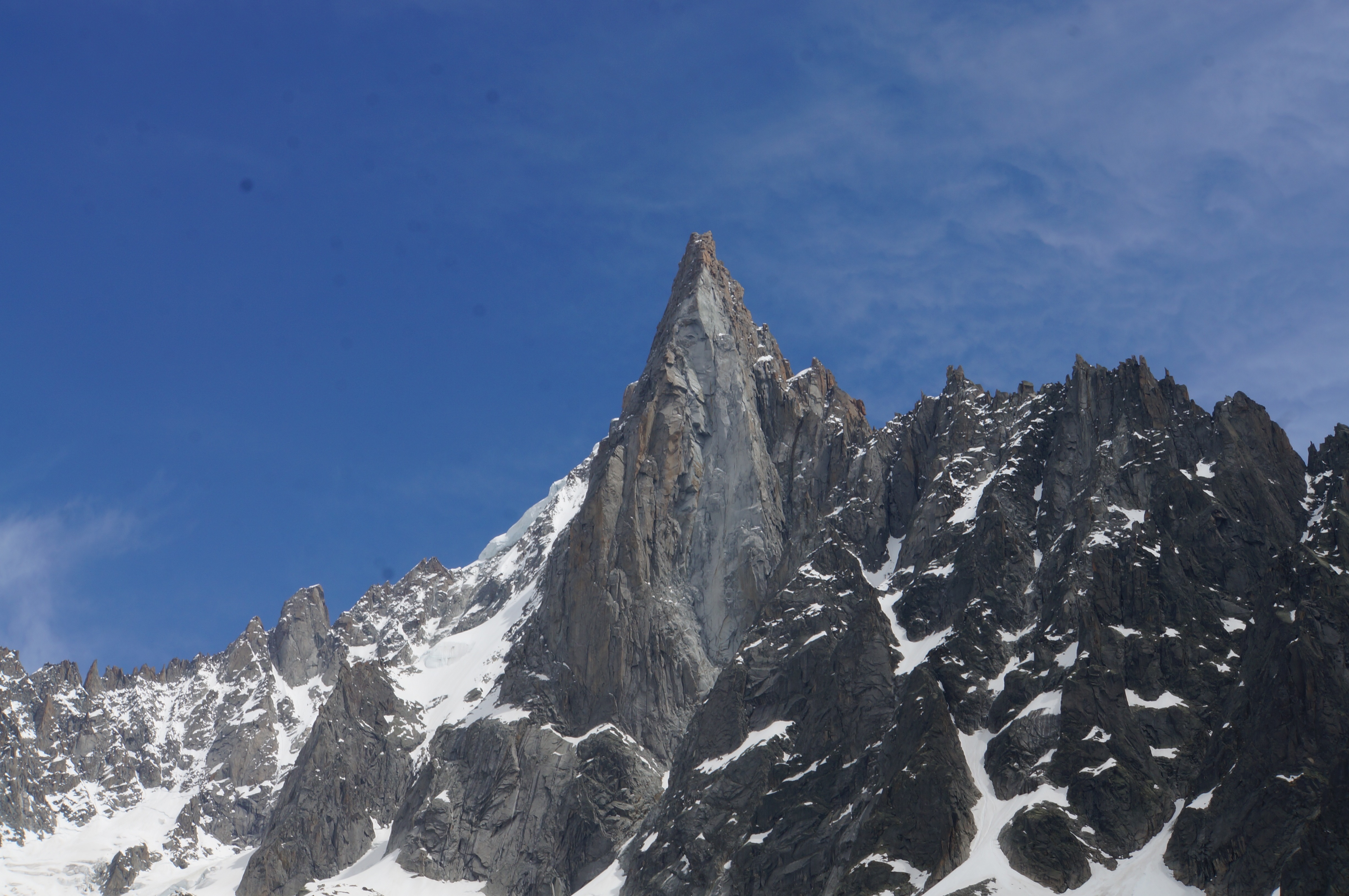
Le Dru

Le Dru

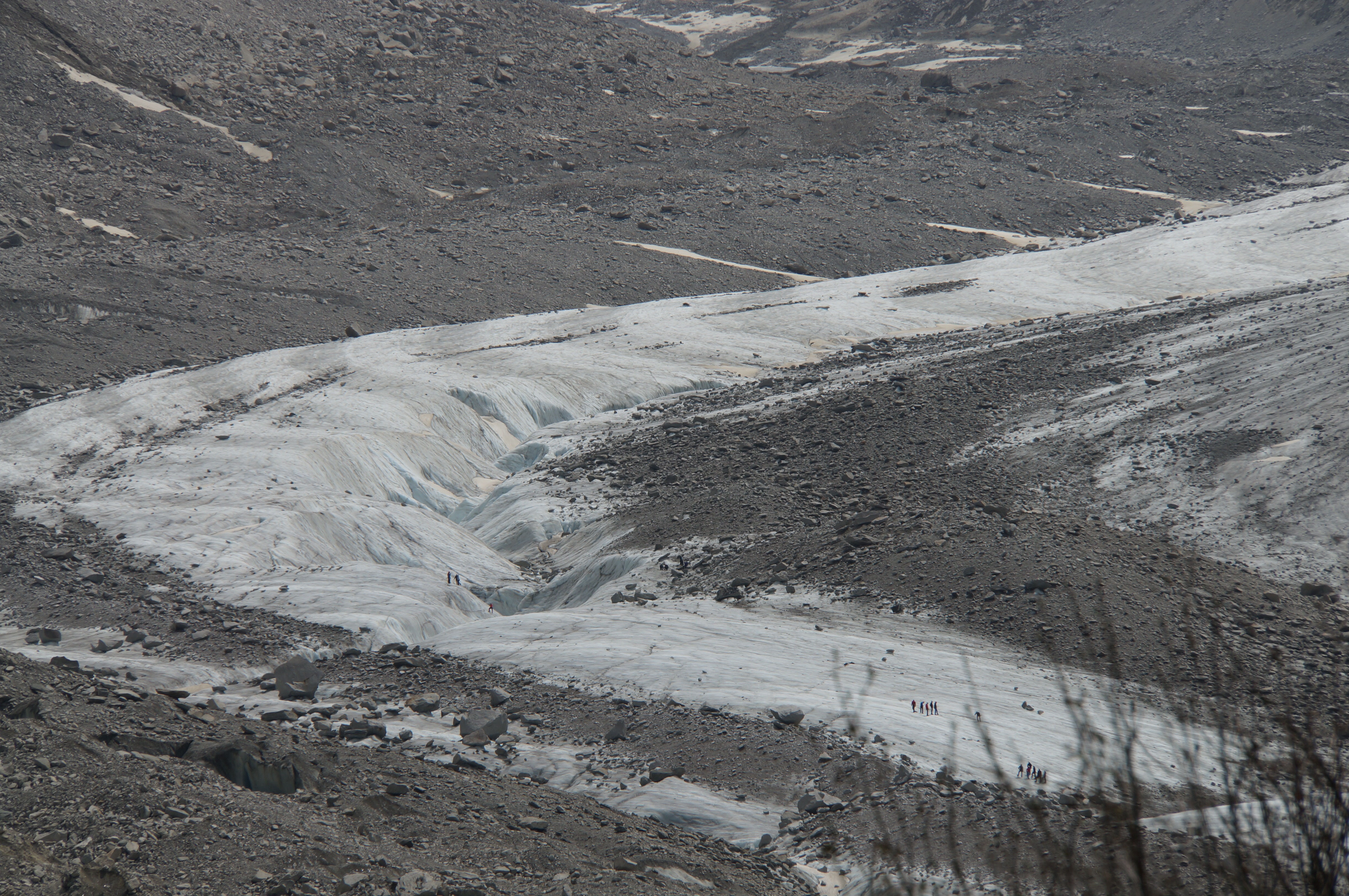
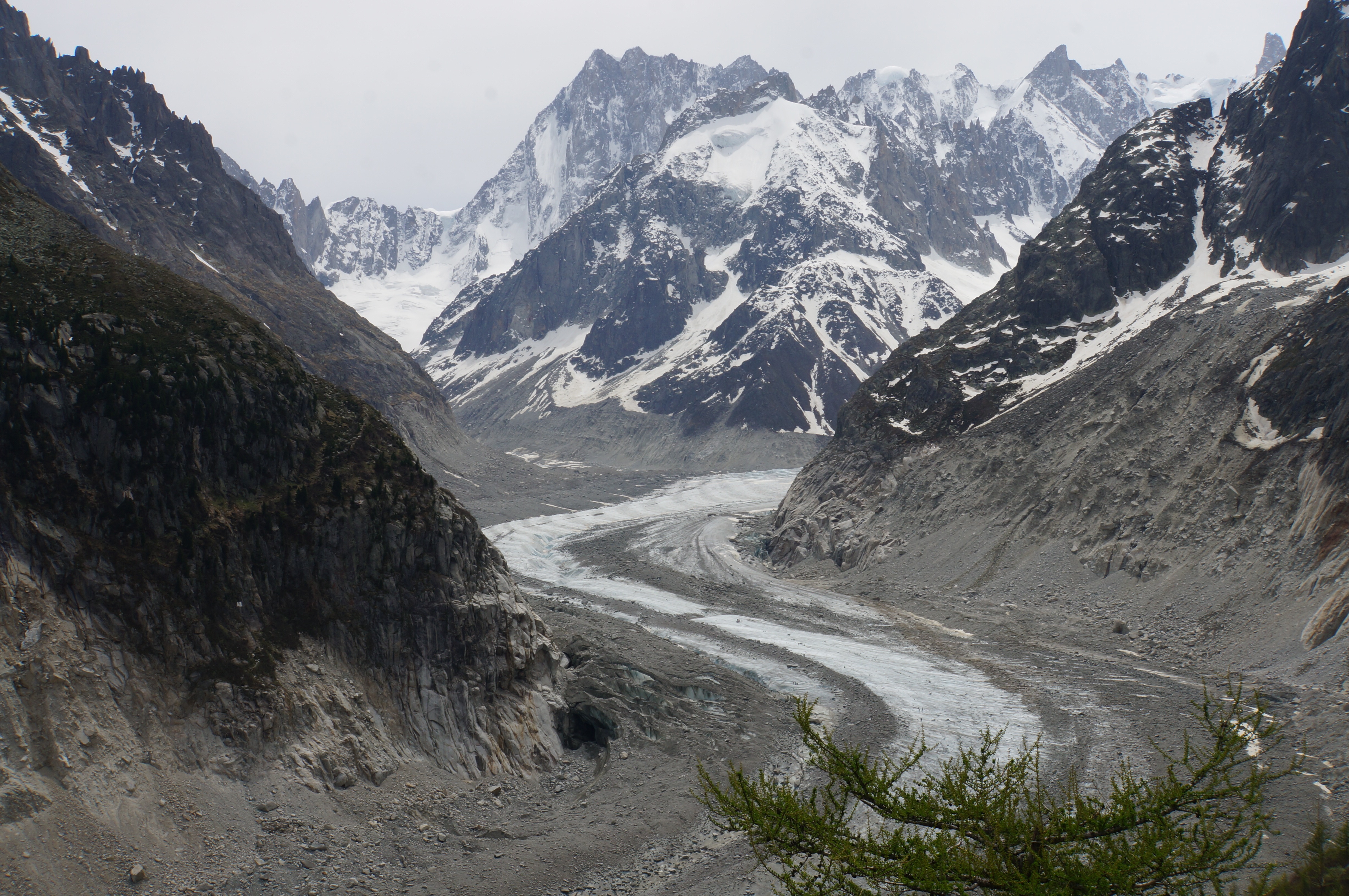
Close up shot of the glacier much further receding than I would have expected.

Close up shot of the glacier much further receding than I would have expected.


DSC00453

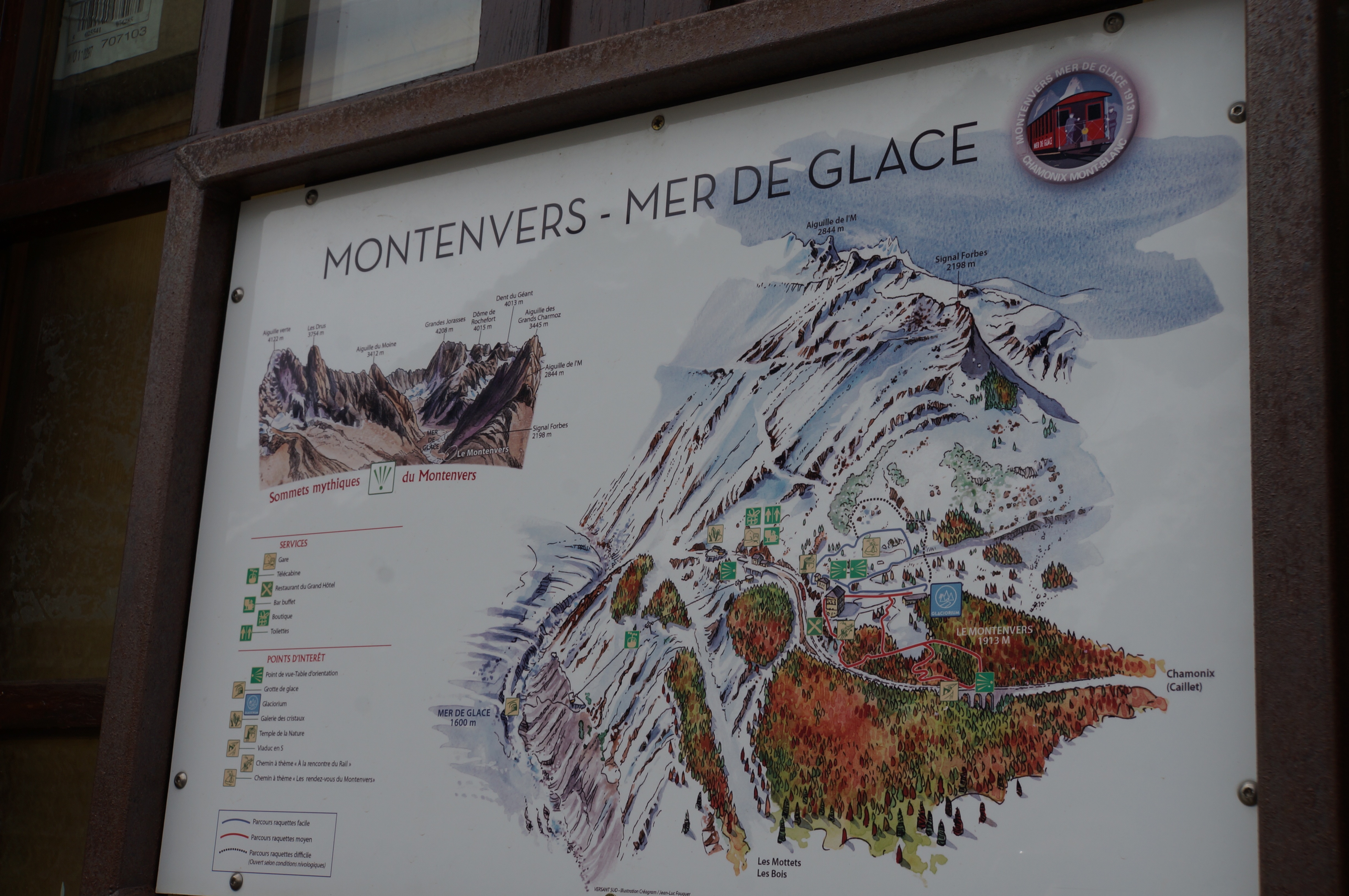
Mer de Glace

Mer de Glace

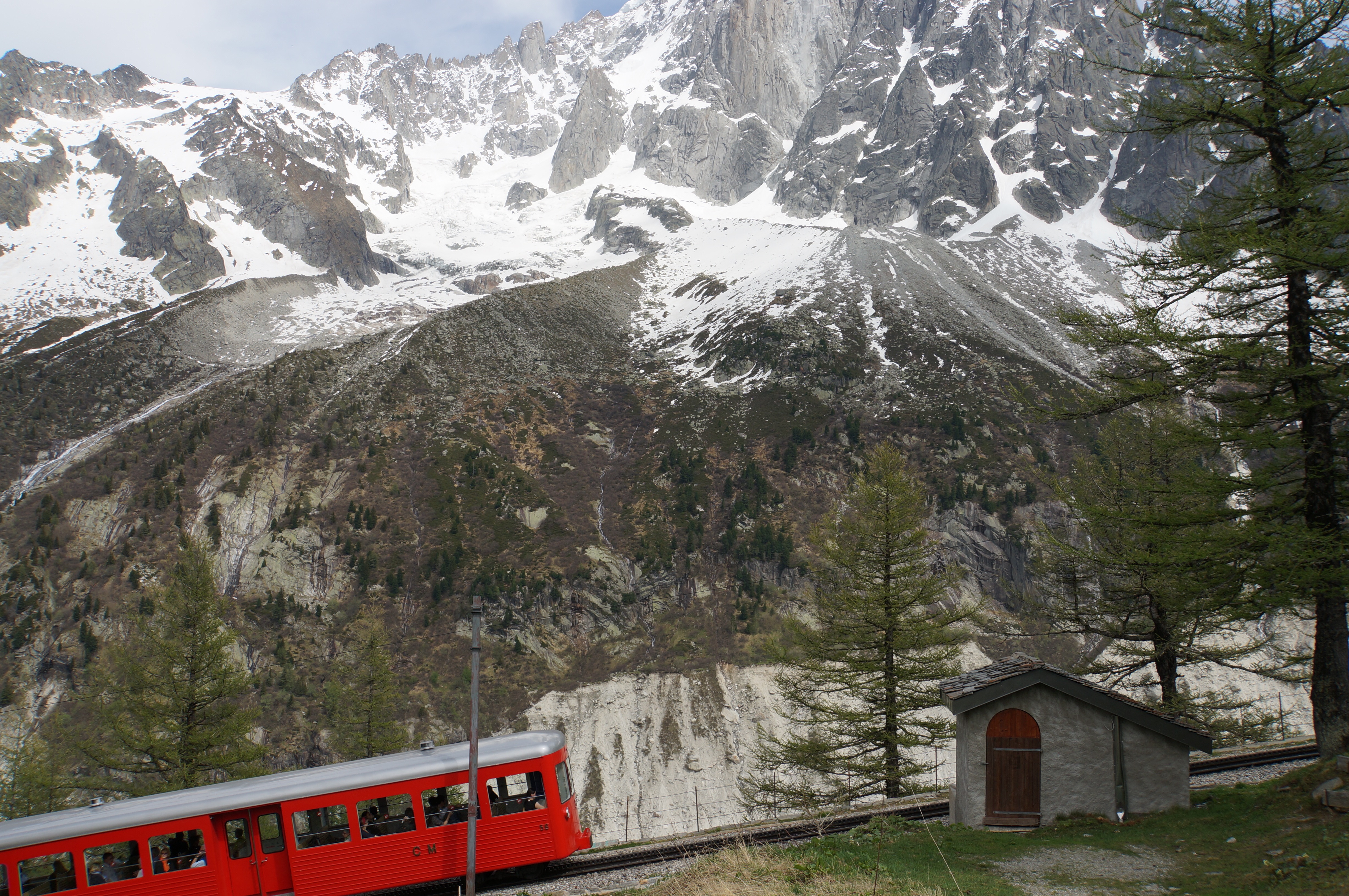
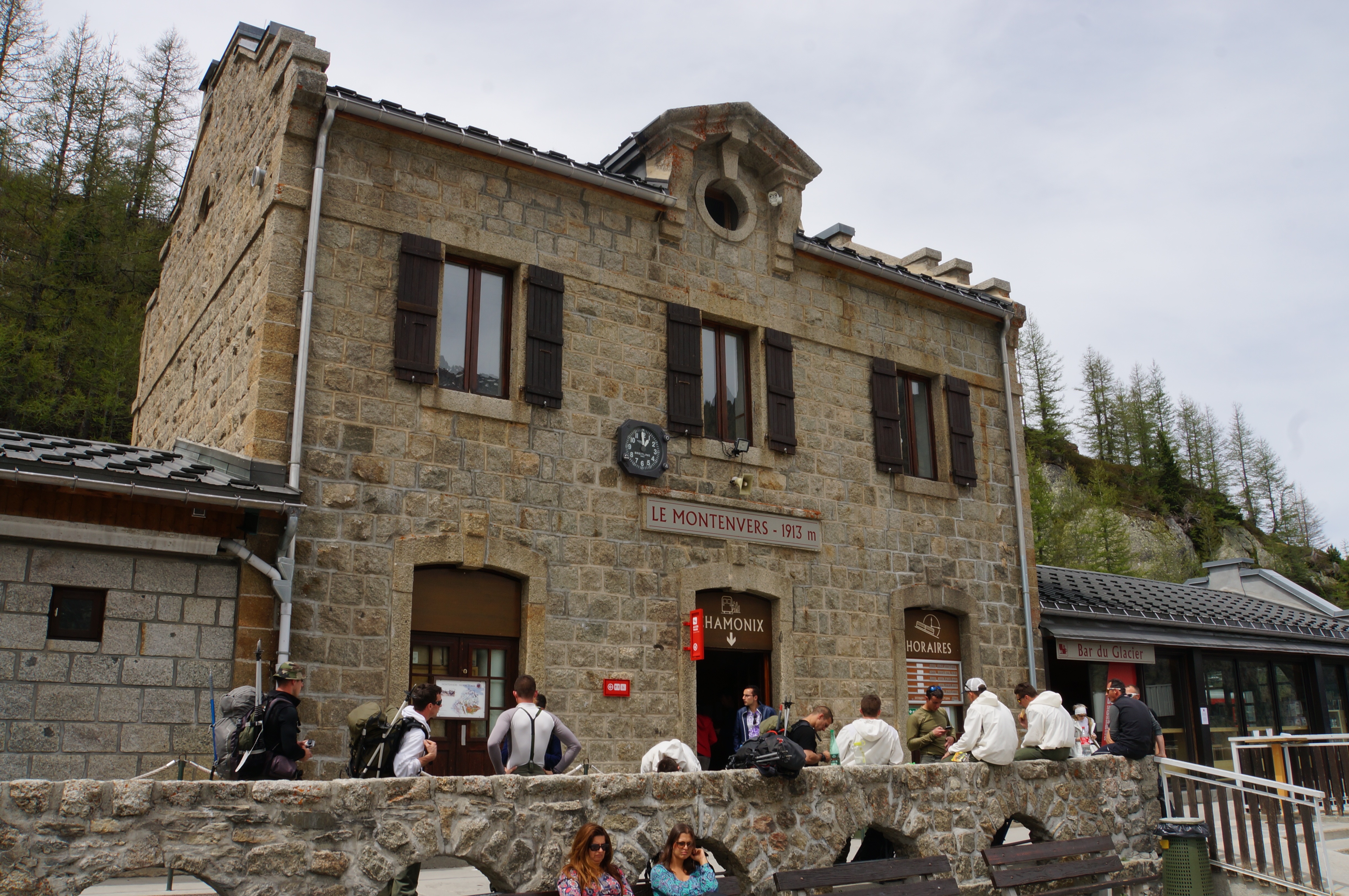
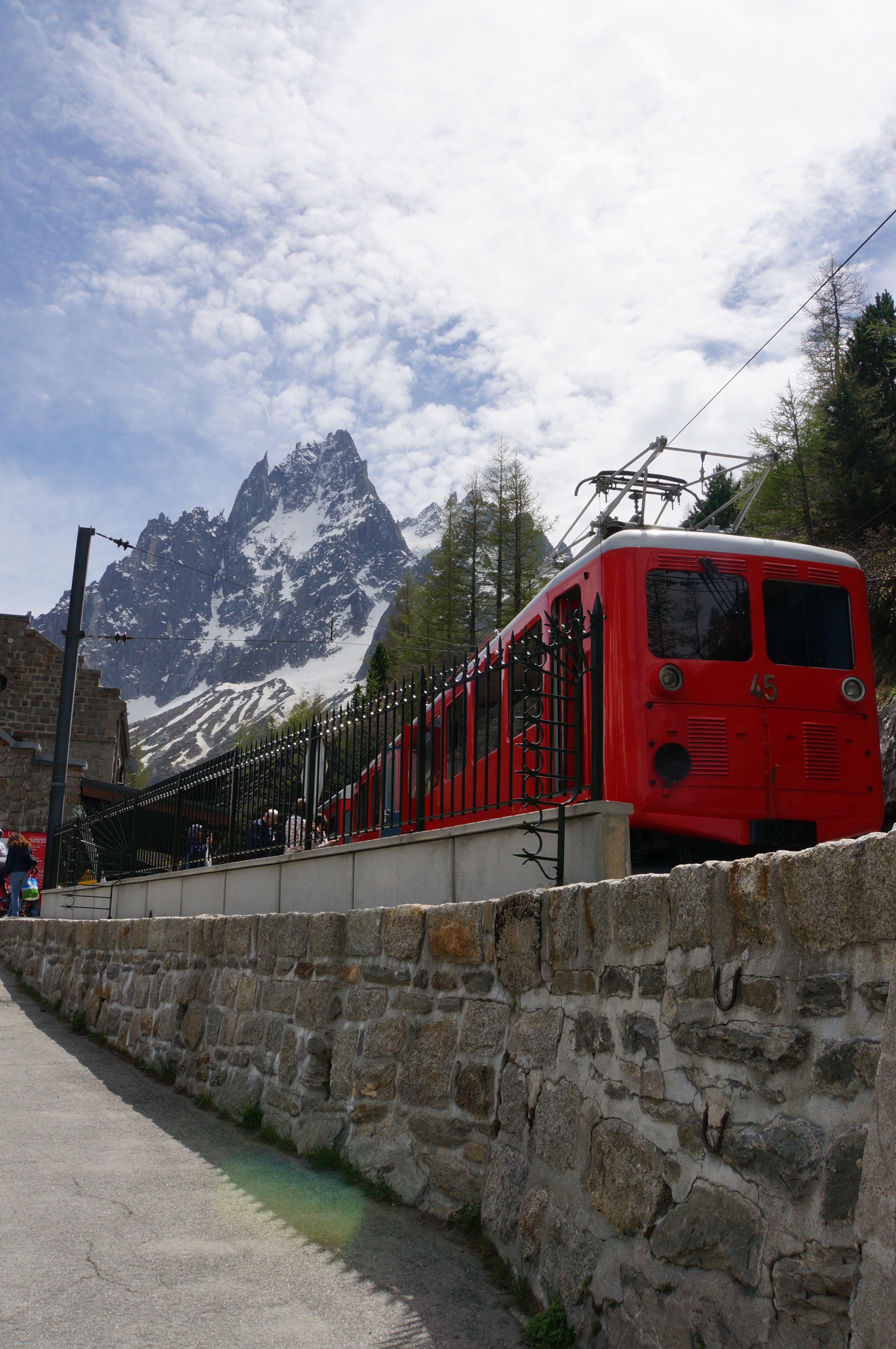
The train that took us up to  Montenvers where we enjoyed Mer de Glace and views of Le Dru

The train that took us up to Montenvers where we enjoyed Mer de Glace and views of Le Dru

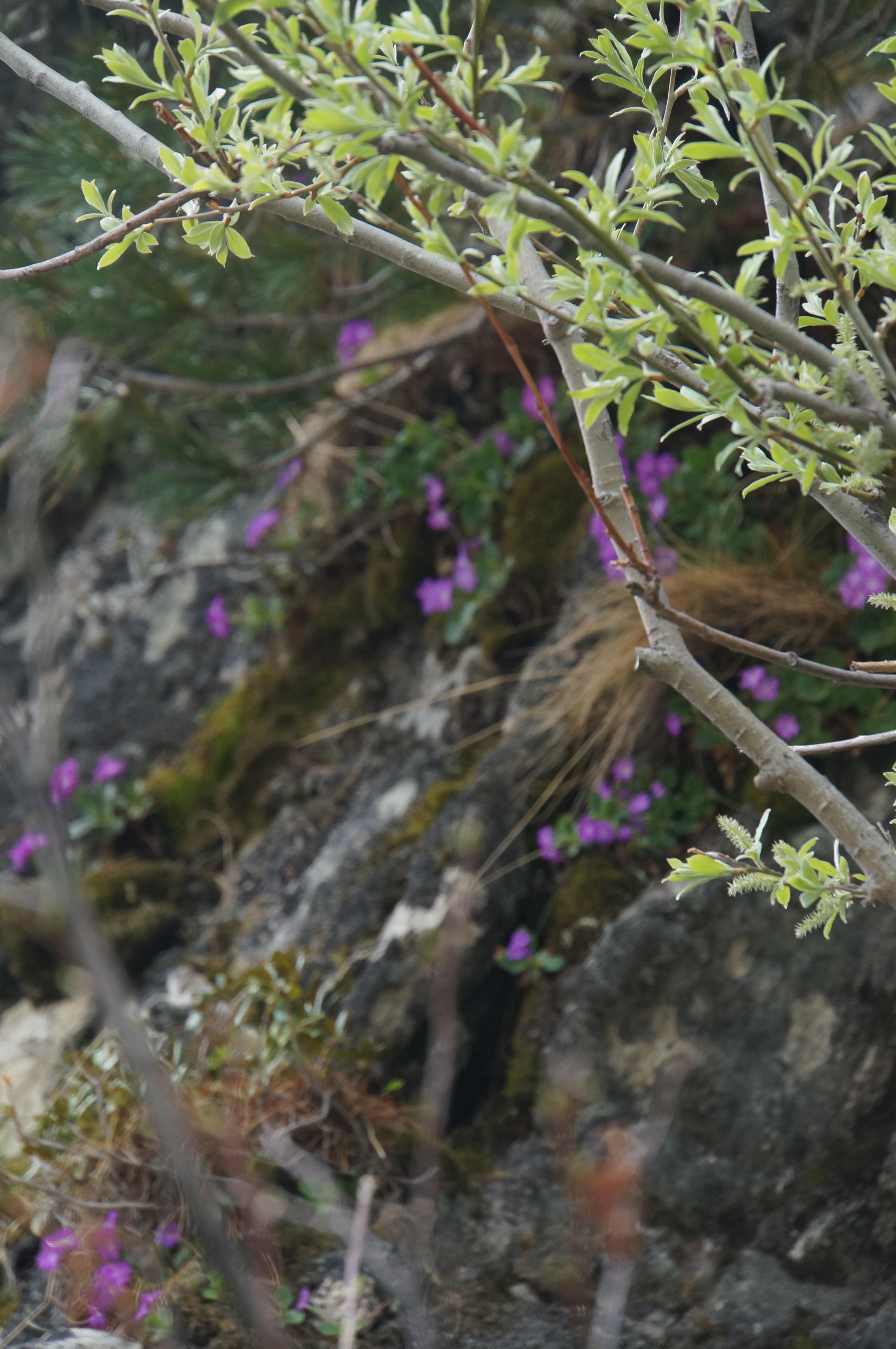
Spring has begun to appear on the mountainsides, as seen from the little red train.

Spring has begun to appear on the mountainsides, as seen from the little red train.


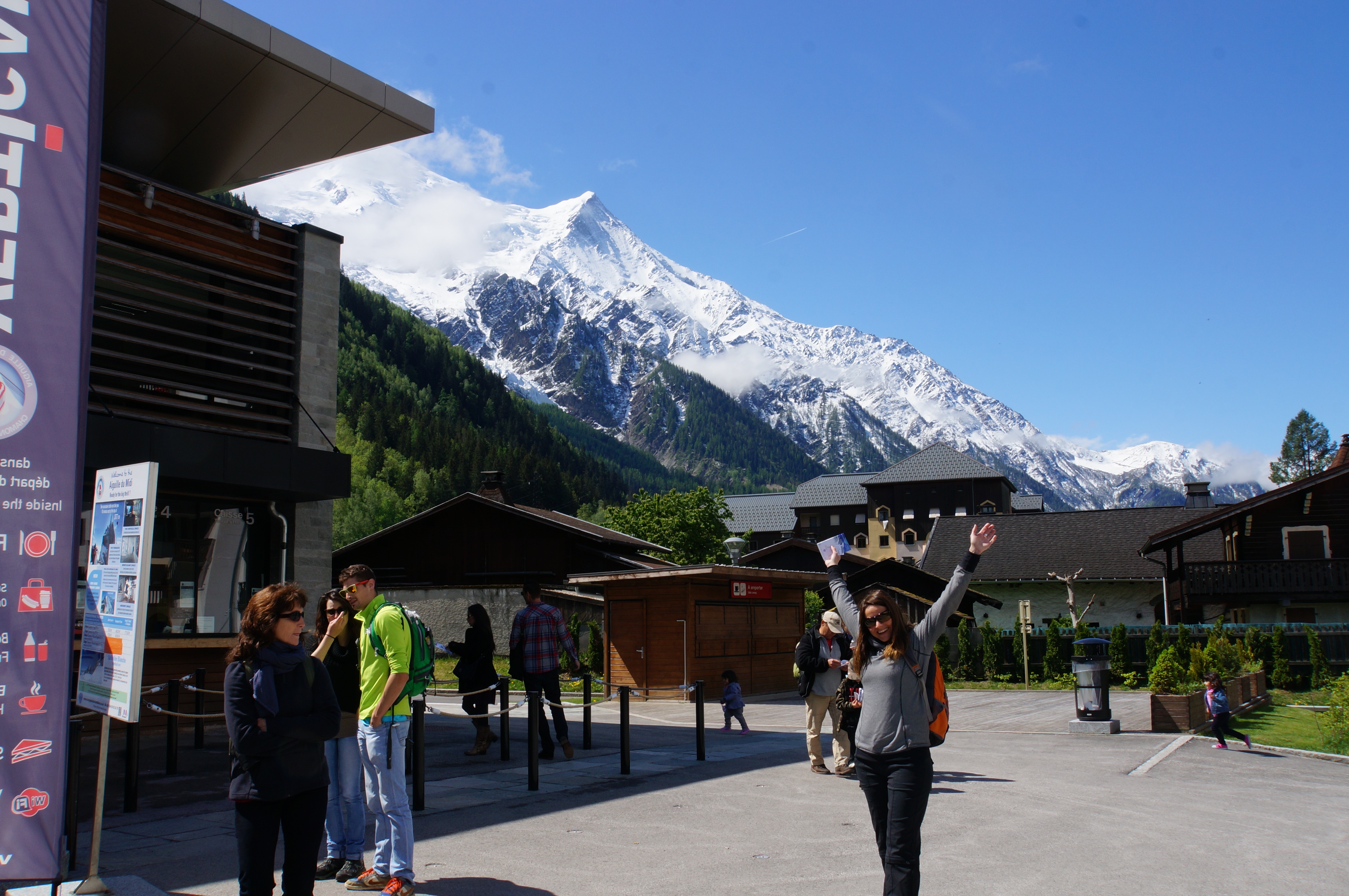
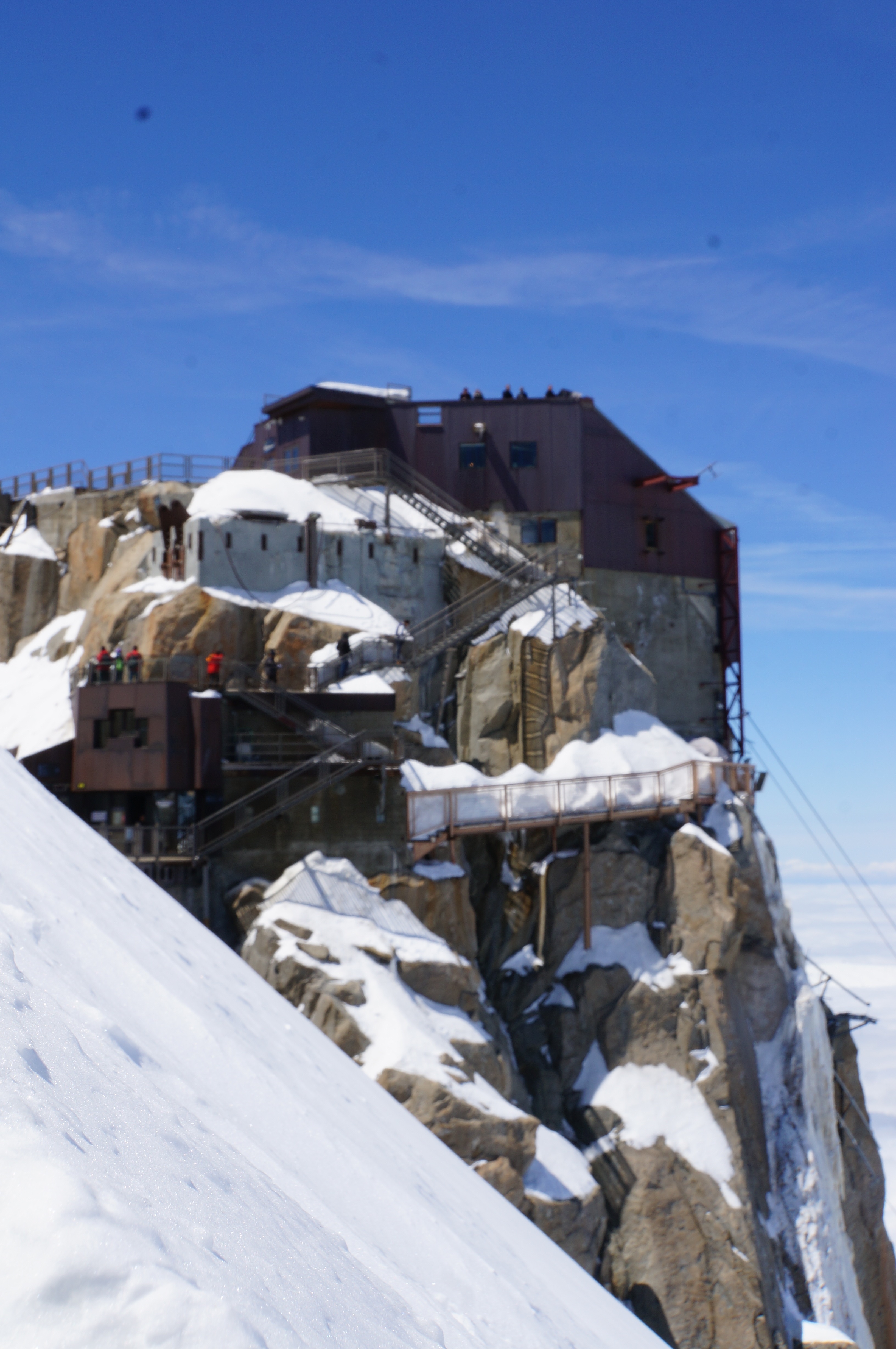
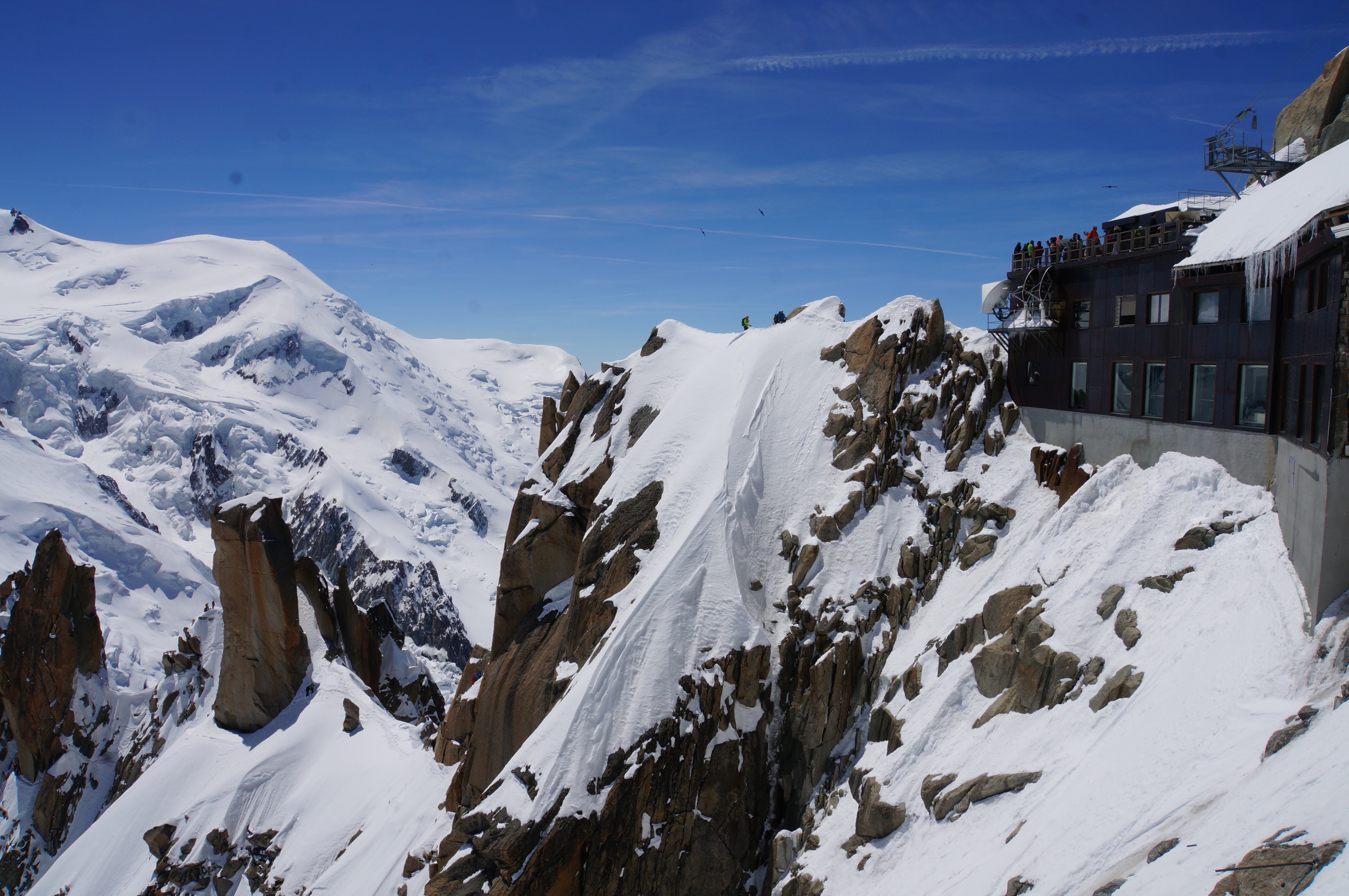
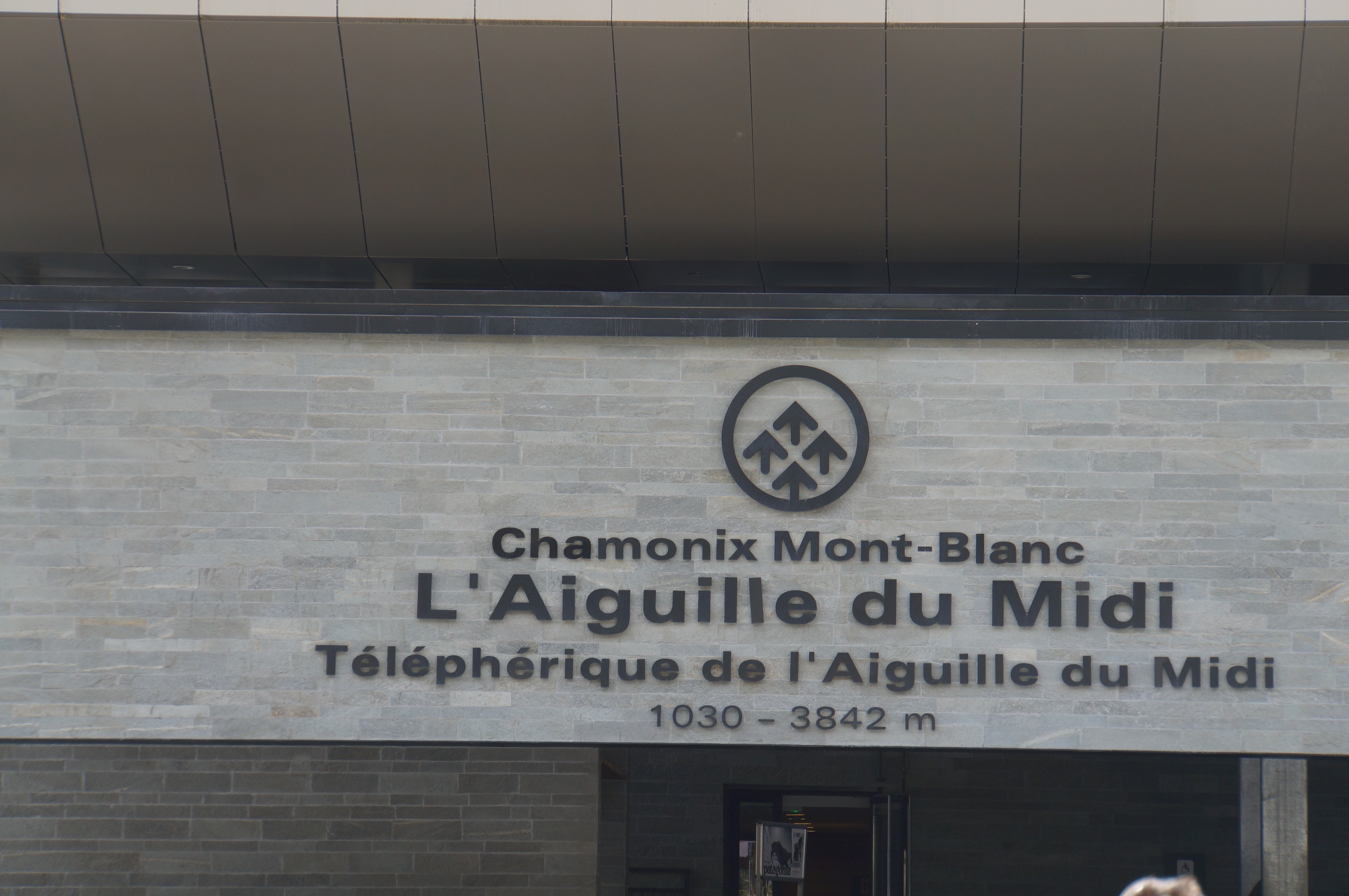
Astrid - excited to be in Chamonix - and about to head up to the Aigulle de Midi

Astrid – excited to be in Chamonix – and about to head up to the Aiguille de Midi

Astrid - reflecting....

Astrid – reflecting….

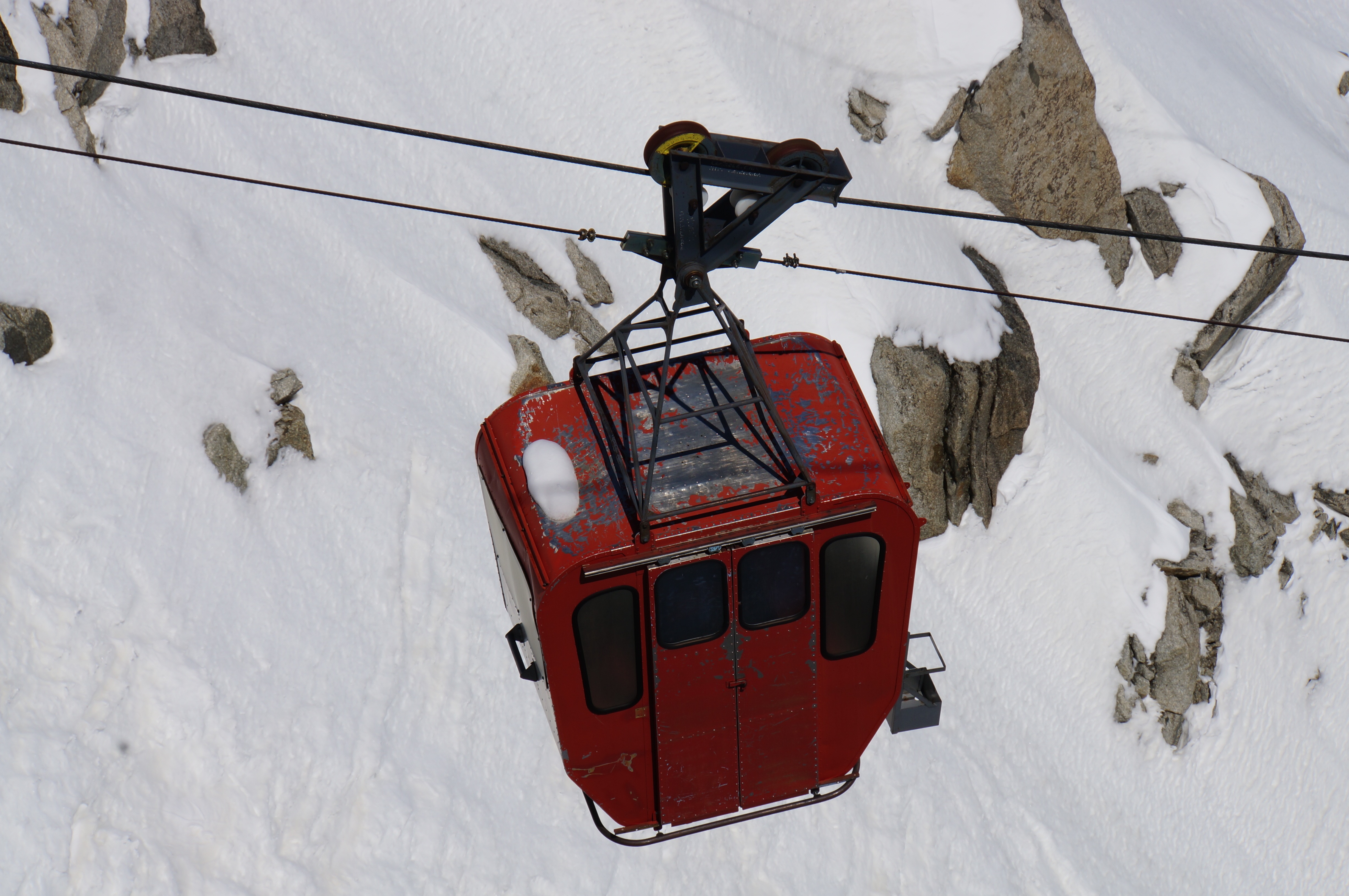
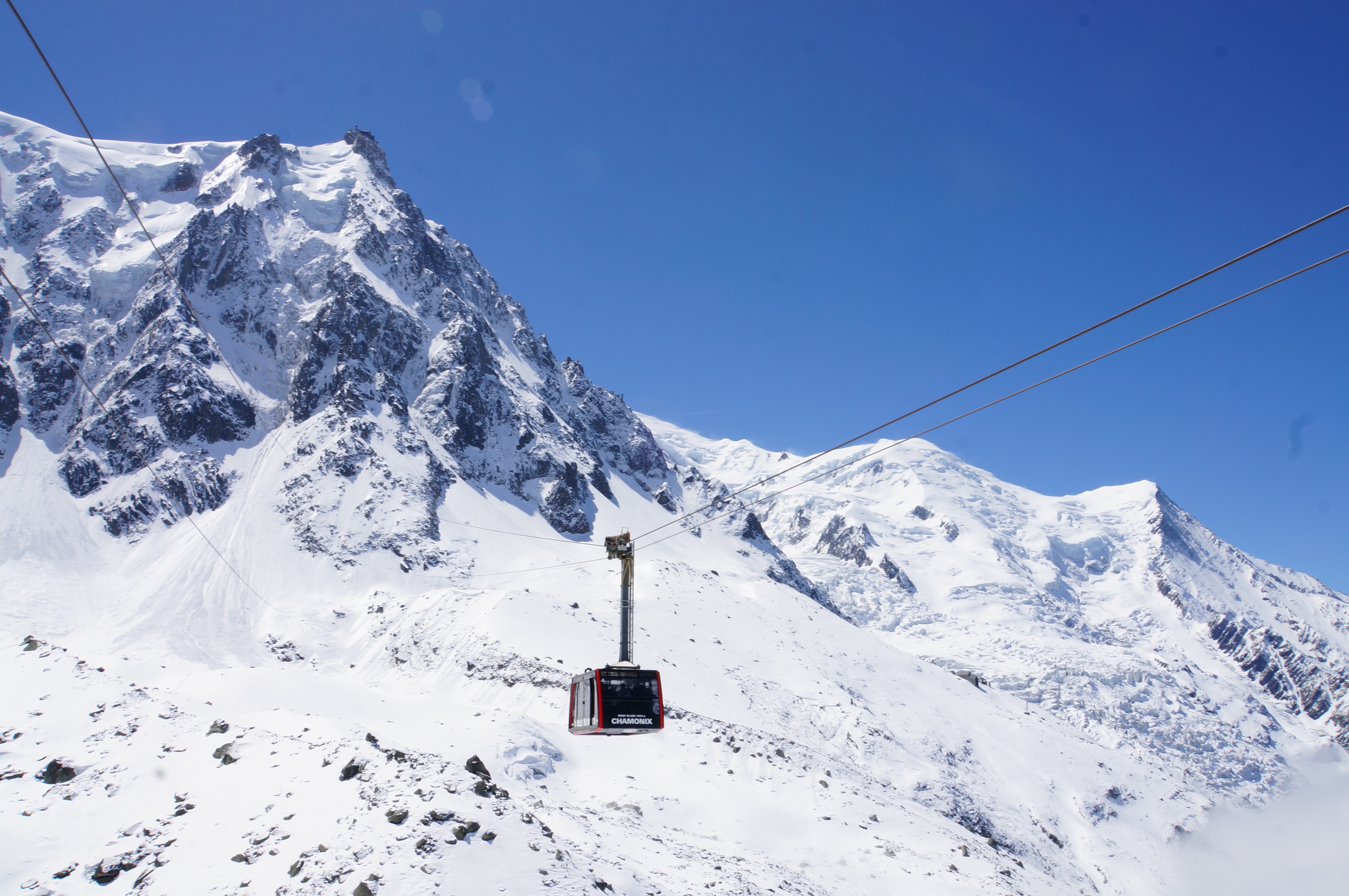
A gondola that was closed during our visit. Possibly the one that could have taken us to Itlay for lunch?

A gondola that was closed during our visit. Possibly the one that could have taken us to Italy for lunch?

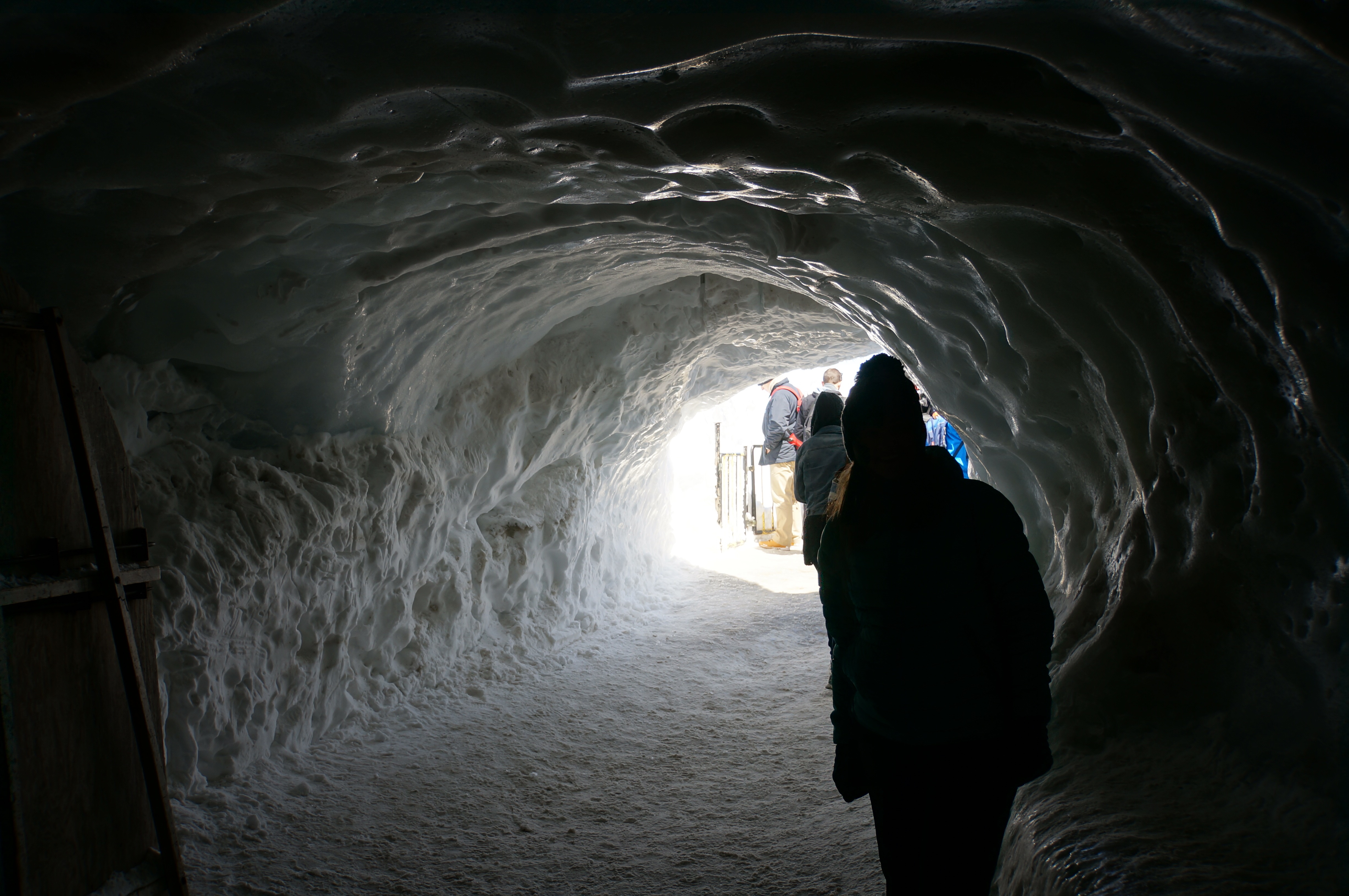
Heading out the tunnel

Heading out the tunnel

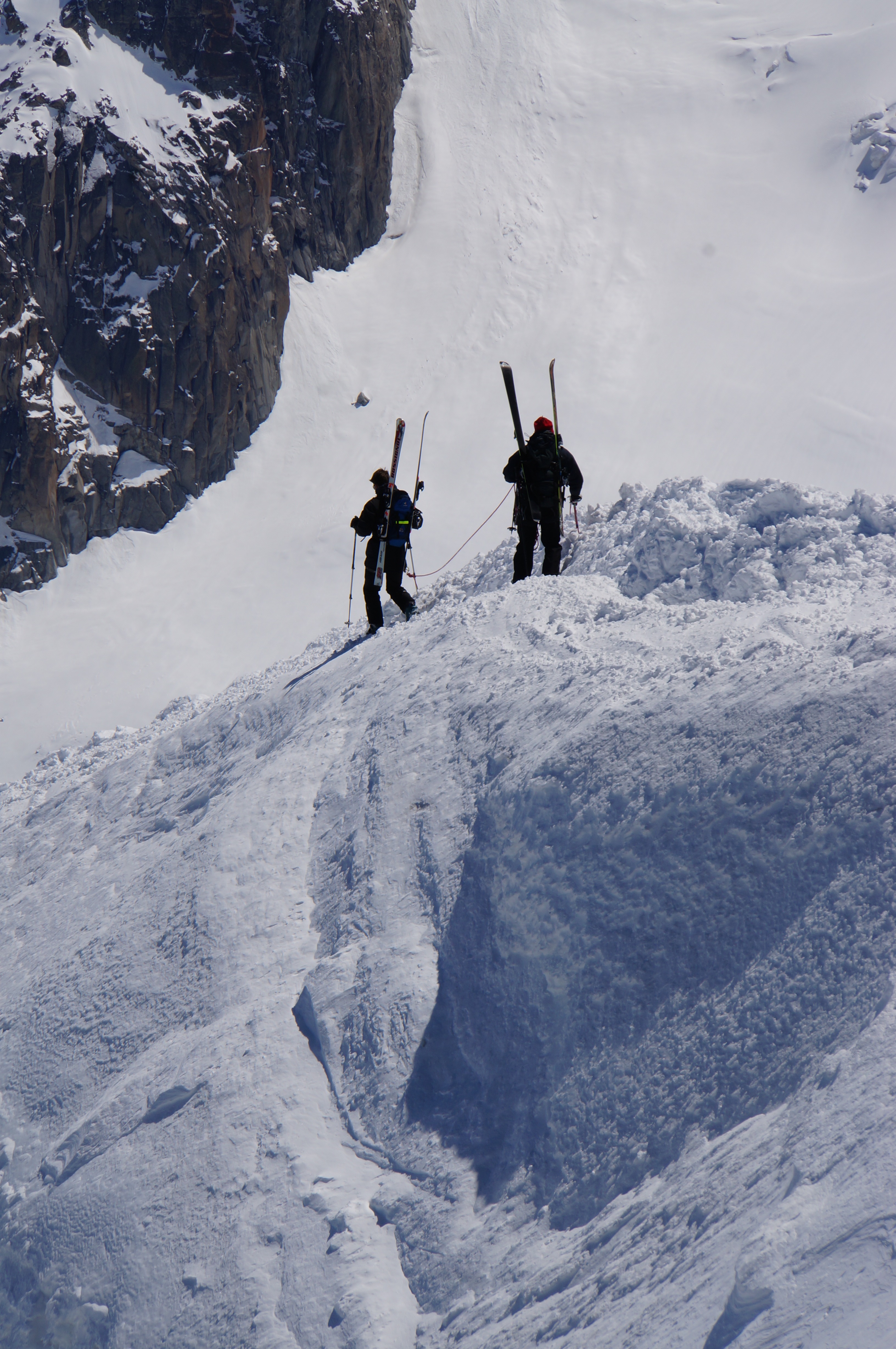
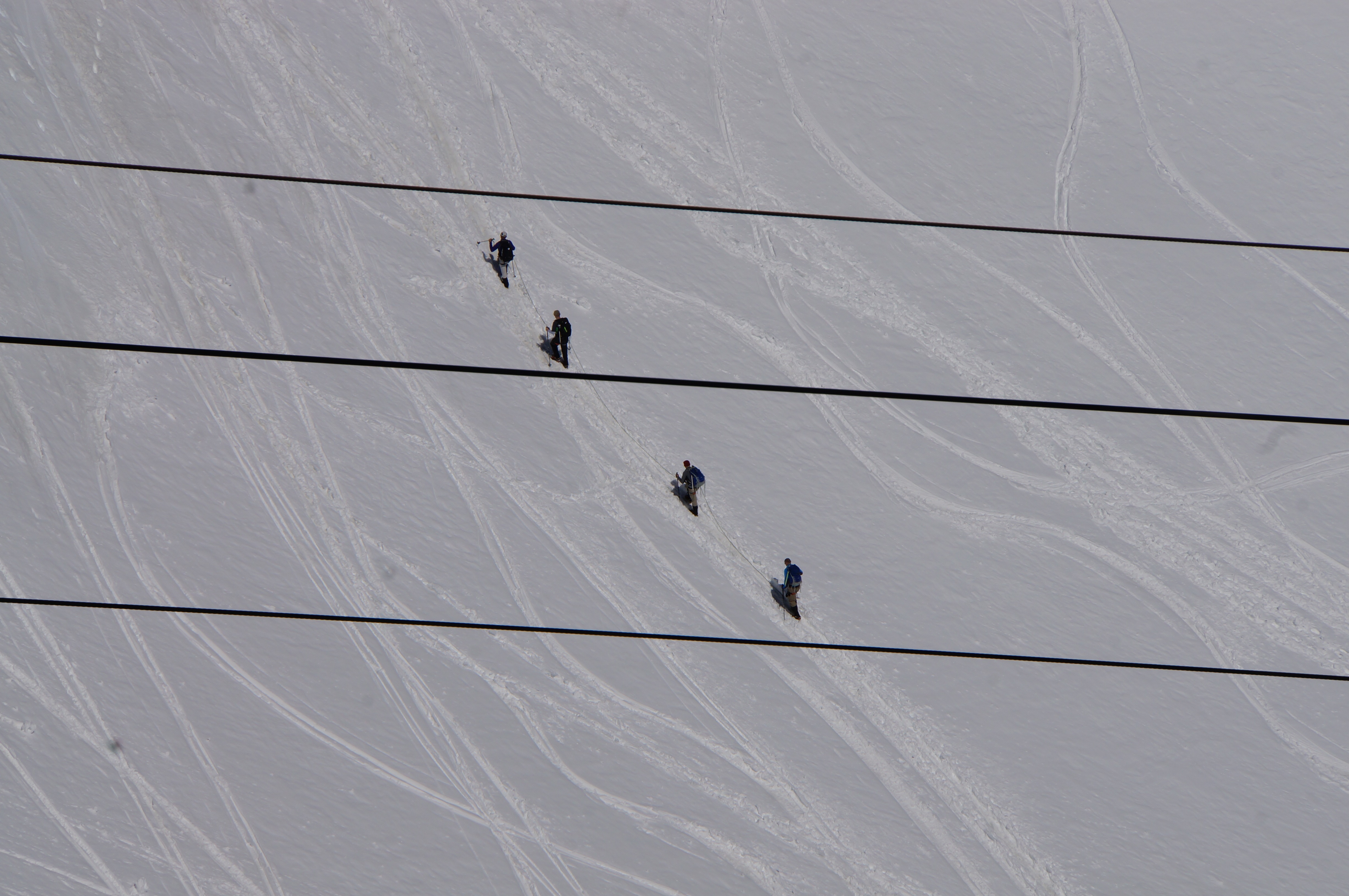
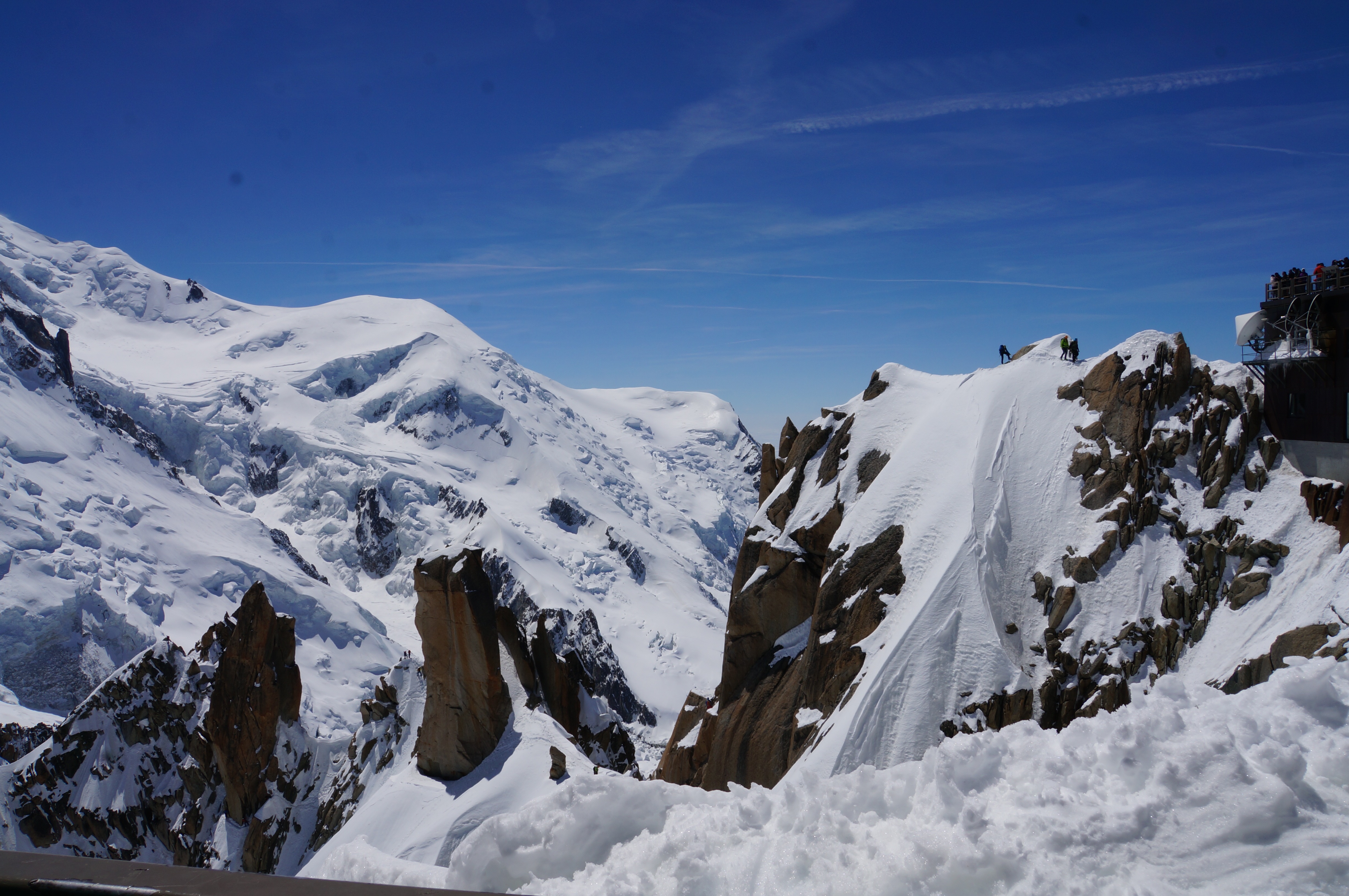
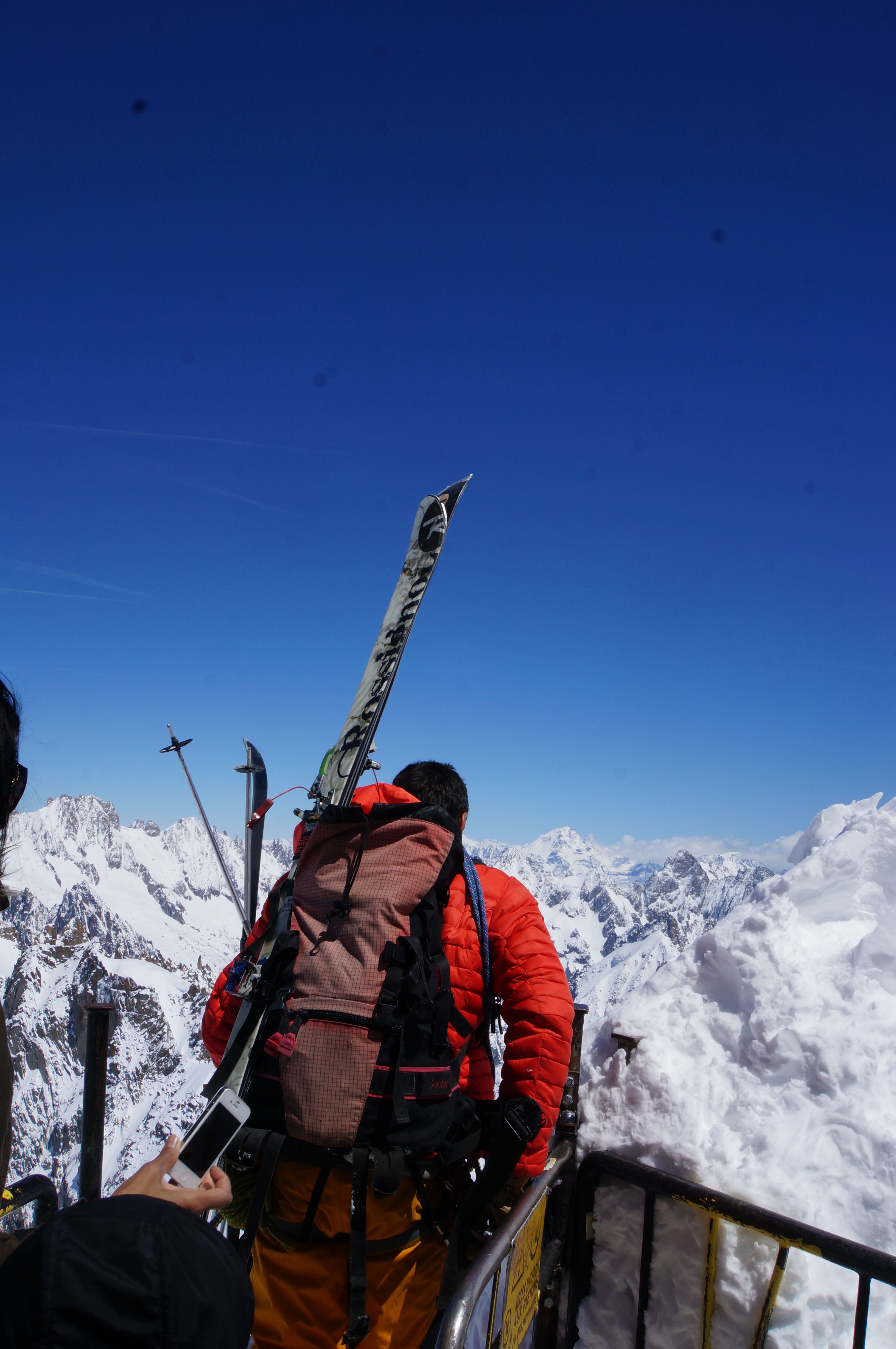
The tiny little figures getting ready to ski their favourite lines.

The tiny little figures getting ready to ski their favourite lines.

Skiers in action - makes my stomach drop

Skiers in action – makes my stomach drop

DSC00976

The view....I mean come on!

The view….I mean come on!

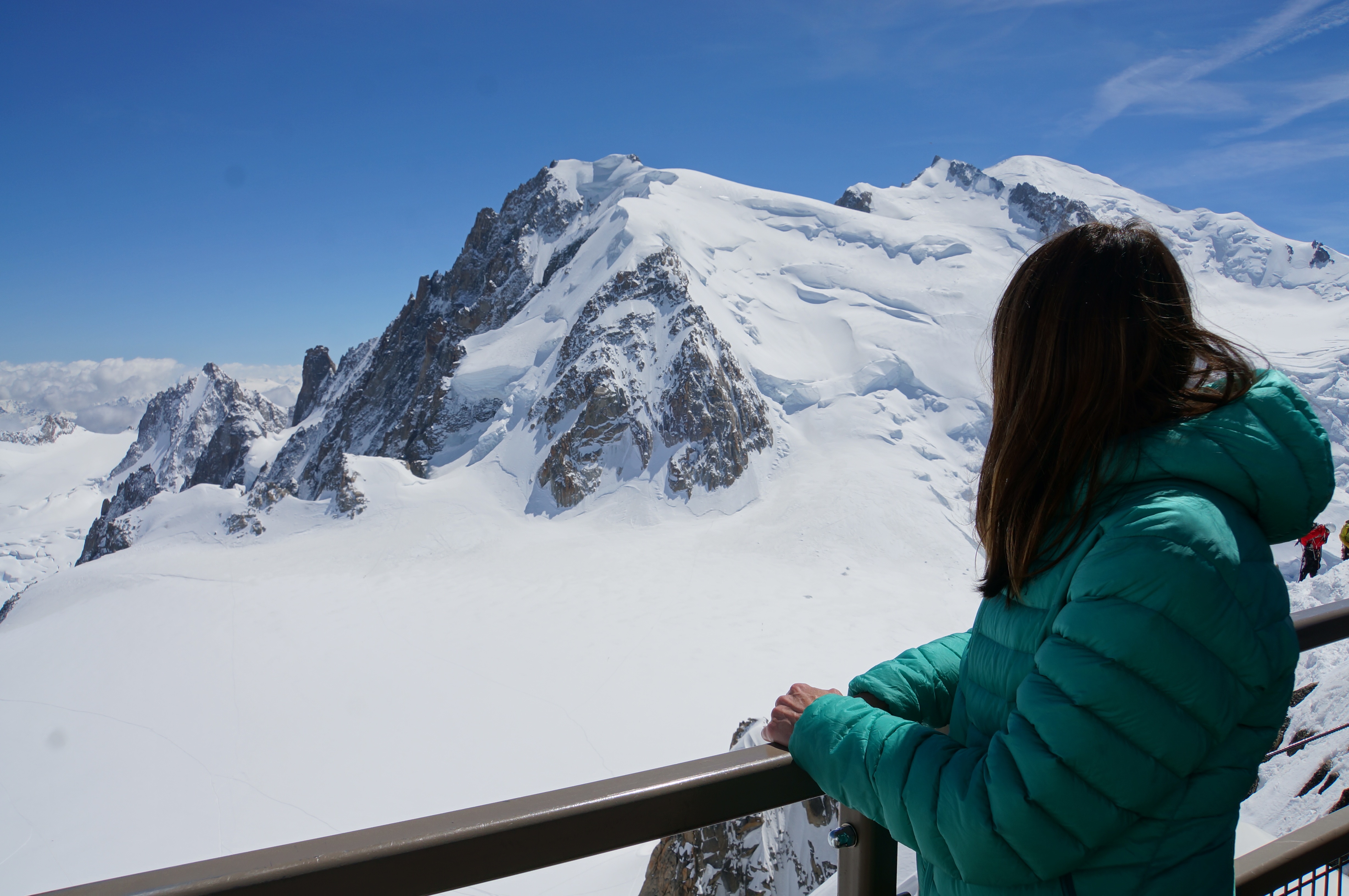
Me - taking in the view

Me – taking in the view

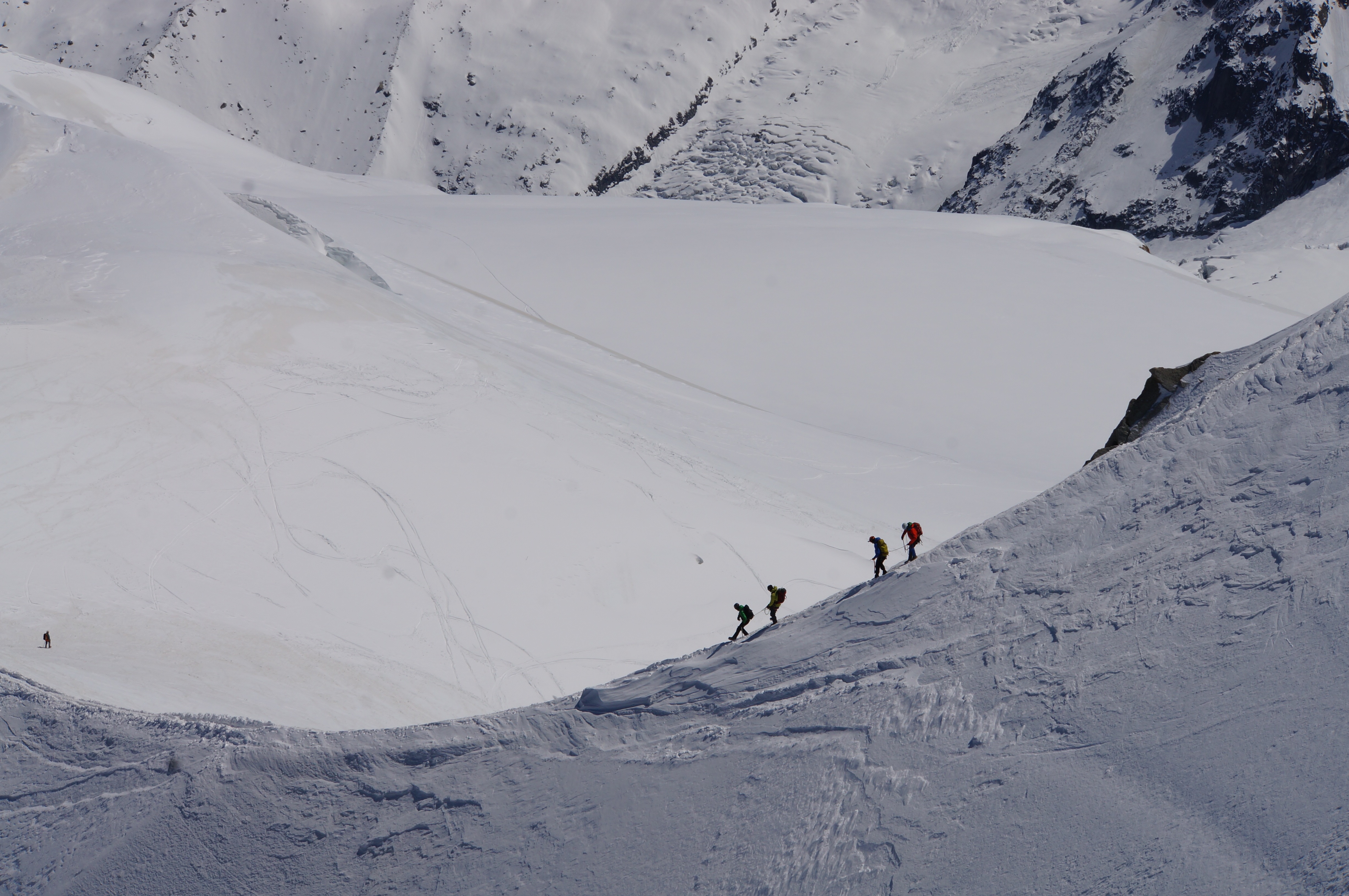
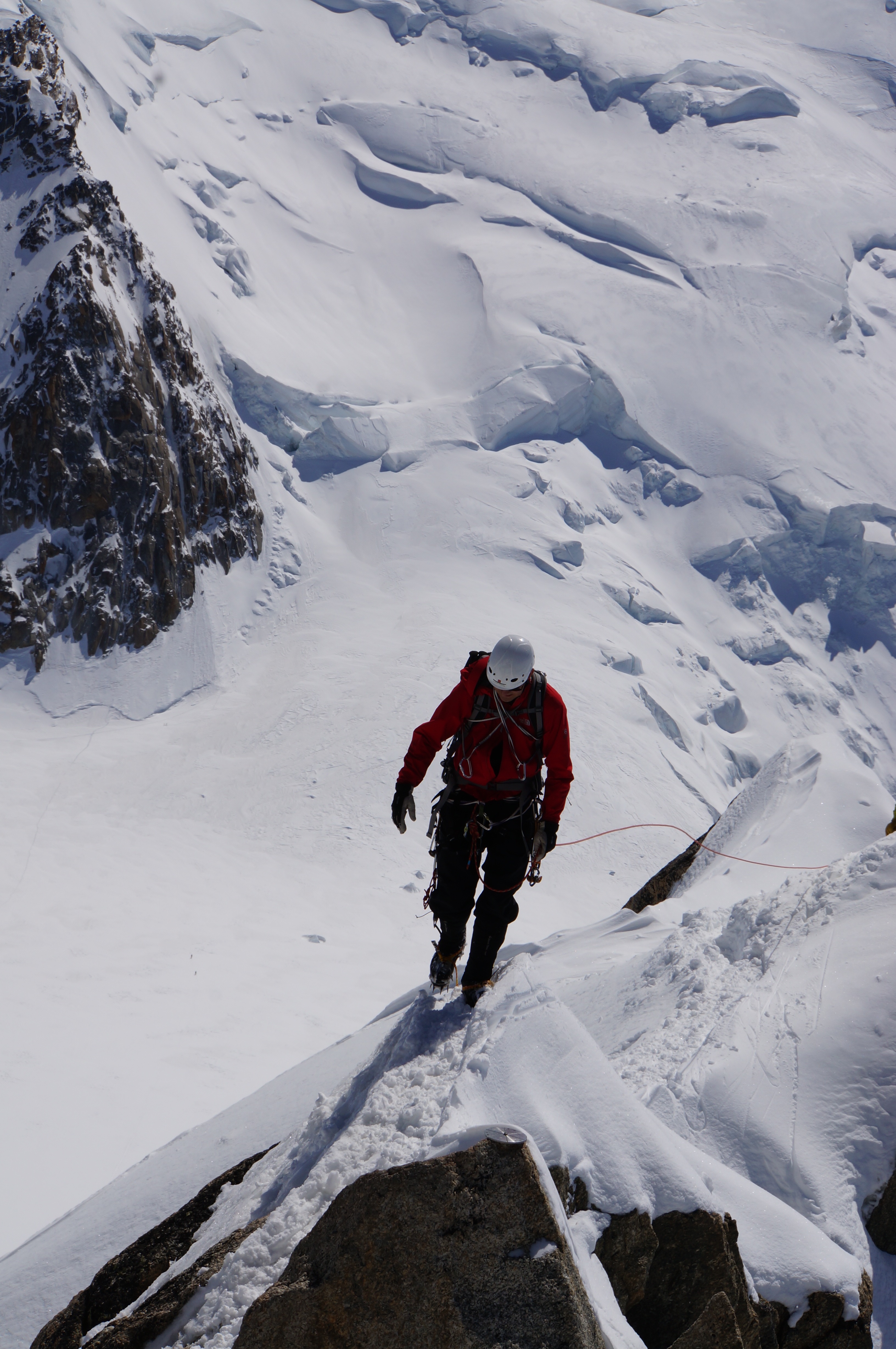
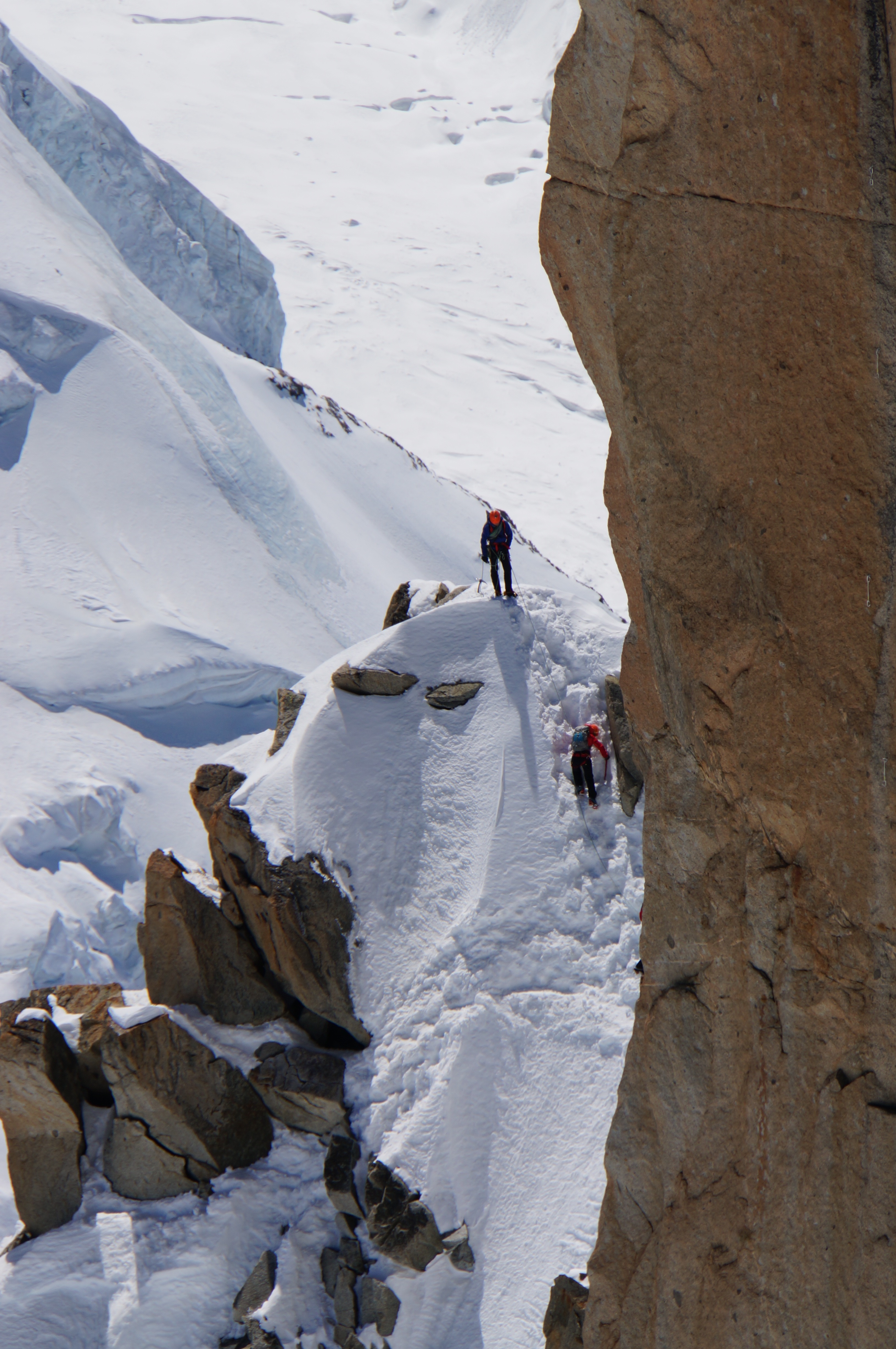
Mountaineers arriving at the peak

Mountaineers arriving at the peak


DSC00866

DSC00983

DSC01036 DSC01116

DSC01061 DSC00903

DSC01070 DSC00944 DSC00737

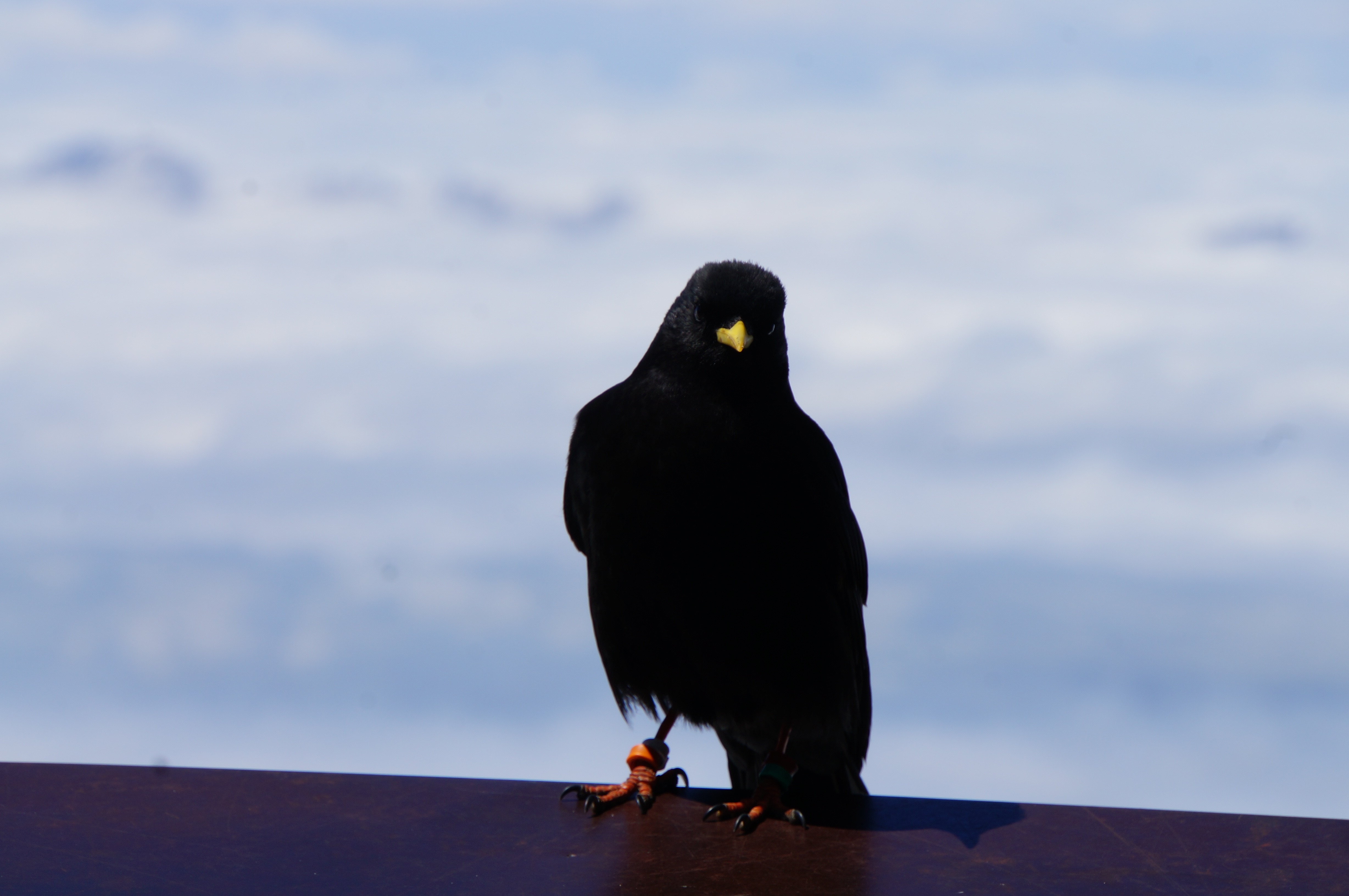
These birds are well known to soar the skies at the top of the Midi

These birds are well known to soar the skies at the top of the Midi

DSC01060 DSC01047 DSC01080

DSC00970 DSC00690

DSC00987

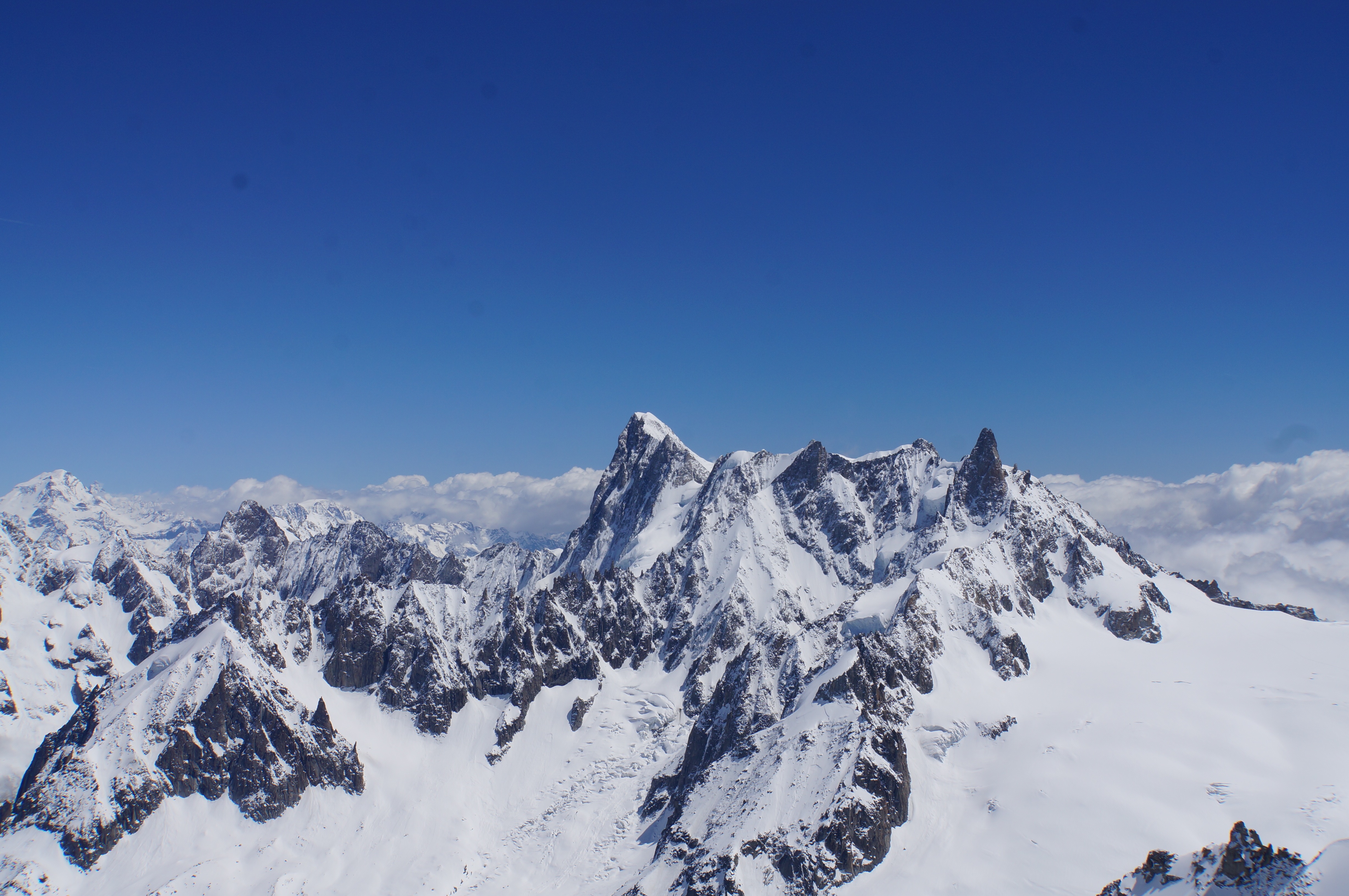
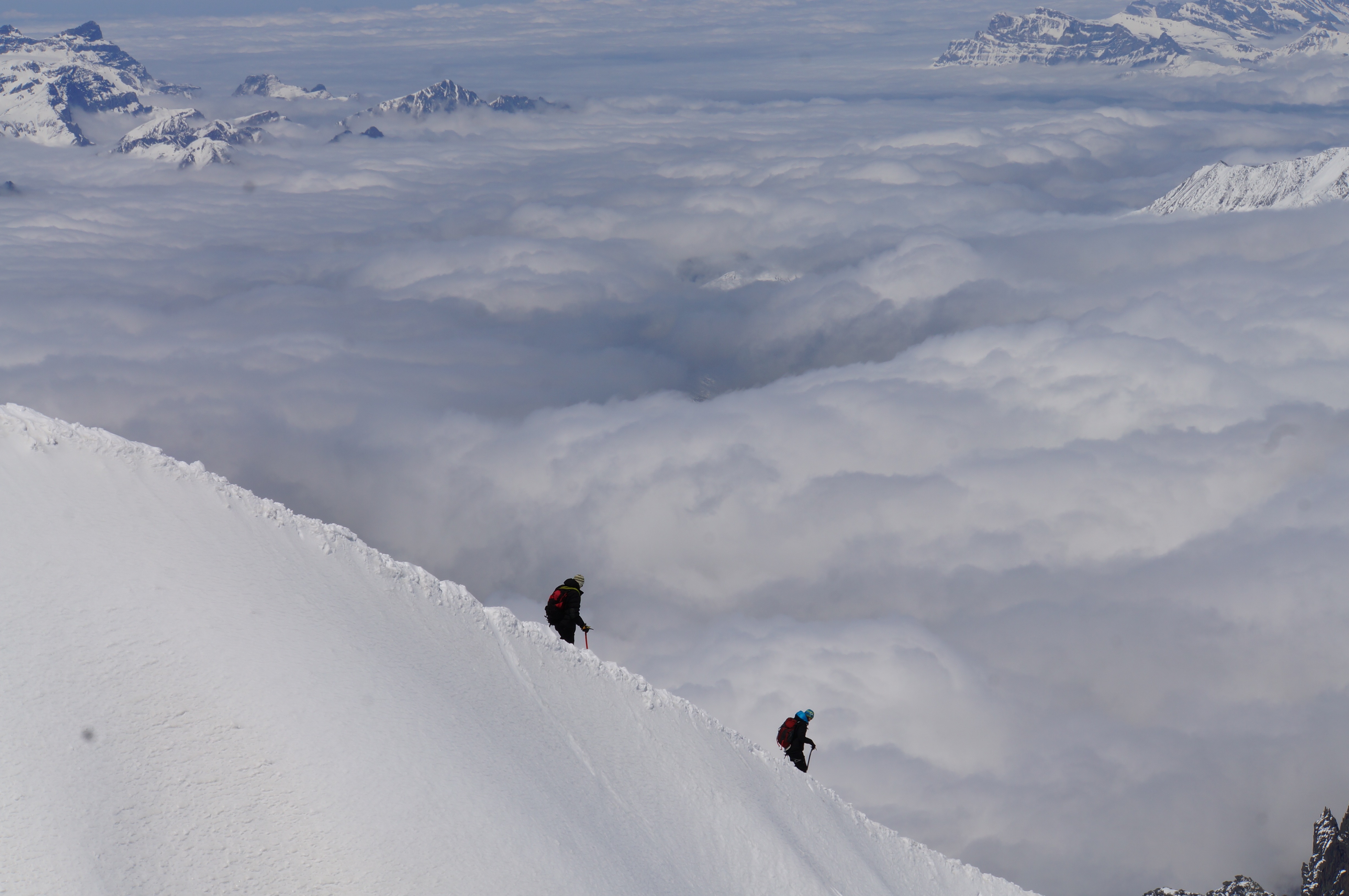
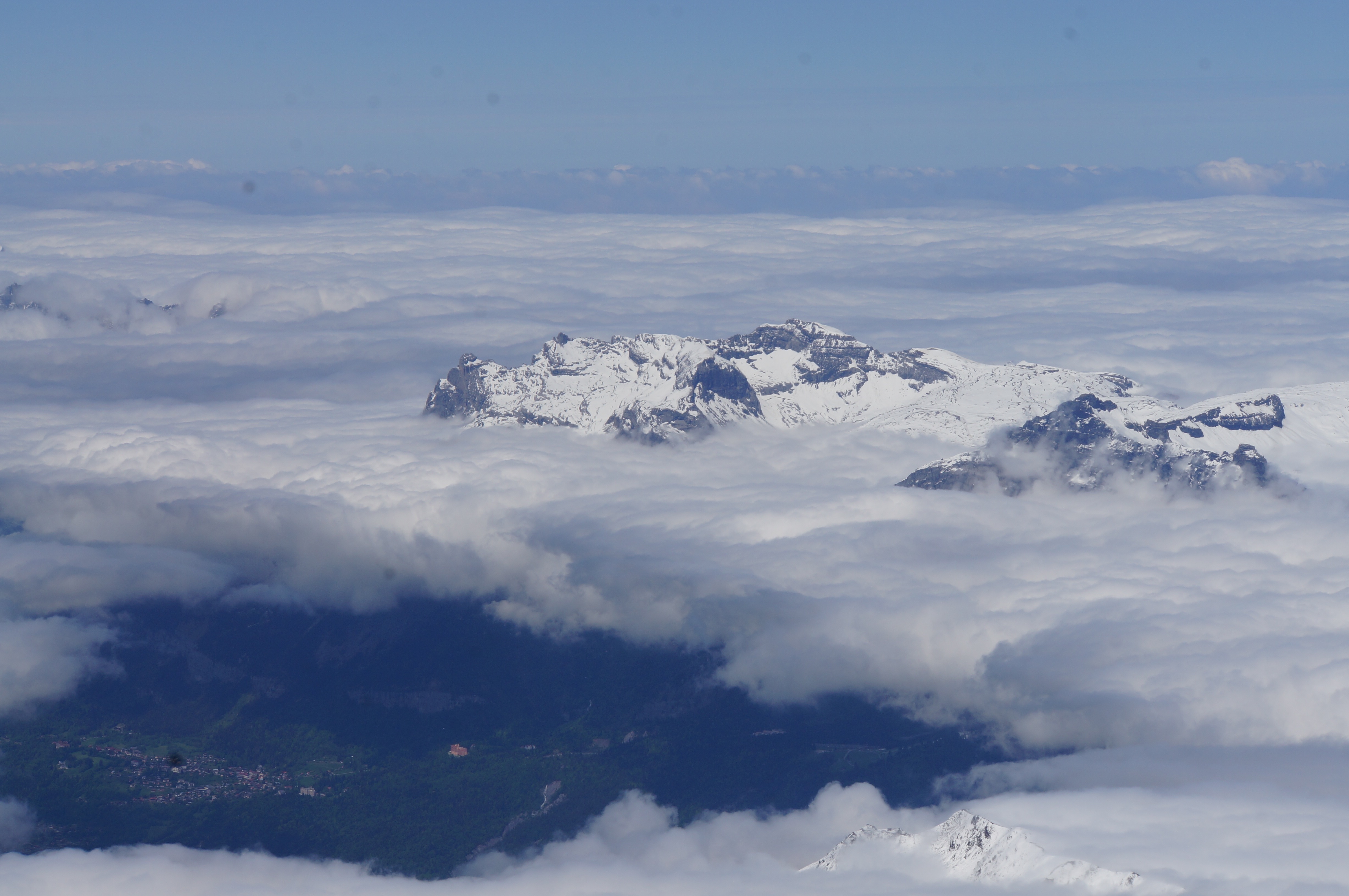
The mountains are like little islands rising up from the clouds, reminding us how freakin high up we actually are.

The mountains are like little islands rising up from the clouds, reminding us how freakin high up we actually are.

DSC00639 DSC01143
DSC00450

DSC00647


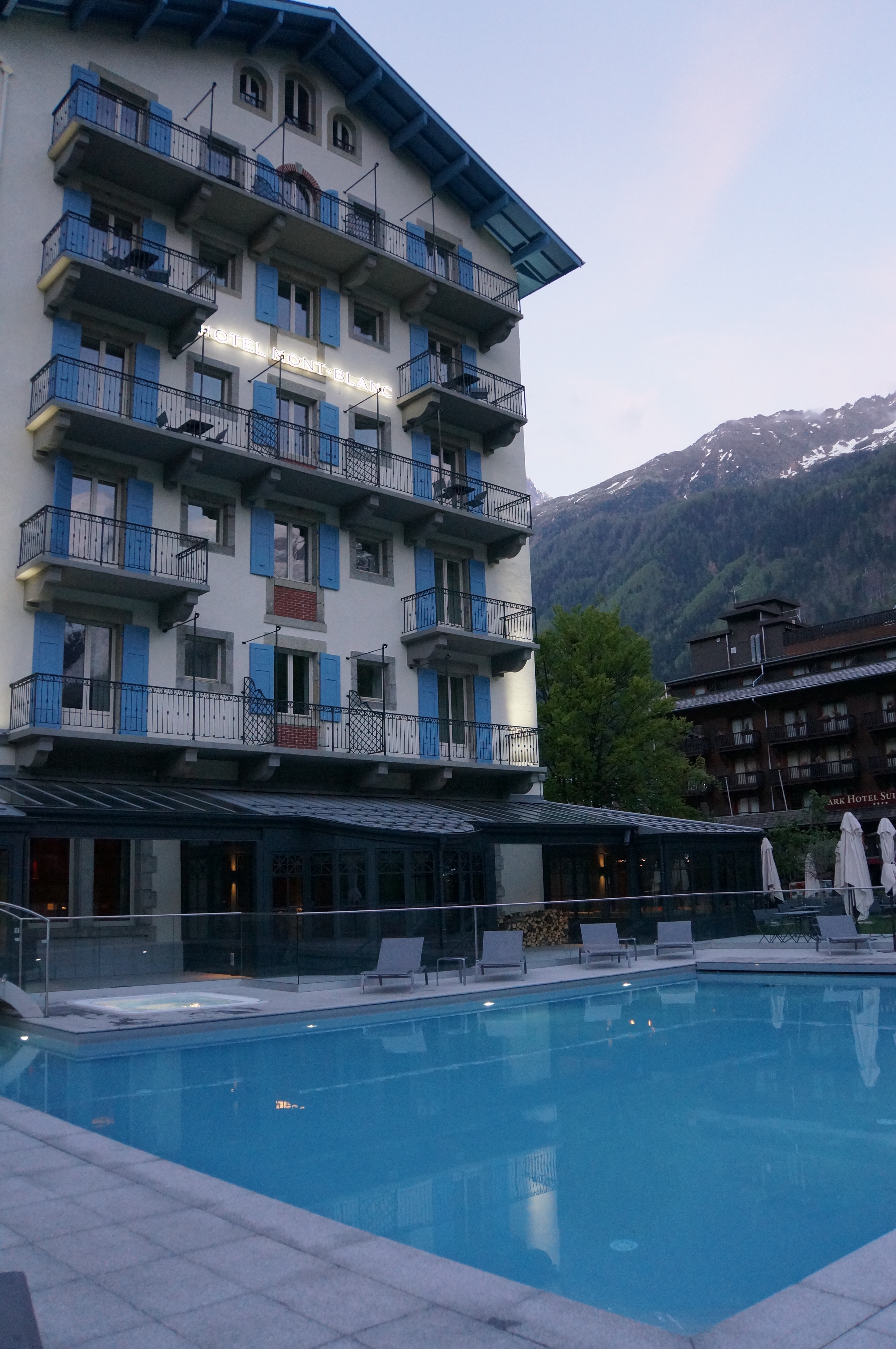
The view from the pool & valley up to the sunlight mountains

The view from the pool & valley up to the sunlight mountains

Life with an outdoor pool surrounded by mountains is simply just the right way to live.

Life with an outdoor pool surrounded by mountains is simply just the right way to live.

DSC01137 DSC00645

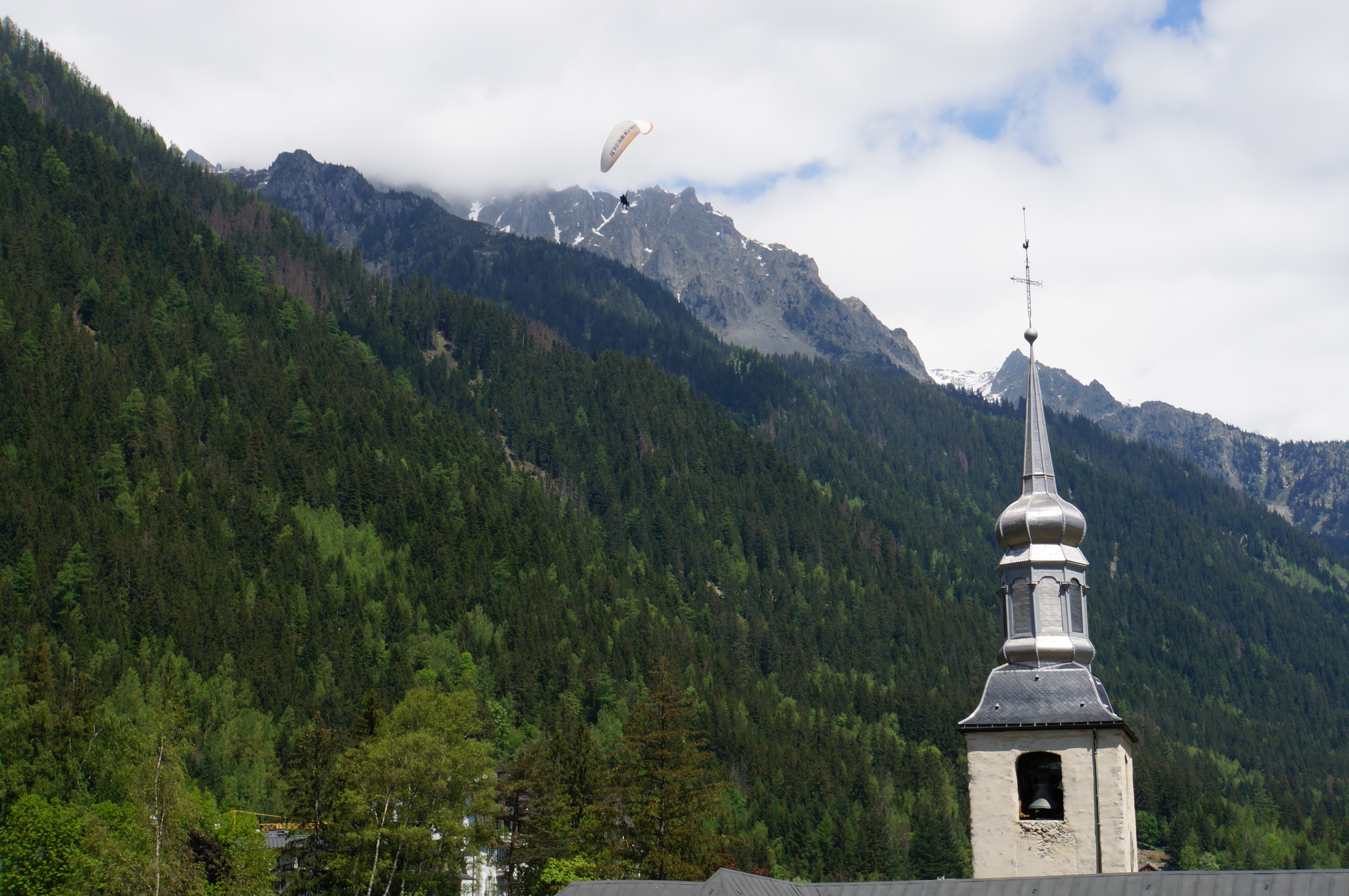
The gliders float effortlessly from the mountaintops pas the church steeple in the centre of town

The gliders float effortlessly from the mountaintops pas the church steeple in the centre of town